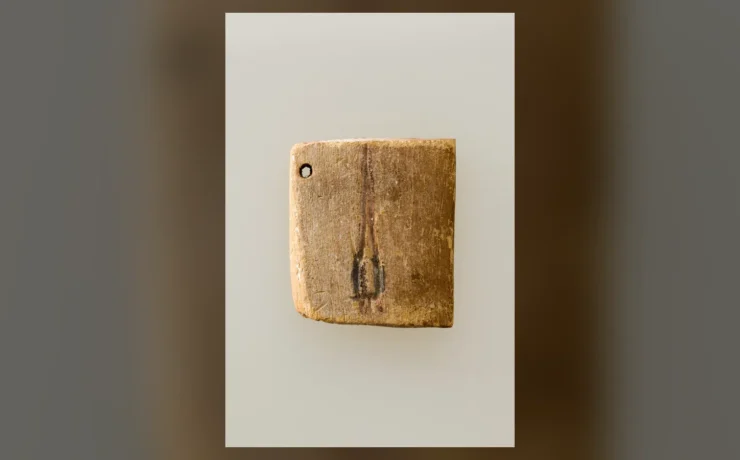
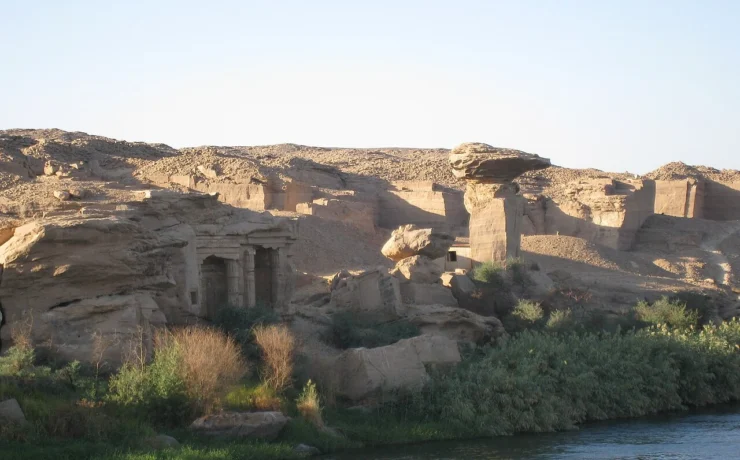
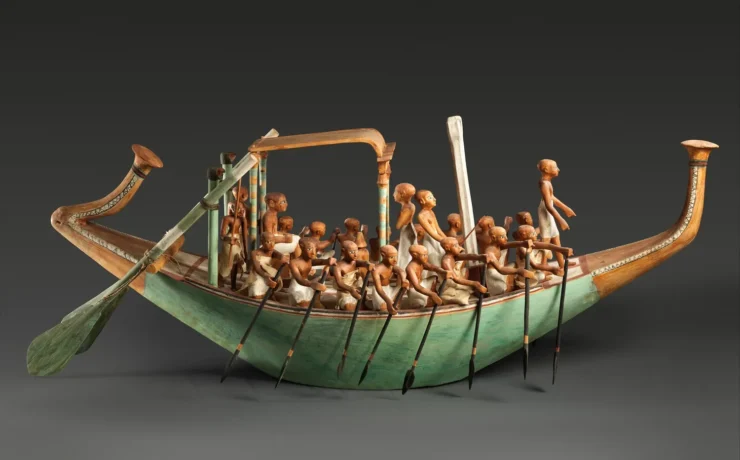
Khafre, also written Khefren and known in Greek as Chephren, is one of the defining rulers of Egypt’s Fourth Dynasty. His second great pyramid at Giza, the richly built valley temple and the sculptural program associated with his reign make him important far beyond the question of which pyramid is tallest. He offers a rare opportunity to study how architecture, royal portraiture, sacred images and carefully reconstructed archaeology combine to express kingship.
This research dossier separates what is well supported by monumental context from historical inferences. It explains why a small fragment of a statue can matter almost as much as a giant pyramid, and why the Great Sphinx is associated with Khafre without every detail of its intended identity being directly inscribed. For ticket and sightseeing logistics, see Kemet Vault’s separate Giza visitor guide.
Khafre at a glance
1. Who was Khafre, and where does he belong?
Khafre was a son of Khufu, the builder of the Great Pyramid. The Ministry identifies him as a major successor in the Fourth Dynasty sequence following Djedefre, whose own pyramid was located at Abu Rawash. Khafre’s choice of Giza thus continues a royal landscape already made prominent by his father while creating a distinct complex rather than a simple extension of Khufu’s tomb.
Greek-language authors writing far later called him Chephren. Such classical names can help a modern reader connect old books with Egyptian king lists, but their accounts are not substitutes for contemporary inscriptions or monuments. A later story concerning his personality should be presented as a later literary tradition rather than an observed fact of his reign.
Absolute reign dates vary with the reference chronology. Egypt’s Ministry uses approximately 2558–2532 BCE while The Met dates some objects labeled to Khafre around 2520–2494 BCE. These are different modern frameworks. The fact that an object is securely a Fourth Dynasty royal portrait is distinct from its assignment to a particular modern BCE year.
2. Why does Khafre’s pyramid look so tall?
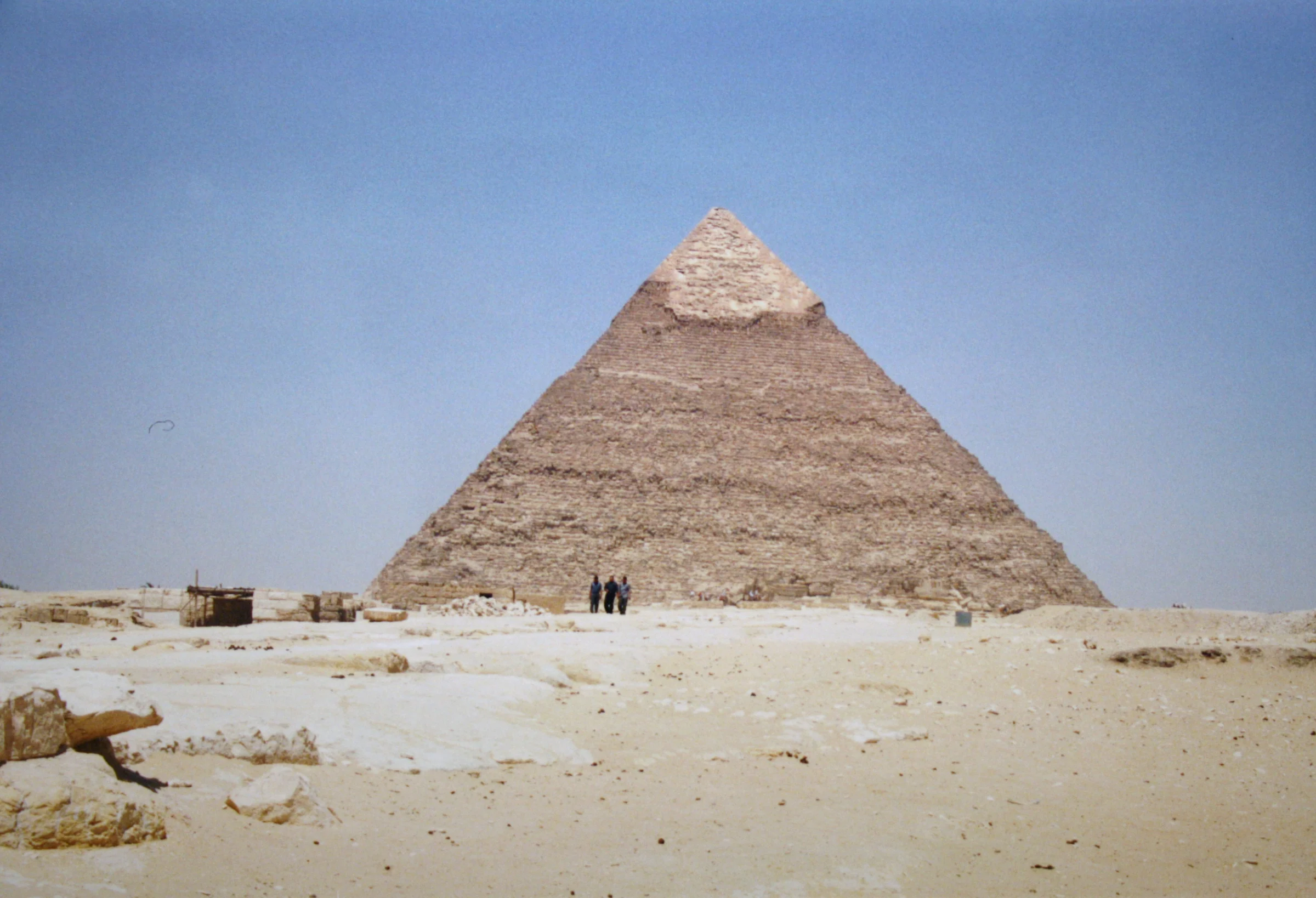
Khafre’s pyramid stands on higher ground than the Great Pyramid of Khufu. Its original height, about 143.5 meters according to the Ministry, was slightly less than Khufu’s approximately 146.5 meters. Perspective photographs can therefore mislead casual viewers into judging which royal project was physically larger. A well-grounded comparison needs actual architectural measurements and an understanding of the different ground levels.
Original fine white limestone casing survives visibly near the pyramid’s top, offering a glimpse of how differently pyramid surfaces once caught sunlight. Much of that outer casing was later removed or lost. The visible core stone is not a complete photograph of the ancient finished appearance. The original casing was obtained from high-quality limestone sources such as Tura, while local limestone formed much of the core structure.
Architecture must also be considered in the context of surrounding buildings. The pyramid’s eastern mortuary temple, causeway and valley temple formed connected components of an integrated funerary landscape, not isolated decorative structures.
3. The design of the whole funerary complex
Royal tomb architecture in this period linked the pyramid with ceremonial spaces where the ruler could receive offerings and be commemorated. Khafre’s mortuary temple lay near the pyramid and was connected along a causeway to a valley temple lower in the landscape. Physical distances between buildings, changes in level and the arrangement of monumental stone blocks give archaeologists useful evidence about planning and movement through the complex.
Khafre’s valley temple is famous for its very large limestone masonry covered in granite, alabaster flooring and halls with substantial granite pillars. The Ministry records the presence of niches that held royal statues. That architecture made a strong statement about ritual permanence and royal legitimacy. Yet we should not mistake an architectural reconstruction for an eyewitness account of every ancient ceremony carried out there.
Later removal of stone, reuse, conservation and excavation have changed what survives. The complex’s modern archaeological plan documents evidence at the time of study, and missing roofed spaces or original decoration often require careful interpretation from remaining walls, fragments and comparisons.
4. The Great Sphinx: relationship and unanswered questions

The Great Sphinx was carved from bedrock and stands close to Khafre’s valley temple and the lower part of his causeway. Egypt’s Ministry treats these architectural relationships as strong evidence for a construction date during Khafre’s reign. The Sphinx Temple also belongs to the same broad monumental setting. The argument comes from the landscape, the sequence of building activities and comparisons with royal iconography.
The Sphinx lacks an inscription stating in plain words that Khafre commissioned it or that every individual facial detail was modeled after him. Scholars can therefore regard the Khafre attribution as the best-supported explanation while acknowledging the difference between a strong contextual inference and a direct original dedication. Claims for radically alternative dates require evidence of comparable quality.
In later New Kingdom history the Sphinx acquired other religious associations, especially as Horemakhet or Horus in the Horizon. Thutmose IV’s Dream Stela belongs to that later history. It should not be quoted as though it were a Fourth Dynasty foundation document made under Khafre.
5. Khafre’s royal portrait and the falcon of Horus
The granodiorite royal statue associated with Khafre, with a falcon behind his head, is among the best-known images of Old Kingdom kingship. It is described by the Egyptian Ministry as a celebrated work from the royal statuary program. The figure’s posture, throne and protective deity express ideal royal status, not necessarily the king’s everyday facial appearance at one moment.
Royal images could operate within temple ritual environments, where the monarch’s presence and relationship with gods had enduring religious significance. The falcon offers a visual connection to Horus, a divine figure central to Egyptian kingship. A student should avoid reducing the image to a modern decorative idea of “a bird behind a king.” Its symbolism belongs to a larger language of royal legitimacy and divine protection.
The sculpture’s fine craftsmanship is also evidence of specialized labor and institutional resources. Stone selection, polishing and carving are material processes that can be studied independently of theological interpretation. Archaeologists and art historians place surviving objects beside architecture, context and comparable royal portraits.
6. A genuine fragment of Khafre’s face
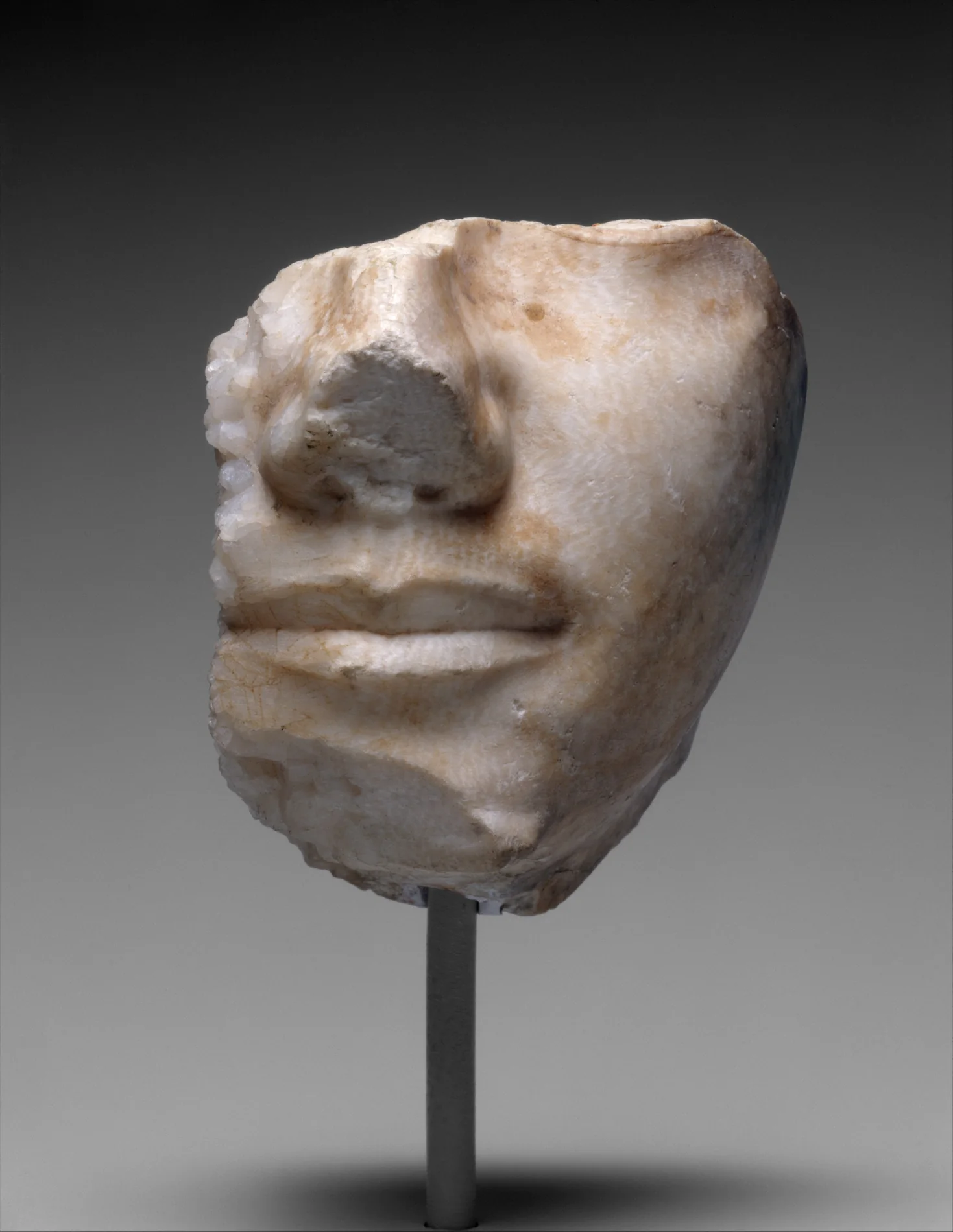
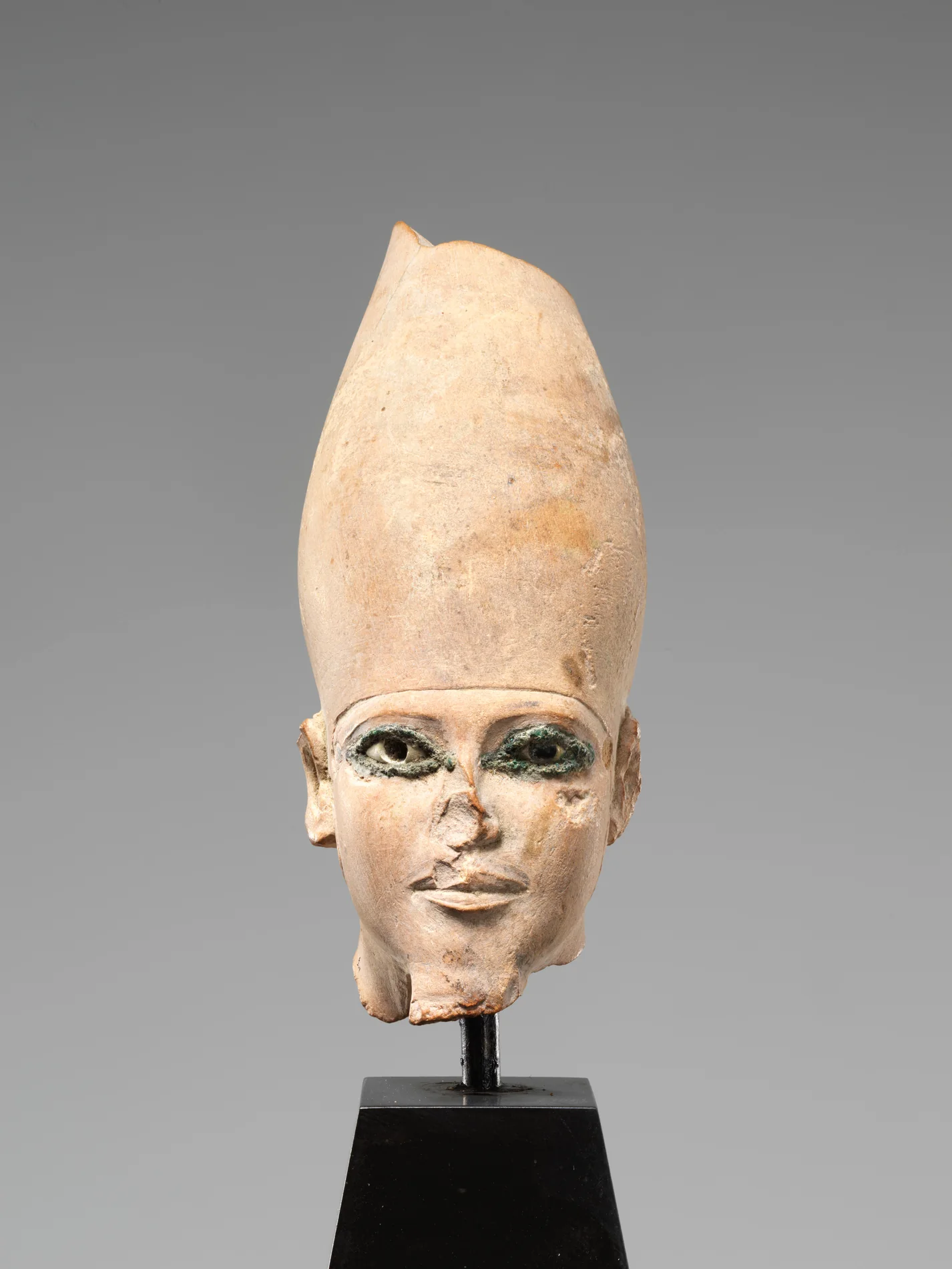
The Metropolitan Museum’s fragmentary face identified as Khafre, accession 26.7.1392, retains subtle modeling around the mouth and nose, even though the larger sculpture did not survive. The catalog connects this identification to similarities with recognized portraits of the king and traces of a royal beard. Such fragments show why a small object with solid evidence can matter historically.
The museum also holds a small crowned royal head, accession 2021.41.80, described as probably Khafre. That wording matters. An uncertain identification should remain uncertain on Kemet Vault, even when assigning an absolute name might make a more dramatic headline. Comparing the two objects helps students distinguish direct labels, stylistic reasoning and inference from material features.
7. What royal sculpture can reveal about ideology
Royal portraits were created within formal conventions. Headcloths, crowns, false beards and seated poses expressed a continuing institutional identity. They did not aim only at psychological individuality in the modern portrait-photography sense. A surviving image can reflect royal office, relations with gods and ceremonial expectations rather than the exact physical features of the individual.
This does not mean artistic details are irrelevant. Materials, proportion, tool finishing, bodily modeling and archaeological association all contribute to attribution. Ancient sculptors were capable of delicate observation while working within an established official visual language. A documentary photograph should ideally show enough of the surviving object to let students inspect those details without altering them digitally.
Restoring missing pieces on a computer can be useful when clearly labeled, but a reconstruction should not replace authentic evidence in a museum caption. The images in this guide show actual objects; their archival originals and licenses are recorded separately.
8. Work, trade and resource coordination
Khafre’s monuments imply the coordinated acquisition of limestone, granite and other materials, labor to move and shape stone, construction planning and provisioning. Ancient Egyptian state administration operated through institutions whose surviving remains are uneven. We can recognize the scale of the task without pretending to possess a complete original workforce spreadsheet.
The Giza plateau also housed cemeteries and social environments connected with royal construction and later cult practices. Exploring these sites means going beyond the royal pyramid’s outline to examine workshops, food production, transport and archaeological settlement records. Each type of evidence answers a different question.
It is tempting to explain the entire project with one spectacular lifting hypothesis. Archaeologists instead compare stonework, quarry locations, building traces and documents from the broader Old Kingdom economy. The diary of Merer, for instance, directly illuminates logistics in the earlier Khufu project but does not automatically document Khafre’s entire construction organization.
9. Khafre and the broader Fourth Dynasty
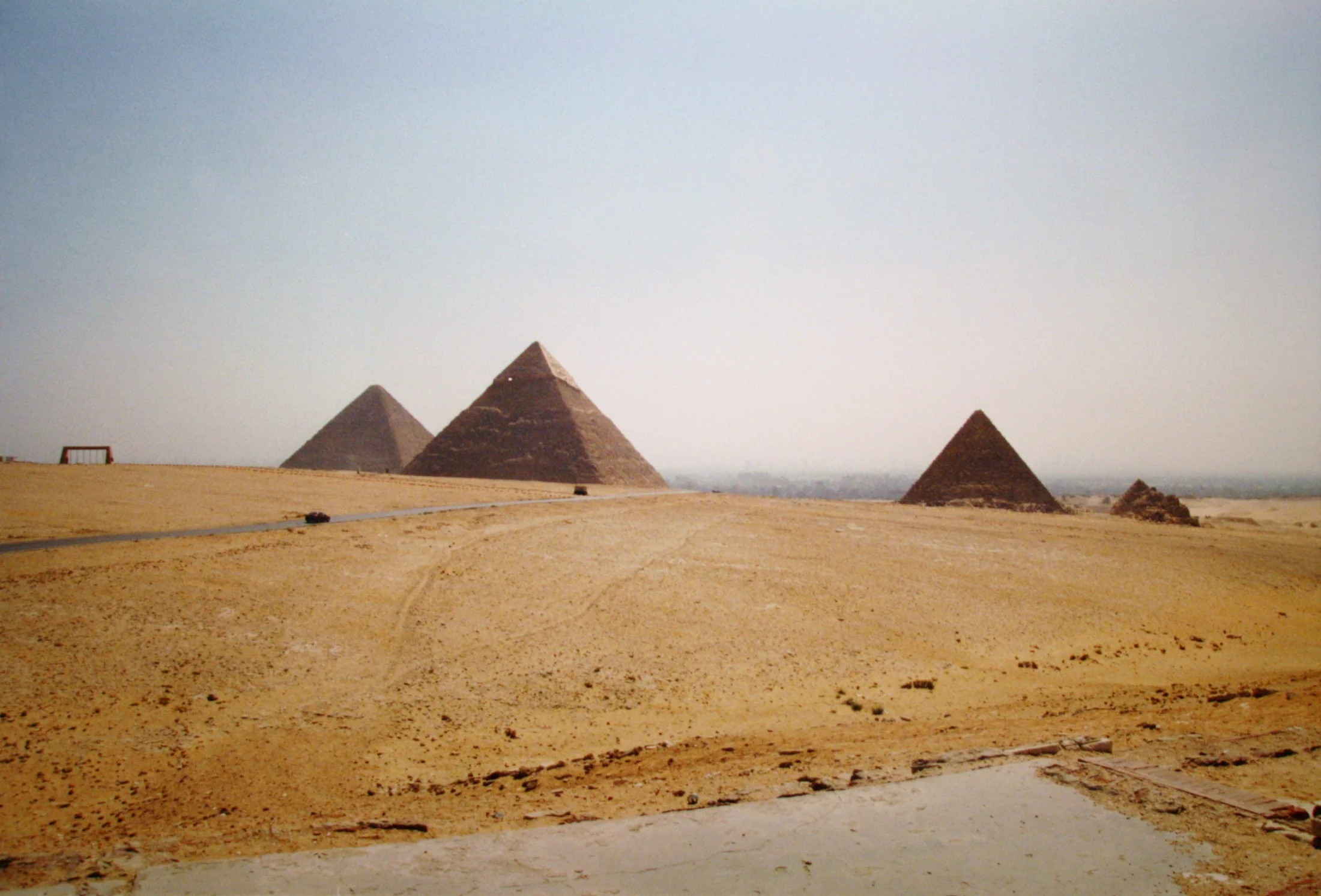
Khafre stands between the reigns associated with Khufu and Menkaure, in a period when the monuments at Giza formed one of the strongest concentrations of royal investment in Egypt’s history. Nevertheless, a chronology of royal tombs is not equivalent to a complete political narrative. Monumental plans changed under different kings, and the archaeological record is only partially preserved.
Menkaure’s smaller pyramid and rich sculptural legacy reveal a different balance between materials and architectural scale. A useful comparison asks what changed in monument size, what remained stable in temple ideas and which objects survived. It does not assume that pyramid dimensions alone provide a reliable measure of governmental success. Explore the Fourth Dynasty synthesis and Menkaure’s individual profile for these contrasts.
10. Evidence and uncertainty: how the dating works
The traditional Fourth Dynasty sequence is reconstructed from monument attributions, royal names and textual materials. Its absolute placement against modern BCE years is more flexible. The Met lists its fragmentary Khafre face to approximately 2520–2494 BCE, while the Ministry gives Khafre a reign c. 2558–2532 BCE. These discrepancies reflect dating systems rather than a denial of the object’s basic identity.
Other uncertainties concern the precise program of vanished decorations and the interpretation of parts of the funerary complex. Strong architectural context can justify a preferred reading without turning it into an eyewitness document. Researchers make progress by adding evidence, evaluating alternative explanations and clearly identifying which claims have been established.
11. A practical student research method
Begin with what still exists
Identify the pyramid, temple walls, causeway traces, Sphinx setting and cataloged sculptures. Record whether an object is a surviving fragment or a reconstructed whole.
Check accession numbers and attribution language
The Met 26.7.1392 is called Khafre; The Met 2021.41.80 is called probably Khafre. This difference should appear in academic notes.
Keep chronology systems labeled
Never merge reign dates from two different institutional chronologies without attribution. Relational ordering and absolute year assignment are different levels of certainty.
Separate architecture from later interpretation
New Kingdom Sphinx-related inscriptions are valuable evidence for later uses of the monument, but not direct witnesses to its original Fourth Dynasty commission.
12. Common questions about Khafre
Was Khafre the builder of the Great Pyramid?
No. Khufu built the Great Pyramid. Khafre built the second principal pyramid at Giza, and Menkaure built the third.
Why can Khafre’s pyramid seem larger than Khufu’s?
It occupies higher ground, which affects perspective. Its original height was slightly lower, according to the Egyptian Ministry.
Did Khafre build the Great Sphinx?
The best-supported conventional attribution associates the Sphinx with Khafre’s complex, based on archaeological context. Direct original inscriptional proof of every detail of its intended portrait is not available.
Where can I find genuine images of Khafre?
Look for properly attributed catalog entries in Egyptian museums and The Met’s Open Access collection. This guide includes two museum-identified objects and notes the level of certainty of each attribution.
Are the museum dates and ministry dates contradictory?
Different modern chronological frameworks can place a well-established reign at somewhat different absolute dates. Cite the institution and do not treat every difference as proof of an error.
13. Explore Khafre’s research connections
The Giza Archaeological Atlas locates Khafre’s landscape, and the Old Kingdom timeline places him within the broader royal sequence. For more detailed material culture, use the Giza archaeology guide; compare Khufu’s administration and Menkaure’s sculpture. The tourism guide remains a separate resource for practical visits rather than repeating these historical arguments.
Museum and primary institutional sources
- Egyptian Ministry — Pyramid Complex of Khafre.
- Egyptian Ministry — The Great Sphinx.
- Egyptian Ministry — Giza Plateau.
- The Met 26.7.1392 — Fragmentary Face of King Khafre.
- The Met 2021.41.80 — Head Probably Khafre.
Editorial method: independent Kemet Vault synthesis of identified scholarly and institutional records. Artifact dates follow the respective museum’s catalog; photographs are authentic licensed images hosted on Kemet Vault, not generated reconstructions.