Imagine finding a fragment of ivory only three centimeters wide near an ancient royal tomb. It doesn’t look much like a government document. Yet it may once have identified an offering placed beside Egypt’s early kings, using a handful of signs that helped people keep track of objects, names and authority.
Written administration was taking shape long before the huge rolls of papyrus familiar from later Egyptian history. The evidence at Abydos is small and sometimes damaged: labels, fragments of pottery, impressions left by seals. To understand what these things can tell us about the early state, we need to look closely at individual objects instead of imagining a fully formed tax office.
A fragment from the reign of Den
The Metropolitan Museum’s ivory tag fragment, object 09.182.17, came from excavations near the tomb of King Den at Umm el-Qa’ab, Abydos. It is assigned to the First Dynasty and measures only 3 by 1.4 centimeters. The museum records that it was found beside an ivory furniture leg, another label and two stone vessels.
That context suggests the tag may have been attached to an item or group of goods deposited in the royal tomb. Among the signs visible on the fragment is an ib sign, which can mean ‘heart’ and occurs in a queenly title. The museum suggests this might indicate a connection with a royal wife, but the surviving piece is too incomplete to settle the question.
The important point is modest but revealing. People at the early royal court used writing-like marks to identify and manage objects. The tag does not preserve a full shipment record or list the taxes paid by a village. What it gives us is one surviving trace of marking and organizing goods.
The label called ivory that the museum records as wood
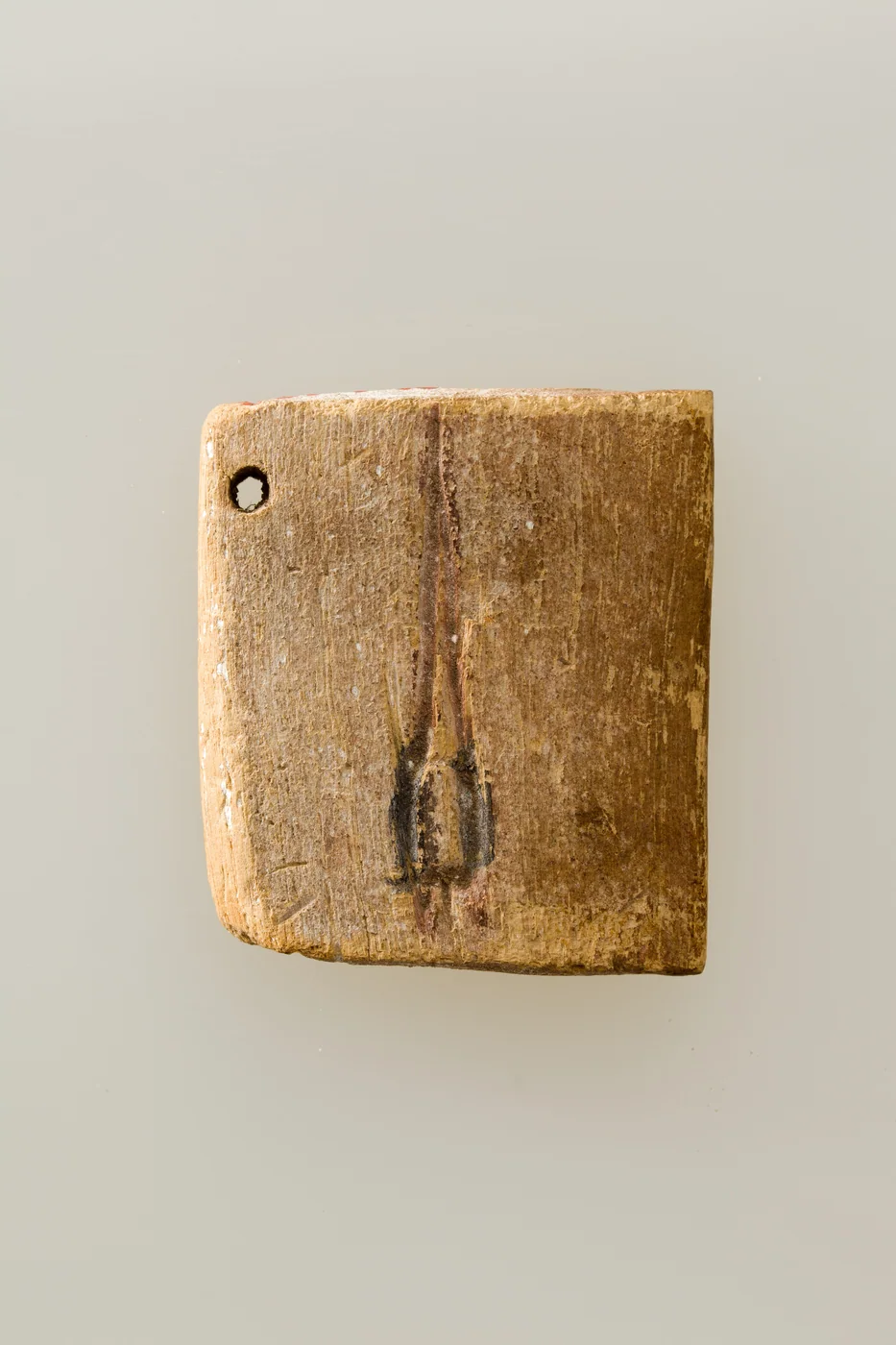
A second Metropolitan Museum object comes from the tomb of Djer, another First Dynasty ruler. Its record, 01.4.162, gives a title referring to an early ‘ivory label’, but its material field lists wood and ink. The piece bears an early sign that may represent a bundle of arrows.
The disagreement between the object title and the material description is a useful reminder to read the catalogue fields rather than trusting a headline alone. It also means the following photograph should not be passed off as the separate ivory fragment from Den’s reign. These are different objects, excavated in different contexts.
Both pieces show how much early writing depends on context. A sign on an offering label is not the same as an instruction carved on a public monument. We need to ask who would have seen it, what item it accompanied, and why an official or worker might have needed to identify that object.
What a royal serekh on pottery changes
The same museum holds a pottery sherd bearing a serekh, 01.4.63, excavated at Abydos. A serekh is the formal frame used in early royal names, typically representing the facade of a palace. On this fragment, the sign survives without the rest of the original vessel.
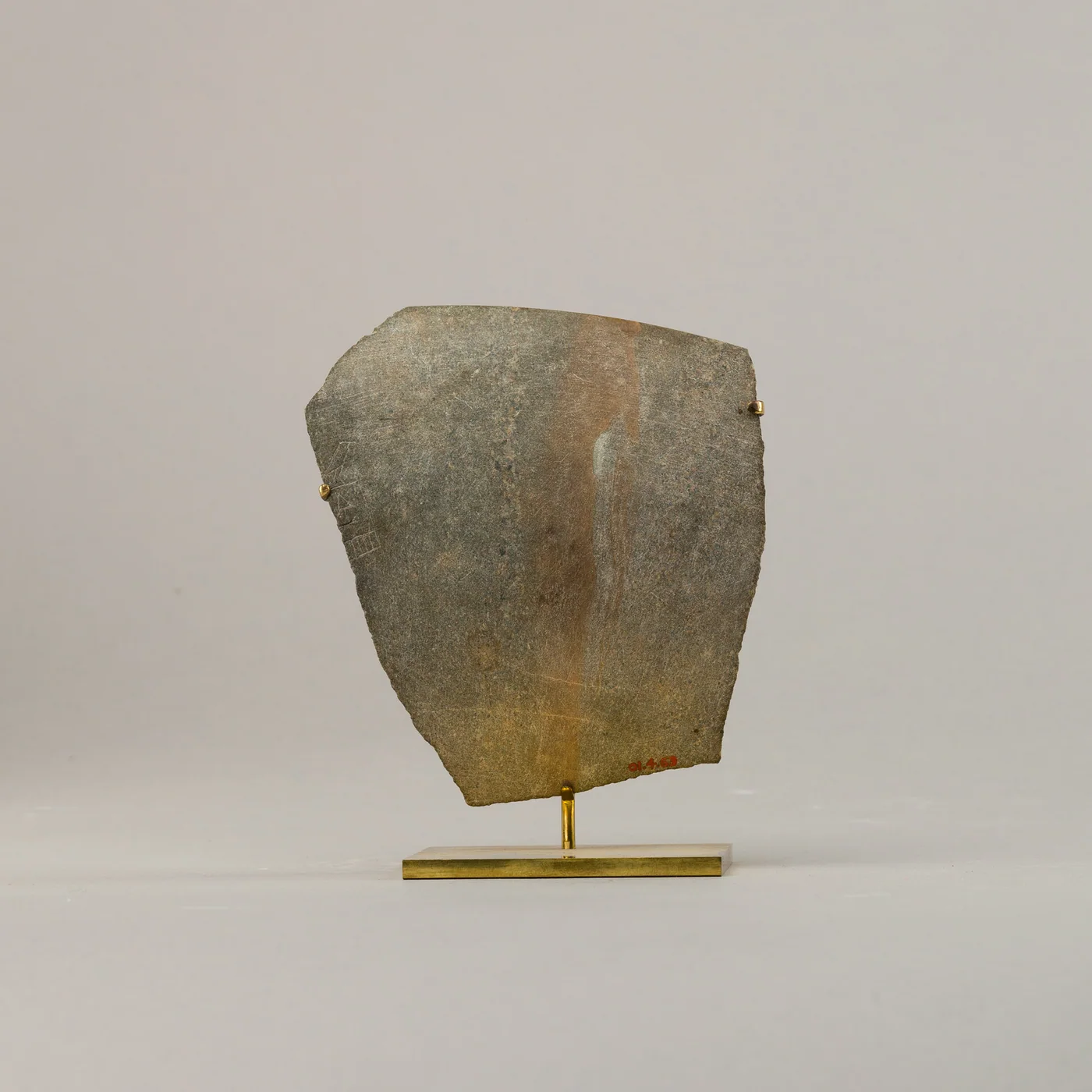
A painted or impressed royal mark on pottery can signal an association with authority, but the fragment alone is not an inventory of who owned every container in a storehouse. The pattern becomes more meaningful when researchers compare many examples and recover their archaeological positions. The Cambridge study of the Early Dynastic economy places labels, seals and early institutions within the larger process of state formation.
It is tempting to see each royal mark as evidence for a modern bureaucracy with consistent ministries and regulations. The real evidence is more uneven. Practices changed, surviving objects represent special contexts, and the elite burial record does not show how every village worked.
Sealing a container is different from labelling it
Labels could identify goods or their destination. Clay sealings served a related but different purpose: they could secure a container, door or package while leaving an impression of the seal used. A broken sealing might preserve a name or design, and sometimes the impression of the basket, cord or papyrus beneath it.
Modern research at much later Old Kingdom settlements helps illustrate the method. The AERA and Yale Sealings and Scribes project studies thousands of clay seal impressions from the Giza pyramid builders’ settlement. Those pieces are centuries later than Den, so they should not be used as direct proof of the same office operating unchanged from the First Dynasty. They demonstrate how researchers can reconstruct administrative practices from materials that were once discarded.
For the geographical side of this investigation, our archaeological atlas guide explains why an object’s findspot, a named tomb and its current museum address must remain distinct. Object 09.182.17 is held by the Met today, but its importance to the history of Egyptian administration depends on its original Abydos context.
What the small finds can actually establish
The fragments tell us that officials and artisans used signs, names and marks in connection with royal goods and institutions. They suggest systems of labeling, authority and control, but not a complete national census, a known tax rate or a line-by-line record of every household in Egypt.
The best way to understand these early documents is to compare the objects, not enlarge them into a story they cannot support. Den’s fragment may have labelled a tomb deposit. Djer’s wooden tag bears an early sign. A pottery sherd retains the form of royal identity. Together they show writing and administration becoming part of everyday work around royal institutions.
That is more revealing than a fictional scene of a First Dynasty scribe sitting at a desk with a modern ledger. The state was made from people, materials and routines. These small marks give us unusually direct evidence of some of those routines, with all the gaps still visible.