The pyramids of Giza are often photographed as three isolated monuments rising from a desert horizon. Archaeologically, that familiar image leaves out much of the story. The plateau is a connected royal cemetery: pyramids, subsidiary burials, temples, causeways, tombs of officials and a landscape shaped by the needs of the Egyptian state during the Fourth Dynasty of the Old Kingdom.
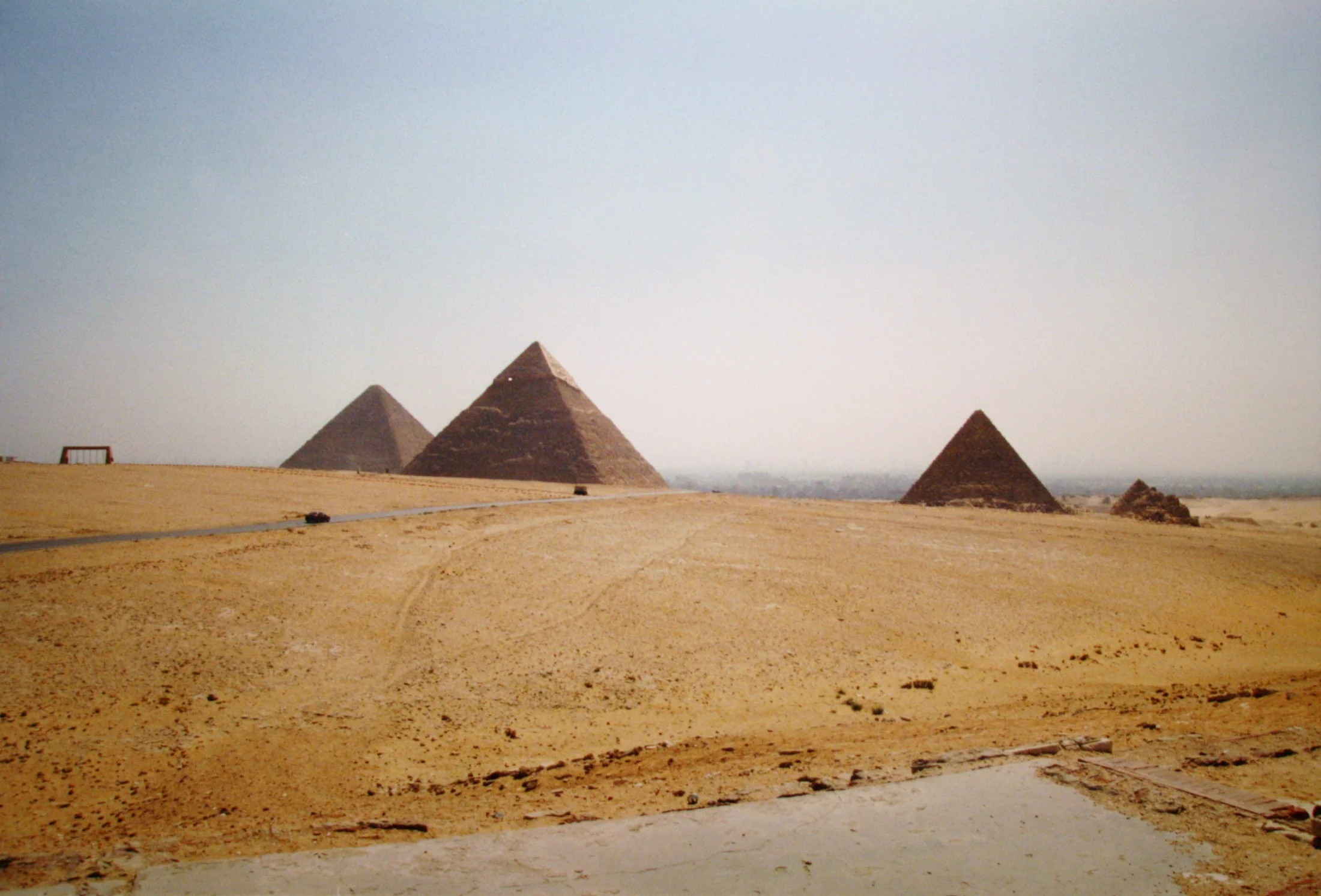
Giza at a glance
Royal monuments are part of a larger landscape. This research guide explains the archaeology; current tickets and visiting logistics belong to our separate visitor guide.
Where Giza fits into Egyptian history
Giza lies on the west side of the Nile near the ancient capital of Memphis. Its principal pyramids were constructed for three Fourth Dynasty kings: Khufu, Khafre and Menkaure. Exact reign dates vary between scholarly chronologies. Instead of treating any single set of dates as unchangeable, it is more reliable to place these monuments within the broader Old Kingdom and study how their architecture and surrounding archaeological remains relate to each other.
The wider Memphite necropolis extends beyond Giza, taking in major archaeological landscapes such as Saqqara, Abusir and Dahshur. UNESCO recognizes Memphis and its Necropolis, including the pyramid fields from Giza to Dahshur, as a World Heritage property. Giza is therefore one chapter in a much longer history of Egyptian royal burial, not the starting point or endpoint of pyramid building.
Three pyramids, three different royal complexes
Khufu and the Great Pyramid
Khufu’s pyramid is the largest of the three principal pyramids on the plateau. Its surviving structure shows the extraordinary scale of Fourth Dynasty stone construction, but the pyramid itself was not the entire royal complex. Subsidiary pyramids, traces of cult buildings, surrounding burials and evidence of associated boat installations belonged to a wider ceremonial and funerary environment.
The monumental form communicates royal authority, but the material remains raise more practical questions too: how stone was obtained, how teams were organized, how construction activity was provisioned and how a large architectural project was sustained. Not all proposed solutions to those questions have equal archaeological support, so claims about a single definitive building method deserve scrutiny.
Khafre, his temples and the Great Sphinx
Khafre’s pyramid stands on slightly higher ground, which can make it appear taller than Khufu’s from some viewpoints, despite being smaller. Part of its original limestone casing remains near the summit. The pyramid complex includes a mortuary temple near the pyramid, a long causeway and a substantial valley temple. These structures help researchers reconstruct how ritual movement and access were organized.
The Great Sphinx stands within the archaeological setting of Khafre’s monuments and is widely associated with his reign. Its monumental lion body and royal head were cut from living bedrock. The history of the Sphinx is not limited to its original creation: its later restoration, cult, burial by sand and rediscovery reveal changing Egyptian attitudes to older monuments over centuries.
Menkaure and changes in scale and materials
Menkaure’s pyramid is considerably smaller than the others. A reduction in size should not be mistaken for an absence of ambition. His complex preserves evidence of distinctive decisions about stone and construction, including the use of granite for part of the pyramid’s casing. Granite presented different extraction, transport and working challenges from limestone. The unfinished state of several elements also provides evidence for how construction plans could change.
The complex’s temples and associated sculptural finds show that royal commemoration relied upon more than a pyramidal silhouette. Sculpture, ritual spaces and later continued activity were important to how a royal burial place functioned.
How were the royal complexes organized?
A pyramid is the most conspicuous element of the landscape, but the functional unit was the royal funerary complex. Built spaces linked the pyramid to offering rituals, approaches through the plateau and cemeteries where family members and officials were commemorated. In some areas, later rebuilding and stone removal make parts of the original arrangement difficult to reconstruct.
The pyramid itself
The central monumental stone mass housed internal passages and chambers. Its profile, casing and structural choices are best studied through measured architecture, not only appearance from tourist viewpoints.
The mortuary temple
Near the pyramid, ritual spaces supported the royal funerary cult. Relief decoration, altar or offering arrangements and architectural traces must be interpreted according to their original context, where securely known.
The causeway and valley approach
Causeways connected elements of some royal complexes across the plateau. Their paths and surviving foundations help reconstruct movements between monument zones, although their original decorative programs are often fragmentary.
Subsidiary pyramids and elite cemeteries
The burial landscape extended far beyond the principal king. The smaller monuments and mastabas preserve evidence concerning royal relatives, officials, funerary art and the social organization of the Old Kingdom.
What the smaller tombs tell us
Giza contains numerous mastabas and other tombs related to members of the royal family, administrators and officials. These structures create a social landscape around the royal monuments. Their chapels, inscriptions and decorated scenes can document names, relationships, offices, offerings and ideals of commemoration.
It would be misleading to treat every tomb image as a literal photograph of ordinary life. Egyptian tomb decoration followed artistic and religious conventions; scenes expressed wishes for sustenance and continuity as well as aspects of familiar work. Even so, when inscriptions and objects are studied in context, the cemeteries offer vital evidence for hierarchy, craft production and the administration of the Old Kingdom.
Objects from the Fourth Dynasty: evidence beyond the pyramids
The Met holds relief fragments dated to the reign of Khufu and later reused at Lisht. These objects matter because their iconography and inscriptions can document aspects of agricultural provision, the royal mortuary cult and Old Kingdom artistic conventions. They are not a substitute for a full excavation report, and their present findspots may be later than their original creation.
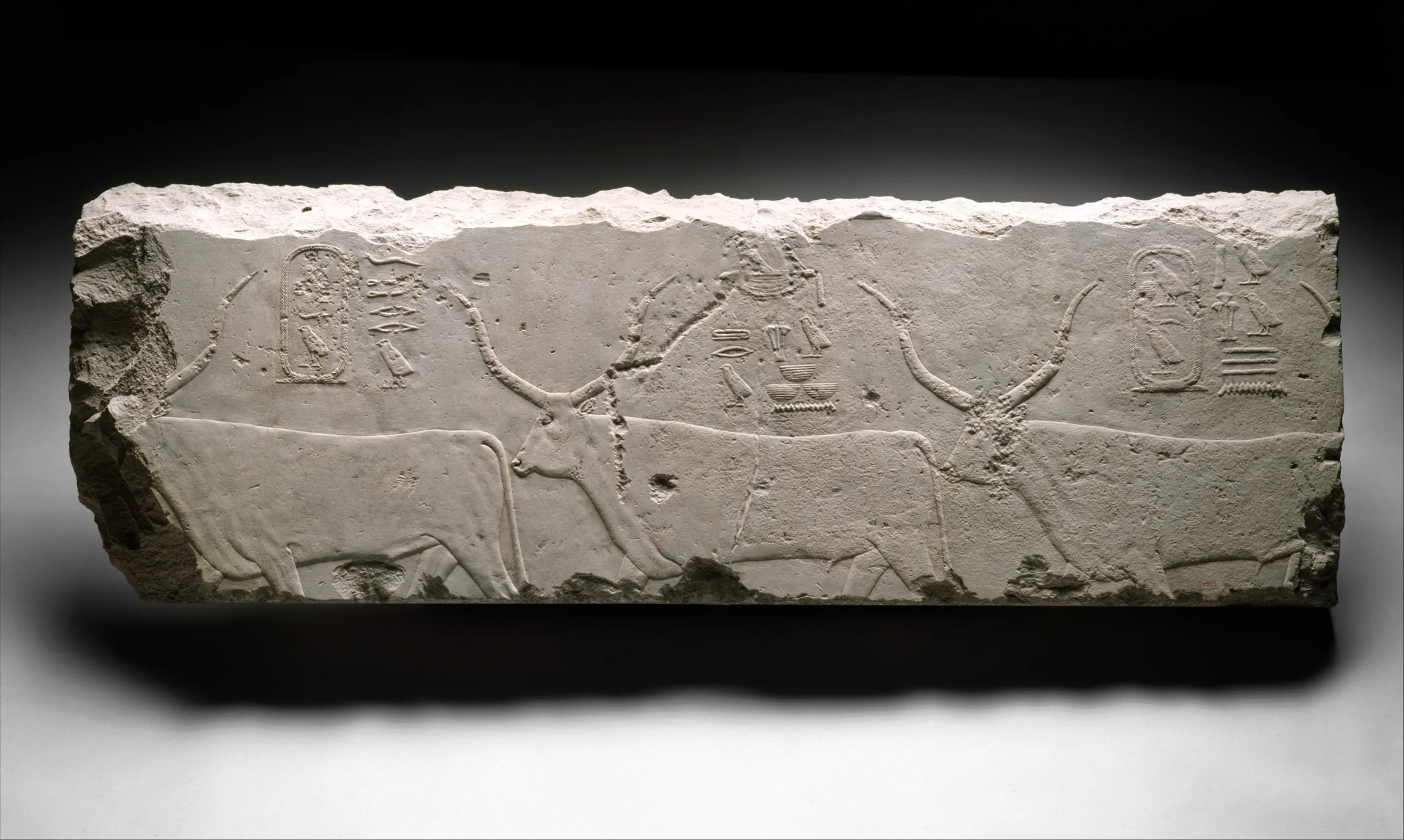
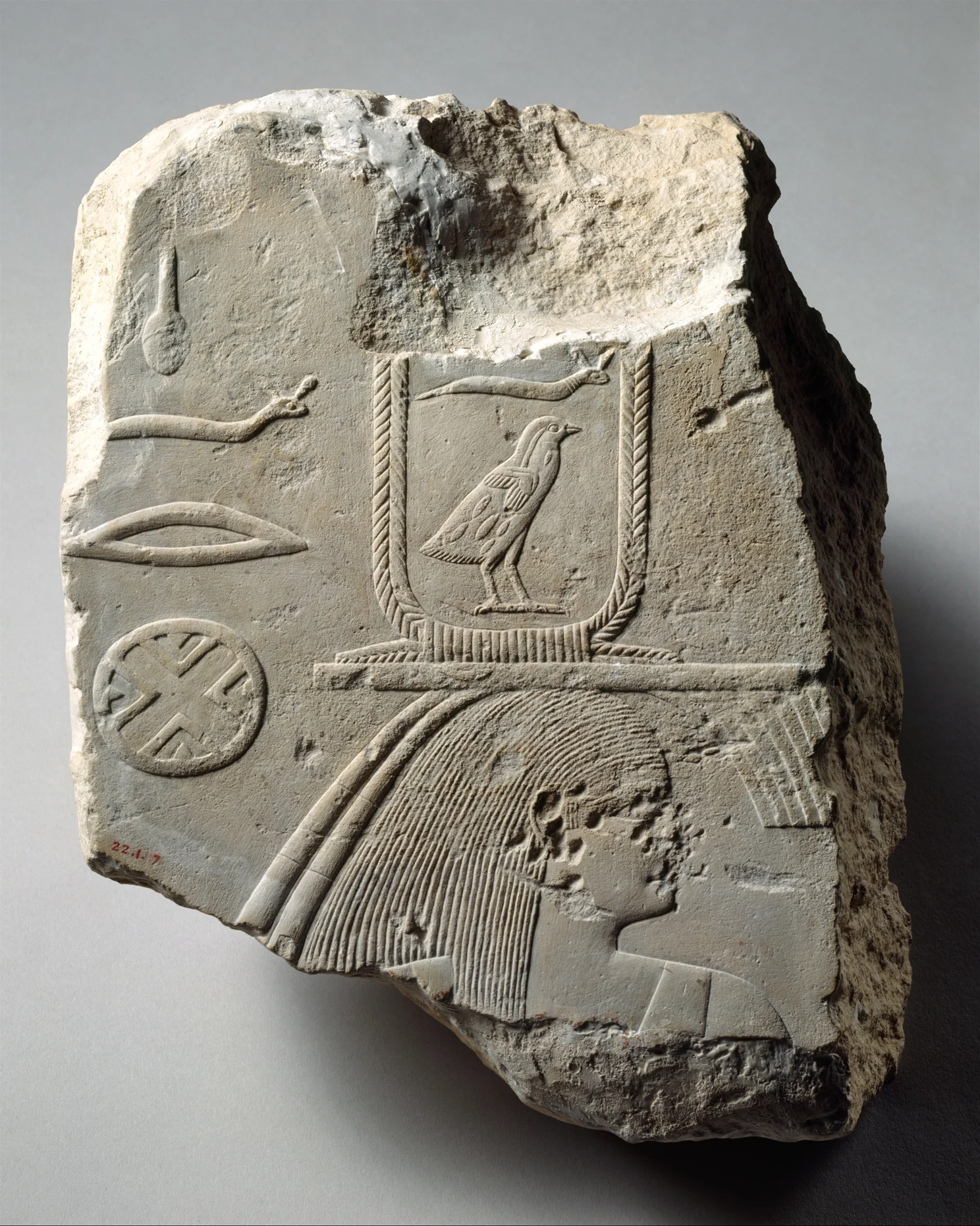
A photograph of a relief can show artistic details, but the archaeological record establishes how secure the attribution and history of a piece may be. Students should inspect the object title, accession number, reported findspot and museum’s discussion rather than guessing historical meaning from visual resemblance.
Reading the plateau as a landscape
Three useful questions can guide the study of any monument at Giza. First, what is its relationship to the plateau’s natural geology and to nearby structures? Second, what evidence distinguishes its original construction from later reuse or restoration? Third, which claims are supported by inscriptions and excavated finds, and which remain interpretations?
These questions matter because a photograph, however spectacular, compresses a complicated place into one point of view. A site plan and carefully recorded context can explain details that even the best aerial image cannot show. The royal pyramids, connected temples, causeways and cemeteries are more informative when considered together.
Human lives in Giza’s cemeteries
The human history of Giza is often overshadowed by its engineering. The mastaba cemeteries contain evidence of titles and social standing, family relations, ritual care and skilled production. Excavations have documented complex patterns of burial, rather than a single static group of monuments made at once. The cemetery continued to be used and altered over successive periods.
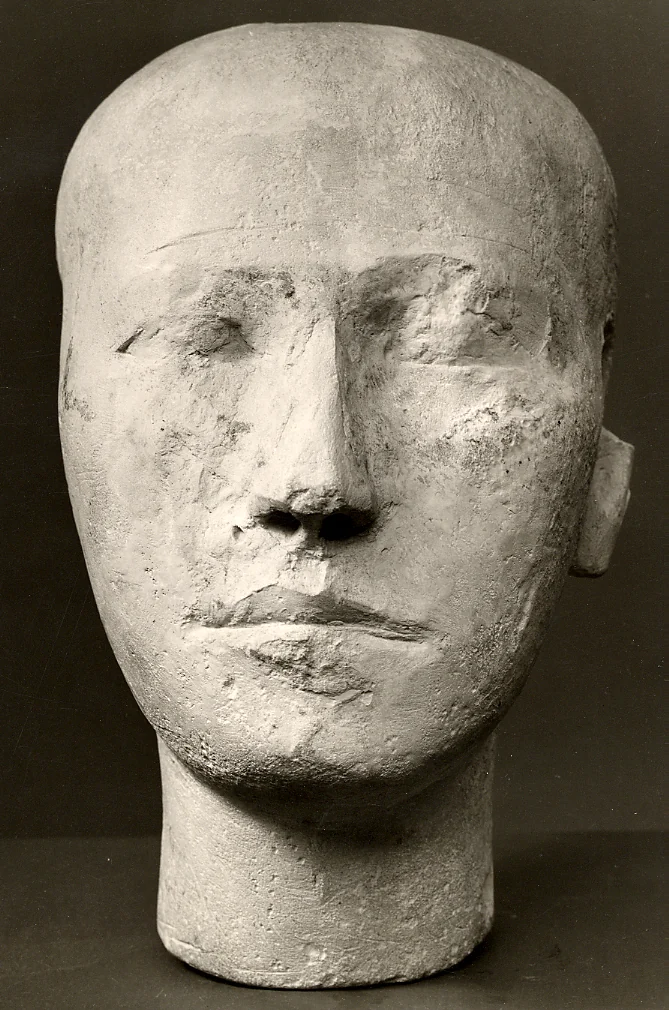
The social significance of such a head cannot be explained entirely by modern ideas of portraiture. The form and its placement within the tomb complex belong to funerary practices that specialists continue to interpret. Contrasting this smaller sculptural object with the scale of the royal pyramid demonstrates how different archaeological sources answer different questions.
What can we say with confidence, and what is still debated?
The attribution of the three major pyramids to Khufu, Khafre and Menkaure is securely established in mainstream Egyptology. Their broad placement within the Fourth Dynasty is also well supported, although exact absolute dates can differ among chronological schemes.
The details of labor organization, specific building sequences and some features of the ancient surrounding environment continue to be researched. Responsible interpretation distinguishes measured remains from hypothetical reconstructions. Kemet Vault will label proposed reconstructions as interpretations rather than presenting them as surviving ancient reality.
How to study Giza using three evidence layers
Monument evidence
Architecture, stone and excavated features help reconstruct how spaces were built and used. A surviving wall can establish position, not automatically the entire ritual sequence.
Inscription evidence
Names and titles on stone, administrative papyri and tomb texts provide additional context. They are interpreted alongside the object they were found on, not as isolated quotations.
A third evidence layer comes from comparisons and modern methods: pottery typology, conservation observations, geology, surveys and analytical imaging. Interpretations become stronger when independent types of evidence support one another. Some reconstructions are plausible without being historically certain, and responsible reporting labels that difference.
Why the plateau was suitable for royal monuments
Giza’s natural geology shaped its architectural possibilities. The builders worked with the limestone plateau and its changes in elevation; they did not start from a perfectly flat artificial platform. Quarrying, leveling and the arrangement of causeways all responded to the character of the ground. The exposed environment helped preserve large stone structures, but it has also subjected them to erosion, weathering and later human interventions.
Stone monuments are not simply piles of interchangeable blocks. Architectural historians examine tool traces, the placement and quality of masonry, surviving foundations and the relationship between structures and the plateau. Where ancient stone was removed or reused, reconstruction requires inference. A plan drawn today can illustrate a proposed building sequence, but it is not itself a contemporary Egyptian document.
Reading an archaeological plan
A reliable plan distinguishes visible structures, excavated foundations and hypothetical reconstructions through different graphic conventions. Scale and orientation matter: a drawing without these elements may look persuasive while concealing essential information. Students should use the Archaeological Atlas to orient the monuments geographically, and then consult specialist site publications when exact archaeological boundaries are important.
Workers, supplies and settlements
The pyramid age cannot be understood only by studying burial chambers. Large construction projects depended on transportation, provisioning, administrative control and work crews. Archaeological research around the plateau investigates ancient settlements, facilities for food preparation and other traces of activity associated with the labor force. These traces offer a more human view of the society behind the monuments.
Labels such as “slaves built the pyramids” replace a complex research problem with an oversimplified picture. The evidence instead requires investigation of different groups, labor arrangements and forms of royal obligation. The remains of housing, food production and work organization are not a complete population census, but they challenge the idea of a single anonymous group working in unchanging conditions.
Khufu’s administration is illuminated by the Wadi al-Jarf papyri, particularly the logbooks associated with Merer. These texts document transport operations connected with the pyramid project, including the movement of limestone from Tura. They are vital direct evidence for part of the supply system, yet they do not explain every engineering method or construction stage.
What changed after the Old Kingdom?
Giza had a long history after Khufu, Khafre and Menkaure. The stone monuments remained visible, while smaller structures could be reused, restored, cleared or incorporated into new ritual landscapes. Egyptians of later periods did not necessarily understand the plateau in the same way as its original royal builders. Modern excavation and conservation added still more layers of interpretation.
Researchers must therefore distinguish Fourth Dynasty remains from later cults, alterations and modern presentation. The Great Sphinx is a particularly important example of a monument with a long post-construction history. It is widely connected with the reign of Khafre, but its later restorations and religious meanings cannot simply be projected back onto the time of construction.
Questions students can investigate
Which monuments can be attributed securely?
Use inscriptions, excavated contexts and architectural relationships to differentiate the royal pyramids and associated complexes. Avoid identifying uninscribed objects solely by proximity to a famous monument.
What evidence documents everyday operations?
Compare quarry traces, administrative papyri and settlement archaeology. Each documents a different aspect of state activity and has its own limitations.
How much of a diagram is reconstruction?
Check whether walls, routes and chambers are preserved, excavated, inferred or reconstructed for visual explanation. Archaeological interpretation is strongest when uncertainty is marked explicitly.
Why do dates differ among museum labels?
Ancient Egyptian historical chronology is a scholarly reconstruction. Absolute-year assignments can differ by reference work even where dynasty and relative order are well supported.
Continue exploring
To place Giza on a larger historical scale, explore the Interactive Timeline. To compare its position with other archaeological sites, use the Archaeological Atlas. For other Egyptian monuments, browse Temples & Monuments.
Research sources and further reading
- Egyptian Ministry of Tourism and Antiquities, Giza Plateau.
- Egyptian Ministry of Tourism and Antiquities, Pyramid Complex of Menkaure.
- UNESCO World Heritage Centre, Memphis and its Necropolis.
- The Metropolitan Museum of Art, Seated Statue of King Menkaure.
- The Met — Relief fragment with king Khufu’s cattle, 22.1.3a,b.
- The Met — Royal estate personification, 22.1.7.
- The Met — Reserve head from Giza eastern cemetery, 48.156.
Editorial note: this is an original archaeological overview, not an official statement by an Egyptian or international heritage authority. Chronological dates are approximate where scholarly reference works differ.