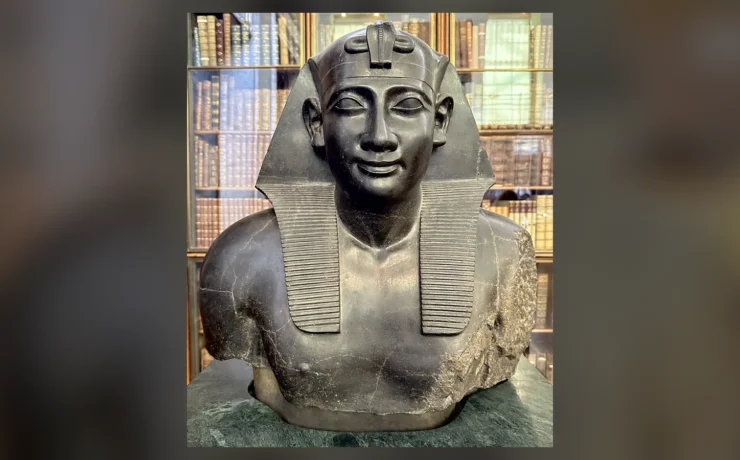
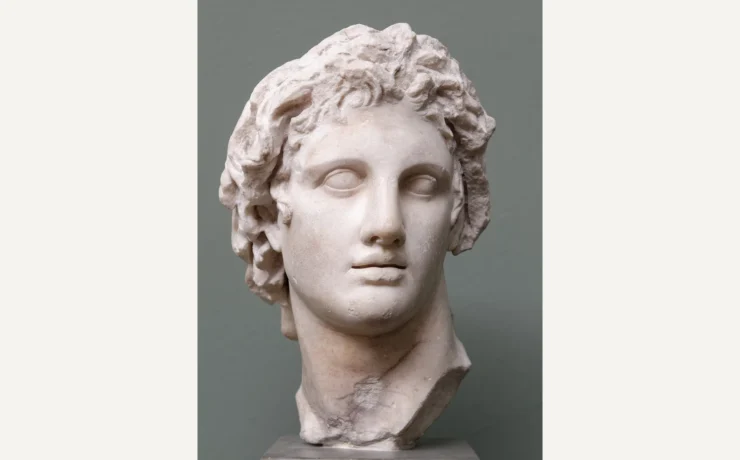
The reign of Ptolemy II Philadelphus is often reduced to the Library of Alexandria and an image of effortless wealth. The actual history is more demanding. His court navigated rival family claims, sponsored the formidable political memory of Arsinoe II, confronted Seleucid power in Syria and maintained maritime influence while administering a productive and unequal Nile kingdom. Ismail Mazhar's Beginning of the Ptolemaic Age explores these struggles in detail. This independent encyclopedic account combines that historical narrative with papyri, museum objects, temple inscriptions and modern scholarship, paying attention to what is secure, what remains contested and why later portraits cannot automatically be treated as contemporary images of the king and queen.
The kingdom Ptolemy II inherited
Ptolemy II Philadelphus inherited a monarchy already shaped by decades of warfare after Alexander the Great. His father had controlled Egypt from 323 BCE and proclaimed kingship in 305 BCE; the younger Ptolemy emerged as co-ruler late in the founder's reign and became sole ruler after his father's death in 282 BCE. This is an important distinction from the misleading notion that he personally founded Ptolemaic Egypt. His challenge was different: keep an expanding administration solvent, secure a dynasty facing internal family rivals and preserve influence across the eastern Mediterranean. Ismail Mazhar's book devotes its second major movement to this transition and the politics of Ptolemy II's court. It is an unusually rich narrative, but also a product of its author's time. Modern research needs to test statements about battles, royal psychology and social hierarchy against inscriptions, papyri and archaeological finds. Those different kinds of evidence rarely tell the same story in the same words.
The disputed succession and two branches of the royal family
The dynasty's second ruler was not the eldest surviving son of its founder. Ptolemy I had children by Eurydice and Berenice I, two women whose descendants became linked to competing claims. Ptolemy Ceraunus, a son of Eurydice, eventually pursued his career elsewhere in the Hellenistic world rather than inheriting Egypt. Mazhar reconstructs the marriages, court alliances and dangerous consequences of this succession rivalry. Some relationships are securely established by ancient narratives and inscriptions, while the private reasoning attributed to individual members of the family is harder to recover. A ruler's choice of successor was not merely domestic: it could influence foreign alliances and determine which branch of the family controlled wealth and patronage. Ptolemy II entered government with an inherited political settlement, not a neutral family tree. Royal genealogy should therefore be explained as a political institution, with the limits of surviving evidence openly stated.
Alexandria as capital, port and political theatre
Alexandria was founded by Alexander, but much of the city's political and architectural prominence developed under his successors. Ministry of Tourism and Antiquities descriptions emphasize its planned streets, Mediterranean harbors and connection with Pharos Island through the Heptastadion. Under Ptolemy II the city became a central symbol of royal resources and Hellenistic learning. Its palaces, waterfront and temples were not equivalent to the entire country. Memphis, the Delta towns, the Fayum, Upper Egypt and border stations had their own economic and religious importance. Ancient accounts of Alexandrian luxury often describe elite spectacle rather than the daily experience of all residents. The physical city has also changed dramatically over two millennia, so modern photographs show surviving structures, later monuments or a changed shoreline, not intact Ptolemaic streets. A historically careful guide presents Alexandria as both a real administrative city and a carefully staged expression of monarchy, without pretending that its famous classical buildings remain visible as they originally stood.
Arsinoe I and marriage diplomacy before Arsinoe II
Ptolemy II first married Arsinoe I, a daughter of the Thracian ruler Lysimachus. Such marriages connected kingdoms created by Alexander's successors and could support diplomatic settlements. Arsinoe I was the mother of the future Ptolemy III, an essential fact in understanding the later succession. Ancient traditions describe accusations and the queen's removal from court, but a definitive reconstruction of motives and private conversations is rarely possible. Mazhar writes with considerable attention to intrigue, and his storytelling should not be mistaken for a court transcript. Modern articles are particularly vulnerable to turning sensational anecdotes into certain facts about a woman's ambitions or guilt. What is secure is that Arsinoe I belonged to the first chapter of Ptolemy II's marriage policy, and that her descendants continued the ruling line. Distinguishing Arsinoe I from Arsinoe II is indispensable, because their similar names and close position in the family repeatedly cause errors in popular histories.
Arsinoe II: ruler, sister and political partner
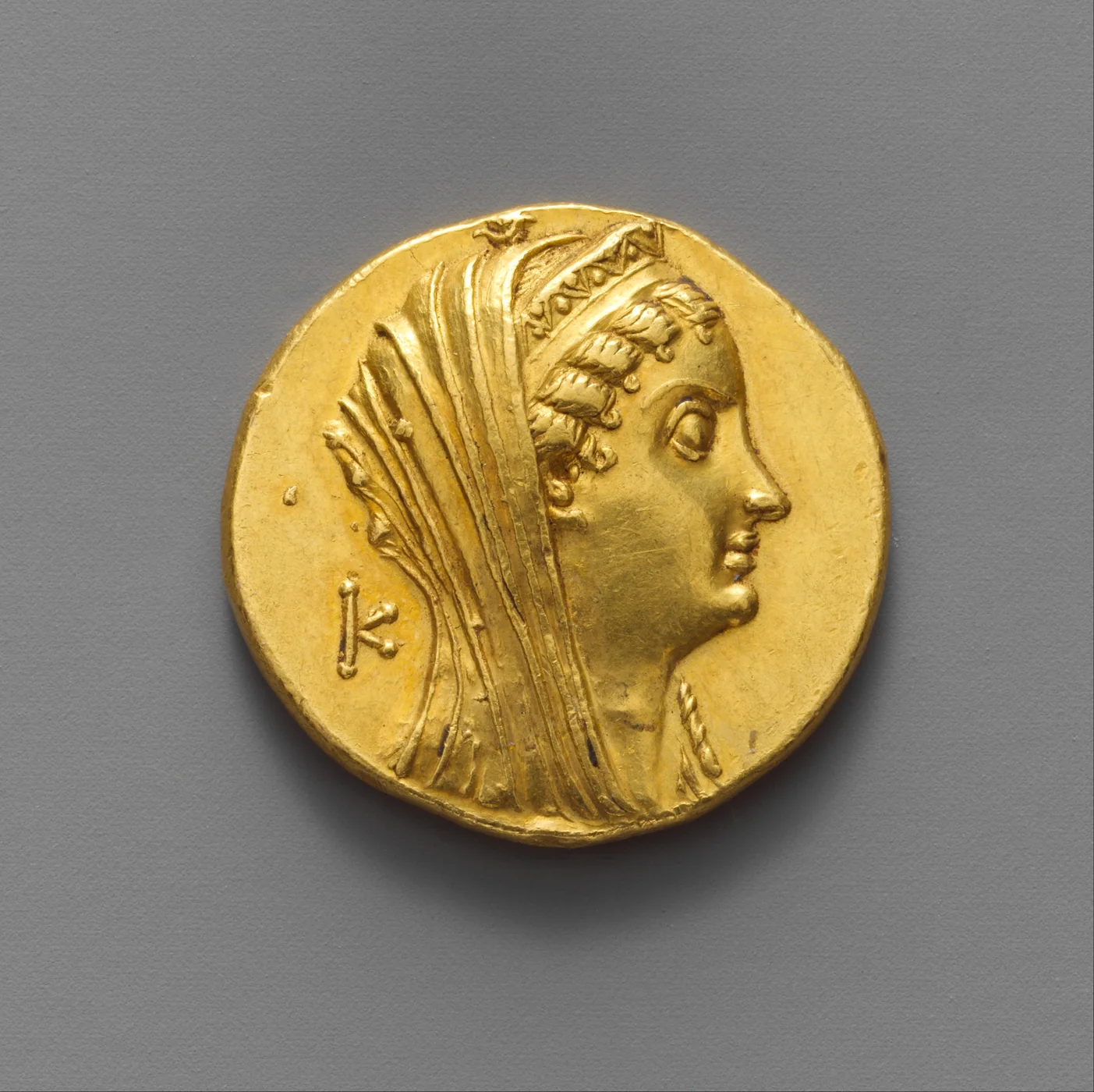
Arsinoe II, daughter of Ptolemy I and Berenice I, had previously married Lysimachus and played a role in the turbulent politics of his kingdom. She eventually returned to Egypt and married her brother Ptolemy II. The union was striking by ordinary Macedonian and Greek practice, although Egyptian royal ideology offered other precedents for associations between divine siblings. The royal pair became known through the language of Philadelphoi, often translated as sibling-loving. Mazhar traces Arsinoe's earlier marriages and her arrival at Alexandria, sometimes giving dramatic interpretations of her political power. Material evidence shows that her importance was not simply a later romantic invention. Coins, portrait images and the later cult attest to her exceptional position in dynastic representation. The safest description is not that she personally controlled every decision, but that the regime invested heavily in her royal identity. Her biography provides a route into women, legitimacy and dynastic image-making in the early Hellenistic kingdoms.
The queen's cult and the limits of retrospective portraits
Arsinoe II died around 270 BCE and became the focus of a prominent posthumous cult sponsored by the royal court. Surviving coins and sculptural images continued to display her long after her death. The Metropolitan Museum of Art documents a statuette from the second century BCE depicting the deified queen, demonstrating that her memory endured well beyond Ptolemy II's lifetime. This also illustrates an important trap: a portrait of Arsinoe on an object made a century later is not a contemporary image of a living queen. The horn, veil, double cornucopia and other divine or royal attributes have specific meanings that change with material and date. Greek traditions of dynastic cult interacted with established Egyptian religious practices but were never identical in all local contexts. Mazhar distinguishes private honors, civic worship and the cult of Alexander; readers can use those categories as a starting point, while inscriptions clarify how individual institutions operated. Royal veneration is part of political history, not proof that deities intervened in public affairs.
State finances, land, temples and village life
One royal court could stage elaborate festivals while countryside households confronted the practical demands of farming and tax collection. The Ptolemaic state drew income from agricultural production, monopolies, customs and other assessments that varied by location and period. Officials needed records, communication and procedures for storing and moving goods. Temple estates and local elites continued to matter, and Egyptian-language documentary practices did not vanish merely because the royal administration used Greek extensively. This is a central correction to any history that views Egypt only through Alexandria. Mazhar describes large social distinctions between the new ruling elite and older Egyptian populations. Modern papyri make possible a less schematic account, revealing negotiations, complaints, work arrangements and the changing status of particular individuals. Evidence from different decades must not be combined as though the entire Ptolemaic period operated under one frozen tax code. Administrative intensity was a process developed over time, with genuine human costs and opportunities.
The Zenon papyri: everyday history beside royal history
The Zenon archive offers an extraordinary counterweight to court-centered narratives. These papyri, largely associated with the third century BCE, document the work of an official and his networks during the reign of Ptolemy II. They illuminate estate management, travel, accounts, communications and relationships across Egypt and the eastern Mediterranean. They are not a diary of the king and cannot supply complete figures for every household or trade route. But they give contemporary voices and documentary traces that are more securely dated than many late anecdotes. Mazhar briefly uses evidence from papyri when discussing contacts between Egypt and regions east of the Mediterranean. An encyclopedia should make a habit of asking how a claim was established: is it a tax account, a dedicatory inscription, a letter, a coin or a historical narrative copied centuries later? The answers affect what can responsibly be asserted. Private transactions and bureaucratic documents show a kingdom functioning between its celebrated ceremonies and wars.
The First Syrian War and why its chronology is difficult
Ptolemy II's military policy was shaped by the continuing rivalry with the Seleucid monarchy, especially over the territories commonly called Coele-Syria. The First Syrian War is generally placed in the 270s BCE, often approximately 274 to 271 BCE, though surviving evidence does not support a seamless narrative of every campaign. Mazhar explicitly describes the difficulties of constructing its history from fragmentary accounts and a cuneiform record. That caution is worth preserving. Historians distinguish what dated documents establish from reconstructions of the order and purposes of military operations. The war was tied to ports, routes, prestige and protection of Egyptian territory. It should not be reduced to an eternal ethnic conflict or a single general's personal quarrel. The Ptolemies and Seleucids were both Hellenistic royal houses whose military institutions relied on diverse populations. Their competing claims were built into the uncertain political settlement that followed the wars of Alexander's successors.
The Pithom inscription and the eastern border
The Pithom Stela and related Egyptian temple inscriptions are important for investigating the eastern frontier in Ptolemy II's reign. Mazhar discusses the king's attention to the region around Tell el-Maskhuta, where waterways, installations and access to the Sinai corridor mattered strategically. The monument's royal praise cannot simply be read as a literal war diary. Egyptian inscriptions follow established rhetorical conventions that celebrate royal generosity, temple support and mastery of enemies. Their value lies partly in dates, places, ritual contexts and the titles employed, not just the victories they claim. Archaeological geography also matters: a location called by one name in an ancient account might be known by another in a modern excavation report. Distinguishing the early Ptolemaic Pithom inscription from the later Rosetta Stone is necessary, since both reflect interactions between kings and Egyptian priestly institutions but belong to different rulers and moments in the dynasty's history.
Cyrenaica, Magas and instability to the west
The western provinces remained difficult to control. Magas, connected by family to the Ptolemaic court, governed Cyrene and eventually asserted independence. Accounts of his challenge to Egypt include military movements, shifting allies and pressures from communities beyond the coastal cities. Mazhar narrates these events as part of the multiple crises faced under Ptolemy II. It is tempting to label every governor's break with Alexandria a straightforward national rebellion, but the political realities involved dynastic interests, Greek civic institutions, mercenary forces and local communities. Egyptian rulers could command considerable wealth without exercising identical authority in every region. Cyrenaica's story explains why it is inaccurate to draw a single unchanging map of the kingdom for the entire reign. Later marriage arrangements between Ptolemaic and Cyrenaican family branches would help reshape the relationship. For the period of Ptolemy II, the tension belongs to a continuing contest, not to a conflict solved in one permanent campaign.
Sea power, the Cyclades and the Chremonidean War
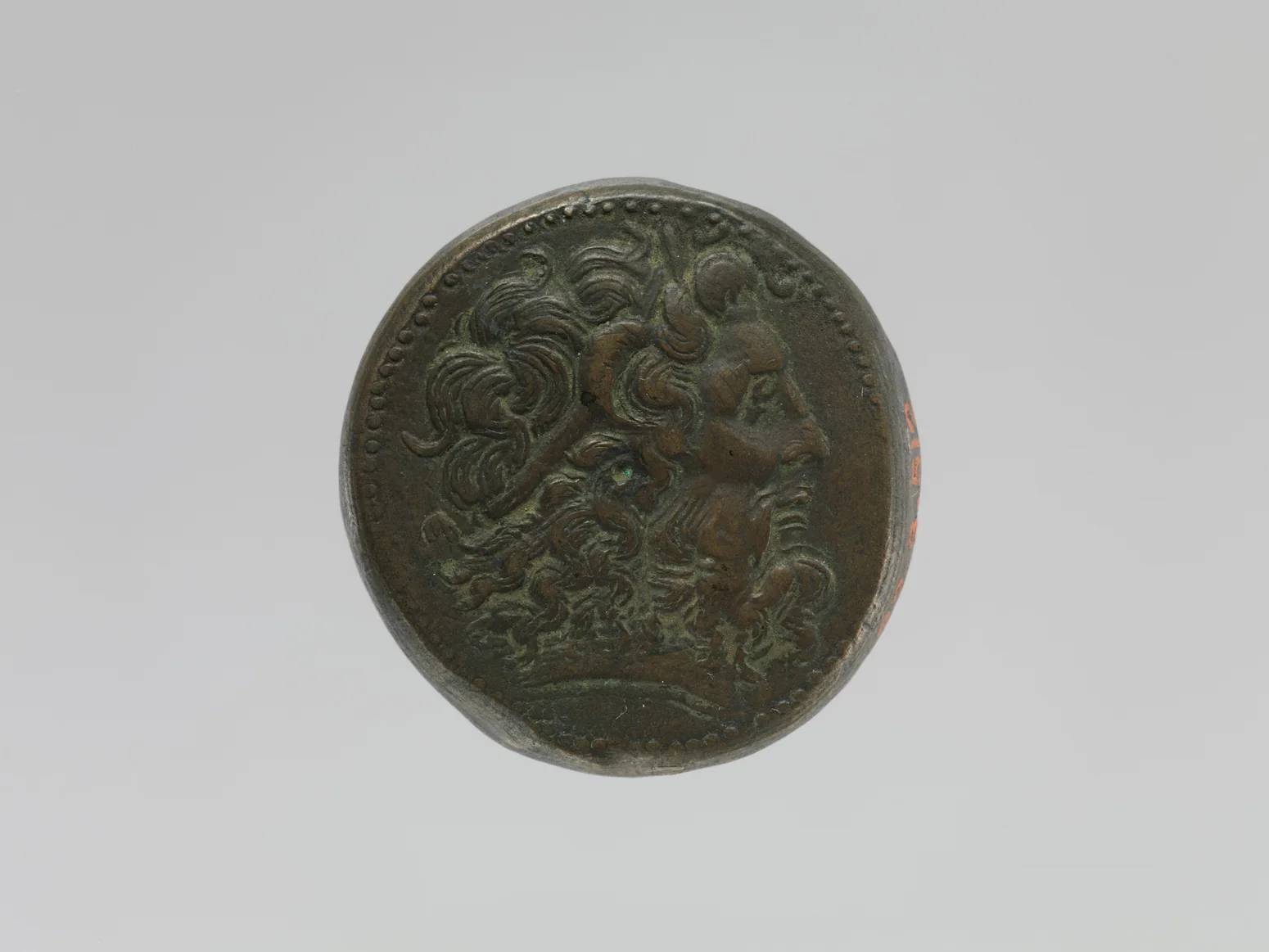
Control of the eastern Mediterranean required naval resources and diplomatic networks, not only strong defenses at the Nile mouths. Ptolemaic involvement in the Cyclades and Greek mainland politics placed the Egyptian court in competition with Macedonian kings. The Chremonidean War, fought in the 260s BCE, showed both the ambitions and limits of Egyptian naval assistance. Mazhar recounts changing influence among island leagues and the setbacks that complicated Ptolemy II's policy. Different ancient accounts prioritize different participants, and exact sequences remain debated. A coin of the period is useful for identifying royal language and economic networks, but it is not an illustration of a naval battle. This distinction matters visually as well as historically. Ptolemy II may be remembered for prosperity and cultural institutions, yet his reign was not a peaceful interval free from military expense. The combination of fiscal demands and international commitments helps explain the pressures that contemporaries experienced.
Nubia, trade corridors and the limits of expansion
The kingdom's southern relations were not identical to the wars of its northern coast. The Metropolitan Museum of Art notes that Ptolemy II pushed into Lower Nubia around 275–274 BCE, confronting Kushite influence and developing a route linked to trade and resources. Mazhar also discusses a southward expedition and ancient traditions about exploration beyond familiar Greek geographical horizons. Details about motives and precise routes require care, particularly when ancient writers emphasize exotic animals or heroic discovery. Nubia had its own political and cultural history; it was not an empty landscape waiting to be entered on a royal map. Archaeological and textual sources should differentiate an expedition, a military garrison, tributary influence and fully administered territory. A source-led account also avoids using Ethiopia as though the ancient geographical term mapped neatly onto one modern state. Southern policy is best understood through the interaction of frontier security, river transport, local states and commercial interests.
Library, Mouseion and the problem with founder myths
Alexandria became associated with the Mouseion and the great library tradition, but popular retellings often assign the construction of an entire scholarly world to one moment or one king. Accounts involving Demetrius of Phalerum and Ptolemy I are difficult to reconcile neatly, and direct ancient evidence about the early organization of the library is incomplete. Under Ptolemy II, the court's patronage of literature and scholarship undoubtedly helped establish Alexandria as an important center. The Ministry of Tourism and Antiquities highlights the city's growth and cultural prominence during his reign. That is a more defensible statement than claiming an exact opening day for a complete institution with a confidently known number of scrolls. The great library is not evidence that every text from every civilization was successfully collected. Mazhar's interests in historical scholarship can be used to ask how cultural patronage served monarchy: preserving intellectual prestige, attracting specialists and associating royal power with learning.
Languages, local gods and the multicultural kingdom
The old dichotomy of Greeks versus Egyptians explains part of the political hierarchy but cannot account for every interaction in the country. Greek could be prominent in royal government, while Egyptian remained essential in temples, local documents, religious texts and daily speech. Communities were connected by work, trade and institutions even when citizenship and privilege differed. Material culture shows both continuity and mixture, from traditional temple images to Hellenistic portrait styles and new combinations of royal symbols. The Met emphasizes the importance of looking at the work of Egyptian and Greek artists rather than treating the period as a complete replacement of one civilization by another. Mazhar's historical lecture sometimes speaks of society in sweeping categories characteristic of its era. An evidence-centered account should make those categories more precise. Individual documents, objects and places help tell us who acted, under what conditions and with what limitations. A multicultural kingdom was also a stratified one, and neither fact cancels the other.
The final years and the long Ptolemaic legacy
Ptolemy II ruled until 246 BCE and handed the kingdom to Ptolemy III. The court inherited by his successor was wealthy and influential, but it was also embedded in unresolved relationships with Seleucid territories, Cyrenaica, the Aegean and Egyptian local institutions. Mazhar ends his treatment with royal succession and observations about court luxury, while the surviving inscriptions and coins allow a firmer account of institutional continuity. The reign's significance rests on a combination of public patronage, political adjustment, naval competition, administration and dynastic cult. Each left different kinds of evidence. Later rulers would invoke the founder and Arsinoe II when building their own authority, and some objects depicting them were produced long after their deaths. Thus the lasting images of the reign are evidence about memory as well as the original events. A reliable encyclopedia separates contemporary documents, later representations and modern interpretation so that a visitor or student can trace the story without inheriting a convenient but inaccurate legend.
Evidence at a glance
| Evidence | What can be concluded |
|---|---|
| Political chronology | Satrap in Egypt from 323 BCE; separate monarchy from 305 BCE. |
| Ancient testimony | Later narratives supply sequences but sometimes conflict; do not treat every detail as certain. |
| Dated objects | Coinage, temple inscriptions and Egyptian documents preserve specific royal titles and official claims. |
| Modern method | Compare inscription context, objects, documentary dates and scholarly interpretation. |
Frequently asked questions
Is this story taken straight from Ismail Mazhar's book?
The book supplies the historical questions, structure and many named episodes. This article is independently written and checks them against museum evidence and research. It is not a reproduction or translation of the book.
Are the images genuine ancient objects?
Yes. The photographs show documented museum objects, with the originating collection and reuse information recorded. An object photographed today is not a photograph of the ancient event itself.
Why do historians disagree about some details?
Sources were produced at different times for different audiences. Royal inscriptions can be propaganda, later histories may conflict, and archaeological evidence may be incomplete. Disagreement is disclosed rather than hidden.
New source-led dossier: Ptolemy II beyond royal biography
The studies below expand the existing article rather than replacing it. They compare Egyptian monuments, Greek papyri, the modern chronology debate, museum artifacts and specialist scholarship. Their dates and limits matter: an object described broadly as Ptolemaic cannot automatically be assigned to Ptolemy II’s private possessions or precise reign. Source review: 26 October 2026.
Royal chronology: 282–246 BCE, co-rule and misleading precision
University College London dates Ptolemy II Philadelphus’s reign to 282–246 BCE and notes both military conflict in Syria and his relationship with Arsinoe II. That broad chronology is a secure starting point, but it should not be confused with certainty about every Egyptian regnal-year notation. Earlier papyri, co-regency conventions and inscriptions may count particular years differently, which is why researchers distinguish an attested document date from a calendar conversion inferred later. For students, the practical rule is to preserve the date supplied by a museum or papyrological catalogue and explain any modern conversion rather than silently asserting an exact day that the original document does not state.
R. A. Hazzard’s study, The Regnal Years of Ptolemy II Philadelphos, shows why such chronology remains a scholarly question. UCL also records major Egyptian temple works, as well as developing Red Sea harbor networks, that belong to this reign. These claims require period-specific evidence, not the assumption that everything famous about Hellenistic Alexandria was personally built by the same monarch.
Arsinoe II and an actual priestly document in the British Library
For understanding royal cult, a surviving document can be more valuable than an elegant story told centuries later. The British Library catalogues Papyrus 2971, identified with P. Hibeh II 199 and Trismegistos 2832, as fragments of priestly annals recovered from mummy cartonnage. The catalogue states that the material attests the cult of Ptolemy II and his sister Arsinoe being established while Arsinoe was still alive. The surviving fragments are damaged, with columns and partial lines; they are not a complete contemporary narrative written to summarize her biography for modern readers.
This evidence complicates a common shortcut: royal cult did not consist merely of honors invented after the queen’s death. It also does not justify imposing one stable date on every local shrine or festival. See the British Library papyrus catalogue, entry Papyrus 2971. The record has a broad manuscript date range of 270–250 BCE. That range should not be misrepresented as the exact year in which every part of the cult was introduced.
A royal statue from Bubastis and the Second Syrian War
A hieroglyphic statue associated with Ptolemy II, catalogued as Villa Albani 558 and studied as originating from Bubastis, provides another kind of evidence: formal Egyptian royal inscription. Maxim Panov and Andrii Zelinskyi published a close study in Studies in Ancient Art and Civilisation (2019). Their analysis connects the inscription with the commemoration of Arsinoe II and proposes a reconsideration of the Second Syrian War chronology, using related papyrus documentation and royal naming practices.
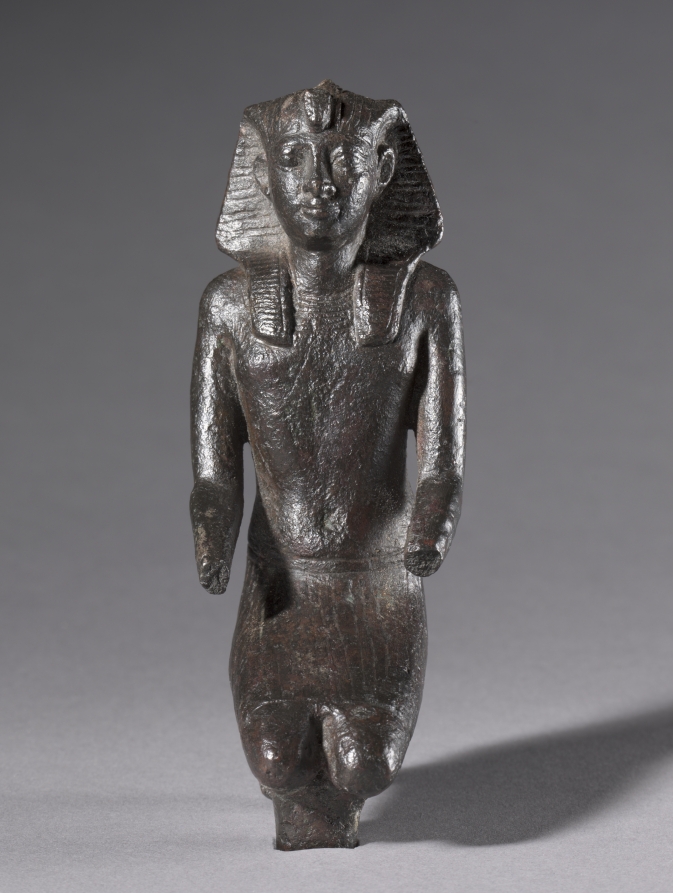
The proposal includes the interpretation that Ptolemy II took part in a coastal campaign and that a particular phase of the war ended in spring 257 BCE. These are scholarly conclusions drawn from limited records, not uncontested diary entries, and should be attributed to the researchers rather than announced as directly witnessed facts. Read the published statue and inscription study. Importantly, its statue is not the same object as the anonymous bronze kneeling king pictured later in this dossier: visual resemblance cannot substitute for accession-based identification.
Festivals, Alexandria and the use of royal spectacle
Accounts of Ptolemy II’s great procession in Alexandria describe elaborate public display, but the exact date of the event is itself debated. A scholarly study by Yuri Kuzmin in Klio (2017) notes several proposed dates, including the winters of 279/278, 275/274 and 271/270 BCE, with arguments about the appearance of particular shield forms and the chronology of military events. Repeating one of these dates without qualification would make a disputed inference seem more definite than it is.
Royal celebration could communicate military resources, wealth, access to animals and crafted objects, and dynastic legitimacy. But an ancient literary description of spectacle cannot by itself yield a reliable annual budget, population estimate, or list of all craftsmen who contributed. For the dating question, see New Perspectives on the Date of the Great Festival of Ptolemy II. For the city’s independent historical context, compare Kemet Vault’s specialist article on Ptolemaic Alexandria.
Egypt beyond the palace: land, taxes, documents and literacy
One of the most consequential gaps in court-centered narratives is the distance between royal ceremonial language and the lived world of farming, religious institutions and contract writing. Papyri linked to officials, agents and village economic life show that a Hellenistic government worked through obligations and transactions. The Zenon archive, already discussed in the main article, is not a census of all Egyptian households, but it provides unusually concrete examples of administration, correspondence and private economic interests. A small group of elite documents cannot establish that every farmer held land on identical terms.
The Revenue Laws Papyrus, associated with the period around 259 BCE, also illustrates the importance of documentation and legal organization in taxation and state-monopoly arrangements. It is a mistake to translate that evidence into “the king personally owned every field.” Different forms of property and use rights require separate treatment. That question has its own Kemet Vault study of private land, temple estates and Demotic papyri, which this biography should link to rather than duplicate. The continuation of Demotic writing is likewise documented in the separate language-history guide.
Commerce beyond the Nile: Red Sea routes and what is demonstrable
UCL’s teaching history notes that Ptolemy II founded or developed a chain of harbor towns along the Red Sea coast, with trade connections extending toward Arabia and India. These efforts place the Egyptian monarchy within routes of movement, imported commodities and military logistics beyond the Mediterranean. Yet a harbor-name list is not proof that every item known from much later Indian Ocean commerce already passed through the same port, in the same quantities, under Ptolemy II himself.
Trade history must distinguish a royal project reported in literary or institutional evidence from an excavated cargo, a securely dated inscription and a later reconstruction of maritime pathways. The existing article’s section on Nubia and regional connections gives valuable political context. See UCL’s reign overview for a documented starting point. Rather than filling gaps with guesses about ship capacities or modern national borders, future specialist pieces should examine archaeological ports, their excavation records and the dates of relevant objects individually.
Three genuine artifacts: evidence from the wider Ptolemaic world
These original collection photographs illustrate writing, temple religion and royal representation from the Ptolemaic era. They are not three belongings of Ptolemy II, and their often broad dates do not permit a narrower assertion. Every caption preserves the holding institution and accession number so students can check it independently.


Reading route: build historical context without repeating entire articles
The dynasty begins with the original Ptolemy I Soter biography, preceded by Alexander’s conquest of Egypt. The first ruler’s succession and Ptolemy II’s policies are different subjects. The city of Alexandria, landholding systems and Demotic legal evidence have their own detailed pages linked above. Keeping these distinctions visible helps visitors follow a coherent path while preventing several articles from repeating the same claim with different titles.
Research limits: A museum accession establishes an identified surviving artifact. A British Library catalogue describes a damaged papyrus. A modern scholarly date for the royal procession is an interpretation. A literary narrative can preserve valuable traditions while reflecting its author’s agenda. This article explicitly separates those forms of evidence and preserves their source links. No ancient words, artifacts or identities have been reconstructed to make the narrative appear more complete.
Sources and image provenance
The page draws on Ismail Mazhar, Bada’at Asr al-Batalima (Beginning of the Ptolemaic Age), specifically PDF pages 45–69. Its historical rhetoric and older interpretations are not treated as conclusive archaeological evidence. The external museum and research records below are linked for independent checking.
- The Metropolitan Museum of Art: Egypt in the Ptolemaic Period
- Egyptian Ministry of Tourism and Antiquities: Alexandria
- The Met: Gold oktadrachm of Ptolemy II
- The Met: Coin of Ptolemy II from a hoard
- The Met: Statuette of Arsinoe II for her posthumous cult
- Oxford: Corpus of Ptolemaic Inscriptions
- Photograph: Gold oktadrachm of Ptolemy II Philadelphus, circa 261–246 BCE, depicting the veiled Arsinoe II; Metropolitan Museum of Art, 30.115.23, The Metropolitan Museum of Art, Open Access (CC0 / public domain)
- Photograph: Bronze coin of Ptolemy II, object 22.3.512, recovered from a Theban coin hoard; Metropolitan Museum of Art. The hoard's burial belongs to a later event and is not directly contemporary with every coin, The Metropolitan Museum of Art, Open Access (CC0 / public domain)