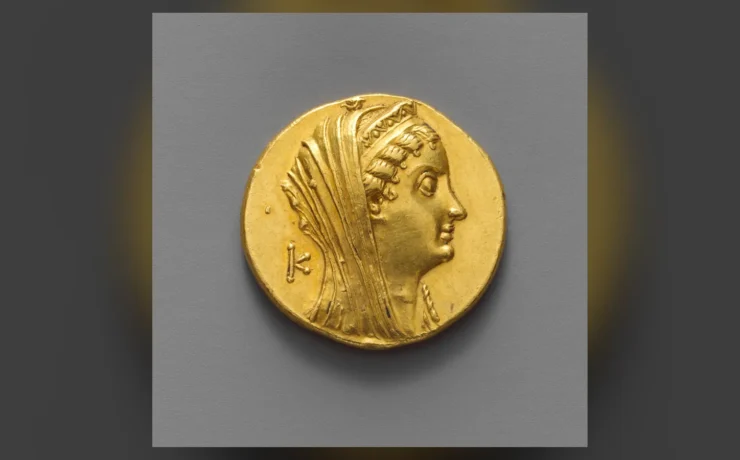
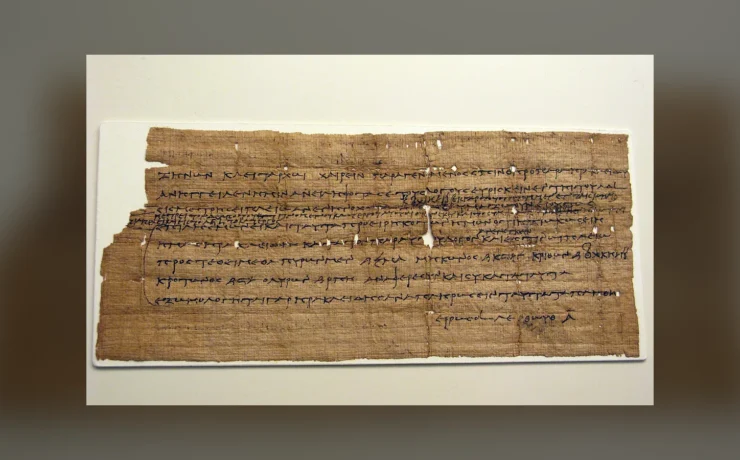
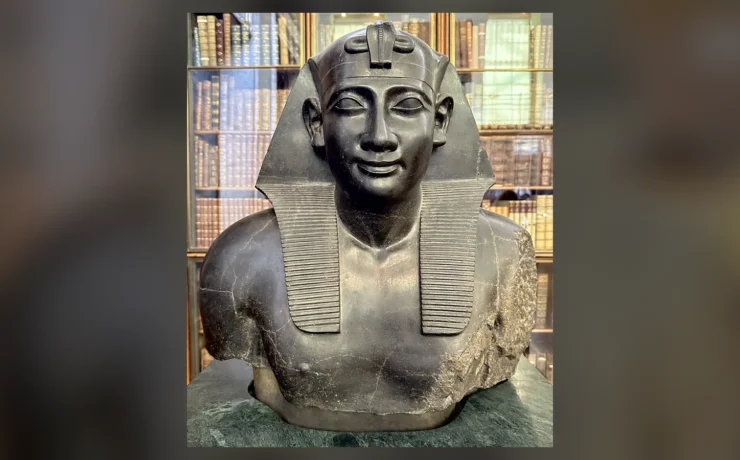
Did every Egyptian field belong to the Ptolemaic king? Older studies based heavily on the Greek Fayum papyri often implied a system of sweeping royal landownership. Research on Demotic documents from Upper Egypt now supports a more complex picture of royal estates, temple property, soldier settlements and legally recognized private claims. This encyclopedia study uses Lotfy Yehia's History of Ptolemaic Egypt as a historical starting point and evaluates its economic themes against John Manning's scholarship and genuine Museo Egizio papyri. The photographs illustrate documentary practices, not fictional scenes of farmers or falsely labeled land sales.
The appealing but misleading idea of a single royal landlord
Older histories sometimes described the Ptolemaic monarchy as the owner of virtually every cultivated field in Egypt. That interpretation appears tidy: a powerful Macedonian dynasty governed the Nile, officials collected agricultural revenue, and some Greek documents refer to royal land. Yet the leap from particular royal estates to universal ownership is much larger than the evidence permits. In his studies of Ptolemaic Egypt, Lotfy Yehia explored the economic institutions that made this powerful state possible. A modern analysis needs to place such older accounts beside the changing documentary record. John Manning's research on Demotic papyri and local Egyptian institutions demonstrates why a single top-down ownership model cannot describe a diverse agricultural society. This article follows the dispute rather than choosing an attractive slogan. It asks what it meant to own, inherit, lease, cultivate or tax a field and why one archive from the Fayum cannot speak for all Egypt.
Where the older theory came from
Many influential reconstructions of the Ptolemaic economy were written when the Greek papyri of the Fayum dominated scholarly attention. Those texts preserve remarkable information about officials, estates, rents and royal revenue, especially in an environment where the crown sponsored agricultural reclamation. Scholars such as Rostovtzeff and Préaux consequently emphasized state direction and control. Their arguments were serious attempts to interpret the available record, not mere inventions, but their evidence was geographically uneven. Cambridge's modern survey of the ancient Egyptian economy explicitly explains how Greek documentary evidence shaped earlier assumptions about land tenure. The problem is not that royal land did not exist; it did. The problem comes when a state-focused archive is assumed to describe the legal condition of every parcel along the Nile. A sound method distinguishes what a contract says about one holding from a universal claim about property rights throughout an entire kingdom.
Why the Fayum is not all of Egypt
The Fayum was a particularly dynamic landscape for Hellenistic agriculture. Water management, settlement schemes and new farming arrangements attracted attention from royal administrators and generated records in Greek. Those conditions made its archives unusually visible to modern historians. Upper Egypt had different institutional traditions, however, with important temples, long-established villages and Demotic documentary habits. A single administrative category could carry different practical meanings according to district, period and holder. John Manning's work highlights how contracts from southern Egypt force scholars to revisit economic generalizations made from more northerly material. Such comparisons do not prove there were two wholly separate countries. They reveal a kingdom administered through regions that did not have identical histories or patterns of documentation. When students encounter the phrase 'the Ptolemaic land system,' they should ask which locality, which decade, which archive and which form of ownership the author actually means.
A field could have more than one kind of claim attached
Ancient land tenure is not always equivalent to modern private freehold. A farmer might possess a recognized right to cultivate, transfer or inherit land while also owing taxes, rents or services to a ruler, temple or another institution. The state's ability to assess agricultural production does not by itself establish that the crown owned the soil. Conversely, paying rent or recognizing a superior authority does not mean a household enjoyed absolute discretion over a parcel. These distinctions are central to the scholarship on Ptolemaic land and power. Researchers examine the rights associated with different categories rather than imposing one modern property label. A transaction may identify who could sell a claim, witness an agreement or use the field's income, but it may say little about ultimate sovereignty. The most revealing question is therefore not simply 'Was it public or private?' but 'Which legally and socially recognized rights did particular people actually exercise?'
Royal land and crown revenue were real
Rejecting universal royal ownership does not deny the scale of royal involvement in agriculture. Royal estates and lands administered for state revenue played important roles, and the monarchy employed officials to supervise assessment and collection. Agricultural taxes supported armies, court patronage and government operations, while irrigation and reclamation could increase taxable production. The papyrus record offers compelling evidence of state intervention in some districts. But a treasury's interest in harvests is different from possession of every field. The words used for royal property must be read in the legal and administrative context of each document. The kingdom's capacity to demand payments was itself a form of power, even where other individuals or institutions held durable rights in land. Presenting the crown as neither powerless nor omnipotent helps explain why the economy could sustain large expenditures while still depending on village households and temple corporations.
Temple estates did not vanish after Alexander
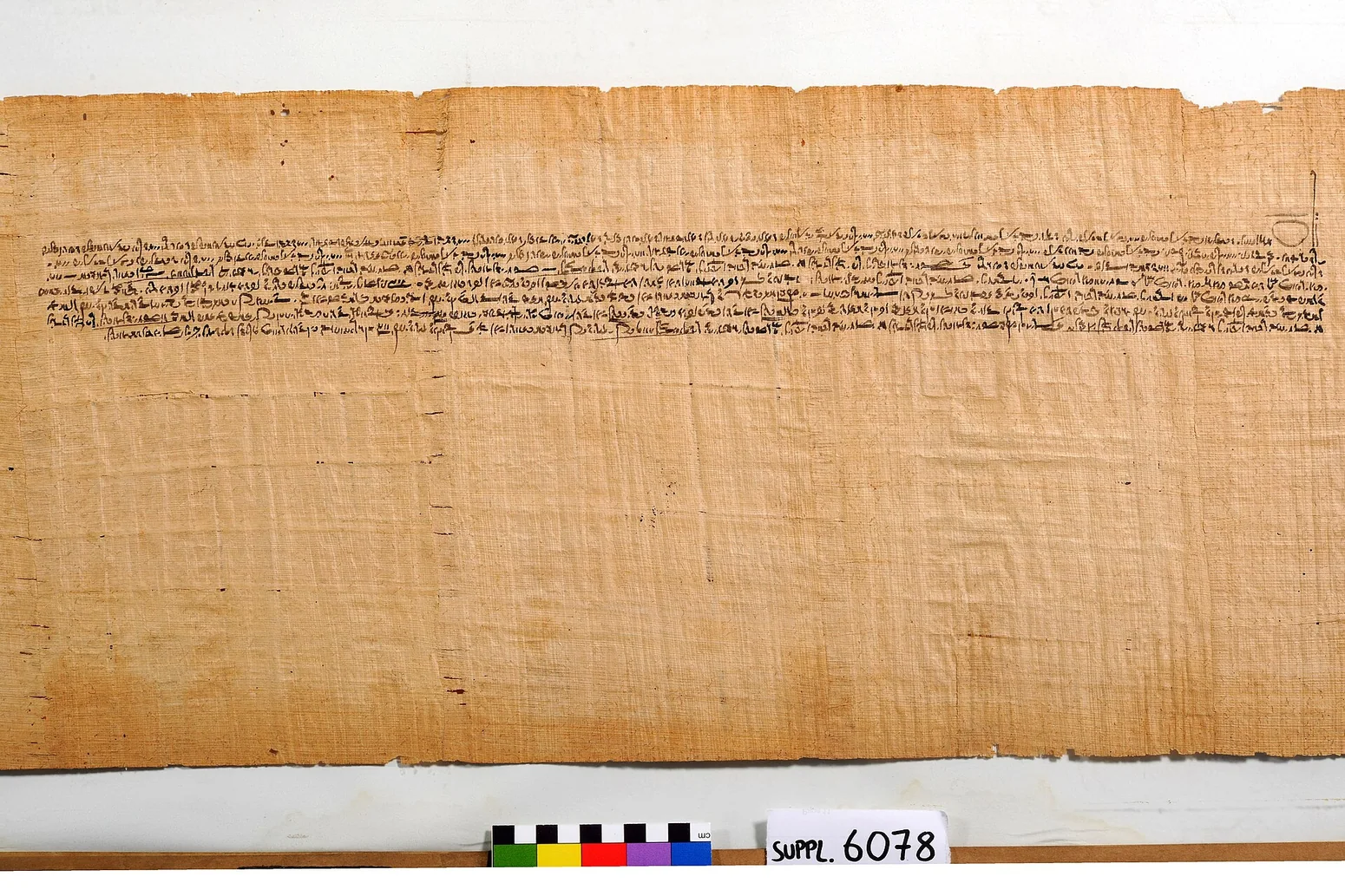
Egyptian temples were religious institutions and economic actors. Some possessed agricultural resources and employed people whose income depended on those resources. The arrival of a Macedonian royal dynasty altered relationships of patronage and fiscal authority without simply dissolving the temples as landholding communities. In southern Egypt, Demotic documentation reveals institutions with their own transactions, officials and traditions of recording rights. A photographed priestly contract in the Museo Egizio, S.6078, is helpful evidence of the legal documentary culture within which religious personnel operated. Crucially, the photographed contract concerns religious services among priests, not a transfer of farmland. It therefore cannot be advertised as direct visual proof of a temple field. Its proper use is to show how legally consequential transactions were written and witnessed in Egyptian script. A broader claim about temple land requires specific land contracts, estate records and corroborating scholarship.
The Demotic record changes the picture
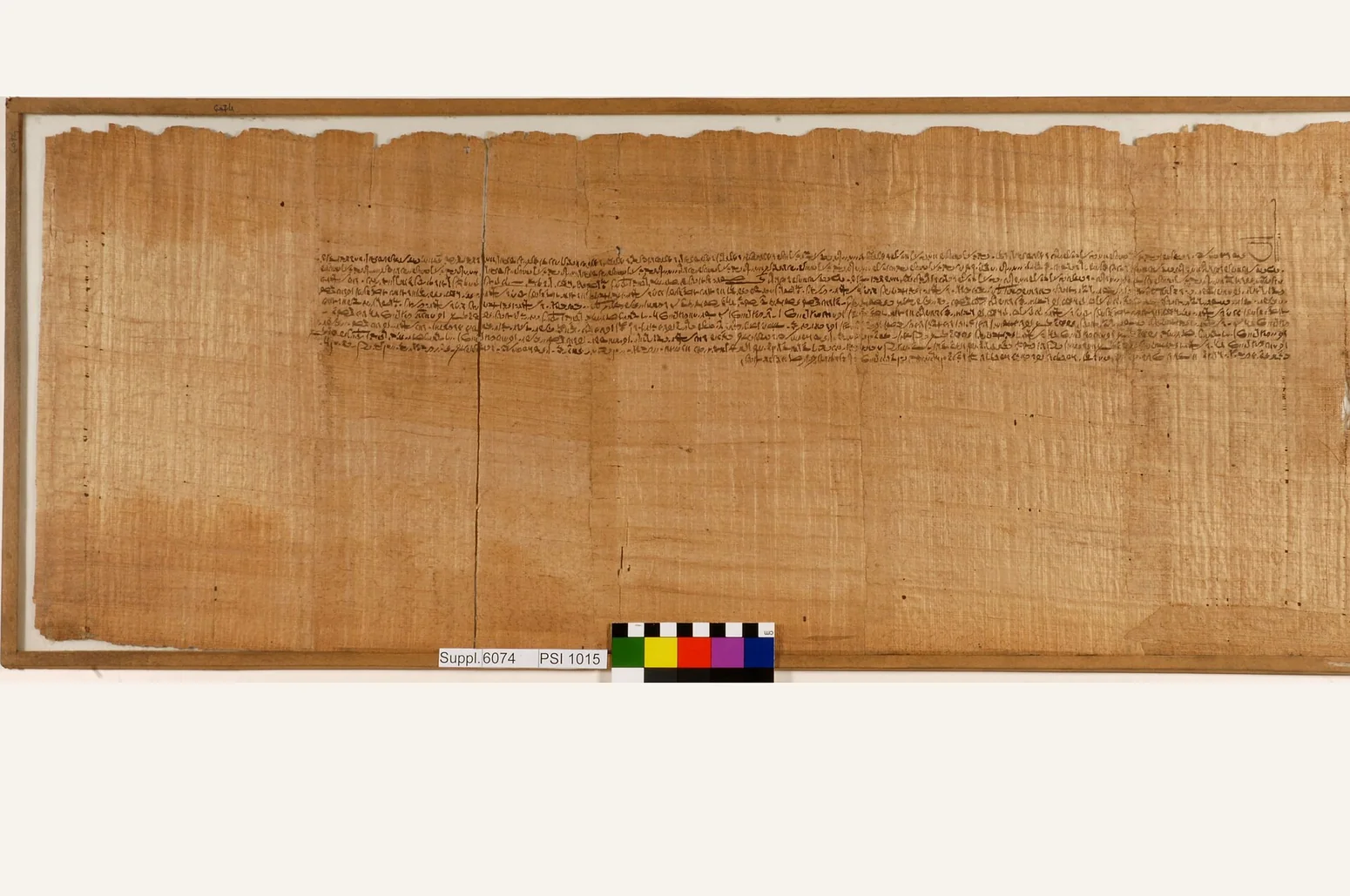
Greek documents became famous partly because they were accessible to generations of classical scholars. Demotic documents, written in a later Egyptian script, often required different expertise and developed a more specialized publication history. As more contracts were translated and compared, scholars found substantial evidence of property rights and transactions not captured by earlier models. Manning's Land and Power in Ptolemaic Egypt draws especially on evidence from southern Egypt to explain these differences. An original Demotic papyrus survives in the Museo Egizio as inventory S.6074. It contains two payment contracts involving a woman named Tanuphis and a building with a courtyard. This is a property transaction but not a land-sale contract for agricultural fields. It illustrates why one must read what an object actually says: a documentary photograph can demonstrate the presence of private legal transactions while leaving the precise history of farmland ownership to appropriate texts.
Theban archives and the importance of find context
The Museo Egizio records papyri from Deir el-Medina and the wider Theban region, including an archive associated with a priestly family. Their chronological range, physical storage and repeated names provide a way to reconstruct institutional life from individual documents. A text found together with other family papers carries different interpretive weight from a papyrus bought without findspot information. Archaeological context helps researchers decide whether an agreement was part of long-term local recordkeeping, an isolated official note or an assemblage accumulated through unrelated transactions. A single contract's date is also not the date of the whole collection. The museum's S.6074 and S.6078 should be presented with their separate inventory numbers and distinct contents. Their existence supports a more complicated account of legal culture, not an assertion that every Theban priest personally owned agricultural land.
Military settlers and cleruchic land
The Ptolemaic rulers settled soldiers on land in arrangements often described through Greek cleruchic terminology. A holding could be connected to military obligations and still acquire traits that made it a durable family resource. The system changed during the long Ptolemaic period, and a single textbook description of 'soldier farms' cannot substitute for dated contracts. Researchers debate how particular tenures were inherited, transferred and associated with service. The term cleruch should not be taken to mean every Greek-speaking immigrant received the same area or that every military settlement displaced a local household in the same way. State interests, veteran rewards, local agriculture and changing demographic relations intersected. When the documentary evidence is incomplete, it is better to describe a range of rights and obligations than to manufacture a fixed universal allotment. This complexity further weakens the proposition that all farmland fell into one undifferentiated ownership category.
What did a sale prove?
A written sale or transfer records a legally recognized act, but historians must establish exactly what was conveyed. The subject could be a building, a share in a property, use rights, agricultural land or a claim connected to family inheritance. Names of contracting parties and witnesses can show that private actors exercised agency within a recognized legal system. But such a record does not always settle whether a ruler, temple or landlord maintained separate superior claims. The S.6074 papyrus, for instance, describes the transfer of rights in a building and courtyard. Its value here is methodological: no responsible caption should silently turn that house transaction into the sale of a farm. The same caution applies to translation. An Egyptian legal term might have a specific meaning that does not correspond precisely to a modern English word. Comparing multiple documents and the scholarship on their legal context provides a stronger result than relying on a visually impressive manuscript alone.
Taxes are not a title deed
The Ptolemaic state had means of collecting revenue from agricultural production, but a tax demand is evidence of fiscal power, not automatically of property ownership. Historians distinguish imposts charged on cultivated land, rents arising from specific tenures and other obligations. The existence of a royal official measuring fields may show an organized system of assessment without proving that every parcel was a personal asset of the king. Likewise, a person paying a public charge could retain significant inheritance or transfer rights. There is no need to deny royal coercion or downplay the burden of taxes to make that distinction. Indeed, stronger analysis asks how fiscal demands changed incentives, land use and local bargaining. Records of complaints, petitions and accounts can reveal conflicts around these obligations, but a careful article will not invent average tax rates from an isolated document or assume one district's practice operated everywhere.
Why village households matter in this debate
A royal economy depended on people cultivating crops, maintaining channels, meeting obligations and recording transactions. Those practical activities took place in households and local institutions, not simply within the palace. Legal documentation helps reconstruct a world in which women could appear in certain property records, families arranged transfers and priests operated through formal agreements. That does not prove equal freedom for every class or gender. The surviving archive is fragmentary and often privileges people whose affairs generated documents that endured. Nevertheless, these traces challenge a purely administrative story in which Egypt's population appears only as anonymous recipients of royal commands. The better historical question is which kinds of agency were possible under particular conditions. A household might be subject to intense assessment and yet retain legally acknowledged claims. Reading these tensions is more informative than calling the entire society either entirely state-owned or entirely free.
Chronology: a system that changed over nearly three centuries
The Ptolemaic dynasty ruled from the late fourth century until 30 BCE. Administrative priorities and political conditions shifted substantially across that long span. Evidence from the third century should not be merged without comment with a contract from the late second century. The Museo Egizio's two featured objects belong to approximately 145–116 BCE and 180–145 BCE respectively. They are therefore not photographs of documents written under Ptolemy I or Ptolemy II. A modern article must state those later dates visibly. Their value is to illustrate enduring Egyptian legal documentary practices within the dynasty's broader history. Trends in military landholding, priestly property, monetary obligations and rural politics can change as decades pass. A claim about land should always have a temporal address as well as a geographical one. That habit prevents a source about one generation from becoming an unsupported statement about the whole period.
How modern historians correct earlier histories
A historical argument can be influential without being permanently conclusive. Rostovtzeff and Préaux worked with the materials and comparative approaches available to them; later scholars have different corpora of published documents and greater familiarity with Demotic legal records. Manning and other researchers stress the regional and institutional complexity of land tenure. Correcting the older model should not become an easy dismissal of previous scholarship. The useful process is transparent: name the older claim, identify its evidence base, explain what newly studied material challenges it and specify which questions remain unresolved. This is a promising role for a digital encyclopedia that builds from Lotfy Yehia's earlier study while maintaining independent source criticism. Readers gain an explanation of historical research rather than a confident but unsupported replacement slogan. The old statement that the Ptolemaic kings 'owned Egypt' can be broken into more precise and testable claims about taxes, estates, institutions and legally recognized rights.
The answer: several overlapping rights, uneven evidence
It is not defensible to assert that the Ptolemies personally owned every Egyptian field. They possessed extensive royal estates and exercised formidable fiscal power, but surviving records also show temples, individuals and military settlers engaged in different forms of landholding and property transactions. The difficult work is defining those forms within their own legal settings. A Demotic contract about a house does not by itself prove private farmland ownership, just as a Greek state tax register does not by itself prove universal crown ownership. Placing such sources together teaches a more valuable lesson about evidentiary limits. The economy operated through people, offices and institutions with overlapping claims and unequal authority. A strong account of Ptolemaic agriculture must consequently be local, chronological and explicit about the documents used. That conclusion is less sensational than a universal royal landlord, but it better reflects the complexity revealed by Egypt's written and archaeological record.
Evidence at a glance
| Evidence | What can be concluded |
|---|---|
| Greek Fayum administration records | Strong evidence for particular royal and state-managed agricultural arrangements, not a complete register of all Egypt. |
| Upper Egyptian Demotic land contracts | Important evidence for property rights and institutions underrepresented in early Greek-focused scholarship. |
| Museo Egizio S.6074 | Actual late Ptolemaic property-related contract concerning a building, NOT farm land. |
| Museo Egizio S.6078 | Actual late Ptolemaic document about temple religious services, NOT a land contract. |
| Historiographical difference | Older universal-state-ownership model challenged by regionally diverse legal and papyrological evidence. |
Frequently asked questions
Did Ptolemaic kings own all land?
No universal claim is justified. Royal and state-controlled estates existed, but evidence also documents legally significant private, temple and military landholding arrangements.
Why do older historians suggest state ownership?
They relied heavily on Greek administrative records, especially from the Fayum. Broader Demotic research has challenged the geographic reach of that model.
Do the photos show farmland sales?
No. S.6074 concerns rights in a building and courtyard; S.6078 concerns priestly religious services. They illustrate the surviving legal archives, not direct farmland-sale proof.
Were taxes equivalent to ownership?
Not necessarily. A government could levy taxes on produce while people or temples retained legally acknowledged rights in a holding.
Sources and image provenance
This article uses the historical source listed in the bibliography as a research starting point, specifically PDF pages Lotfy Yehia, Studies in Egyptian History, Part 1: Ptolemaic Period, around PDF pages 306 onward (economic chapters); exact claims independently attributed. Its historical rhetoric and older interpretations are not treated as conclusive archaeological evidence. The external museum and research records below are linked for independent checking.
- Cambridge: The Ancient Egyptian Economy, Ptolemaic Period
- Cambridge University Press: J.G. Manning, Land and Power in Ptolemaic Egypt
- British Academy research: Demotic land contracts and southern Egypt
- Museo Egizio S.6074 property contracts
- Museo Egizio S.6078 priestly services contract
- University of Cambridge: Ptolemaic State and Land Tenure
- Photograph: Museo Egizio S.6074, genuine Demotic property-related contracts concerning a building and courtyard, 145–116 BCE. This is NOT an agricultural land-sale deed., Museo Egizio Turin, Open Access, CC0
- Photograph: Museo Egizio S.6078, genuine Demotic temple-priest religious-service contract dated 180–145 BCE, not proof of a transfer of farmland., Museo Egizio Turin, Open Access, CC0