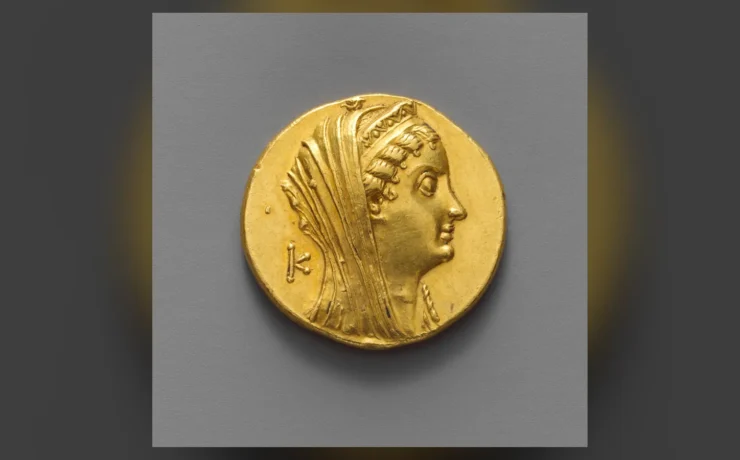
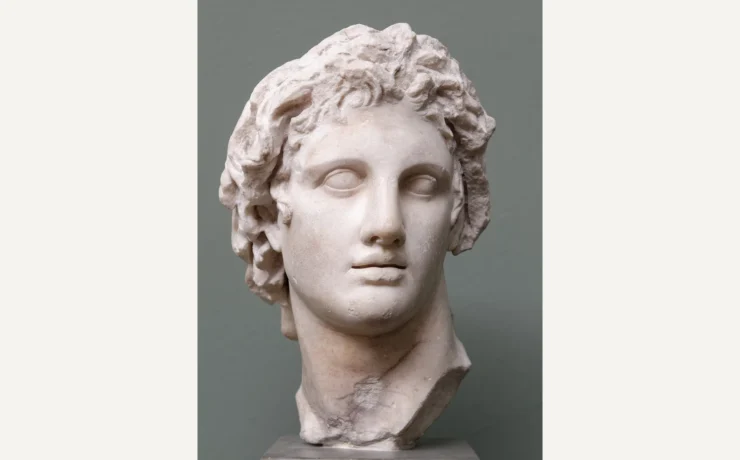
When Alexander the Great died in Babylon in 323 BCE, he left an empire without a clear successor capable of holding it together. His generals began dividing responsibilities and competing for control. One of them, Ptolemy, received Egypt. He did not inherit an independent throne that day. He arrived as the governor of a wealthy province, with the resources and geography to make a lasting bid for power.
Nearly two decades later, Ptolemy was calling himself king. His family would rule Egypt until the death of Cleopatra VII in 30 BCE. The transition from general to dynastic founder wasn’t inevitable, and it becomes more interesting when we follow the choices that made it possible.
Why Egypt was the prize Ptolemy could defend
Egypt’s Nile agriculture and established administrative institutions made the province a valuable base. Its position between the Mediterranean and the eastern deserts gave Ptolemy access to ports and strategic borders. He also inherited institutions and officials who had been operating under earlier rulers. The Egyptian Ministry of Tourism and Antiquities describes the transition from Alexander’s conquest to the new Ptolemaic kingdom as part of a longer Egyptian history, not the creation of a society on previously empty land.
Ptolemy’s challenge was to keep control while other successors fought to restore or dominate Alexander’s wider empire. When Perdiccas, one of the powerful regents, advanced against Egypt in 321 BCE, the invasion failed. Perdiccas was killed by his own officers. That outcome helped establish Egypt as a base that was difficult to seize simply because one rival had a larger army on paper.
Egypt’s geography mattered, but it did not decide everything. Ptolemy had to manage troops, alliances, revenue and the legitimacy of his rule among people who had lived under very different political systems. The new dynasty combined Macedonian and Greek power structures with Egyptian religious and administrative traditions.
What the Satrap Stela tells us in 311 BCE
The Satrap Stela, dated to 311 BCE, is especially valuable because it comes from Ptolemy’s period as governor, before he formally adopted the title of king. The text presents him within an Egyptian political and religious framework and records arrangements concerning temple land and authority. It shows how Ptolemy used established Egyptian forms of royal and priestly legitimacy while remaining part of the post-Alexander succession struggle.
A stela is not a neutral newspaper article. Its wording serves political and religious purposes. It can still tell us what Ptolemy’s administration wanted to record publicly and the forms of authority it considered meaningful. The Metropolitan Museum’s account of Ptolemaic Egypt offers broader context for rulers negotiating between Macedonian dynastic claims and Egyptian institutions.
The temptation is to imagine Ptolemy inventing a perfectly unified new regime in one decree. The evidence instead suggests gradual adaptation: retaining systems that made Egypt governable, rewarding institutions important to local legitimacy and reshaping official imagery as his power grew.
Wars of the successors: a kingdom taking shape
In the years after Alexander’s death, Ptolemy fought and made alliances with other successors across the eastern Mediterranean. He sought positions beyond Egypt, including parts of the Levant and Cyrenaica, but these territories changed hands in the wars. A victory in one campaign did not guarantee permanent control over a city or coast.
The contest with Antigonus and Demetrius illustrates the limits of expanding influence. In 306 BCE, Ptolemy’s forces suffered a major naval defeat near Salamis in Cyprus. The setback was serious, yet it did not end his control of Egypt. Antigonus’s subsequent attempt to invade Egypt failed to dislodge him. Ptolemy preserved the territory that mattered most to his future dynasty even when his wider ambitions met resistance.
These events are a reminder that the Ptolemaic kingdom emerged through a series of defensive and offensive decisions, not from a single triumphant campaign. Later accounts of Alexander’s successors are complex and sometimes disagree in detail; the dates and political context should be checked against specialist scholarship rather than reduced to a simple battle list.
305 BCE: the governor becomes a king
Ptolemy assumed the royal title in 305 BCE, following a period in which other successors had also claimed kingship. That decision marked a public change in his status and helped turn his Egyptian base into an independent dynastic state. His rule remained connected to the wider Hellenistic world, but the dynasty increasingly had its own institutions, finances and political interests.
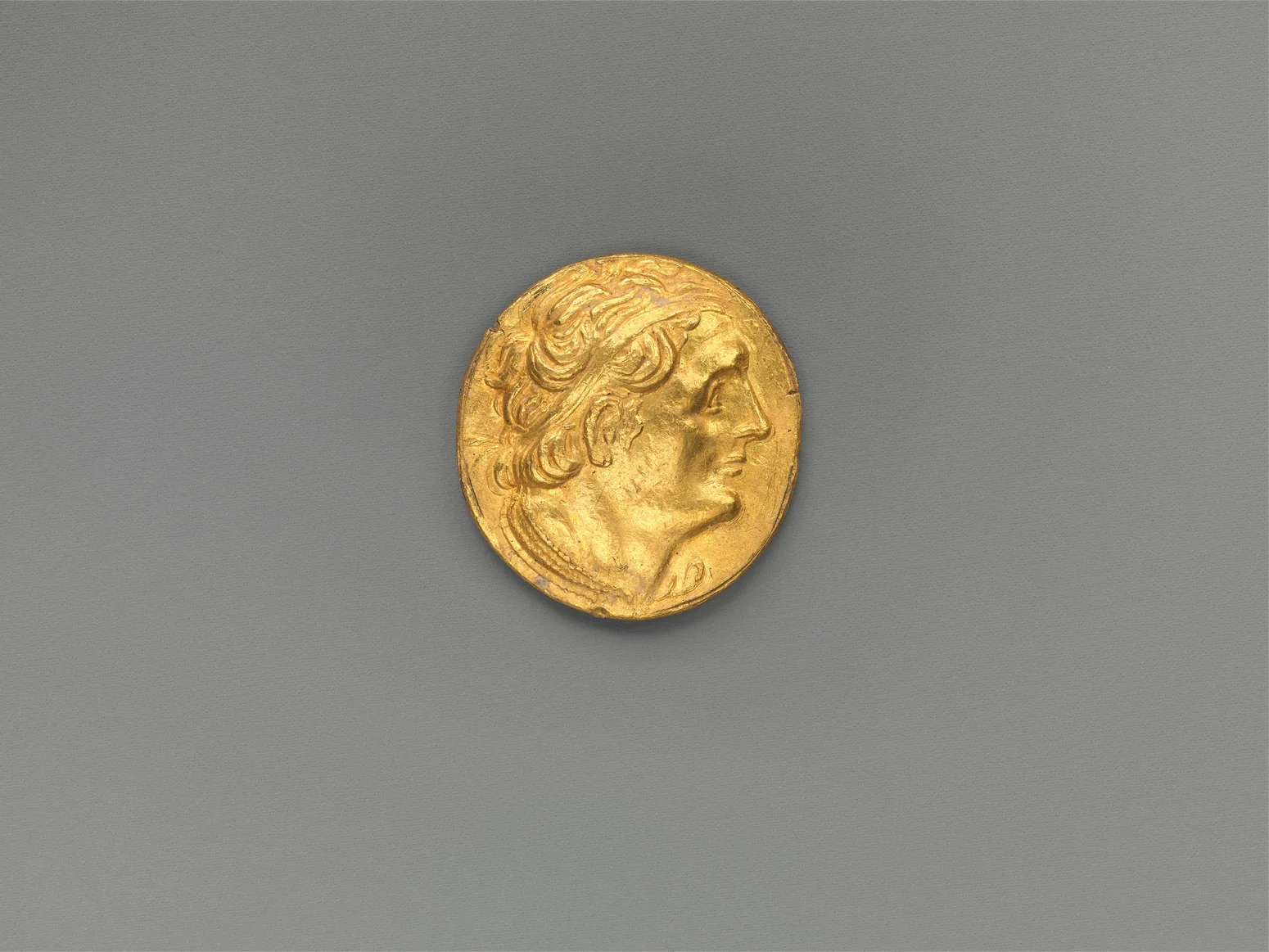
Coins provide a different kind of evidence from chronicle narratives. The Metropolitan Museum holds a gold stater of Ptolemy I, object 1993.290, dated broadly to 305–284 BCE and struck in Cyrenaica. The coin carries Ptolemy’s portrait on one side and an elephant-drawn quadriga on the other. The choice of image projected royal power well beyond a palace court: coins circulated through economic and political networks.
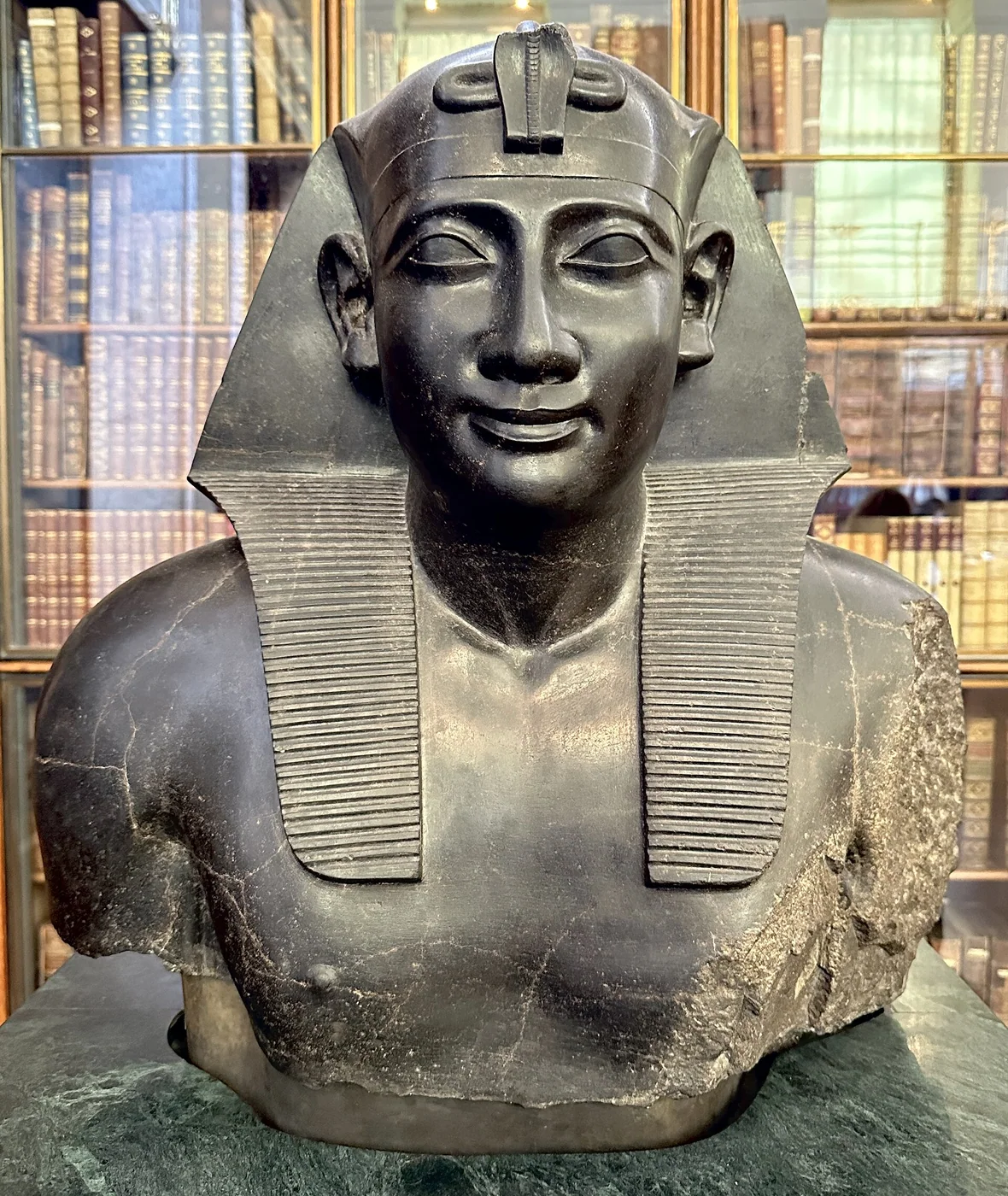
The portrait is a political object, not a photograph of the ruler’s true face. An official royal likeness can tell us how power was presented. It cannot establish Ptolemy’s exact appearance, personality or private intentions.
A coin, a capital and a family project
The new dynasty invested in Alexandria, which Alexander had founded on the Mediterranean. Ptolemy helped develop the city as a royal and administrative center. Institutions associated with learning, the court and later the great library became part of its international reputation, though their dates and the roles of different early Ptolemies need to be separated carefully.
His political decisions also addressed succession. Rather than leaving the issue entirely to rival generals, he associated his chosen son, the future Ptolemy II Philadelphus, with the monarchy before his own death around 282 BCE. The succession provided a degree of continuity in a political world where many of Alexander’s successors had not built stable dynasties.
Our study of Ptolemy II and Arsinoe considers a later phase of the dynasty’s religious, dynastic and cultural policies. This page follows the founder’s decisions and the evidence for the transition to kingship, not every achievement of the whole Ptolemaic period.
Where Alexander’s body fits, and where certainty ends
Ancient authors describe the transfer of Alexander’s body and connect Ptolemy with its arrival in Egypt. The story has a powerful role in narratives of political legitimacy. Possession of the dead conqueror’s remains could strengthen a successor’s claim to his memory, but the surviving accounts disagree about parts of the route and later arrangements.
Most importantly, the precise burial place of Alexander has not been securely identified by archaeology. It would be irresponsible to use the disputed story to point travelers toward a ‘verified’ tomb in Alexandria or to claim that every stage of the funeral procession is settled history.
The source problem shows why a founder’s life cannot be reconstructed from heroic anecdotes alone. Official inscriptions, contemporary coins, later literary accounts and excavated material all answer different questions. A good history gives each kind of evidence an appropriate weight.
Did Ptolemy become an Egyptian pharaoh?
As king of Egypt, Ptolemy adopted modes of representation and royal legitimacy familiar to Egyptian institutions. Priests and temples continued to play important roles in the relationship between ruler and population. Greek and Macedonian military and dynastic traditions remained powerful at court. The coexistence of these frameworks was not always simple or evenly experienced by all Egyptians.
| Date | Change in Ptolemy’s position | Key evidence or context |
|---|---|---|
| 323 BCE | Assigned Egypt as a satrap after Alexander’s death | Successor-state political accounts |
| 321 BCE | Survived the invasion attempted by Perdiccas | Later narratives of the successor wars |
| 311 BCE | Still acting as governor in Egyptian official language | Satrap Stela |
| 305 BCE | Assumed the title of king | Royal and numismatic evidence |
| c. 282 BCE | End of reign and transition to Ptolemy II | Dynastic chronology |
The dates offer a path through the story, not proof that every later chronicler agreed about every event. For a wider view, consult the Egyptian Ministry’s Ptolemaic period overview and the Oxford Corpus of Ptolemaic Inscriptions.
Ptolemy’s most lasting achievement was not one battle, one monument or one coin. He converted a vulnerable appointment after Alexander’s death into a dynasty that could rule from Egypt for nearly three centuries. The evidence reminds us that such a transformation was constructed over years, not handed to him in an instant.