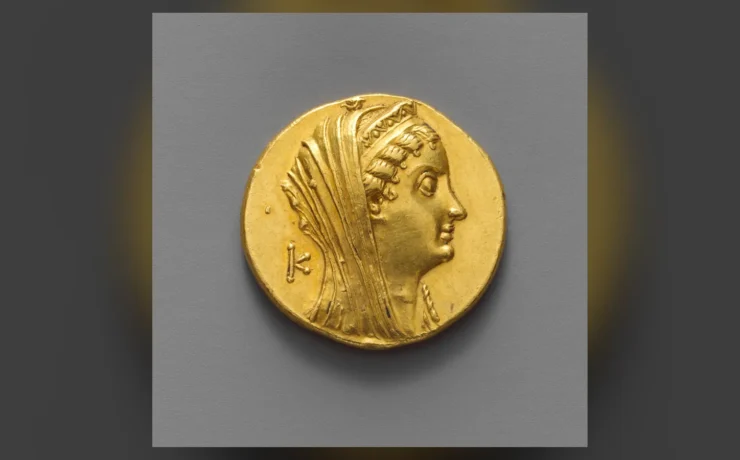
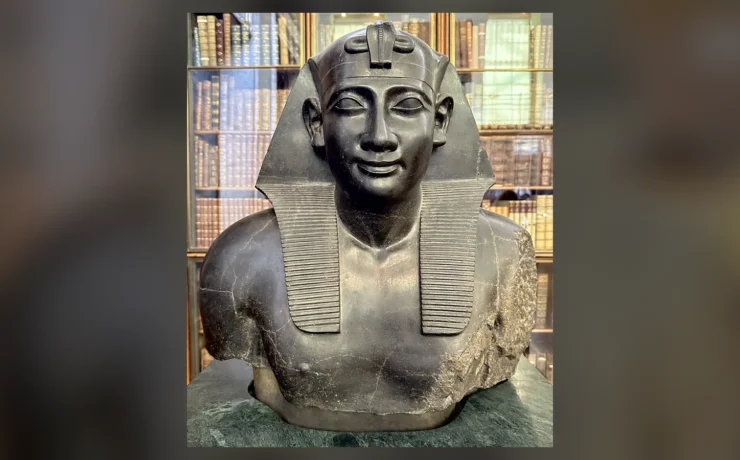
Alexander the Great entered Egypt in 332 BCE as a Macedonian conqueror of the Persian Empire and became associated with Egyptian pharaonic kingship. His short Egyptian stay led to visits to Memphis and Siwa and the foundation tradition of Alexandria. Yet famous statements about his coronation, divine ancestry and the city’s exact founding date are debated, and his tomb has not been archaeologically identified. This museum-quality guide weighs Greek and Roman narratives against Egyptian inscriptions, modern archaeological studies and original museum objects. The four photographs show genuine historic art and sites, not AI reconstructions. Distinct dates identify when the ancient works were made and when modern photographs were taken.
332 BCE: what did Alexander actually do in Egypt?
Alexander III of Macedon entered Egypt in 332 BCE, after military victories had weakened the Persian Empire’s western defenses. Over the following months he made claims to rule a country with far older political and religious institutions than Macedon. Later traditions emphasize his arrival at Memphis, his consultation of the oracle at Siwa and the foundation of Alexandria. These episodes are historically important, but not every colorful statement in the literary sources has the same documentary weight. The chronology is compressed in many school retellings. Cambridge historian Timothy Howe finds that the Egyptian visit lasted at most eight months, during the winter of 332–331 BCE. Alexander did not personally build the full metropolis of Alexandria, rule Egypt continuously for decades, or establish the Ptolemaic dynasty as an already-crowned king. His actions were the opening of political transformations pursued by successors after his death in Babylon in 323 BCE.
Before Egypt: the Macedonian king and the Persian war
Born in 356 BCE, Alexander succeeded Philip II as ruler of Macedon in 336 BCE. His invasion of Persian-controlled Asia began in 334 BCE. The battle of Issus in 333 BCE and subsequent campaigns along the eastern Mediterranean coastline altered the military balance before he reached Egypt. These dates explain the regional context, but his Egyptian history should not disappear beneath a catalogue of distant battles. Egyptians encountered him as a new imperial ruler, not simply as a character in Greek heroic biography. The military institutions and territorial alliances he inherited owed much to Philip’s state-building. Later writers tended to celebrate Alexander’s exceptional personality, sometimes placing memorable speeches in his mouth without a contemporary transcript. The Oxford historical introduction separates the campaign from later legends. That is especially important when dealing with accounts of Alexander’s dreams, divine ancestry and supposed destiny to create a new capital, all of which acquired political meaning after his death.
What Egypt was like before the Macedonian conquest
In 332 BCE Egypt formed part of the Achaemenid Persian Empire. Persia had retaken the country in 343 BCE after a period of renewed Egyptian independence. The Nile valley nevertheless retained its languages, farming settlements, temples and priestly institutions. Egyptian identity and religious authority cannot be described as having vanished under Persian administration. Nor does political conflict establish that every Egyptian person greeted the next foreign monarch in precisely the same way. The earlier Kemet Vault study of Persian rule in Egypt sets out the interruptions, local dynasties and imperial relationships behind this setting. Classical Greek authors often describe Egypt’s reception of Alexander as welcoming. Some local elites may indeed have seen advantages in the transfer of power, but the surviving accounts do not constitute a survey of popular sentiment. We should report the political transition without pretending all rural communities had identical expectations.
The road to Pelusium, Memphis and political acceptance
Alexander advanced into Egypt after the siege campaigns along the Levantine coast, including Tyre and Gaza. Ancient sources place his entry through the eastern Delta and record no great set-piece battle against a Persian army inside Egypt comparable to Issus. This helps explain the speed with which control changed, but absence of an extensively recorded battle is not evidence that no one experienced pressure or uncertainty. Memphis, a traditional royal and religious center, became central to the new ruler’s presentation. He needed military control but also a framework through which Egyptian officials and priests could accommodate him. Recent Cambridge research distinguishes what the historical texts say from what later interpretations infer about local support. Instead of claiming Alexander single-handedly liberated every Egyptian from oppression, the article follows the evidence for the changing imperial authority and the specific institutions through which it operated.

Alexander and the Apis bull: why Memphis mattered
Ancient historian Arrian relates that Alexander honored Egyptian gods at Memphis, particularly the sacred Apis bull. A royal offering in this setting was politically meaningful: the ruler’s participation in religious rites could signal acceptance of local institutions and his willingness to inhabit an Egyptian pattern of kingship. The event should be evaluated as the report of an ancient historical source, not as a modern recording of every gesture he made. A scholarly study of Memphis under the Ptolemies discusses the Apis sacrifice and notes that Arrian does not describe a formal enthronement there. Egypt’s priestly centers therefore matter both for the actual rituals recorded and for the limits of our knowledge. An offering is not the same act as a coronation. A careful account distinguishes sacred legitimacy, military control and a specific ceremony whose existence remains debated.
Was Alexander formally crowned pharaoh?
Alexander unquestionably came to be represented as king within Egyptian religious and political systems. Hieroglyphic cartouches, royal naming and temple scenes provide material evidence for that status. But a popular statement that Egyptian priests definitely carried out a complete pharaonic coronation ceremony at Memphis in 332 BCE is less secure. Most major surviving literary narratives omit an actual enthronement account, while some later romance traditions fill the gap. A 2024 peer-reviewed study argues that accommodation with priestly elites did not necessarily produce a formal coronation, contrasting with conventional teaching summaries such as UCL’s chronology. These differences should not be hidden. The sound conclusion is that Alexander adopted Egyptian royal identity and was commemorated with its titulary, while the detailed nature and even occurrence of a particular Memphis enthronement ceremony are disputed. That statement respects evidence without denying his pharaonic representation.
Reading Alexander’s names on Egyptian monuments
Cartouches present Alexander’s name as part of an established Egyptian writing tradition. Royal names could express a sovereign’s relationship with deities and legitimate order; they were not simple signatures. Surviving inscriptions demonstrate that the Macedonian ruler was absorbed into this visual and linguistic language. They do not make him ethnically Egyptian by birth, nor do they provide a day-by-day journal of his movements around temple precincts. The UCL Digital Egypt royal chronology gives examples of his Egyptian royal naming. A photograph from Luxor Temple shows real inscribed stone, not a newly fabricated illustration, but its modern capture date is separate from the ancient carving. Temple decoration may also have been completed by agents or in subsequent phases. Researchers must distinguish the named king from the artisan’s date, original context and any later restoration before making personal claims about Alexander.

The oracle of Amun at Siwa: history and location
The Western Desert oasis of Siwa housed a renowned oracle associated with the Egyptian god Amun. Greek worshippers related Amun to Zeus-Ammon, making the sanctuary meaningful across cultural boundaries. Alexander’s visit is a major feature of ancient accounts of his Egyptian expedition. The site’s existence is material fact; the motivations, encounters and answers preserved by later writers are more difficult to reconstruct at the level of exact conversation. Timothy Howe assesses the Egyptian evidence and Greek and Roman stories, while Dorothy J. Thompson explores how the visit fed Alexander’s long afterlife in cultural memory. A temple may be photographed and located; it does not preserve the exact words spoken inside it. Nor should a modern picture of the ruins be mistaken for the temple’s appearance in 331 BCE. That separation is part of presenting a real historical site responsibly.

Did the oracle call Alexander the son of a god?
Later ancient narratives report that the Siwa oracle associated Alexander with divine parentage. The wording, context and even what questions he asked differ between writers. Royal Egyptian language already included divine affiliations, while Greek accounts could reinterpret them through Zeus-Ammon. A priestly address might be expressed later as a dramatic personal revelation; no contemporary recording of a full private dialogue survives. The Cambridge chapter on Alexander’s religious role warns against extending claims about divine parentage beyond what surviving evidence supports. Religious policy, ritual language and an individual’s private belief are not interchangeable. Alexander could benefit politically from sacral titles without historians being able to prove every private thought he held. We can describe the celebrated encounter and its later influence without repeating a supposed word-for-word proclamation as an authenticated historical quotation.
Desert travel and the limits of miraculous stories
The journey from the Nile-related Mediterranean routes into the Western Desert demanded logistical preparation and local guidance. Classical writers preserve stories of extraordinary help in navigation, sometimes involving animals, weather or divine intervention. Such accounts reveal how later authors framed a difficult royal expedition. They cannot be verified as a complete and precise route record simply because the oasis itself still exists. This article shows a real photograph associated with the oracle sanctuary. The modern location can be documented independently of a literary tale. Confusion also arises between the oracle at Aghurmi and other ruins associated with Amun around Siwa. An illustrated history should name the actual site rather than show a randomly selected desert temple as proof of every miracle. Historical certainty applies differently to geography, an ancient writer’s testimony and an alleged supernatural event.
Why Alexander chose the site of Alexandria
The Mediterranean coast offered a location for maritime access linked to Egypt’s interior. Classical tradition connects Alexander with planning the city that became Alexandria, around 331 BCE. That foundation was both a practical political act and a source of later dynastic legend. Accounts of how he marked a layout and predicted its prosperity are not all contemporary; much was written after Alexandria had become an exceptionally important city. The archaeological guide Egypt from Alexander to the Copts and Cambridge scholarship provide context for earlier settlement and later development. A planned foundation and a completed capital are separate historical achievements. Alexander did not personally oversee the construction of every monumental harbor installation, palace and learned institution later associated with his name. The city emerged through the work of succeeding rulers, communities, builders and administrators.
Rhakotis: was Alexandria built on empty land?
Alexandria’s site already had an Egyptian geographical and settlement history. The name Rhakotis, or Rakote, is associated with the pre-existing locality and later parts of the metropolis. Thus the often repeated statement that Alexander created a city in a completely uninhabited wasteland is an exaggeration. Recognizing the older landscape changes the story from a sudden appearance out of nothing into the reorganization of an inhabited coast. The published archaeological synthesis associates the Egyptian name with the city’s prehistory. Yet archaeology does not let historians specify every street and building present when Alexander arrived. Later foundations and modern Alexandria obscure much of the underlying record. The responsible position recognizes an earlier Egyptian context and a major new Macedonian urban undertaking, without inventing a fully mapped predynastic harbor town or denying any prior local life.
Why the date 7 April 331 BCE is not certain
The exact calendar date 7 April 331 BCE is often cited as Alexandria’s founding anniversary. It appears in later tradition and in concise modern chronologies such as UCL Digital Egypt. The underlying association with the 331 BCE foundation period is strong, but this precise day is not authenticated by a surviving contemporary decree signed by Alexander. Ancient narratives also differ about whether city planning occurred before or after the journey to Siwa. The Oxford account highlights the contradictory sequences, and a Cambridge reassessment emphasizes hindsight in foundation stories. The article therefore uses “traditionally dated” for the exact date, without pretending to establish a minute-by-minute itinerary. This distinction may seem small, but historical scholarship is built on admitting when a memorable anniversary comes from a later source rather than direct evidence.
The Library and Lighthouse: projects of later rulers
The Library of Alexandria and the Lighthouse of Pharos became famous through the city’s subsequent development. They were not completed during Alexander’s short Egyptian stay. Their emergence belongs to the early Ptolemaic royal world, after his death in Babylon. Putting all of them into 331 BCE compresses decades of construction, scholarship and institutional organization into one invented building campaign. A more accurate account restores the agency of those who developed Alexandria after Alexander. Ptolemaic kings, craftspeople, scholars and traders helped transform the new settlement into a major center of Mediterranean learning and commerce. Research on Alexandria’s founding traditions explicitly cautions against reading later fame backward into the founder’s lifetime. The distinction between choosing a site and completing its monuments is not a reduction in importance; it makes the city’s long history intelligible.
Egyptian society did not suddenly become Greek
Changing the ruler of Egypt in 332 BCE did not instantly transform its inhabitants, languages, temples or agricultural systems into Greek equivalents. Local institutions had developed over centuries and remained essential to governance. Greek-speaking military and urban elites acquired new prominence, but how particular towns experienced rule depended on location, economic role and relations with the authorities. An empire could change political allegiance more quickly than it changed everyday customs. The UCL overview of Ptolemaic Egypt shows Greek and Egyptian practices continuing within a layered society. Kemet Vault’s Demotic-language history provides evidence for Egyptian writing in the later centuries. Neither continuity nor innovation should be made absolute. The population did not have a single homogeneous reaction to the conquest, and economic change under the later dynasty should not automatically be credited to Alexander’s personal decisions.
Temples, priests and the political language of kingship
Temple elites were vital to any ruler hoping to govern Egypt in recognizable local terms. The Memphis Apis sacrifices, royal cartouches and Siwa consultation represent different forms of interaction with religious authority. One is preserved chiefly in a later historical narrative, another in surviving inscribed stone, and another in stories about an oracle whose site is archaeologically known. Their evidentiary weight must be identified separately. Describing these acts solely as sincere religious conversion or solely as deliberate deceit would impose certainty about Alexander’s motives that the sources do not support. Memphite religious studies and modern coronation research show a ruler accommodating older traditions under new political conditions. The evidence supports an Egyptian royal presentation; it does not reconstruct his private thoughts or every priest’s interpretation.

Later portraits are not photographs of Alexander’s face
The youthful face and swept-back hair familiar from museum statues are artistic types. The marble portrait from Alexandria illustrated above is dated to the third century BCE, after Alexander died. Such works are valuable witnesses to Hellenistic commemoration, but identifying them as a life portrait taken from direct observation would be false. Egyptian temple images follow different pharaonic conventions and cannot be used like modern biometric records. The Metropolitan Museum’s Bust of Alexander provides an unusually clear example of curatorial caution. Its date range is 150 BCE–200 CE, and the museum says its identification as Alexander is possible rather than certain. The ram’s horns and royal headdress communicate later religious and political meanings. A careful editor keeps an object’s ancient production date distinct from the date of the person it represents and the year of the modern photograph.
Who governed Egypt after Alexander departed?
Alexander had to leave administrators and officers behind while continuing his eastern campaigns. Ancient records include Egyptian officials and Macedonian military leadership, but they do not survive as a complete administrative handbook. The mixed arrangements show that central authority needed local institutions and people to function. They do not imply either representative government or an immediate fully developed Ptolemaic bureaucracy. The UCL chronology names local officials involved in the division of responsibilities and the later governor Ptolemy. Historians have to distinguish those arrangements from those that evolved across subsequent decades. A document from the mature Ptolemaic state may illustrate continuity but cannot by itself prove that every policy existed when Alexander was present. This is an important example of respecting chronology in institutional history.
How long did Alexander stay in Egypt?
Modern accounts differ in their reconstructed departure month. Howe’s Cambridge chapter places the period at no more than eight months, broadly from mid-to-late October 332 to late June 331 BCE. The UCL chronology offers an earlier departure in April 331 BCE. Both point to a stay measured in months, not years, and to an absence from Egypt after he resumed campaigning in the east. Where ancient dates are uncertain, an encyclopedia should use approximate ranges and clearly identify the disagreement. A precise day without a contemporary itinerary can be more misleading than a carefully worded season. The consequences of the visit grew over later generations, but those later developments should not be retroactively turned into activities Alexander witnessed during his brief Egyptian stay.
Alexander’s death in Babylon, 323 BCE
Alexander left Egypt and campaigned elsewhere in the former Persian Empire before dying in Babylon in 323 BCE. His sudden death created deep problems of succession, with royal relatives and military commanders claiming or exercising authority in different places. Historians cannot establish a single definitive medical cause from the conflicting ancient narratives, and claims of a proved murder are not supported by an uncontested chain of evidence. For Egypt the important political consequence was that Ptolemy, a general in Alexander’s army, gained control as governor. He did not immediately become an Egyptian king when Alexander died. The UCL historical overview dates his royal assumption to 305 BCE. This distinction separates Alexander’s imperial campaigns, the successor struggles and the later Ptolemaic dynasty, three phases too often fused into one continuous royal biography.
Ptolemy I: from governor to ruler of a dynasty
Ptolemy son of Lagos became a dominant figure in Egypt after 323 BCE, first acting as satrap within the breakup of Alexander’s empire. In 305 BCE he assumed the royal title, inaugurating the monarchy conventionally called the Ptolemaic dynasty. The family’s Macedonian ancestry did not erase its need for Egyptian institutions, religious recognition or control of local land and taxation. The dynasty later presided over Alexandria’s growth and a complex world of Greek and Egyptian cultural practices. Sally-Ann Ashton’s UCL account distinguishes Greek court conventions from continuing Egyptian systems. Students can investigate the later material record through Kemet Vault’s Dendera history. The dynasty’s projects, its centuries of rulers and the reign of Cleopatra VII cannot be attributed as works performed personally by Alexander, who never witnessed them.
The body of Alexander: from Babylon to Egypt
The fate of Alexander’s remains became part of the struggle for legitimate succession. Ancient narratives tell how Ptolemy gained control of the funerary procession and brought the body to Egypt. Memphis appears in accounts of an initial burial, followed by movement to Alexandria and a memorial linked with the royal quarter. The chronology and number of temporary burial arrangements are not wholly resolved, but the broad association with both cities is longstanding. Archaeologist Robert S. Bianchi’s account distinguishes the traditions of Memphis and later Alexandrian tombs. Dorothy J. Thompson examines the role of his embalmed remains in Ptolemaic dynastic identity. The body was not a neutral relic: possession of it could carry a political claim to succession. This explains the importance of the ancient stories without proving every incident they describe.
Where is Alexander’s tomb today?
No archaeologically verified final resting place of Alexander the Great has been identified. Ancient authors report a tomb in Alexandria, but they do not give modern excavators a sufficiently secure location for an uncontroversial discovery. Proposals involving the city, coastal remains or Siwa continue to attract attention, often without the independently published evidence needed to establish an identification. The archaeological review of tomb theories explains the problems with speculative claims, while Egyptologist Chris Naunton and classicist Andrew Erskine emphasize uncertainty about its final site. It is reasonable to say ancient tradition locates later burial in Alexandria; it is not reasonable to announce that a specific building is definitely the lost tomb without strong archaeological evidence. The distinction protects readers from recycled sensational stories.
Coins made after his death and the cult of the founder
Ptolemaic rulers used Alexander’s image to express political inheritance. Coins show the king with the horn of Zeus-Ammon and other imagery associated with his conquests, but their mint dates matter. A silver coin produced under Ptolemy I in Alexandria around 306 BCE is not a coin Alexander carried in his Egyptian winter of 332–331 BCE. The later object records a successor’s message. The British Museum accession 1987,0649.508 provides both the image description and its approximate mint date. The Metropolitan Museum’s later Egyptian royal bust demonstrates another form of posthumous representation with a qualified identification. These pieces show that an Egyptian political and religious memory of Alexander developed over time. They should be identified as posthumous art rather than eyewitness portraits.
What Alexander changed and what Egypt retained
The Macedonian takeover ended Persian supremacy in Egypt and opened a new imperial and dynastic alignment. Alexandria later emerged as a Mediterranean capital, while long-established Egyptian institutions continued across many regions. The country’s material culture after 332 BCE therefore reflects both structural change and persistence. A sweeping claim that Alexander personally Hellenized every Egyptian would ignore social diversity and the much longer work of succeeding generations. Archaeological histories of Ptolemaic Egypt and UCL’s comparative account treat Egypt as a historical society rather than only a stage for famous rulers. The evidence from temples, language and administrative practice encourages specific conclusions about place and period. The conquest mattered profoundly, but it did not create Egypt’s culture or replace its people.
Fact, legend and the method of checking Alexander
Ancient Greek and Roman narratives give vivid detail, but many writers were removed from the events by long intervals. Egyptian inscriptions supply physical evidence of royal naming; archaeology records actual objects and buildings; later coins tell us about dynastic commemoration. An institutional museum label is usually strong on accession, material and date, yet may explicitly mark a person’s identity as uncertain. Each source answers a distinct question. The 2024 Cambridge analysis compares these forms of evidence, the formal enthronement study shows why royal titulary does not settle coronation ritual, and Oxford scholarship identifies conflicting foundation chronologies. An honest encyclopedia does not simply accept whichever national tradition is easiest to repeat. It marks probable, traditional and unverified claims while letting strongly documented facts remain clear.
Evidence timeline and major corrections
The timeline below puts the visit, succession and later visual representations into their proper chronological order. It also marks the difference between a conventionally dated event and an archaeological confirmation. For example, 7 April 331 BCE may be useful as a traditional Alexandria anniversary, but it is not equivalent to a signed foundation charter preserved from the event. Correct dates also clarify that the library and lighthouse developed after Alexander, Ptolemy I’s Egyptian kingship began only in 305 BCE, and the tomb’s modern location remains unidentified. The chronology is a research aid, not a replacement for the external academic and museum links given throughout the article.
| Date | Event | Evidence/qualification |
|---|---|---|
| 336 BCE | Alexander becomes Macedonian king | Standard political chronology |
| 332 BCE | Macedonian entry into Persian-controlled Egypt | Supported by literary history and historical consensus |
| Winter 332–331 BCE | Memphis, Siwa oracle, Alexandria planning | Sequence disputed between ancient authors |
| 331 BCE | Traditional Alexandria foundation; Alexander leaves Egypt | 7 April is a later traditional precise date; departure month varies |
| 323 BCE | Alexander dies in Babylon | Clear historical date; medical cause debated |
| 305 BCE | Ptolemy I assumes title of king | Later than his appointment as governor |
| c. 306 BCE | Ptolemaic coin depicts Alexander and Zeus-Ammon | British Museum 1987,0649.508; posthumous image |
| 30 BCE | Ptolemaic rule ends under Roman conquest | See separate Roman Egypt history |
Frequently asked questions about Alexander in Egypt
When did Alexander enter Egypt? In 332 BCE. Was he Egyptian? He was Macedonian and became ruler of Egypt. Was he definitely crowned at Memphis? Royal titulary is documented; a full formal enthronement is historically disputed. Why did he visit Siwa? Ancient sources associate the journey with the oracle of Amun, but do not preserve a verifiable complete transcript. Did he build the Great Library or Lighthouse? No; these developed under successors. Is 7 April 331 BCE proven as Alexandria’s exact founding date? It is a traditional date rather than a surviving firsthand charter. Was he buried in Siwa? That claim is unverified; ancient accounts connect his remains first with Memphis and later Alexandria. Have archaeologists found his tomb? Not in a conclusively authenticated discovery. Editorial review: 26 October 2026. Documentary source descriptions, ancient historical testimony and posthumous material artifacts are kept distinct. Names, accessions, reuse rights and archaeological uncertainties appear explicitly in the original image captions.