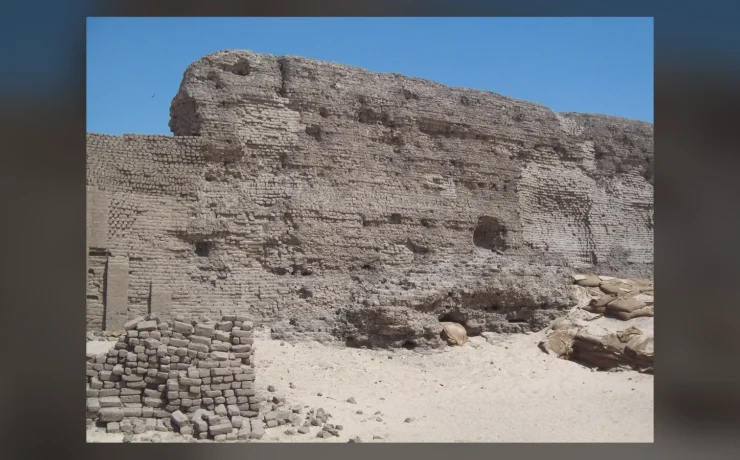
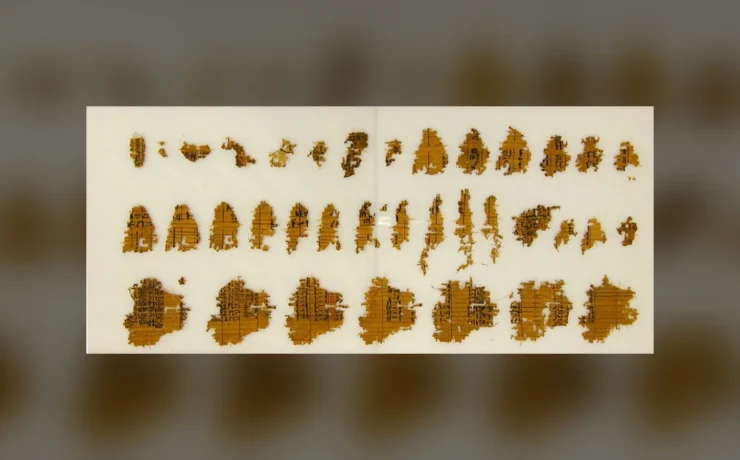
Long before the pyramids, communities along the Egyptian Nile developed local ceramic styles, burial traditions, craft specializations and connections extending beyond their immediate settlements. The term Naqada culture describes archaeological phases, not a timeless people with one political identity. Reading this period responsibly means reconstructing change from surviving pottery, graves, objects and settlement remains rather than projecting later pharaonic institutions backward.
What archaeologists mean by Naqada I, II and III
Archaeologists use the names Naqada I, II and III for broad phases within the fourth millennium BCE, following earlier regional traditions including Badarian and other Nile Valley cultures. These labels describe changes in material evidence rather than neatly dated dynasties. Naqada I ceramics and burials do not suddenly vanish when Naqada II begins; styles develop, overlap and vary between places. Establishing sequence involves observing associations of objects in excavated contexts, comparing pottery forms and, where possible, anchoring relative sequences with radiocarbon measurements. The resulting chronology contains uncertainty. An individual pot can be assigned a likely phase, but that does not mean the precise year of manufacture is known. The Egyptian Ministry of Tourism and Antiquities uses roughly 5500 to 3100 BCE for the wider predynastic overview; earlier prehistory is far older and should not disappear from the story.
Why ceramic shapes transformed historical knowledge
Flinders Petrie's work at Naqada helped establish sequence dating, a method for arranging assemblages according to changes in object types. A vessel's shape, fabric, surface treatment or decorative pattern can provide evidence even when it has no inscription. Black-topped red pottery, decorated wares and changing handles are useful in different contexts, but the familiar illustrated sequence is not a direct portrait of every village. The Cambridge Whipple Library's discussion of Petrie's early interpretations also shows how historical scholarship corrects itself: his proposed explanation involving a foreign 'New Race' was challenged, and the assemblages became central to understanding predynastic Egypt instead. Interpretation changed because material comparisons provided a better chronology, a reminder that archaeological classifications are hypotheses to test, not eternal truths.
Before Egypt was a united kingdom
Egyptian predynastic history is not a miniature version of the Old Kingdom with pyramids removed. Communities along the Nile and in adjacent deserts developed different ways of living, making pottery, trading and commemorating their dead over a long span of time. Archaeologists use the label 'Naqada culture' for particular assemblages and traditions mainly associated with Upper Egypt, rather than the name of a single empire or one uniform ethnic group. The shift from village-scale communities towards more hierarchical centres unfolded over centuries and was uneven between regions. A cemetery rich in grave goods can signal status distinctions, but it cannot tell us that all people living nearby belonged to one ruling family. The evidence has to be read through material remains, settlement patterns, burials, environmental conditions and later comparisons. The story matters because many practices later familiar in pharaonic Egypt have antecedents here, while other predynastic practices did not continue unchanged.
What Naqada I, II and III actually measure
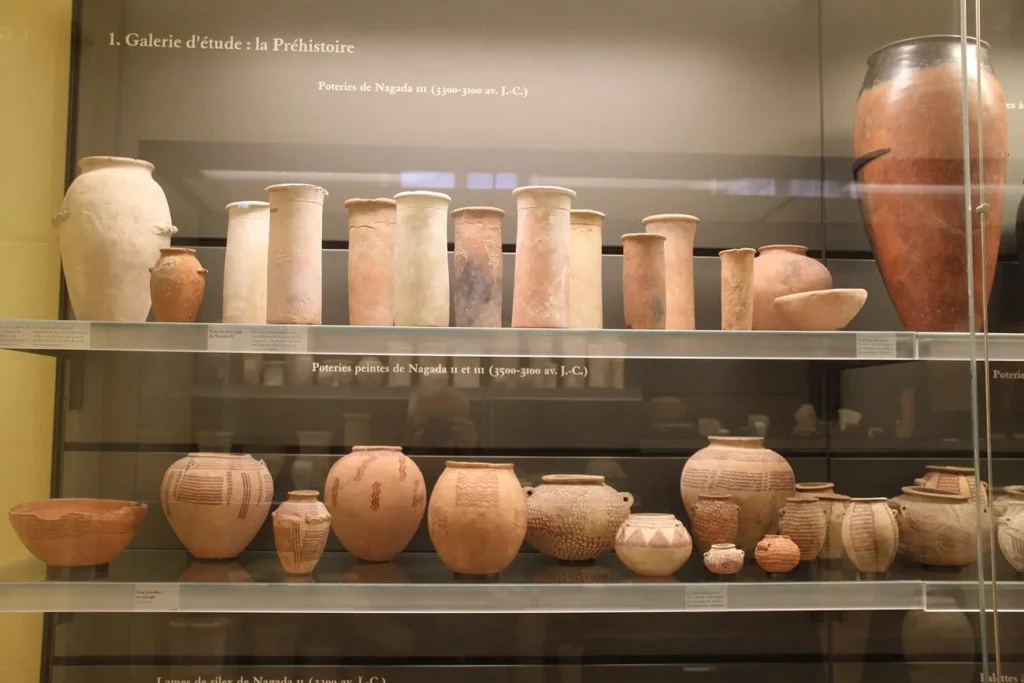
The phases Naqada I, Naqada II and Naqada III are archaeological chronology categories, often discussed with approximate fourth-millennium BCE ranges. They emerge from the study of ceramics, burial assemblages and changing settlement evidence; they are not official historical dynasties recorded by an ancient Egyptian court. Naqada II is often associated with painted pottery, expanded regional contacts and changes in visual culture, while Naqada III provides important material evidence for emerging political institutions and early kingship. Exact starting and ending years vary across academic publications because archaeological relative sequences and absolute date estimates are not identical tools. Some places may have retained older customs while others adopted new forms. Readers should therefore avoid treating a date range as if a switch was thrown across the entire Nile Valley. An accurate timeline shows overlap, uncertainty and the specific types of evidence supporting each phase.
How Petrie's sequence dating changed Egyptian archaeology
Flinders Petrie developed a sequence-dating method by ordering grave assemblages using patterns of pottery and associated objects. His work demonstrated that changes in artefact styles could help establish relative chronology even when written dates were unavailable. This was a major methodological achievement, although the categories and assumptions of early archaeology have since been refined through new excavations, scientific dating and better attention to context. A pot form appearing earlier in one sequence than another does not prove a simple linear evolution in every settlement. Trade, imitation, regional custom and the length of an object's use can complicate the pattern. The Cambridge Whipple Library's discussion of conflicting chronologies provides a useful historical introduction to the method and its intellectual context. A modern encyclopedia should explain what sequence dating is capable of establishing and what it cannot: it can order material groups, but cannot by itself provide every pot with a universally exact calendar year.
Recognising red-polished, black-topped and decorated wares
Predynastic pottery has several distinctive fabric and surface treatments, but the terms refer to archaeological descriptions, not brand names with fixed production dates. Black-topped red ware is often recognised by a darker upper area against a reddish vessel body, created through specific firing practices. Decorated wares may include painted animals, boats or geometric elements. The clay, manufacturing technique, surface treatment and vessel shape all contribute to classification. Similar-looking objects may have different excavation contexts or chronology. Photographs are particularly useful here when they show authentic museum objects, accurate labels and their visible surfaces. A visitor should not identify every red jar as Naqada I or every boat decoration as evidence for an early naval fleet. Pottery was used for varied purposes, and its archaeological significance often comes from comparison among hundreds of fragments and excavated contexts rather than from one spectacular piece.
Boats painted on pottery and the limits of pictorial evidence
Boat imagery on Naqada pottery is visually striking, particularly on vessels with painted human, animal and landscape motifs. It shows that boats occupied an important place in the visual world of some Predynastic communities, potentially linked to river travel, display, ritual or social meaning. Yet a painted image is not an engineering diagram or a literal record of a named historical expedition. The Metropolitan Museum of Art documents examples of decorated vessels with boats and figures, noting that the precise significance of their imagery is not always understood. A strong description identifies the object's accession and period and explains what is physically represented before speculating about meaning. The Nile unquestionably connected communities, but evidence for river transport should be assembled from boats, models, iconography, settlement location and broader comparative studies. An attractive motif alone cannot reconstruct a complete transport network or prove the political control of a particular ruler.
What cemeteries reveal about labour and social difference
Naqada cemeteries contain graves with different arrangements, vessel sets and other objects. Differences in burial wealth suggest variation in access to goods, social identity or commemorative investment. They do not automatically reveal every occupation, family relationship or belief held by the person buried. Archaeological samples can be biased by later disturbance, excavation methods and uneven preservation. Burial ceremonies may have involved items supplied by living relatives or communities; the objects placed with someone do not necessarily describe their everyday possessions. Researchers also compare grave size, body treatment, associated production areas and regional distributions. A cemetery may show increasingly elaborate differentiation without every wealthy grave belonging to a member of a formal royal state. Cautious interpretation is central to a meaningful encyclopedia because the attractive narrative of 'the first kings' can obscure the complexity of evolving social relations.
Cemeteries and the danger of treating wealth as a complete biography
Graves reveal how a community buried selected people, what materials survived and which objects were deposited deliberately. Some burials contain more elaborate goods than others, suggesting differences in resources, practices or status. Such contrasts matter, but a lavish burial does not automatically reveal how its occupant governed, where their family lived or what everyone in the settlement believed. Excavation histories affect what can be said: early archaeological recording was not as detailed as modern stratigraphic approaches, and excavated objects may have entered museum collections far from their original landscape. Museum accession records can reconnect a surviving jar or stone object to its documented provenance. The National Gallery of Victoria, for example, holds Naqada pottery and explains how ceramic forms informed Petrie's chronological method.

Trade, geography and changing communities
The Nile provided a corridor for movement, but predynastic Egypt included different environmental zones: floodplain, desert edge, Delta and routes toward Nubia and the eastern deserts. Long-distance materials and stylistic similarities can indicate exchange and contact without proving direct control over another settlement. The Delta's archaeological record is often less visible than desert-edge cemeteries because alluvial deposits, water tables and later habitation complicate recovery. A map of Naqada archaeological locations is therefore a map of evidence, not a complete picture of ancient population density. Comparing Upper and Lower Egyptian contexts helps explain both local identities and increasing links among communities before dynastic rule.
From changing imagery to early royal authority
Toward the late fourth millennium BCE, larger political networks and more formal visual statements of authority become visible. Early signs, seals, labels and objects associated with elite centres are often brought into debates about state formation. Yet there is no reliable single scene that records all stages of Egyptian unification. The Narmer Palette is a real object with imagery expressing kingship and dominance, but its symbolic presentation cannot substitute for independent archaeological proof of every event later readers infer. Rather than claiming one warrior created an entire nation in a day, examine changes in administration, regional power and written evidence across generations. Early dynastic kingship emerged from this longer process and should be connected to, not isolated from, predynastic archaeology.
Craft specialists, stone tools and the production of prestige
Ceramics are only one part of the predynastic material record. Flint knives, stone vessels, palettes, beads and other worked materials offer evidence for technical expertise, exchange and social display. Manufacture may have required skilled labour and access to suitable sources of raw material. However, an elaborately worked object does not prove the existence of a state workshop unless the archaeological context supports it. Craft forms could circulate through gift exchange, imitation, mobility or trade. The preservation of durable stone and pottery also skews the record towards certain types of work: textiles, food preparation equipment and perishable objects may survive much less well. An honest picture of production combines technological study with excavation context rather than presenting only the most photogenic museum treasures. If a tool is shown in a gallery, identify whether it was excavated at Naqada itself or merely belongs to a broader cultural horizon.
Upper Egypt, the Delta and connected regional worlds
The geographical distribution of Naqada-related material changed over time, including interaction between Upper Egyptian centres and the Nile Delta. Terms such as 'expansion' and 'unification' can imply military conquest even where the material evidence supports a more complex sequence of contacts and cultural convergence. Desert routes, river transport and settlement strategies connected regions but did not make every community identical. The Delta has different preservation and excavation challenges because sedimentation and later land use can bury older remains deeply. Some sites therefore appear less well represented in surviving archaeological maps. A careful atlas should identify excavated evidence, inferred exchange routes and uncertain boundaries separately. Egypt's political integration emerged from a wider landscape of interconnected communities, not a simple advance of one already fully formed modern nation along the Nile. This geographical sensitivity also prevents the accidental erasure of regional traditions before the appearance of the earliest historically attested kings.
From animal motifs to emerging royal iconography
Late Predynastic imagery sometimes includes standards, animals, processional scenes and motifs later associated with political authority. Their presence can contribute to arguments about emerging kingship, especially when supported by seal impressions, administrative marks and contexts near major centres. The exact interpretation of any one image remains contested. An animal carved on a palette does not by itself identify a named king; a ceremonial object may combine imagery, ritual and political messaging. Readers should distinguish images whose date and archaeological provenance are known from objects with complicated collecting histories. The emergence of royal iconography was part of a broader shift in the ways authority was represented and recorded. It should not be described as the sudden invention of Egypt by one person whose complete biography survives. The more cautious narrative of institutional change is also more interesting: symbols acquired recognisable conventions as regional networks and forms of administration grew.
Naqada III and the beginnings of administration
Naqada III is crucial to discussions of early state formation because material evidence suggests increasingly formalised systems of display, storage and political organisation. Pottery of this phase can include large storage jars and changing painted or incised conventions. Sealings, tags and very early written marks are part of the broader record, although the interpretation and precise chronology of individual examples require specialist work. The development of administration does not mean that all later institutions existed in finished form. Households, production centres and regional elites continued to shape society in ways that may not be visible in formal symbols. Archaeologists examine assemblages rather than one famous object when studying the transition to Dynasty 1. This approach helps readers understand why a timeline labelled 'Naqada III' is not simply another name for all of Egypt's First Dynasty and why different scholarly chronologies sometimes overlap.
Museum labels, object numbers and what pictures can prove
A museum photograph is strongest when paired with a collection record identifying the material, approximate date, findspot when known and accession number. Several Naqada pottery vessels with boat decoration exist in institutional collections, and a similar motif does not make them the same object. In the digital gallery, each photo should link to the original repository or Commons record and describe exactly what the image documents. A pottery jar photograph cannot be used as a literal depiction of a fourth-millennium sailing event. When an accession is uncertain, the correct response is to omit a speculative number rather than substitute another object with an impressive title. Photographic color and shape can also be affected by lighting and restoration. Comparing documented photographs, catalogue records and excavation publications gives the visitor a far better understanding than decorating a short article with uncaptioned stock images.
How researchers date Naqada material today
Modern research draws on relative sequences, stratigraphy, radiocarbon determinations, inscriptions where available and reanalysis of earlier excavations. Each method answers a somewhat different question. A ceramic sequence can establish an ordering among forms, while a radiocarbon measurement estimates the date of an organic sample under explicit statistical assumptions. The relationship between the sample and the object matters: charcoal from a burial may represent a deposition or earlier use context rather than the firing date of every pot. Calibrated date ranges can also be wider than a tidy museum label suggests. This is why scholarly articles may disagree about the exact transition between Naqada II and III without disagreeing that both represent real changes. An educational interactive timeline should make methods, uncertainty and regional variation visible. It must not generate a false sense of precision merely because a user interface can display a single year.
Site chronology and visiting essentials
| Topic | What the evidence establishes |
|---|---|
| Naqada I | Early documented assemblages in Upper Egypt; distinctive pottery and burial traditions |
| Naqada II | Decorated ware, broader contacts, changes in symbols and settlement networks |
| Naqada III | Emerging administrative and royal imagery, with chronological regional variation |
| Evidence types | Pottery, burials, tools, sealings, iconography and contextual excavations |
| Dating methods | Relative sequences, stratigraphy and scientific date estimates |
| Image policy | Only real identified museum objects with source and licensing metadata |
Frequently asked questions
Was Naqada a single unified kingdom?
The label refers to archaeological phases and associated regional traditions; early state formation was gradual and complex.
Why are boat images so common on some decorated pottery?
They indicate themes meaningful in their cultural context, but no single universal interpretation of every image is established.
Can archaeologists date every pottery vessel precisely?
No. Many dates are approximate and depend on archaeological associations, relative sequences or scientific samples.
Does a museum photo show exactly how the object looked 5,500 years ago?
Not necessarily. Condition, restoration, lighting and loss affect the appearance of surviving objects.
References, museum evidence and photography credits
All cited providers and institutions should be consulted at their original sources. Photographs depict identified real sites or aircraft at a documented moment; images are not live footage, booking offers or proof of current facilities.
- Egyptian Ministry of Tourism and Antiquities — Predynastic Period
- Cambridge Whipple Library — Establishing Predynastic Egypt
- National Gallery of Victoria — Naqada III jar record
- AERA Pottery Manual Volume 2, Naqada ceramic chronology
- The Met — decorated ware with boats and figures, Naqada II
- The Met — Naqada II jar with boats, object 07.228.135
- Ancient Egypt Predynastic Nagada Painted Pottery (28394187986).jpg — Gary Lee Todd, CC0.
- Decorated jar depicting boats MET 07.228.126 EGDP010333.jpg — The Metropolitan Museum of Art, CC0.
Historical-source cross-check and further reading
Evidence and dating note (23 October 2026): Naqada I c.4000–3500, II c.3500–3200, III c.3200–3000 BCE, with alternative absolute ranges in scholarship; pottery typology and relative dating, not a kingdom founded on one exact day.
Original institution or academic research record: https://www.ucl.ac.uk/museums-static/digitalegypt/naqadan/chronology.html
Scholarly reading / comparative reference: Ian Shaw, ed., The Oxford History of Ancient Egypt (OUP, 2000), Naqada period chapter.
Scope: a source comparison of the named historical point, not independent scholarly approval of every claim or every image in this article.