What did scribes do in ancient Egypt? Scribes prepared administrative accounts, legal records, correspondence, literature and religious texts. They used ink, reed brushes, palettes and writing surfaces such as papyrus and pottery fragments. Egyptian hieroglyphs and cursive hieratic were different written forms suited to different contexts. Surviving tools and practice texts reveal professional training, but they do not establish that every Egyptian child attended a formal school.
The written civilization of Egypt depended on much more than grand inscriptions carved into temples. Scribes used palettes, reed brushes, ink and papyrus to keep accounts, transmit literature, preserve rituals and help institutions operate. Learning how they worked also explains why hieroglyphs, hieratic and later scripts must be studied as evolving systems rather than one timeless collection of mystery symbols.
The work of a scribe becomes tangible in the surviving records: Heqanakht’s Middle Kingdom letters show writing used to direct an estate, while the Abusir temple papyri preserve scheduled duties and accounts from an earlier royal cult. These are different institutions and periods, not interchangeable examples of one timeless office.
Ancient Egyptian writing: essential facts
1. Why writing mattered to the Egyptian state
Ancient Egypt generated inscriptions, letters, inventories, funerary texts, contracts and royal records. Writing was an instrument of communication and social power, not merely an ornamental pattern on a temple wall. State administration required accounting and documentation, while religious and funerary traditions used carefully transmitted formulae.
The survival of a carved monument can give a distorted picture of how frequently people wrote on less durable materials. Papyrus, wood and pottery could carry ordinary texts; few specimens survived compared with the quantity once produced. A beginner must understand the difference between monumental visibility and historical frequency.
2. The distinction between hieroglyphs and hieratic
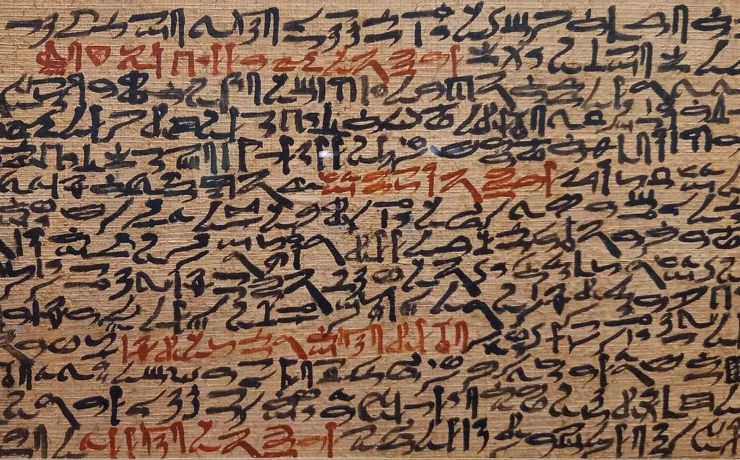
Hieroglyphs use recognizable signs that often retain pictorial elements. Hieratic developed as a cursive writing system well suited to ink and rapid documentation. Both could express forms of the ancient Egyptian language. A school exercise in hieratic is not simply bad handwriting or an inferior copy of sacred signs.
The relationship between script, language and purpose changed across time. Some readers confuse hieroglyphs with a language separate from Egyptian, but script refers to a system of writing. The language itself went through important historical phases, from earlier Egyptian to later Egyptian and Demotic, eventually continuing in Coptic.
3. What a writing palette actually held
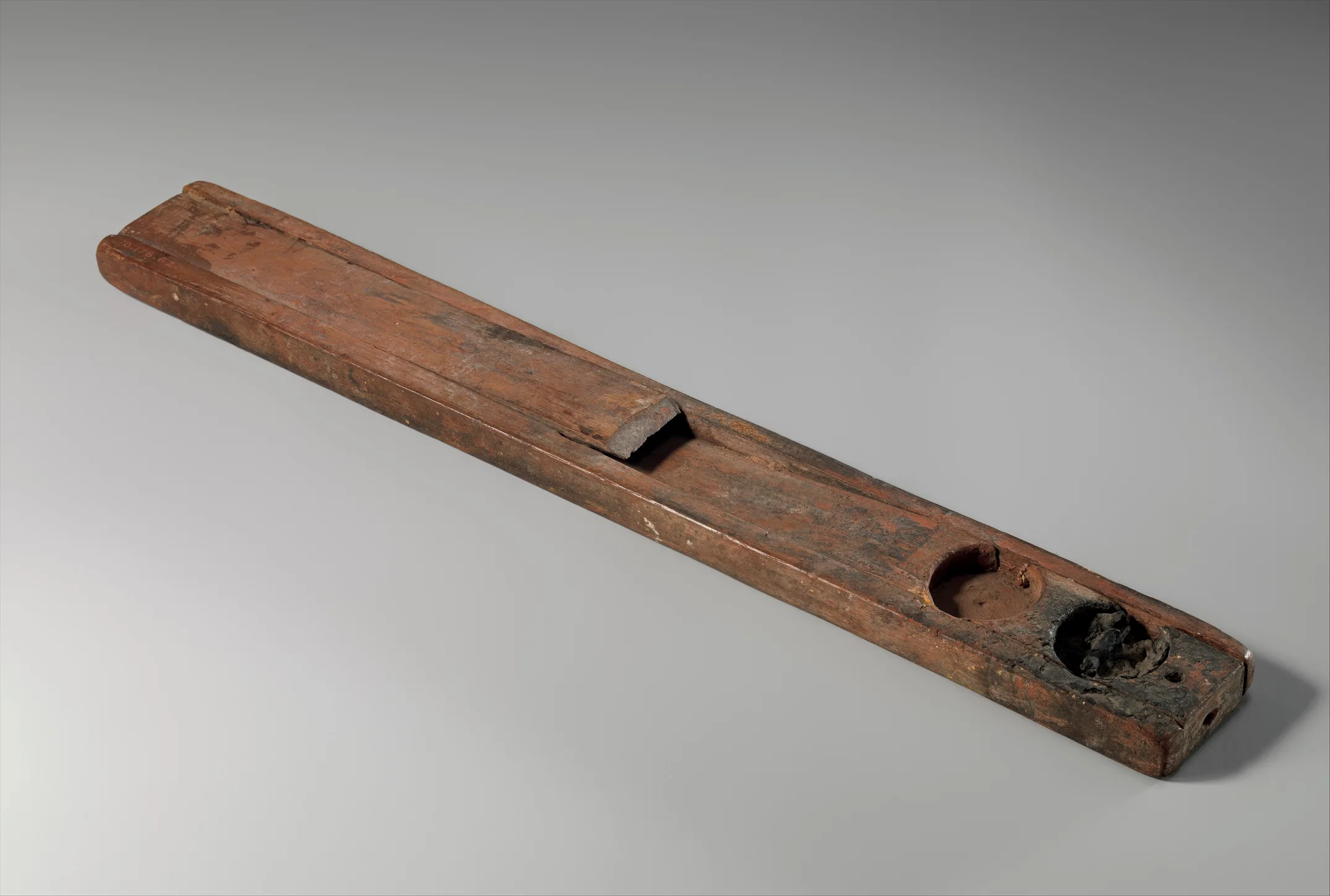
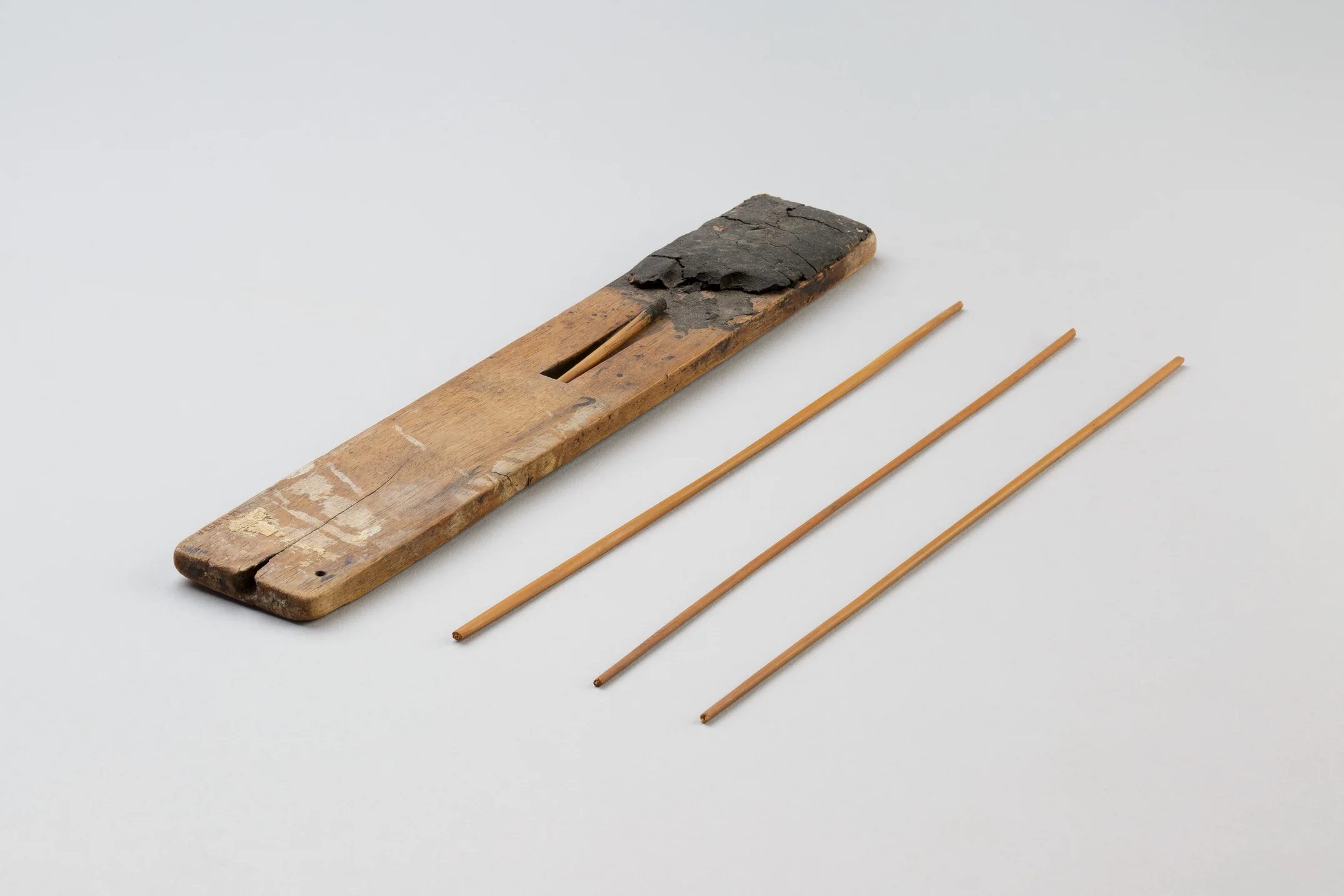
The Met’s Middle Kingdom scribal palette preserves traces of black ink, with little red remaining, and has a form designed to accommodate writing implements. Red and black could help scribes distinguish categories of text or mark important elements. The palette is valuable because it reveals the physical tools of a working writer rather than a purely symbolic royal sculpture.
Wood, ink and reeds have archaeological histories and preservation problems. A label stating the object was found in Egypt does not always supply an exact workshop or owner’s identity. Do not invent an ancient scribe’s name or biography from a generic museum palette.
4. Reed brushes, ink cakes and practical skill
Scribes could use reed brushes with frayed writing tips, moistened pigment and portable wooden palettes. The Met’s Late Period palette set includes reed brushes, strings, papyrus pieces and a linen wrapper, providing an unusually informative object group. It shows how the tools could be bundled and transported.
Making writing look effortless required training. The angle of the brush, preparation of ink and control of signs could affect legibility. The use of black and red pigment should be interpreted through particular texts and conventions rather than assumed to obey the same rules in all genres.
5. Papyrus: valuable and vulnerable
Papyrus was widely associated with Egyptian writing and could hold long texts, administrative lists, religious compositions and private documents. Creating suitable writing sheets involved processing plant material, but exact methods and patterns of manufacture varied. A museum image of one papyrus is evidence of a surviving manuscript, not a complete picture of the broader industry.
Unlike stone reliefs, organic writing surfaces can decay quickly. Their survival often depends on environmental circumstances and burial history. The existing corpus of readable documents therefore does not represent all writing ever produced in Egypt.
6. Ostraca and inexpensive practice surfaces
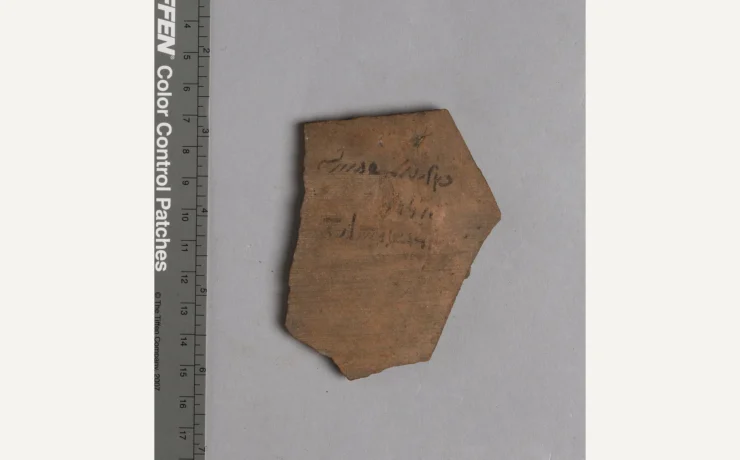
Ostraca are fragments of pottery or stone reused for writing or drawing. They could support brief notes, accounts and writing exercises. Their durability and availability make them particularly useful for seeing work that was never intended as formal royal display.
A fragment found in reused archaeological fill must be dated and located carefully. Even where the writing is legible, the original intention might remain open: account, exercise, draft or casual note. Such uncertainties are normal in the history of literacy.
7. Did all Egyptian children go to school?
No evidence supports universal standardized schooling comparable to contemporary systems. Some children and trainees learned writing through families, institutions or apprenticeships, while literacy levels varied across occupation, gender, class and period. Historians reconstruct learning from exercises, instructional texts, scribal titles and surviving tools.
The phrase “Egyptian school” can be useful shorthand but it should not imply every village had a formal classroom or that all children received identical curricula. Elite educational ideals are easier to document than the complete social reality of access to knowledge.
8. How scribes learned signs and documents
Training involved repeated practice of sign forms, conventional phrases, numerical methods and document structure. Lists and copied literary passages could help students develop skill while absorbing values associated with scribal careers. A surviving exercise might reveal mistakes, uncertain spacing or varied hands that illuminate how learning worked.
Copying a wisdom text served several purposes at once: improving writing, learning language and passing on a model of conduct. It does not imply that every student agreed with all its claims or that a single text functioned as an official national curriculum.
9. The role of the professional scribe
People described as scribes could undertake accounting, correspondence, record preparation and other specialized tasks. Writing expertise offered access to certain offices and forms of authority, but not every scribe occupied the same rank. A royal administrator and a local record keeper might share skills yet work in very different circumstances.
Occupational titles can reflect actual responsibilities or be used in honorific and elite settings. The historian must consider the document, region and social context before equating a label with one modern profession. Literacy intersected with economic structures rather than operating as an isolated cultural accomplishment.
10. Numbers, lists and the management of resources
Administrative work required counting and categorizing goods, labor obligations, land and supplies. Egyptian numerical writing could support detailed inventories. Agricultural production and taxation made record keeping especially significant to governments and large institutions.
A carved commemorative list and a working tally are different genres. A practical account may be more useful for studying actual transactions, but its fragmentary context can create difficult questions. The process of translation must separate written numbers from modern calculations inferred by the editor.
11. What did scribes write about ordinary life?
Accounts, letters and administrative documents can reveal wages, movement of goods, disputes and labor arrangements. Religious manuscripts and literary copies also illuminate intellectual traditions. Some documents survive because they were discarded, reused or buried rather than specially preserved for future generations.
These records rarely give every individual equal visibility. People able to write or those mentioned by officials appear disproportionately. Students should not assume an apparently silent social group had no economic or cultural life.
12. The status and limits of scribal prestige
Egyptian texts sometimes celebrate the advantages of a scribal career over manual labor. Such praise is valuable as evidence of elite ideology and professional aspiration, but it cannot be read as a neutral survey of actual working conditions. Manual craftsmen also had expertise and could form socially important groups.
A literary comparison between scribe and farmer demonstrates a set of values, not proof that every scribe was wealthy or that every farmer was miserable. Learning to recognize rhetoric is as important as learning to decode signs.
13. Later scripts: Demotic and Coptic
Egyptian writing continued to change after the New Kingdom. Demotic became important for documents in later periods, while Coptic used a modified Greek alphabet with additional signs to write a later stage of Egyptian language. Hieroglyphs remained meaningful in religious and monumental contexts through much of the late ancient period.
A timeline should not suggest that all these systems replaced each other instantaneously. Different scripts coexisted and were appropriate for different settings. Their chronology helps explain how the written Egyptian language can be studied over thousands of years.
14. Why a palette from the Ptolemaic Period matters
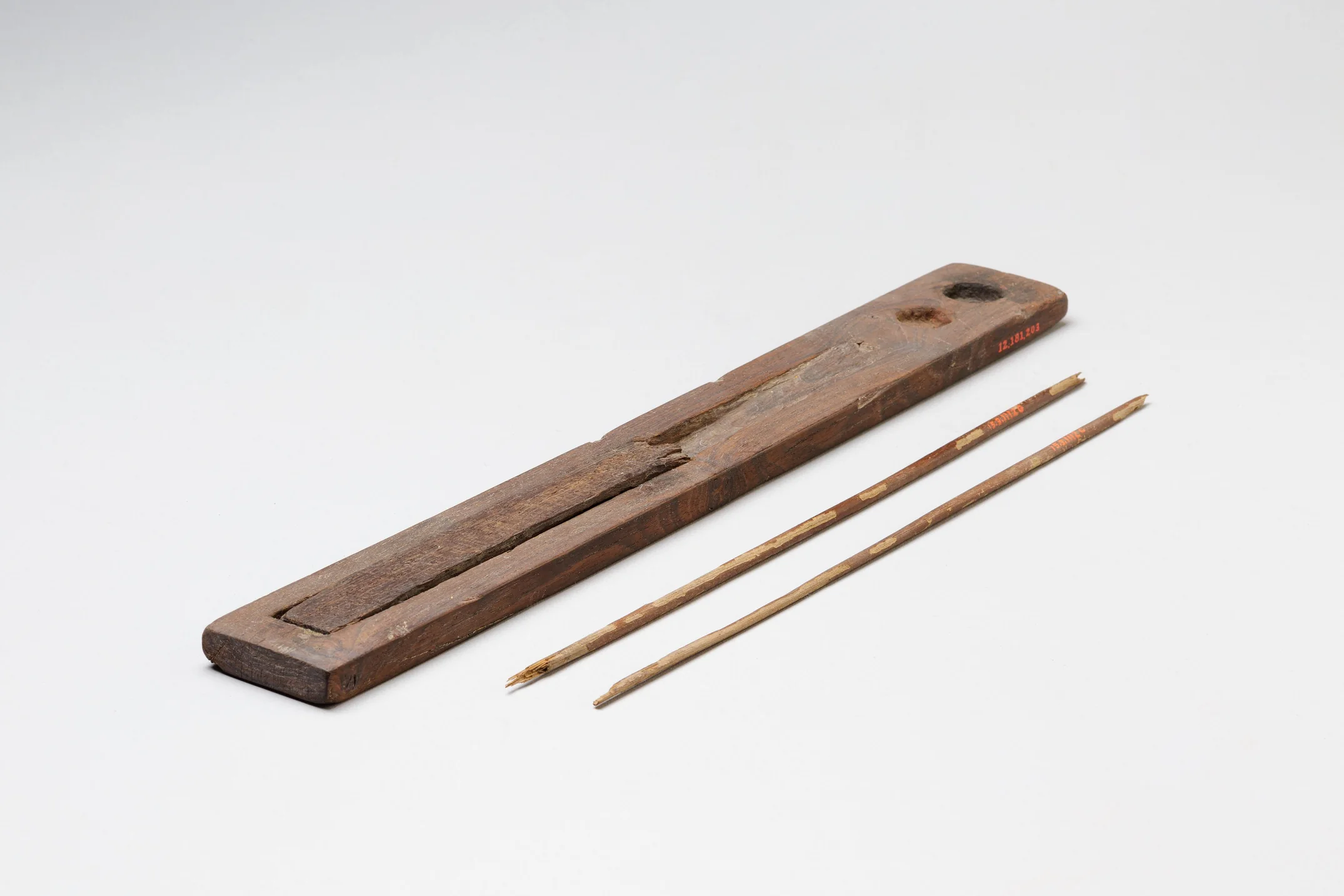
The Met’s Ptolemaic scribal palette documents the persistence of a writing-tool tradition centuries after the New Kingdom. It does not mean that every scribe used the same language or held the same job across those centuries. Objects can show continuity of form alongside changes in administration and literary practice.
A careful comparison with the Middle Kingdom palette should therefore examine material, size and functional features, as well as the known date. The picture of the object alone cannot establish a complete history of educational policy.
15. How to read a hieroglyph responsibly
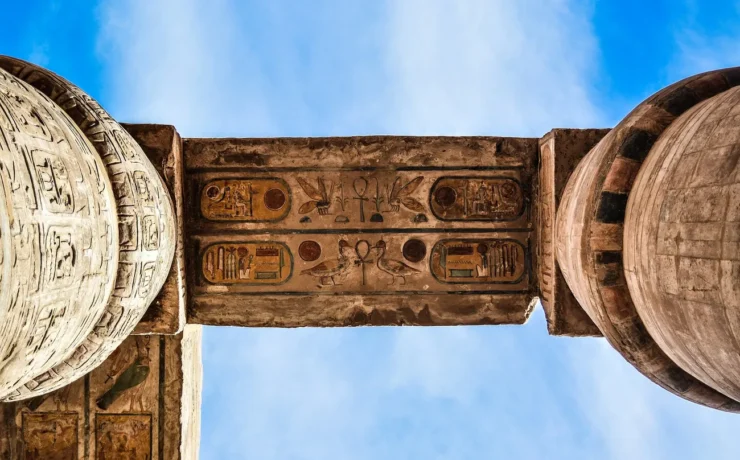
Begin by recognizing that signs may represent sounds, words or semantic classifiers rather than serving as individual alphabetic letters. Direction of reading can be indicated by the way living figures face; the reading order and interpretation depend on composition. Decorative arrangements in inscriptions may have aesthetic as well as linguistic purposes.
Do not promise that a visitor can translate an entire royal inscription after memorizing a few symbols. Real translation involves grammar, context, paleography and the chronology of the language. Tools such as Kemet Vault’s Hieroglyphic Explorer are an introduction, not substitutes for a full philological education.
16. Four original objects as a classroom lesson
Compare a Middle Kingdom palette, a New Kingdom palette, a Late Period bundle of writing tools and a Ptolemaic palette. Record the museum numbers and dates, then list what appears to remain consistent and what cannot be inferred. This turns four images into a structured investigation instead of four decorative photos.
Next, select a translated ostracon with known provenance and examine what its content and handwriting reveal. Remember that identifying a writer’s exact social identity from a fragment can be impossible, even when the script is recognizable.

17. Frequently asked questions
Were hieroglyphs an alphabet? Not in the modern sense; signs can represent multiple functions. Could any Egyptian be a scribe? Literacy access was uneven and varied over time. Was papyrus the only writing material? No; stone, wood and ostraca were important. Did ancient Egyptians use ink? Yes; palettes, ink traces and brushes survive. Were hieratic signs simpler pictures? Hieratic is a distinct cursive writing system. Is Coptic related to ancient Egyptian? Yes; it represents a later stage of the Egyptian language.
Can you learn Egyptian from online sign lists alone? No, though verified sign inventories are a useful starting point for larger study.
18. The museum method: verify the exact tools
The Met’s catalog details give each surviving palette a date, medium, dimensions and provenance where known. For a student paper, cite those records rather than copying an uncredited image. A museum artifact establishes how a real tool was made; a modern diagram of a scribe at work is a reconstruction that requires separate attribution.
Our article deliberately presents authentic tool photography hosted first-party and uses links to the original catalog to preserve independent verification.
Primary object references and connected learning
The Met: Middle Kingdom scribal palette; The Met: Late Period palette and brushes; The Met: New Kingdom scribal palette; The Met: Ptolemaic palette; Kemet Vault Hieroglyphic Explorer; Daily Life and Traditions; Historical Timeline.