The Oxyrhynchus papyri are an extraordinary archive of ordinary and extraordinary writing from Egypt under Greek, Roman and later Byzantine rule. They include household correspondence, tax papers, land transactions, literary fragments, religious texts and records of local administration. The collection takes its name from Oxyrhynchus, near modern al-Bahnasa, where excavators recovered written material from ancient refuse mounds. These documents were not assembled by one royal librarian. Their power comes from an accidental archaeological survival: paperwork that was once discarded can reveal the routines of people whom histories of emperors rarely mention.
The collection covers several centuries and is written mainly in Greek, alongside texts in other languages. Not every fragment comes from the same year or household. The Egypt Exploration Society and the University of Oxford maintain resources that allow students to identify published texts, rather than treating all scraps as interchangeable proof of one timeless Egyptian lifestyle. A source-led guide must distinguish literary manuscripts from documentary records and always ask who produced a text, for whom and why.
From an Egyptian city to the modern discovery of its papyri
Oxyrhynchus was an important town of Middle Egypt, functioning within the administrative and cultural networks of Ptolemaic, Roman and Byzantine Egypt. Its ancient Greek name refers to a fish, but that etymology alone tells little about its social life. People living in and around the town worked in agriculture, industry, services and administration. Local institutions required documents: records of tax collection, private agreements, payments, obligations and correspondence. Such written traces survived in contexts that later researchers could excavate. It is risky to imagine the city as only a place of scribes; writing documented a much larger world of labour and interaction.
Bernard Grenfell and Arthur Hunt conducted excavations there for the Egypt Exploration Fund, later the Egypt Exploration Society, especially from 1896 to 1907. Dry deposits containing papyri were removed, sorted, studied and progressively published. Excavation contexts were often complex, and fragments might have been moved or mixed in ancient rubbish heaps. The remains therefore did not emerge as a neatly ordered filing cabinet. The Oxford project explains that thousands of texts have been catalogued across many volumes and collections. A modern database can bring documents into conversation while preserving the difference between original find, reconstructed text and scholarly interpretation.
A collection larger and more diverse than a group of letters
The Egypt Exploration Society reports a collection exceeding 500,000 fragments, a figure describing fragments rather than half a million complete and individually readable documents. Many pieces remain minute or incomplete. Texts range across multiple languages and chronological periods, from the Hellenistic centuries through late antiquity. Literary compositions have understandably attracted publicity, including fragments of known or lost authors. But the documentary material can be equally transformative for understanding economic activity, household relationships, local law and institutional processes. The quantity of paper is significant; the quality of interpretation depends on close attention to provenance and individual dates.
A Greek-language text is not automatically a text written by a visitor from mainland Greece. Greek served administrative and literary functions across several centuries of Egyptian history, while Egyptian languages and traditions remained significant. The surviving record reflects unequal literacy, differing access to scribes and the likelihood that certain types of documents were created and preserved. It cannot be treated as a direct survey of everybody who lived in the city. People who relied on oral transactions, or whose materials decayed elsewhere, are harder to recover. Written evidence is powerful precisely when researchers recognise its social selectivity.
Private letters: voices, relationships and everyday priorities
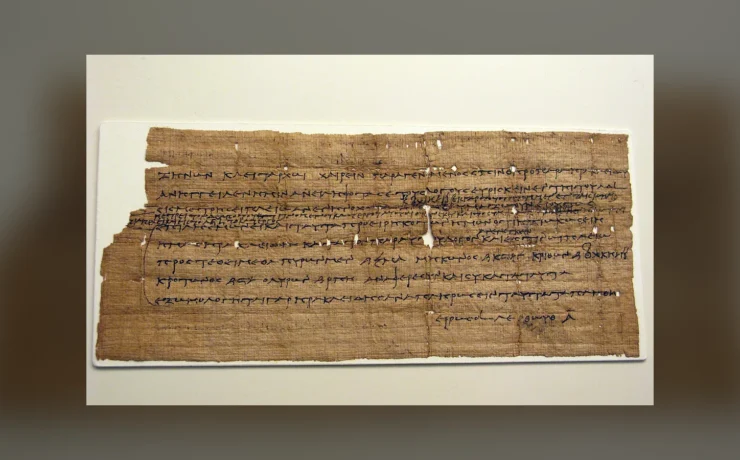
A letter may mention food, clothing, family relationships, money, a meeting or an illness. Such details bring a reader closer to personal concerns than the official formulas of imperial history. But private correspondence was shaped by context, expectations and incomplete exchanges. A surviving request for an item does not prove it was delivered; a complaint does not establish the other person’s motives. The Oxford Oxyrhynchus project’s Daily Life examples include letters arranging meetings and purchases, illustrating how ordinary communication was embedded in local calendars, business relationships and social obligations.
Consider a message discussing several plates and specifying a time to meet with the aid of an astrological reference. The Oxford resource identifies an example among the published papyri. This is evidence of particular choices made by particular correspondents, not proof that everyone timed transactions using the stars. Everyday documents often combine what modern readers separate into practical and religious categories. The first duty of an interpreter is to identify the text, date and surviving lines before attaching a sweeping cultural conclusion. Missing lines may change the apparent force of an instruction or leave the recipient’s response unknown.
Property, land, water and the administration of work

The local economy produced contracts documenting land cessions, leases, labour and irrigation obligations. Such texts allow scholars to study procedures and legal conventions with a precision unavailable from monumental art alone. Oxford highlights an AD 139 private property document that preserves the shape of a routine transaction. A University College London study of thirty-two Roman and Byzantine documentary texts also examines agreements concerning irrigation work, workshop and mill leases, and public responsibilities. Such materials are particularly useful because they show the intersection of personal decisions with systems of administration.
However, a contract is a formula written for a legal purpose, not a full account of the conditions under which its parties lived. The agreed payment may not have been received, and an estate described in a document need not represent the average farm. Papyri can reveal taxes, crop concerns, property disputes and administrative responses, but the people least able to commission written agreements are often less visible. Comparing legal documents with archaeological remains and other sources helps avoid a social history built only on the better-documented property owners. The aim is not to romanticise paperwork but to recover specific mechanisms of daily life.
Taxes, declarations and official demands
Roman and Byzantine administrations required records connected with land, obligations and public duties. Papyri can preserve declarations about agricultural land, instructions, receipts or administrative summonses. For historians, these documents sometimes disclose how central power reached a village through local intermediaries. The UCL edition of Oxyrhynchus documentary papyri includes examples of declarations regarding uninundated or artificially irrigated land. These reveal that the state and private individuals paid attention to the practical condition of fields, not merely to abstract tax labels.
The presence of official paperwork should not be mistaken for seamless control. Messages could be delayed, challenged, revised or ignored; enforcement varied across the countryside. A receipt proves that a particular payment was recorded, not that all dues were fairly assessed or uniformly collected. Modern summaries sometimes quote a tax document and jump to a complete reconstruction of Egyptian hardship, prosperity or corruption. Better scholarship asks what the document was designed to show and searches for comparisons. Oxyrhynchus offers unusually dense evidence, but it still samples a particular region within a changing empire.
Literature and the afterlife of Greek books in Egypt
The Oxyrhynchus dumps have preserved fragments of literary texts as well as administrative records. A small portion of a roll can be the only surviving witness to a work, while other pieces improve the text of an already known author. Papyrus Oxyrhynchus 4640, for example, preserves a fragment associated with a hypothesis concerning Euripides’ Theseus and Hippolytus, and 4944 contains material connected to Dictys Cretensis’ account of the Trojan War. The modern photographs reproduced in this study document real manuscript fragments rather than visualisations of a lost library.
Such manuscripts reveal reading, copying and circulation, but not necessarily what every Egyptian resident read or understood. Literary Greek existed within a multilingual world. An extract might have travelled through school, private ownership, a library or another context that cannot now be established. The archaeological record includes both elite and quotidian writing, sometimes in the same general deposit. Treating literary discoveries as separate from ordinary social history misses the question of how literacy operated. Conversely, presenting them as the private library of a precisely known resident would invent a provenance the excavators did not establish.
Religious change and the many languages of late antique Egypt
The textual range extends into centuries when religious communities and imperial structures changed. Greek documentary and literary habits existed alongside Egyptian linguistic traditions and the growing importance of Coptic writing. Jewish and Christian texts appear in wider documentary and manuscript contexts. A Christian manuscript can establish that a text was present or circulated, but its existence cannot supply the demographic proportions of a neighbourhood on its own. Likewise, a magical formula does not represent the beliefs of every Greek speaker in the city. Papyri preserve variety, not a single shared creed.
Chronology is indispensable here. A Roman-period contract and a much later Byzantine Christian fragment cannot be used together without explaining the generations and transformations between them. Scholars distinguish palaeographic dating, internal calendar references and archaeological context. Each method has limitations. When a papyrus lacks an explicit year, estimates of handwriting style may produce a broad range rather than a single date. A responsible popular article should resist presenting exact dates for every fragment. The historical value lies in watching multiple traditions overlap and change, not in forcing them into a neat story of instant cultural replacement.
Reading a fragment: provenance, missing lines and translation

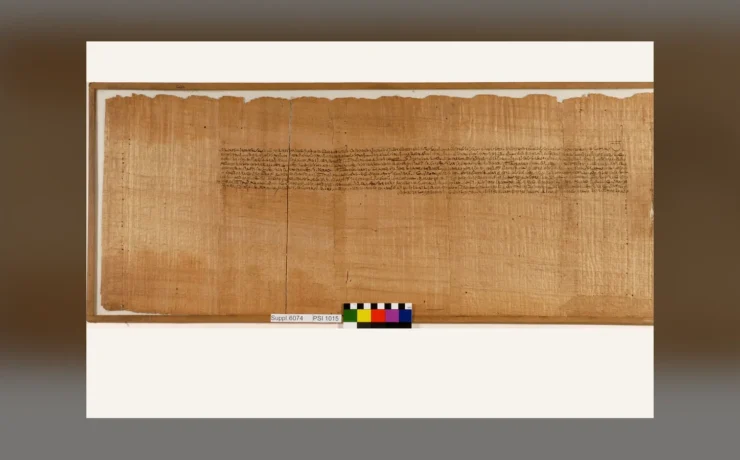
The basic unit of investigation is an identified papyrus with a published number, description and edition. Researchers assess handwriting, material, date, contents and associated fragments. They may restore damaged text using parallels, but a printed translation can hide the differences between ink actually present and letters supplied by an editor. Brackets and editorial signs matter. A photograph allows readers to see the fragmentary state of an object; a transcription and commentary explain how scholars have read it. Neither should be used alone to make exaggerated claims.
Translation creates another layer of judgement. The Greek vocabulary of legal obligations or domestic relations does not always have an exact modern equivalent. Terms can change meaning across centuries or vary with local practice. Modern documentary editions are valuable because they place translations next to technical notes and comparable texts. The questions to ask are concrete: who appears in the document, which action is recorded, what remains missing and what alternative reading is possible? This method turns an archaeological collection from a gallery of curious scraps into a disciplined evidence base.
Limits: what an ancient rubbish heap cannot tell us
Oxyrhynchus has sometimes been described as a time capsule of complete Roman Egyptian life. The metaphor is enticing but misleading. Refuse deposits privilege discarded items. Most of the population’s speech was never written down; many records perished or were thrown away elsewhere. People whose transactions were oral and those excluded from official literate networks remain difficult to observe directly. Even a large corpus cannot supply a complete household census. A surviving papyrus may have been kept or reused long before entering the dump, weakening the assumption that all adjacent pieces were contemporary.
Excavation and collection history add further limits. Fragments were dispersed, conserved, studied and published over generations. Multiple pieces of one document can reside in different catalogues or have their readings refined over time. New digital access is making comparisons easier, but image rights and documentation standards vary. A century-old excavation photograph is not a substitute for the actual text of the papyrus, and a popular claim built on one translated sentence should be checked against the edition. These cautions deepen the human story rather than diminishing it, because they prevent the surviving voices from being overinterpreted.
How this connects to Egypt’s other historical periods
A strong picture of Roman Egypt combines the Oxyrhynchus corpus with material evidence for villages, farms and cities and with the state’s political history. Kemet Vault’s Roman conquest and provincial life article describes the wider imperial framework; its Demotic language and contracts study provides a complementary account of Egyptian scripts. Neither is replaced by this topic-specific exploration of documentary and literary fragments. The point of linking is to let readers pass from imperial policy to a surviving piece of someone’s written communication.
Students can start with one published letter, one legal contract and one literary fragment. Identify their dates and ask what each source was made to accomplish. A transaction records an obligation, a family letter negotiates a relationship, and a literary manuscript transmits a text. The three are products of different activities even if all survive as papyrus. Compare what the sources say explicitly with what scholars infer from wider evidence. This exercise communicates the intellectual excitement of Oxyrhynchus without turning a fragmentary archive into fictional eyewitness testimony.
Research sources and photographs
The Egypt Exploration Society’s collection overview explains custodianship, scale and chronology. The University of Oxford’s digital corpus introduces the manuscript collection, while its Daily Life exemplars provide published document-based examples. UCL research on documentary papyri supplies focused work on legal and irrigation records. The manuscript images shown here are individually identified, licensed photographs of real objects; their captions distinguish literary fragments from the contract and letter examples discussed elsewhere in the text.