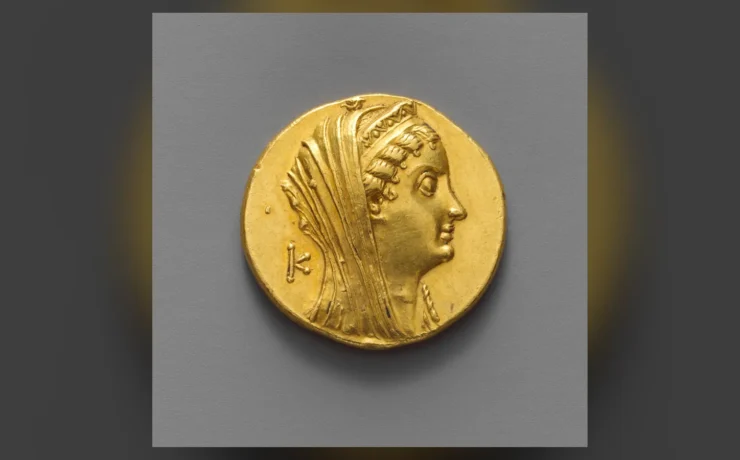
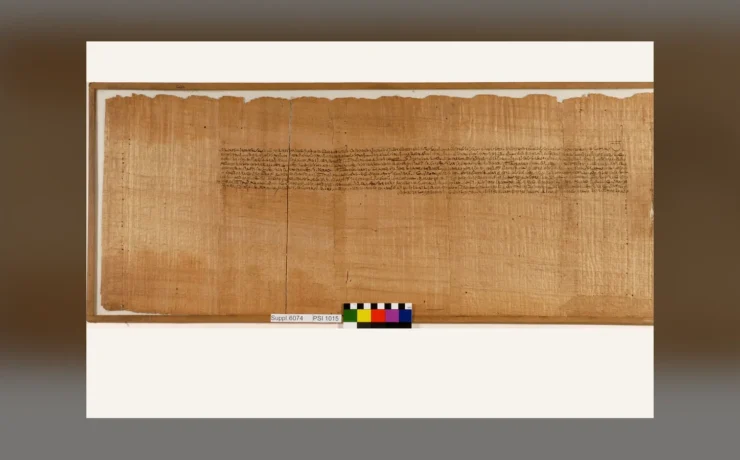
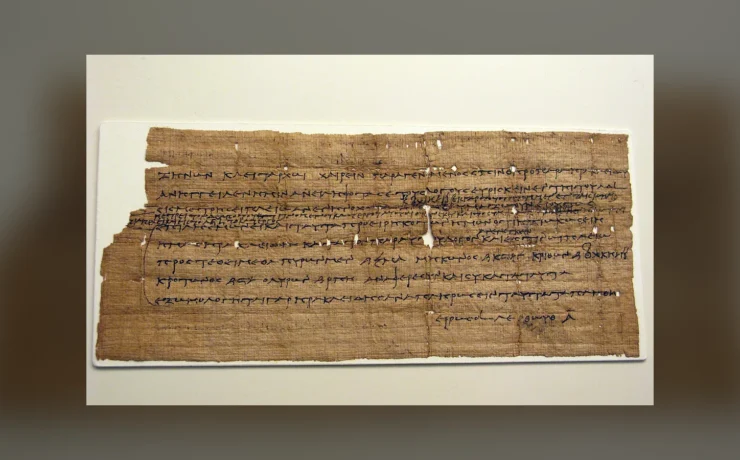
Kellis, modern Ismant el-Kharab, is one of Roman Egypt’s most informative excavated oasis settlements. Archaeologists working in the Dakhleh Oasis recovered domestic architecture, churches, a temple, accounts, household letters and texts connected with Manichaean communities. The surviving material gives unusual access to everyday life beyond the Nile valley. This original study distinguishes what excavations establish from what individual documents cannot reliably tell us.
The research follows Monash University’s Dakhleh Oasis Project and recent textile studies. For the regional context see Egypt’s archaeological atlas; to compare Roman Egyptian villages with different environments, consult the Karanis excavation study. All images below document the actual Kellis site and carry verified licenses.
Locating ancient Kellis in Dakhleh Oasis
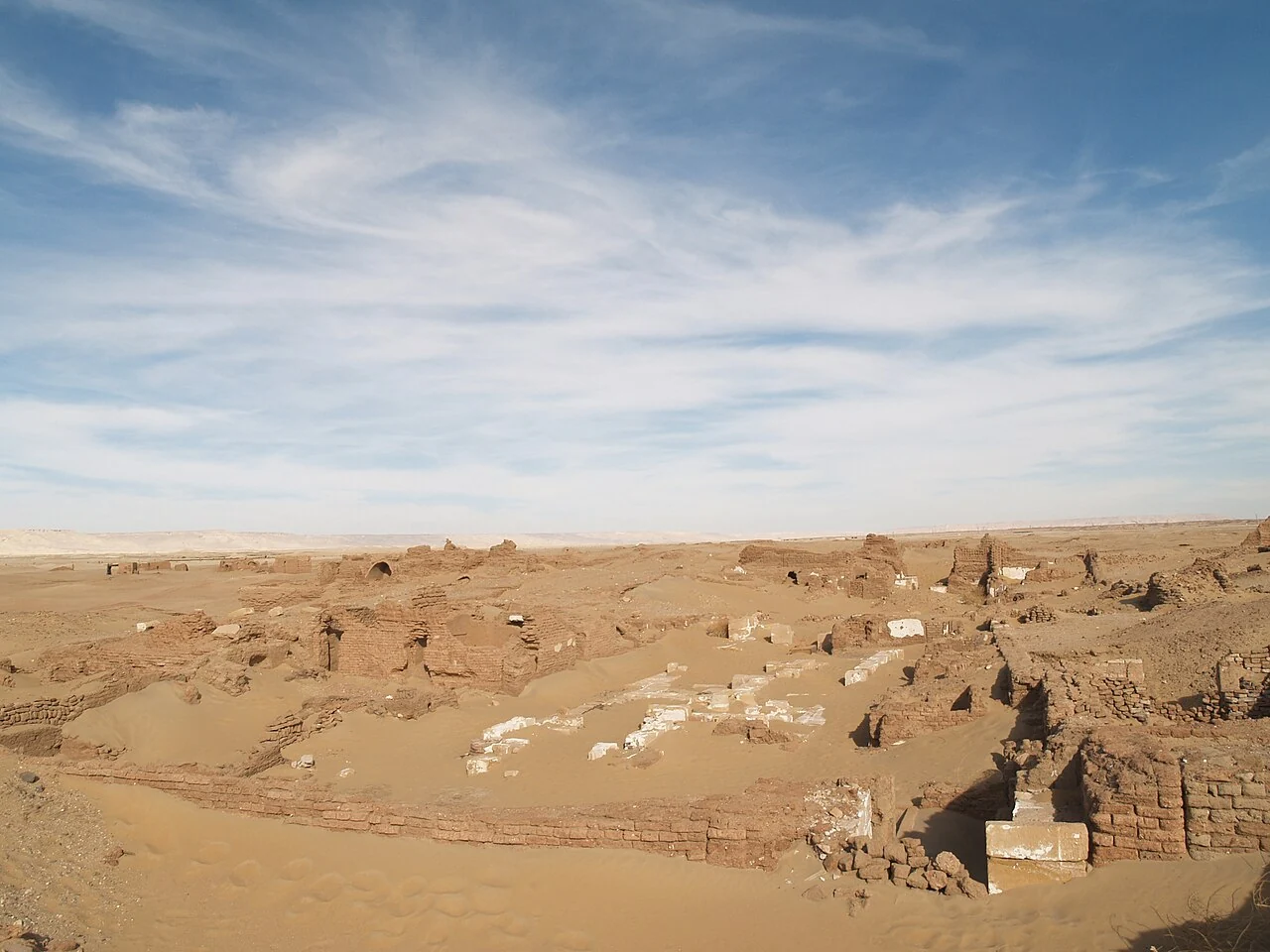
Kellis, the site now known as Ismant el-Kharab, lies in Egypt’s Dakhleh Oasis in the Western Desert. Its mudbrick ruins preserve parts of a settlement that developed during the Roman period and ceased to function as an occupied village around the end of the fourth or beginning of the fifth century CE. This geography matters because the community was not a Nile-side town. Oasis agriculture, communications through the desert and access to local resources shaped its experience of the Roman Egyptian world. The archaeological context allows scholars to examine how a distant settlement participated in broader administrative, economic and religious networks.
An online map of Kellis should identify the regional archaeological site, not pretend every excavated house, sanctuary or manuscript came from one precisely marked point. The Monash University team investigated multiple buildings and deposits. Finds have context only when they remain associated with recorded structures, layers and excavation documentation. The surviving ruins are not a reconstructed snapshot of village life at one date: occupation, repair and abandonment affected buildings over generations. The correct starting point is therefore a documented settlement with different phases rather than a romanticized lost desert city.
The Dakhleh Oasis Project and long-term excavation
Archaeological excavation and survey by the Dakhleh Oasis Project brought together specialists in architecture, ceramics, inscriptions, biological remains and written material. Monash University’s publication lists record work at Ismant el-Kharab from the 1980s onward, including reports by Colin Hope and colleagues. The resulting evidence covers domestic buildings, temples, churches, cemeteries, industrial activity and document finds. Such multidisciplinary work is essential because a papyrus may preserve the name of a person while a building explains the space in which that document was stored or discarded. One source cannot substitute for the other.
The excavation team’s reports are particularly valuable for their attention to context. A photograph of an exposed mudbrick wall, for example, is not enough to determine the religion or occupation of its builders. Related floors, finds, inscriptions and later modifications matter. As research and publication proceed, earlier interpretations may be refined. The existence of large collections of excavation photographs does not make them free to reuse: Monash’s research data archive imposes separate access and copyright conditions. The real site photographs used in this study instead come from Wikimedia Commons files with publicly verified Creative Commons licenses.
Why surviving papyri change our understanding of ordinary people
Kellis became important to historians partly because of a remarkable group of written materials from Roman Egypt. Letters, accounts and religious texts survive on papyrus and other writing surfaces. Their content extends far beyond royal decrees or monumental inscriptions. A household letter may concern clothing, money or family arrangements; an account may document payments, supplies or agricultural work. Together these records give scholars ways to ask how ordinary villagers communicated, organized work and responded to economic uncertainty. However, a text can only answer what it actually says, and some manuscripts survive in damaged or partial form.
The village’s documents are not a complete census of every resident. Literacy, access to writing materials and the accident of preservation shaped who appears in the records. The most detailed personal archives represent particular families and groups, whose experience cannot simply be extended to all inhabitants of the Western Desert. Dates based on handwriting, named officials or documentary relationships need careful treatment. When historians reconstruct family networks, they compare several letters and accounts rather than assuming that every mention of the same name refers to one person.
Greek, Coptic and other languages in the archive
The surviving archive contains Greek and Coptic documentary material, with additional linguistic and literary evidence discussed in specialist editions. Roman Egyptian administration often used Greek, while Coptic developed as a written form of Egyptian employing the Greek alphabet alongside additional signs. The coexistence of languages in one settlement does not imply that every writer was fully bilingual. A person could receive a letter in one language while economic or administrative business was recorded in another. Language choice could reflect schooling, genre, community or the practical purpose of a document.
Researchers therefore treat writing systems as historical evidence, not as simple labels for ethnic identity. A Greek-letter document found in Dakhleh does not prove that its owner migrated from Greece, just as a Coptic text does not automatically disclose the first language of everyone in its household. Specialist editions supply transcriptions, translations and information about damaged sections. Without those apparatuses, a short translated phrase can be overinterpreted. The documents from Kellis are exceptionally useful because their physical contexts can sometimes be considered alongside textual evidence, even when exact associations remain difficult.
The Kellis Agricultural Account Book
One of the better-known groups of documents is the Kellis Agricultural Account Book, a text studied in relation to land, payments and agricultural administration. The excavated context and the published edition help scholars interpret its entries in the economic life of the oasis. Agricultural records are useful not because they offer a simple national price list for Roman Egypt, but because they document locally meaningful transactions and relationships. Units of measure, accounting conventions and the meaning of particular entries require specialist interpretation, which should be tied to the original text rather than guessed from a modern currency value.
The existence of a detailed account also illustrates the limits of isolated numbers. A quantity of grain may represent rent, wages, tax, exchange or another obligation depending on the entry and associated archive. Scholars compare multiple documents and local archaeological evidence before reconstructing broader patterns of agricultural production. Oasis irrigation, access to fields and transport shaped the economy, but the precise size of any one landholding should not be inferred from a vague reference to farming. Kellis helps historians ask better questions about work in a desert settlement.
Manichaean families and religious documents
Kellis is a major source for the study of Manichaeism in Roman Egypt. Documents linked to Manichaean communities, including Coptic texts and letters, were recovered in domestic contexts, allowing scholars to investigate how a religious movement operated through households and social relationships. Manichaeism emerged as an international religion in Late Antiquity and was shaped by distinctive teachings about the cosmos, salvation and community practice. Its presence in Dakhleh should be studied through the excavated letters and religious texts rather than treated as evidence that every household belonged to the movement.
Religious terms found in the documents may identify participants, teachers or contacts beyond the oasis. But determining the beliefs of a particular named individual requires care, and the physical findspot of a manuscript does not prove everyone living in the same house endorsed its contents. The text may have been copied, circulated, stored or discarded at a later date. The excavations therefore challenge simplistic stories in which all villagers followed only one tradition. Kellis reveals a socially connected settlement whose religious life was complex and changed over time.
Christian churches and their architectural evidence
The Dakhleh Oasis Project has documented several early Christian churches at Ismant el-Kharab. Research published by Gillian Bowen examines the architecture, associated cemeteries and place of Christianity in the settlement. Monash University’s overview explains that three churches were built in the early fourth century and that the village was abandoned toward the end of that century. Such archaeological evidence is especially significant because many ordinary early Christian communities are better known from texts than from extensively preserved building complexes. Here, walls, rooms and burial grounds allow researchers to test interpretations based on writing alone.
These churches do not mean that religious change happened instantly or that older practices vanished on one date. A temple and a church may belong to different phases or to overlapping social traditions. Even when an excavated building is securely identified as Christian, its size does not automatically reveal the number of believers, the formal status of its clergy or the worship schedule of every inhabitant. Archaeological architecture is evidence for spaces and practices, while written sources help address identities and beliefs. The two forms of evidence work best when held together without forcing perfect agreement.
The Temple of Tutu, Isis and Serapis
Kellis was also home to a temple complex associated with the Egyptian god Tutu and with religious traditions involving other deities, including Isis and Serapis. Monash’s excavation bibliography contains studies of objects from the Temple of Tutu and of Isis and Serapis at Kellis. This makes the settlement a useful case for investigating Egyptian cult traditions under Roman rule. The presence of such a sanctuary does not imply a fixed, homogeneous religious system throughout the Roman centuries. Temple activity and its surrounding community can change before, during and after the construction of Christian buildings.
It is also important to avoid treating the temple’s existence as proof of a dramatic confrontation with every later church. Archaeological sequences reveal modifications, use and abandonment, but explaining the motives behind those changes requires more than proximity on a modern site plan. Inscriptions, cult objects and building chronology provide separate kinds of evidence. The interpretive challenge is to describe religious diversity while resisting the temptation to turn every adjacent ancient ruin into an uncomplicated story of replacement or conflict.
Women, letters and domestic textile production
The household archive preserves evidence relevant to domestic labor, including textile production. Jennifer Cromwell’s research on fourth-century Dakhleh examines documentary and archaeological evidence for textile work at Kellis. Written records can identify materials, production tasks and relationships among households, while tools or textiles help illuminate physical practices. Because many surviving documents are letters and accounts rather than formal occupational registers, they offer glimpses of routine work without giving a complete economic survey. Such evidence is especially valuable for the study of labor that monumental inscriptions often leave largely invisible.
A letter that mentions clothing or weaving is not necessarily proof of a large commercial workshop. Researchers need to distinguish household production, exchange, specialist work and other activities, and they also consider whether written references correspond to excavated implements. In a desert oasis, textiles mattered to daily life and to connections outside the settlement, but the movement of particular pieces may remain uncertain. The strongest reconstructions combine the form of a document with the material objects and domestic spaces where work happened.
Buildings, mudbrick and the archaeology of abandonment
The architecture of Kellis preserves a settlement built primarily from local materials, including mudbrick. Building survival in a dry environment can be remarkable, yet the exposed ruins represent buildings that were repaired, altered and eventually abandoned. Archaeologists document room sequences, courtyards, construction phases and deposits, then compare these observations with texts recovered nearby. Without that contextual work, a doorway or courtyard in a modern photograph is not evidence for the identity of a particular ancient family. Spatial interpretations must also allow for reused rooms and changing functions.
The relatively clear abandonment horizon makes the settlement useful for examining Late Antique material life. However, abandonment is a process, not necessarily one dramatic event. People may have left belongings, removed valuable objects, returned, or allowed structures to deteriorate over time. Different households could have departed at different dates. Scholars therefore avoid assigning every object to one final afternoon at Kellis. The remains help historians reconstruct stages of occupation and transition rather than a single catastrophic disappearance unsupported by the excavation reports.
Kellis compared with other Roman Egyptian settlements
Comparing Kellis with Karanis in the Fayum shows why historians need more than one representative Roman Egyptian village. The two sites belong to different landscapes. Karanis occupied an agricultural region near the Fayum, while Kellis was an oasis community reached by desert routes. Each preserves distinctive texts, structures and material assemblages. Similarities in administrative language or household objects may reflect broader Roman Egyptian institutions, while differences can arise from local environment, community composition, chronology or the accident of preservation. Neither settlement should be treated as a miniature copy of the other.
The comparison is most useful at the level of specific questions: which documents mention agricultural obligations, what evidence survives for domestic crafts, how can buildings be dated and what forms of religious practice are attested? A general statement that both towns were multicultural says much less than dated object-by-object evidence. The two places also offer different ways to understand the gap between imperial politics and ordinary daily lives. The desert oasis evidence gives its own answers, not merely an exotic footnote to the Nile valley.
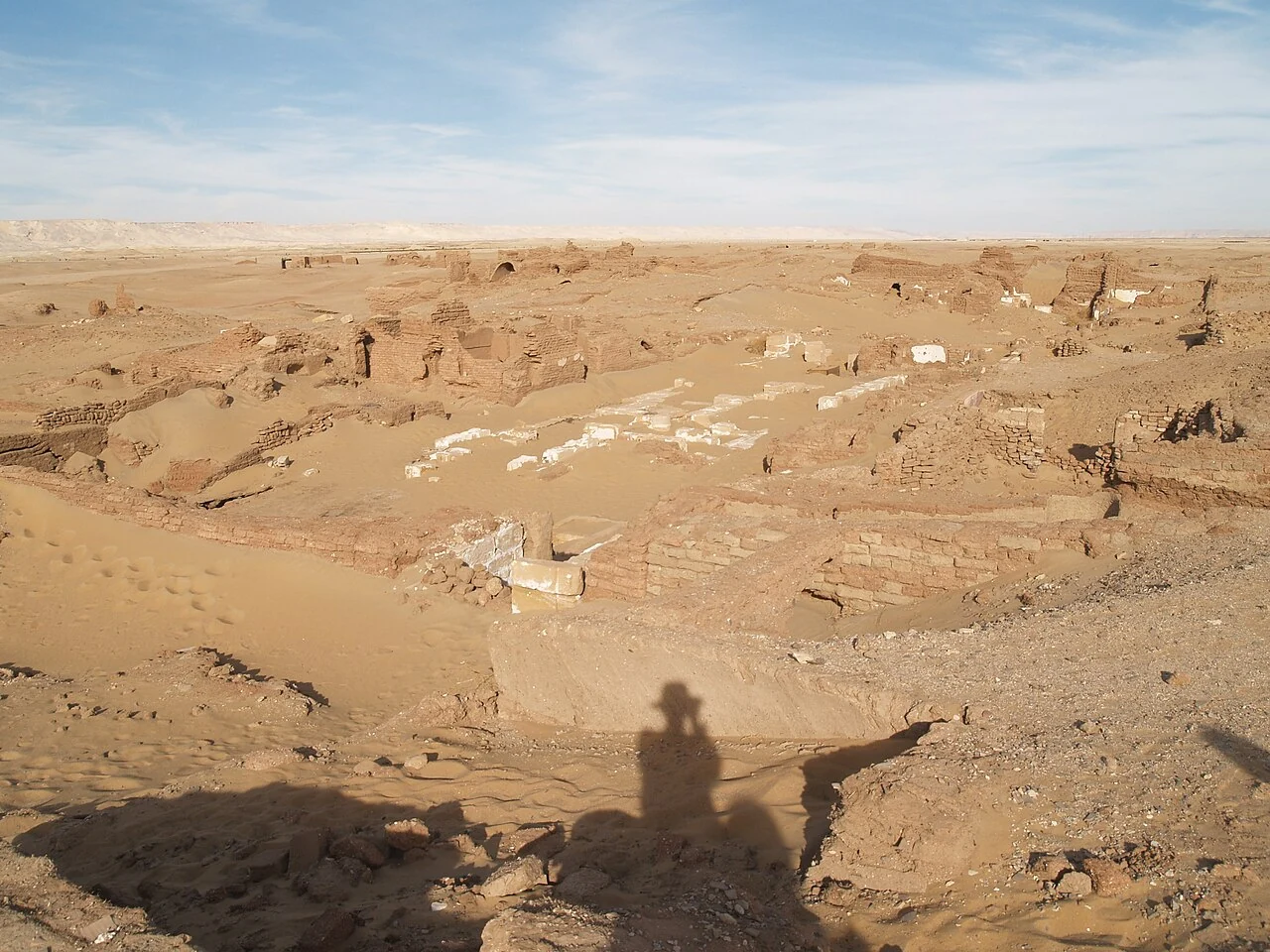
How to read genuine site photography
The two photographs presented here are real documentary views of the Kellis archaeological landscape supplied by the Institute for the Study of the Ancient World and shared via Wikimedia Commons under Creative Commons Attribution 2.0. Their captions identify the site generally rather than inventing the exact identity of a photographed room. This matters because a wide view of ruins cannot always establish a building’s religious function, excavation number or date. Those are claims to be verified against Monash field reports and published archaeological plans.
The images do not depict Greek or Coptic papyri from the excavations, and they are not synthetic reconstructions of ancient villagers. Photographs and manuscript facsimiles have different provenance and permissions. Monash’s archive of archaeological documents has separate access restrictions; no images from that archive are reproduced without an appropriate license. Showing a few accurately credited site photographs, alongside direct research links, is more useful than filling an article with unsourced pictures of unrelated Egyptian monuments.
What the Kellis archive can establish and its uncertainties
The excavated settlement and documents show that Kellis was a lively Roman-era oasis community with agricultural activity, families, varied writing practices and a complex religious landscape. Scholars can identify particular buildings, texts, names and activities within dated archaeological contexts. The record also demonstrates why the history of Roman Egypt cannot be written only from Alexandria, the Nile and imperial legislation. The voices preserved in the Western Desert illuminate relationships and problems that an official royal history would rarely mention. These conclusions are supported by the excavation program and published textual studies rather than by a speculative reconstruction.
At the same time, the documentary sample is not socially complete. Some records survive because of where they were discarded or stored, and some groups left far more writing than others. The exact timing of conversion, the movement of individual documents and the reasons for abandonment can require continuing debate. A responsible account marks those limits and points toward excavation publications. Kellis should be recognized for the extraordinary specificity of its evidence, not turned into a simplistic label for all late Roman villages in Egypt.
Site evidence compared
| Record type | What it helps establish | Limit |
|---|---|---|
| Letters and family archives | Named people, networks, domestic concerns | Not a full village population register |
| Agricultural account book | Transactions, locally recorded obligations | Amounts need specialized context |
| Manichaean documents | Presence and social ties of religious communities | Not proof of the beliefs of every resident |
| Churches and cemeteries | Architectural and burial practices in Late Antiquity | Do not document all conversions |
| Temple of Tutu | Egyptian cult traditions at Roman-period Kellis | Not the religion of every phase or household |
| Site photos | Current visible archaeological remains | Do not identify every room or manuscript |
Original excavation and scholarship sources
These references document the settlement’s architecture, texts and chronology. Detailed manuscript readings should be checked in the critical editions cited by the excavators.
- Monash University, Dakhleh Oasis Project and Christian Monuments of Kellis.
- Monash Dakhleh Oasis Project excavation and text bibliography.
- Monash University, Ancient Kellis: archaeological publications.
- Jennifer Cromwell, Domestic Textile Production in the Dakhla Oasis in the Fourth Century CE.
- Research Data Australia, archaeological document archive access and reuse restrictions.
Evidence and photo rights reviewed 2 November 2026. The documentary images show the excavated site, while any manuscript interpretation is attributed to the published excavation and textual studies.