Egypt’s 23 July Revolution of 1952 began with a coup by the Free Officers, but the monarchy ended and the republic emerged through a much longer sequence of documented events. This independent historical guide is built around archival dates, scholarly interpretations and carefully qualified evidence. It treats the overnight seizure of strategic command, Farouk’s later abdication, Naguib’s presidency and the political crisis of 1954 as distinct events rather than merging them into an official legend.
Read the chronology and original source links critically: American and British documents carry diplomatic perspectives, Egyptian government statements carry institutional interests, and participant memoirs are shaped by hindsight. None is an all-purpose referee. The article identifies what records verify, where historians disagree and which familiar claims should not be repeated as facts.
What exactly happened in July 1952?
The expression “23 July Revolution” refers to a military-led intervention that began in the night of 22–23 July 1952 and set in motion profound changes to Egyptian political life. For the first stage, the descriptive term “military coup” identifies how officers seized strategic authority without a national vote. “Revolution” is also the established name for the longer political and social transformation that followed. Those descriptions are not identical: one describes the initial transfer of control, and the other the subsequent reorganization of institutions, social policy and claims to national sovereignty. Treating either label as a complete explanation creates a historical shortcut. The event was simultaneously a military operation, a crisis of monarchy, and the opening of a prolonged struggle over Egypt’s future.
The chronology matters. King Farouk abdicated three days after the takeover, on 26 July 1952, leaving the crown to an infant successor; the republic was not established until 18 June 1953. Mohamed Naguib became the first president, and Gamal Abdel Nasser subsequently consolidated power during a political struggle extending into 1954. Contemporary American diplomats described a rapid coup, while Joel Gordon’s historical research analyzes how the officers became the center of an enduring new political order. These are useful but distinct types of evidence: a diplomat’s near-contemporary report and a historian’s later synthesis answer different questions.
Before the officers: an independent kingdom with limited sovereignty
Long before 1952, British influence complicated the status of Egypt’s constitutional monarchy. British military occupation began in 1882, and London declared Egypt a protectorate during the First World War. The unilateral British declaration of Egyptian independence in 1922 did not end every reservation concerning imperial defense, communications and the position of Sudan. Under the 1936 Anglo-Egyptian treaty, military arrangements changed but British forces remained tied to the Canal Zone. These legal and diplomatic facts explain why nationalist debate in Egypt could persist even though the state was described as independent and possessed recognizable ministries, political parties and a throne.
That complexity is often flattened by competing retrospective accounts. A romantic account of the monarchy can ignore British pressure and severe economic inequality. A purely celebratory account of the officers can erase the parliamentary institutions, political parties, newspapers and labor organizations that existed before their takeover. The earlier Egyptian Revolution of 1919 offers an essential comparison: mass demonstrations and strikes helped reshape debates about independence, whereas July 1952 was organized inside the armed forces. The Egyptian public was not simply absent from political history before the military stepped in, nor was every pre-1952 institution representative or free of pressure.
Farouk, parliamentary politics and the pre-revolution crisis
Farouk had been king since 1936. By the early 1950s the royal court faced intense public criticism concerning patronage, spending, political interference and the kingdom’s response to national emergencies. Criticism of a court is itself a documented political reality, but it should not be converted into unsupported findings of guilt about every person associated with it. The monarchy functioned alongside a cabinet system, an elected parliament at various times and parties such as the Wafd. Real political disagreement included disputes between politicians, palace officials, labor organizers, students, religious groups and foreign authorities.
The failures of the 1948 war in Palestine damaged confidence in the armed forces and the political system. Some future Free Officers understood the war as a formative experience, but soldiers’ later memoirs must be read as accounts shaped by hindsight. The Cairo fire of January 1952 intensified instability, yet assigning a definite organizer for every act of destruction remains problematic when the evidence is disputed. A responsible historical account should describe these conditions without presenting one culprit or one grievance as definitively explaining all participants. Gordon’s work explicitly considers the gap between the officers’ rhetoric of national rescue and the complicated political society they displaced. His study of revolutionary jurisprudence is particularly relevant to the changes that followed.
Who organized the Free Officers and what is still uncertain?
The Free Officers were a clandestine network of Egyptian military personnel, not a nationwide party whose membership had been independently counted. Gamal Abdel Nasser played an important organizing role, while Mohamed Naguib, an older and highly regarded senior officer, offered a prominent public identity for the movement. Other officers participated with different levels of responsibility, and subsequent political rivalry changed how each man’s contribution was remembered. The distinction between clandestine organization, public command and later office-holding prevents the historically inaccurate statement that one man personally executed the entire operation.
The membership and planning history are reconstructed from surviving testimonies, diplomatic reporting and later scholarship; each type of source has limits. Participant memoirs contain valuable detail but may reflect loyalty, grievance, or a desire to explain the writer’s later status. Foreign intelligence accounts could be wrong about an underground organization’s membership and motives. Public anniversary accounts often name prominent leaders while neglecting lesser-known officers. The contemporary American diplomatic report is a record of what diplomats believed at the time, not a substitute for all Egyptian evidence. In its turn, Gordon’s university-press research traces differences within the officers as they moved from secret conspiracy to formal rule.
Night of 22–23 July: the military seizure of control
During the night of 22–23 July, coordinated groups of officers moved to control key military command sites and senior personnel around Cairo. The military operation sought to neutralize commanders who could organize resistance and to make effective use of communication channels. In a summary written during the crisis, American diplomatic officials described the operation as rapid and initially involving approximately three hundred officers. That estimate is an observer’s report about the operation, not a complete census of the Free Officers organization or proof that the figure never changed.
A common commemorative narrative treats the overnight success as the entire revolution. In reality control of barracks and ministries is different from legitimacy, a constitution, electoral consent, land policy, or international recognition. The military action did not immediately settle who would govern, whether the monarchy would formally survive, or how Egyptians could contest the new authorities. Different accounts also vary in the sequence of individual unit movements. Without command logs for every participating formation, exact minute-by-minute reconstructions should not be asserted as established fact. The carefully dated Foreign Relations of the United States report and Egyptian archival accounts provide a firmer basis for the broad sequence than later fictionalized scenes of a single decisive confrontation.
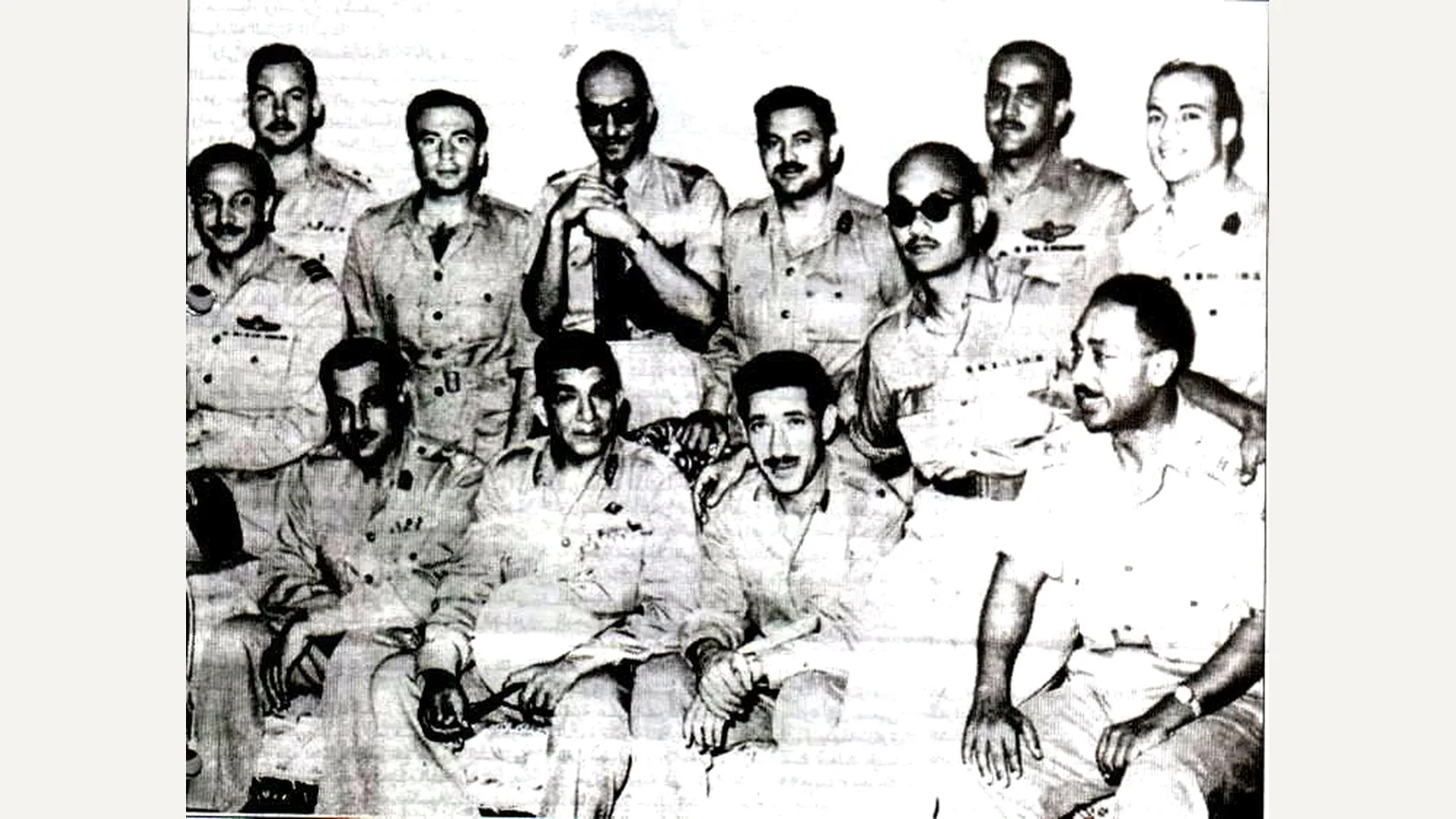
Radio statements and the promises of July
The officers broadcast an announcement to explain the intervention and present their political intentions. Egyptian historical accounts identify Anwar Sadat as the officer who read the early radio statement associated with Mohamed Naguib. The radio was important because military control could be translated quickly into a national message that reached people far from the command centers. Themes of corruption, military reform, sovereignty and constitutional order figured in the movement’s presentation. Those themes were significant to its public appeal, but an announcement cannot, by itself, demonstrate that a stated goal was achieved.
Several questions must therefore remain separate: what did the announcement actually say, what did the officers intend at that moment, and which policies did they subsequently carry out? Later political programs should not be silently inserted into the opening broadcast as if already enacted in July. The slogans repeated at annual ceremonies are also not always exact transcriptions of the original speech. For an educational encyclopedia, the honest approach is to label a speech as a primary source for the movement’s self-description while checking the consequences against laws, documents and independent research. This method avoids both reproducing the government’s promotional language and reflexively dismissing every declared concern as insincere.
26 July: Farouk’s abdication was not the end of the monarchy
After the military intervention, senior officers pressed King Farouk to abdicate. On 26 July 1952, he relinquished the throne in favor of his infant son Ahmed Fuad II and departed Egypt. The abdication followed a direct ultimatum and was formally documented in royal instruments. The child did not exercise political power himself; a regency framework preserved the formal institution of monarchy even while decision-making shifted to the military-centered leadership. Describing 23 July as the date Egypt became a republic erases an important legal interval of almost eleven months.
The documentary evidence here is unusually clear. A contemporary United States diplomatic account recorded the abdication and the arrangements for the new child king. Later reporting on material released by Egypt’s National Archives reproduced the letter demanding Farouk’s abdication and the decree signed at Ras El-Tin. A scan of a signed document can establish the date and language of an instrument, while debates about why Farouk accepted the ultimatum require a broader source base. The distinction between formal status and actual authority is the central historical fact.
From a nominal child king to the Republic of June 1953
The monarchy formally remained in existence after Farouk sailed from Alexandria, but its political position was fundamentally weakened. The officers oversaw an evolving interim government and the Revolutionary Command Council. They operated through civilian cabinets and direct interventions before assuming an increasingly explicit governing role. Political authority, legal continuity and public representation no longer lined up neatly. This unsettled period is essential for understanding how a movement initially presented as corrective military action came to replace the constitutional arrangements in which it arose.
On 18 June 1953 Egypt was proclaimed a republic. Mohamed Naguib became its first president. The new constitutional title did not mean that Egypt had instantly acquired the fully competitive parliamentary system some civilians wanted, nor did it mean that all members of the command council agreed on their future roles. The independent chronological evidence is strong: the Foreign Relations of the United States biographical register explicitly notes the infant Fuad’s succession and the later date of the republic. An English-language description of Egyptian National Archives material identifies Naguib’s presidency and related political documents. The mistake of replacing a year-long transition with a single July date is one of the clearest examples of how slogans can corrupt historical chronology.
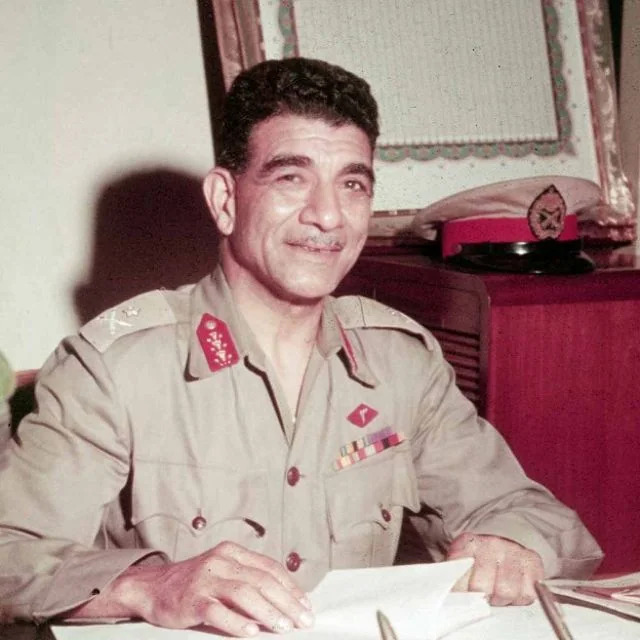
Revolutionary Command Council: authority without ordinary elections
The Revolutionary Command Council emerged as a center of the new system. Its decisions increasingly mattered more than older constitutional procedures, even while civilian ministers continued to appear in the government. The council’s members did not simply inherit a detailed and unanimously agreed long-term constitution. They argued about the military’s role, political parties and how quickly civilians should regain authority. The structure gave a relatively small group of officers influence that cannot be equated automatically with the preferences of all Egyptian citizens.
This is not a judgment invented from a present-day political position. In Gordon’s account of the first six months, the officers initially contemplated purges and limited reform but gradually regarded themselves as rightful rulers. As resistance and rival interests grew, parties were abolished and direct military-backed authority expanded. Understanding this progression makes it possible to document real attempts at social reform without calling the political process democratic merely because its leaders said they served the people. It also helps students distinguish cabinet titles, public popularity and constitutionally accountable government, which are separate things in the surviving record.
Land reform: what the 1952 law actually changed
The September 1952 agrarian reform was one of the earliest substantial policies of the new regime. It put a ceiling on large agricultural holdings, initiated redistribution arrangements and intervened in tenant-landlord relationships. Contemporary and retrospective economic research records a ceiling initially set at two hundred feddans per person, subject to legal qualifications that should be checked before using the number as a universal family limit. Agricultural land mattered economically and politically in a country where rural inequality had long been severe. The measure changed property rights and the bargaining environment for parts of the countryside.
But legislation is not identical to results. Implementation had to cope with land quality, local power relationships, tenancy, compensation and the existence of very poor rural families who did not necessarily become owners. A recent empirical analysis from the World Inequality Database research team finds that the reform reduced land concentration and the dominance of the landed elite, while failing to raise up many of the poorest proprietors and landless people. A scholarly review of Gabriel Saab’s agrarian reform study also discusses variations in outcomes by region and tenant circumstances. A credible article can present redistribution as an important structural change and still report beneficiaries who remained excluded.
Who benefited, who did not, and the need for denominators
Claims that land reform “liberated the Egyptian peasant” are historically incomplete unless they name the rural population being measured. A tenant whose contract became more secure, a small owner who received additional land, a family that stayed landless and a displaced large landowner encountered the reform very differently. Agricultural land was not homogeneous: irrigation, soil, labor, access to credit and local market conditions could affect the value of a nominally equal holding. A statistic about the share of land transferred would not by itself tell us whether household income, nutrition or education changed.
The strength of recent quantitative work is that it compares ownership distributions over long periods rather than citing an anniversary speech as an economic dataset. The 2025 World Inequality Lab findings explicitly qualify the reform’s effects on poor landowners and the landless; the study should be read with its period definitions and methods. Conversely, it is also wrong to claim that a measure with uneven benefits therefore changed nothing. The historically serious conclusion is narrower: land concentration was altered, but redistribution was not a universal escape from poverty. Where precise percentages disagree between authors, Kemet Vault should explain the denominator, date and underlying evidence before publishing a number.
Workers, Kafr el-Dawwar and political limits
The new leadership did not simply move from reform to an era of unrestricted worker participation. Conflict with organized labor appeared early. The Kafr el-Dawwar labor disturbances in 1952 and the subsequent harsh crackdown are documented in academic studies of Egyptian anti-colonial and labor politics. This history complicates anniversary narratives depicting all workers as enthusiastic and fully represented partners in the officers’ program. Worker demands about working conditions, wages and independent representation should not be collapsed into the policy choices of the state.
The existence of a crackdown does not mean every initiative involving workers was a deception or that working conditions never improved under later policies. It means civil liberties and labor rights must be evaluated separately from distributive or industrial measures. Cambridge University Press research on Egyptian anticolonial afterlives explicitly situates the Kafr el-Dawwar repression within longer labor-history debates. Joel Gordon’s broader account studies the suppression of rival political movements during the consolidation of military rule. This is a test of honest historical writing: it should neither suppress repression to protect the officers’ image nor erase policies solely because coercion was also present.
Political parties, civilian movements and the erosion of pluralism
Egypt in the early 1950s contained multiple organized political currents. These included the Wafd, liberals, left-wing groups, religious movements, professional networks and trade unions, as well as military factions. The officers did not become the sole voice of Egyptian politics at the moment of the coup. Restrictions on parties and independent organizations developed over time as the Revolutionary Command Council sought greater authority. Political opposition could challenge the new military rulers on both constitutional and ideological grounds, sometimes while rejecting the old monarchy.
Gordon’s archival study explains that the officers came to see political resistance as an obstacle to their own governing legitimacy. The eventual abolition of parties was therefore not a natural or inevitable expression of all Egyptians’ wishes; it was a concrete governing decision made amid conflict. To understand what was lost or changed, students must consider how elections, association, censorship and independent campaigning were organized before and after the intervention. A state may enact popular social policies while restricting political competition. Both observations can be true simultaneously, and the evidence needed for each should be kept separate. Read the Oxford chapter on abolition of parties for the institutional sequence.
The 1954 constitutional crisis and the Naguib–Nasser conflict
A major crisis erupted in 1954 around the place of Mohamed Naguib, the role of the military leadership and the demand to restore civilian authority. Naguib had substantial visibility and supporters; Nasser also developed increasing institutional influence. The struggle was not reducible to the personality or ambition of two men alone. Political parties, intellectuals, religious and left-wing organizations, street demonstrators and factions within the armed forces all mattered to the outcome. For some participants, returning the officers to their barracks was a central demand; for others, continuing military guardianship seemed essential to protect the changes begun in 1952.
In Joel Gordon’s treatment of the March crisis, the protests and political maneuvers are presented as a turning point for the council’s consolidation. Hazem Kandil’s Oxford study separately analyzes military, security and political dynamics, including repression of demonstrators and growing isolation of Naguib. The period was not a straightforward referendum on Nasser. Its record reveals competing visions of constitutional restoration, revolutionary leadership and control of security institutions. Researchers should identify precisely which demonstrations occurred, who organized them and whose contemporaneous account survives, rather than infer unanimous national opinion from crowds in selected photographs.
Naguib’s removal and Nasser’s eventual presidency
Mohamed Naguib’s removal from the presidency in November 1954 followed the deeper crisis of that year. The event changed the official leadership of the republic and his personal circumstances, but it did not retroactively erase his earlier role as the first president. Histories that skip straight from King Farouk to a presidency under Gamal Abdel Nasser in 1952 confuse the military command structure with the formal constitutional office. They also hide the importance of internal conflict in the consolidation of the new system.
Nasser eventually became president in 1956, after the political order had changed considerably from the arrangement in June 1953. Both Kandil’s analysis of the regime struggle and Gordon’s research on the early officers give reasons to distinguish the initial military coalition from the later leadership. It is reasonable to discuss Nasser’s dominant role in reshaping Egypt, but not to write Naguib out of the chronological record or turn the early 1950s into an inevitable march toward a single outcome. The history of the officers’ disagreements helps explain the political institutions that developed afterward.
Britain, the Canal Zone and the limits of the independence narrative
British withdrawal from the Canal Zone was a defining nationalist objective, but it happened through a sequence of negotiations and agreements after July 1952. British troops had remained under arrangements that predated the military takeover. The Anglo-Egyptian agreement of October 1954 established provisions for evacuation and the future of the Suez base. Acknowledging that agreement matters because claiming all foreign forces disappeared in July 1952 would be a chronological error. The subsequent completion of the evacuation in 1956 belongs to the larger story of Egypt’s evolving sovereignty.
Diplomatic archives illuminate what British and American officials wanted, what the Egyptian delegation demanded, and the extent to which the parties trusted one another. Those archives are indispensable records of negotiations but also express the priorities of foreign governments. Independent historians can test their assertions against the treaty, contemporaneous Egyptian documents and later developments. The 1952–1954 Foreign Relations volumes identify the Canal Zone and Sudan discussions as major subjects. For longer background on the waterway, Kemet Vault’s Suez Canal construction history covers the nineteenth-century labor, engineering and imperial setting that long preceded 1952.
Sudan and the different meanings of self-determination
The name of the Egyptian crown during Farouk’s final reign included Sudan, but the territory’s political future was not merely a royal title to be passed along. Egypt, Britain and Sudanese political actors had different interests, and the Sudan question formed part of negotiations after the officers seized power. A simplified nationalist story can inadvertently exclude Sudanese agency by portraying the region only as an object of agreements between Cairo and London. The transition toward Sudanese independence must therefore be researched as a separate historical process with its own parties and decisions.
The 1953 Anglo-Egyptian agreement concerning Sudan is documented in the foreign-relations series. That treaty was neither an instantaneous achievement of full Egyptian control nor a referendum on every Sudanese opinion. The distinction between Egyptian anti-imperial claims and Sudanese self-determination should be preserved. Historians must also distinguish the aspirations voiced by officers in Cairo from the eventual institutional decisions taken by Sudanese actors. This is a case where using multiple national archives is especially important, because each government’s memory may privilege its own role in the outcome.
1956 and the longer aftermath: avoid compressing decades
The political transformation begun in July 1952 was still underway in 1956. The adoption of a new constitutional framework, Nasser’s formal presidency, British evacuation and the crisis connected with Suez belonged to later phases. The Suez Canal nationalization of July 1956 and subsequent international conflict require independent treatments: treating them as incidents that happened in 1952 would create an inaccurate narrative. Each decision involved specific international relationships, financing, domestic politics and military calculations.
Similarly, later industrial policies, university expansion, state ownership and land measures cannot all be credited or condemned as immediate results of the first coup without chronology and evidence. A serious history can discuss long-term impacts while identifying the date on which a law passed, when an institution opened and which population was actually affected. That approach allows the 1952 event to serve as a meaningful starting point without converting it into a magical origin for everything that happened over the next two decades. The period after 1956 deserves follow-up articles rather than unsupported retrospective lists of successes and failures.
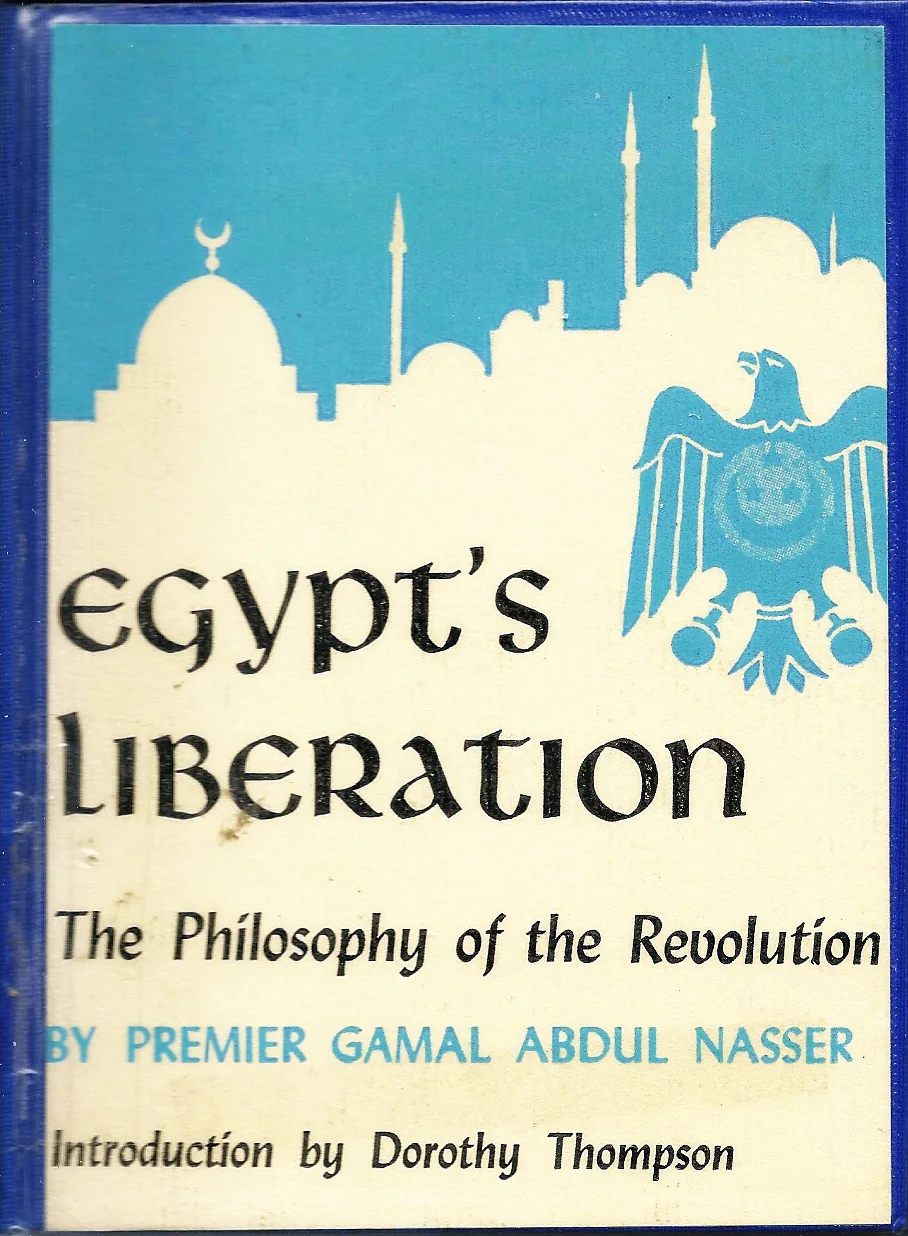
Source criticism: Egyptian, British, American and participant archives
A primary document is not automatically an objective document. A British dispatch records what a British official observed, heard and regarded as strategically important. An American embassy cable may contain accurate dates and mistaken rumors in the same report. Egyptian announcements record the language and priorities of their issuing institutions, not necessarily the views of every resident. Memoirs preserve valuable first-person testimony but can be shaped by later rivalries or the author’s memory. The useful question is not “which country’s account should we believe?” but “what was this source created to do, and which claims can another type of evidence confirm?”
For example, the 1952 US report provides a dated reconstruction of the overnight takeover and abdication. The published account of Egyptian archival instruments links the abdication to documents produced by the monarchy and officers. Gordon’s Oxford monograph studies the broader political transformation, while economic researchers using land-ownership data address outcomes not reliably measured by speeches. These sources come from different institutional settings and answer different historical questions. No one archive should be allowed to transform its preferred language into an unchallenged account of all Egyptians’ experiences.
Eight claims this encyclopedia will not repeat as settled fact
A useful historical encyclopedia should state what it refuses to claim. It will not say the republic was founded on 23 July 1952, that Nasser became president that morning, that all Egyptian political currents unanimously endorsed the officers, or that every peasant gained land. It will not attribute the January 1952 Cairo fire to a named organizer without adequate documentation. It will not interpret a photograph of the Revolutionary Command Council taken or catalogued in 1953 as a camera record of the actual coup. It will not treat an undated memoir as proof of a minute-by-minute sequence inside military headquarters.
Nor will it present the overthrow of Farouk as synonymous with the end of every foreign influence, or a successful land ceiling as proof that rural poverty vanished. These exclusions are not designed to defend one political camp. They follow basic standards used in historical scholarship: date every event precisely, distinguish legal action from implementation, keep conflicting perspectives visible, and trace claims to the best surviving evidence. In areas of genuine disagreement, the article reports that disagreement rather than manufacturing certainty. Where the source base is thin, a truthful omission is better than an apparently complete but invented anecdote.
Chronology: what is secure and what should be qualified
Dates are valuable anchors but should not crowd out interpretation. The chronology below separates immediately dated events from longer processes and identifies which source category establishes each line. It helps readers identify the period between the coup and the republic, the distinction between social policy announcements and outcomes, and the political crisis that split the original officer coalition. Every chronology is selective: other local events, labor struggles, press conflicts and minority experiences belong in deeper research.
The table is not a celebration and it is not a prosecution brief. It is an evidence-led map showing which statement follows from a dated document and which requires later historical analysis. Each line can be checked against the source ledger and its linked publications. The longer-term social and cultural consequences of July 1952 extend beyond these dates and should not be reduced to a list of rulers.
| Date | Event | Evidence type and qualification |
|---|---|---|
| Night 22–23 July 1952 | Free Officers’ military takeover | Contemporaneous embassy reporting + scholarly histories; operational details may differ |
| 26 July 1952 | Farouk abdicates; infant Fuad II succeeds | Royal instrument, archival report and diplomatic record |
| September 1952 | Initial agrarian reform law and land ceiling | Dated legislative changes; impact must be measured separately |
| Early 1953 | Party restrictions and consolidation of officers’ authority | Institutional changes analyzed in Gordon’s scholarship |
| 18 June 1953 | Republic proclaimed; Mohamed Naguib first president | Official proclamation and independently recorded diplomatic chronology |
| March 1954 | Political crisis over Naguib, military and civilian rule | Scholarly reconstructions of competing movements and internal conflict |
| October–November 1954 | Canal Zone agreement; Naguib removed from presidency | Diplomatic agreement, official chronology and historical research |
| 1956 | Nasser takes formal presidency; British evacuation; later Suez crisis | Distinct later events, not part of the 1952 takeover itself |
What July 1952 changed, and what historians still debate
The overthrow of Farouk and abolition of the monarchy unquestionably changed the legal organization of the Egyptian state. The Revolutionary Command Council’s concentration of authority, changes to party politics, agrarian legislation and negotiations concerning British forces were substantial events with dated evidence. The meaning of those changes for different Egyptians is more difficult to summarize. Landowners, tenants, landless laborers, industrial workers, students, civil servants, political activists and people in minority communities did not necessarily experience the same opportunities or costs.
Historians disagree about the relative weight of nationalism, social reform, military self-interest, popular consent and political coercion in assessing this period. The disagreements should be reported through named authors and specific findings rather than reduced to a false balance of slogans. Gordon analyzes the officers’ consolidation and reform program; Kandil emphasizes the institutional power struggle; land-inequality researchers test one set of social outcomes with data. Each provides evidence on a different question. The result is a fuller account that admits historical complexity without pretending all interpretations are equally supported by the available records.
Archival photographs: what the camera does not prove
Photographs of leading officers are a record of a visual arrangement and a surviving reproduction, not a universal eyewitness view of an entire historical event. A later press scan may identify a group and assign a year even though the original photographer, negative or contemporaneous caption has been lost. This is why image captions in this article explicitly distinguish a file’s catalogue attribution from independently checked historical events. A portrait can identify Mohamed Naguib in an official period without confirming where he was on the night of 22 July.
The same warning applies to printed ideological documents. A 1954 book cover attributed to Nasser is strong evidence that such a publication circulated under his name, not direct evidence that the stated philosophy explains every officer’s intention in 1952. None of the three illustrations here is presented as an AI reconstruction, and none is used to identify a person or date beyond the image’s documented limits. Reproduction permission is based on each Wikimedia Commons page’s public-domain classification, which is recorded in the photo inventory. Image provenance and the truth of claims made about an image are related but distinct checks.
Further reading and a reusable verification method
Readers seeking more than an anniversary narrative should begin with Joel Gordon’s Nasser’s Blessed Movement, a scholarly treatment drawing on previously opened foreign records and interviews. For the struggle over the military’s governing role, Hazem Kandil and Gordon’s discussion of the March 1954 crisis are valuable companions. For a near-contemporary diplomatic reconstruction of the first days, consult the United States State Department’s edited Foreign Relations series, but read it critically as the record of a particular foreign government. For land redistribution, prioritize data-based studies and check which farms and households were counted.
A reusable method is to classify each sentence before publication. Label a claim as documented chronology, primary-source assertion, cross-checked institutional fact, quantitative inference, disputed interpretation, or unknown. Then attach a date, accountable source and explicit qualification if necessary. Compare at least two institutionally independent sources for consequential assertions wherever possible. Keep a separate inventory for original photographs: photographer, original repository, file description, known exposure date, reuse rights and uncertainty. The linked National Museum of Egyptian Civilization guide demonstrates how documentary images can be placed within broader Egyptian historical and material context without inventing photographs or artifacts.
Frequently asked questions about Egypt’s 1952 revolution
Did Egypt become a republic on 23 July 1952? No. The officers seized military control then; Farouk abdicated on 26 July, his infant son formally succeeded him, and the republic was proclaimed on 18 June 1953. Was Nasser the first president? No. Mohamed Naguib was the first republican president. Nasser later became president in 1956. Is “coup” or “revolution” the correct term? “Military coup” describes the initial takeover; “July Revolution” is the established name for the broader transformation. Responsible history explains why the terms refer to different aspects of the event.
Did the land reform help everyone? No. It altered land concentration and landlord-tenant relations but research documents uneven gains and exclusion of many of the poorest. Were all Free Officers in agreement? No. Subsequent disagreements over political authority were fundamental to the 1954 crisis. Are the photographs actually from 23 July? The historical image catalogue specifies different years and original custodianship is incomplete for several reproductions. They illustrate the relevant period, not verified exposure during the coup. Which sources are used? Dated diplomatic records, historical documents released through Egyptian archival institutions, scholarly monographs, recent economic research and explicitly qualified period photographs.
Editorial disclosure: Last substantive source review 26 October 2026. Claims of shared public motivation, miraculous social change, exact troop counts and precise photograph capture dates are not inferred without evidence. Sources are linked next to interpretive sections and separately inventoried below. This article is an original educational research synthesis, not a newspaper anniversary text.