In early April 1876, Egypt’s government stopped making scheduled payments on part of its debt. This was not a sudden discovery that Khedive Ismail liked expensive palaces. Years of borrowing, falling revenues and increasingly difficult loan terms had left the treasury in a position where creditors were no longer willing to wait. Within weeks, an international debt commission was given a direct claim on parts of Egypt’s income.
The crisis helps explain how a government could lose control of its finances before losing its ruler. It also shows why the history of Ismail’s ambitious building projects cannot be separated from the terms on which money was borrowed to fund them.
How Egypt became so dependent on lenders
Ismail inherited a state that already carried external debt when he came to power in 1863. Under his rule, borrowing accelerated. Some loans supported transport links, public works and parts of a fast-changing economy. Others were connected with costly military campaigns, court expenditure and the struggle for greater autonomy from the Ottoman Empire.
The International Monetary Fund’s historical study of public debt places Egypt’s funded debt at around £69 million by 1876, alongside a floating debt of roughly £26 million. Those are categories and period estimates, not two figures that can be added uncritically to every alternative account. Historians distinguish nominal loan amounts, actual cash received, interest charges and liabilities that were later restructured.
Rising debt would have been difficult even if international conditions had remained favorable. Cotton prices fell after their earlier wartime boom, and the international financial crises of the 1870s made new borrowing harder. By the mid-1870s, Egypt’s government was approaching the point where fresh loans could no longer cover the servicing of earlier ones.
The Suez Canal shares were sold, but the crisis remained
The Suez Canal is central to the story, though not because the canal alone caused the entire debt. Its construction and Egypt’s obligations connected to it had financial consequences. In 1875, the Egyptian government sold its shares in the Suez Canal Company to Britain. The Bank of England’s historical record describes the purchase of 176,602 shares and the resulting government holding.
For Britain, the shares were strategically valuable. For Egypt, the sale raised immediate cash but did not reverse the underlying debt burden. A government selling a major holding to meet urgent payments may gain temporary breathing space while losing an important source of future financial power.
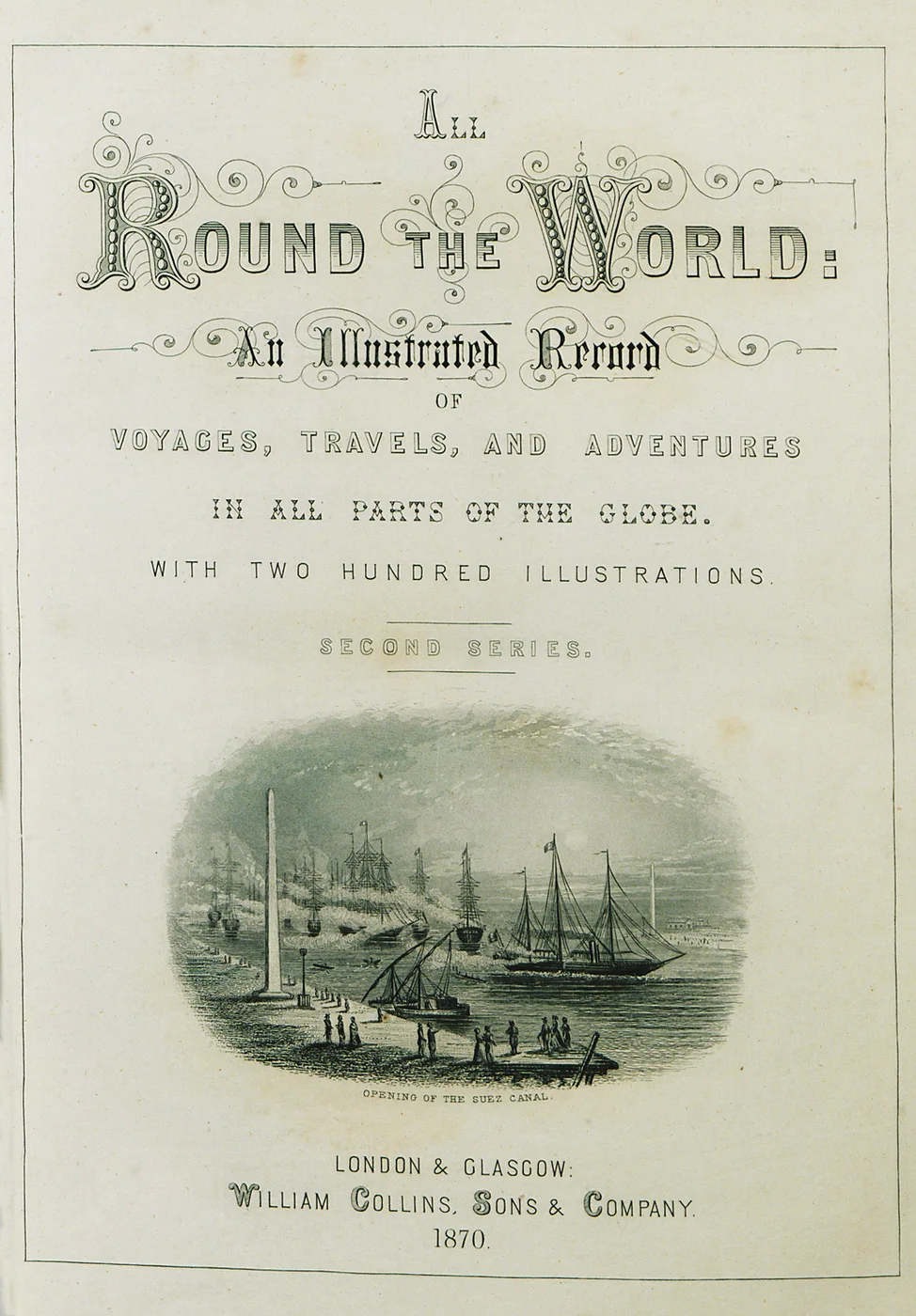
The opening of the canal in 1869 became a symbol of Ismail’s international ambitions. The period illustration below records that world of ceremonies and infrastructure. It is not a photograph of the debt commission and should not be used as proof of how the 1876 negotiations were conducted.
6 April and 2 May 1876: a crisis becomes an institution
The government’s inability to meet obligations reached a visible point in April. On 6 April 1876, payments were postponed. Then, on 2 May, a decree established the Caisse de la Dette Publique, commonly known as the Public Debt Commission.
Representatives of creditor governments were given authority over specified Egyptian revenues intended for debt repayment. The commission could receive assigned income without passing through the normal budgetary discretion of Egypt’s finance ministry. Contemporary financial history and later scholarship emphasize why this represented more than bookkeeping: control over collection and allocation of public revenue is a major part of governing.
The French public-finance historical study details the April suspension and the May decree, including assigned sources such as customs duties and particular taxes. These arrangements were not the occupation of Egypt by a foreign army in 1876. They were a significant shift in fiscal authority that made foreign governments and creditors participants in decisions affecting domestic policy.
Why a commission could change ordinary government
When lenders hold a claim on a specific stream of government income, other priorities must compete for what remains. Railways, administration, wages, military spending and public works all depend on the same budget. A debt arrangement can therefore reshape politics even without replacing a local ruler.
The IMF study discusses the commission’s powers over assigned revenues and restrictions around new borrowing or taxation. The central issue was sovereignty: which decisions could Ismail make as ruler, and which now required the consent or cooperation of foreign financial representatives?
It would be misleading to say that the Public Debt Commission immediately controlled every aspect of Egyptian society. Its authority arose from particular financial arrangements, then became part of a wider system of intervention. The sequence matters because the tightening of control unfolded over several years, rather than in one afternoon.
1878: the inquiry brings the argument into cabinet politics
By 1878, questions about the debt had grown into a dispute over the structure of the government itself. An international commission of inquiry investigated Egypt’s finances, and proposals for reform helped shape the ministry led by Nubar Pasha.
There are unusually direct contemporary records for this turning point. A United States diplomatic dispatch of August 1878 discusses the inquiry and Ismail’s response; a September dispatch records Nubar’s appointment and changes in ministerial responsibilities.
These documents are particularly useful because they were written while the events were unfolding. They still reflect the viewpoint of foreign diplomats and should not be mistaken for an account of every Egyptian participant’s motives. Egyptian officials were active political actors, not merely people whose decisions were dictated by lenders.
26 June 1879: Ismail loses the throne
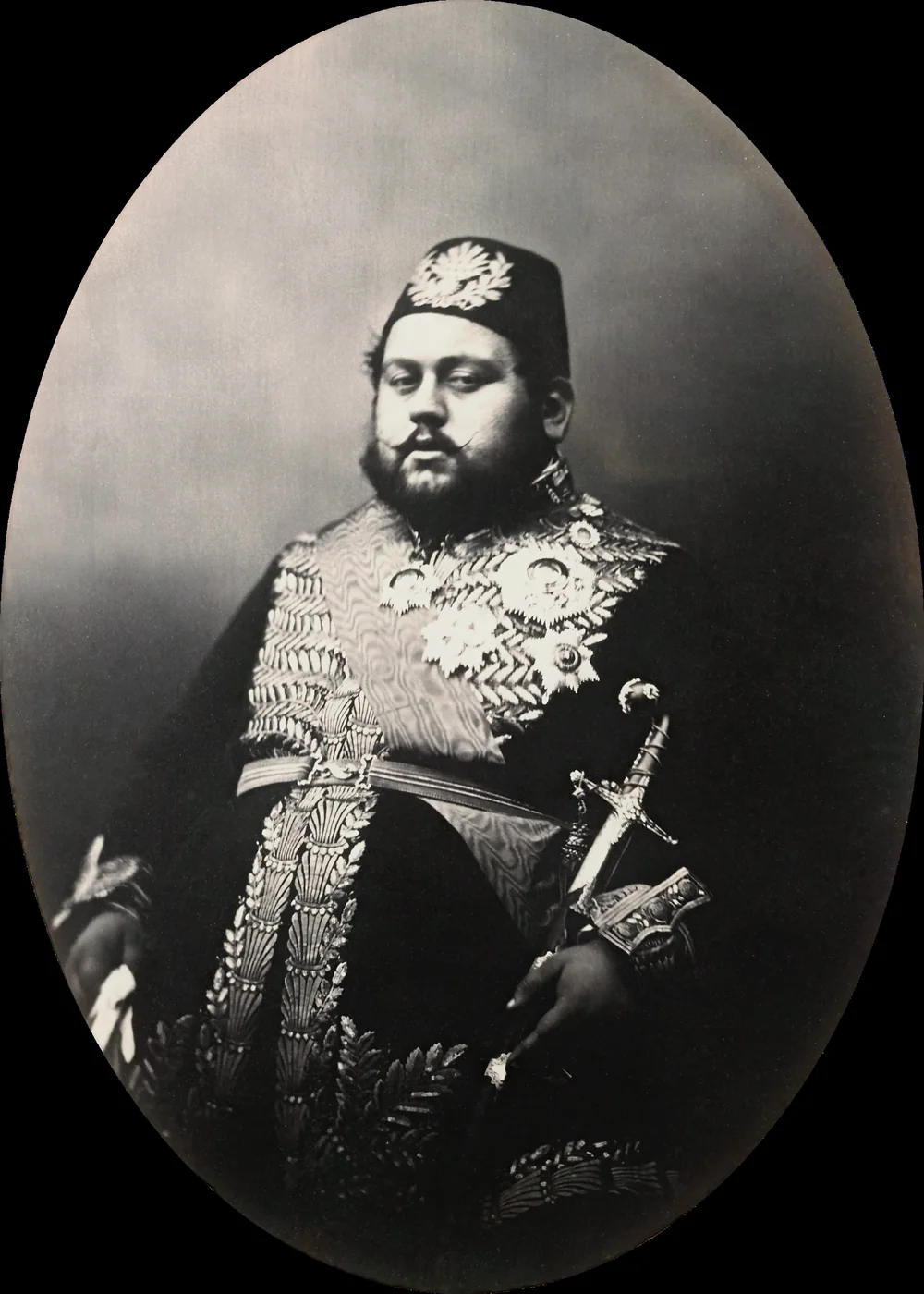
Ismail’s position became increasingly difficult as European governments pressed for changes and his struggle with financial oversight continued. On 26 June 1879, the Ottoman sultan deposed him and nominated his son Tewfik as his successor. The event is documented in the United States diplomatic correspondence from Constantinople, which includes the formal communication of the deposition.
The removal of Ismail did not mean Egypt immediately ceased to have its own government. Nor did it end the debt problem. Foreign involvement in Egyptian finances continued, and in 1882 Britain occupied Egypt following another series of political and military crises. It is important not to collapse those separate events into a claim that the 1876 debt commission directly and instantly created the 1882 occupation.
The important distinction: financial dependence and political rule
| Date | Event | What changed |
|---|---|---|
| 1875 | Suez Canal shares sold to Britain | Immediate cash raised, valuable holding relinquished |
| 6 April 1876 | Payments postponed | The debt crisis became an open default problem |
| 2 May 1876 | Public Debt Commission created | Creditors obtained direct control over assigned revenues |
| 1878 | Financial inquiry and cabinet changes | Debt management became a dispute about government authority |
| 26 June 1879 | Ismail removed by Ottoman decree | Tewfik succeeded him as Egypt’s ruler |
Ismail’s legacy cannot be summarized fairly as either ‘the ruler who built modern Egypt’ or ‘the ruler who bankrupted it’. Public works and financial dependence developed together. The practical challenge for historians is to examine how the money was borrowed, what was actually received, who benefited and how the terms of repayment narrowed the government’s choices.
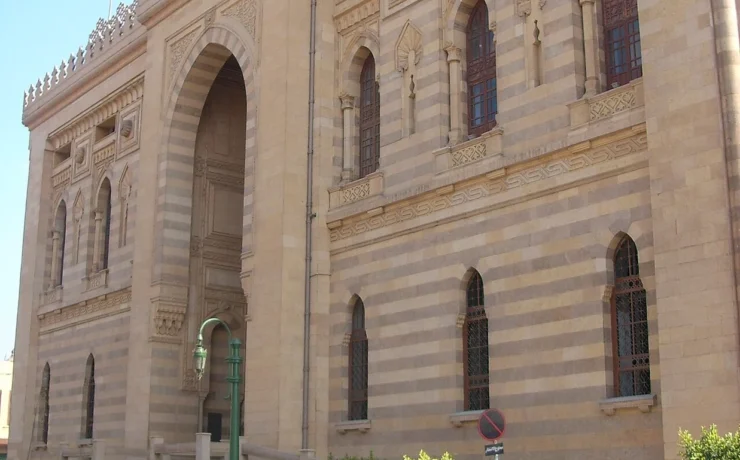
For the urban changes visible in Cairo, our history of modern Cairo’s streets and architecture offers a companion perspective. Those buildings show one side of Ismail’s ambitions. The 1876 debt commission and the events ending in his removal reveal the other.