Ottoman Cairo lived through streets, workshops, coffeehouses and trade as well as through official palaces. This original social history separates surviving commercial architecture, written historical evidence and later images to reconstruct urban life without pretending every modern market scene belongs to the seventeenth century.
Ottoman Cairo was a city of encounters, not just governors
Between the Ottoman conquest in 1517 and the political transformations of the early nineteenth century, Cairo remained one of the region’s major commercial and cultural centers. Trade routes, neighborhood markets, artisans, religious institutions and coffeehouses shaped everyday urban life. Ottoman sovereignty did not erase the Mamluk-built city. Instead, local power holders, imperial officers and Cairo residents worked within older institutions while making new arrangements. Markets were places to buy grain, textiles and spices, but also spaces where news circulated and disputes unfolded. A coffeehouse could provide conversation and sociability without being an institution open equally to everyone. Merchant networks connected local shops with Nile ports, the Red Sea, Syria and the wider Ottoman world. The history of this urban life is documented unevenly. Official court registers and waqf deeds reveal some economic practices, while architecture and later visual sources preserve other traces. This study follows those differences and avoids the fantasy that the city in 1750 looked exactly like an unchanging modern bazaar.
The city before 1517: what the Ottomans inherited
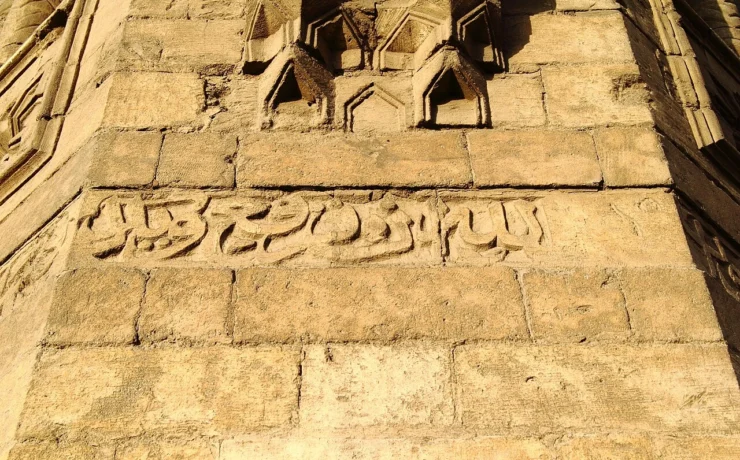
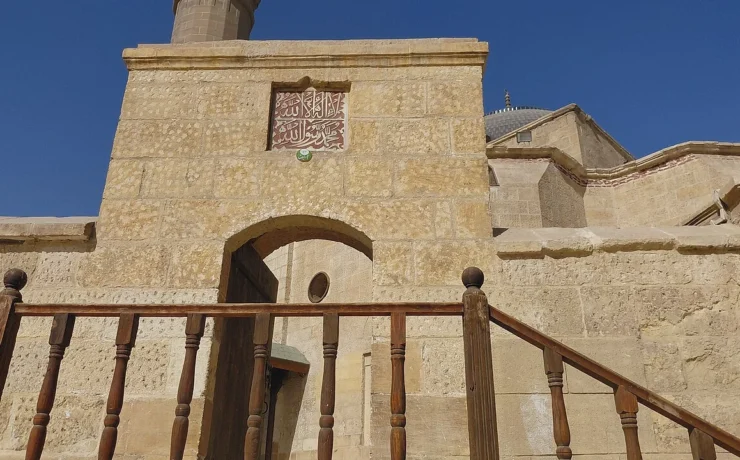
Cairo’s commercial landscape had deep roots in the Mamluk period and earlier. A striking example is the Wikala of Sultan al-Ghuri on al-Muizz Street, built around 1503–1504, before Ottoman rule began in Egypt. The Egyptian Ministry of Tourism and Antiquities describes its courtyard, warehouses, merchants’ rooms and upper lodgings. This makes the wikala useful evidence for institutions and buildings that Ottoman merchants inherited, but it must not be misdated as an Ottoman foundation. The conquest altered political relationships at the top, yet it did not physically replace the entire city’s streets and buildings. Markets continued to function through people who knew their trades and neighborhoods. Commercial buildings could be repaired, repurposed or managed under new patterns of patronage. The difference between the date when a structure was built and the dates during which it was used is essential. Modern photographs of the wikala likewise show a conserved monument rather than the exact appearance of a sixteenth-century market.
How a wikala worked: shops, storage and lodging
A wikala was a commercial building that could combine storage, dealing rooms, merchandise handling and accommodation for merchants. Its practical organization reflected the movement of goods into and out of Cairo. The al-Ghuri wikala, although Mamluk in its original construction, preserves a model for understanding such activity. The Ministry notes warehouses on lower levels and lodgings in upper areas, around a central courtyard. These architectural functions were not identical in every building, and particular uses could change with time. A merchant needed rooms to inspect goods, protect stock and negotiate prices, but the actual transactions may have taken place in separate streets and markets as well. The arrangement of an open courtyard made movement and loading possible within a dense district. Trade also required written agreements, credit, intermediaries and legal institutions. Stone buildings provide only one piece of that economic world. The wider social mechanisms are illuminated by Ottoman court records and the scholarly reconstruction of craft and merchant groups.
Coffee reaches the city: religion, controversy and everyday habit
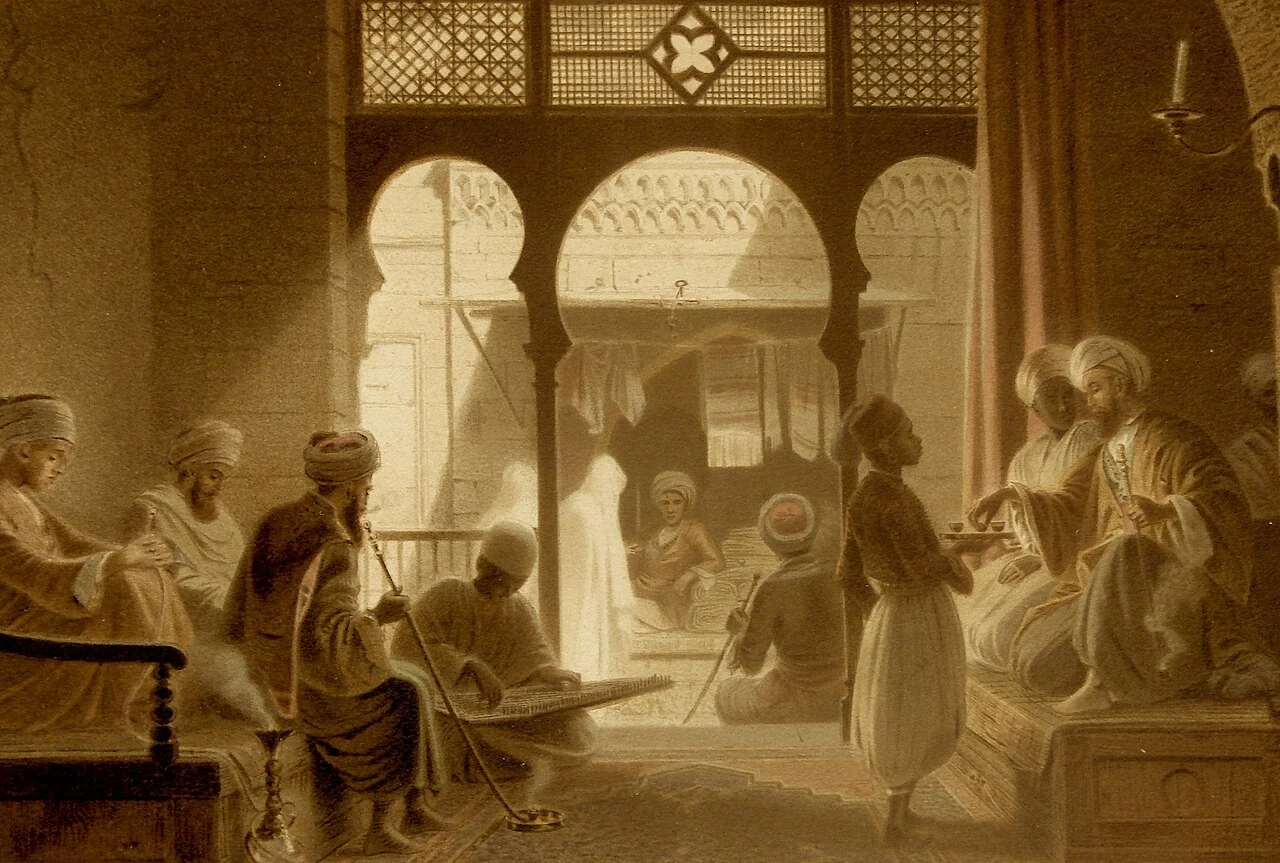
Coffee became an important beverage and social practice across the Ottoman world, including Cairo. The drink’s circulation was associated with networks connecting Yemen, Red Sea ports and other urban centers. Coffeehouses offered spaces for customers to meet, talk and spend time together. Their history was not always peaceful: religious and political authorities periodically debated or regulated forms of public gathering and stimulating beverages. However, it would be misleading to portray one universal seventeenth-century prohibition, or to claim that every Egyptian drank coffee in the same way. Consumption depended on wealth, neighborhood, occupation and access. Individual cafés differed in clientele and style. Historians make use of travel descriptions alongside local legal sources, but travelers often selected exotic details for foreign readers. Illustrations are also time-sensitive: a famous color view of a Cairo coffeehouse associated with Carl Werner dates from around 1871, after the conventional end of the Ottoman Egyptian period. It is included here as a later visual comparison, never as photographic proof of conditions in 1650.
Who spent time at the coffeehouse?
The image of a café filled with people talking easily becomes a shorthand for urban public life. Yet the identities and freedoms of its visitors require more careful questions. Traders, craftsmen, students, travelers and professional intermediaries might encounter one another in a range of public spaces. Coffeehouses could foster discussion and informal contacts, while some were more closely connected with particular occupations or local circles. Women participated in Cairo’s economy and owned or managed property in various contexts, but a male-dominated coffeehouse image is not a comprehensive record of women’s public lives. Household gatherings, markets and charitable institutions offered other social settings. Likewise, legal status mattered: masters, apprentices, servants and enslaved workers did not necessarily enter a café with equal resources or autonomy. Popular narratives tend to exaggerate coffeehouses as early democratic parliaments. In reality, a socially visible space can still be hierarchical and subject to authority. The historian’s task is to reconstruct opportunities and restrictions without making a single drawing stand for everyone.
Guilds, artisans and the economics of a neighborhood
Cairo’s craft industries employed skilled and unskilled labor across occupations such as woodworking, leatherwork, metalworking, building, weaving and food preparation. Guild-like organizations and leading masters could mediate disputes, training and dealings with officials, but their precise powers changed with profession and period. Pascale Ghazaleh’s study Masters of the Trade investigates artisans and guild structures, cautioning against fixed romantic images of perfectly ordered medieval industries. Workshops produced material objects for both local consumption and long-distance trade. A carved mashrabiyya, for example, depended on specialist woodworkers, joiners, suppliers and patrons. Such products tied domestic architecture to the wider urban economy. A decorated house alone does not establish average wages or working conditions of its builders. Nor were artisans automatically politically powerless; some built networks of influence through expertise, property and collective action. A detailed story of Ottoman Cairo must include the people whose labor filled its buildings as well as those whose names appear over gateways.
Khan al-Khalili: an old market in a changing city
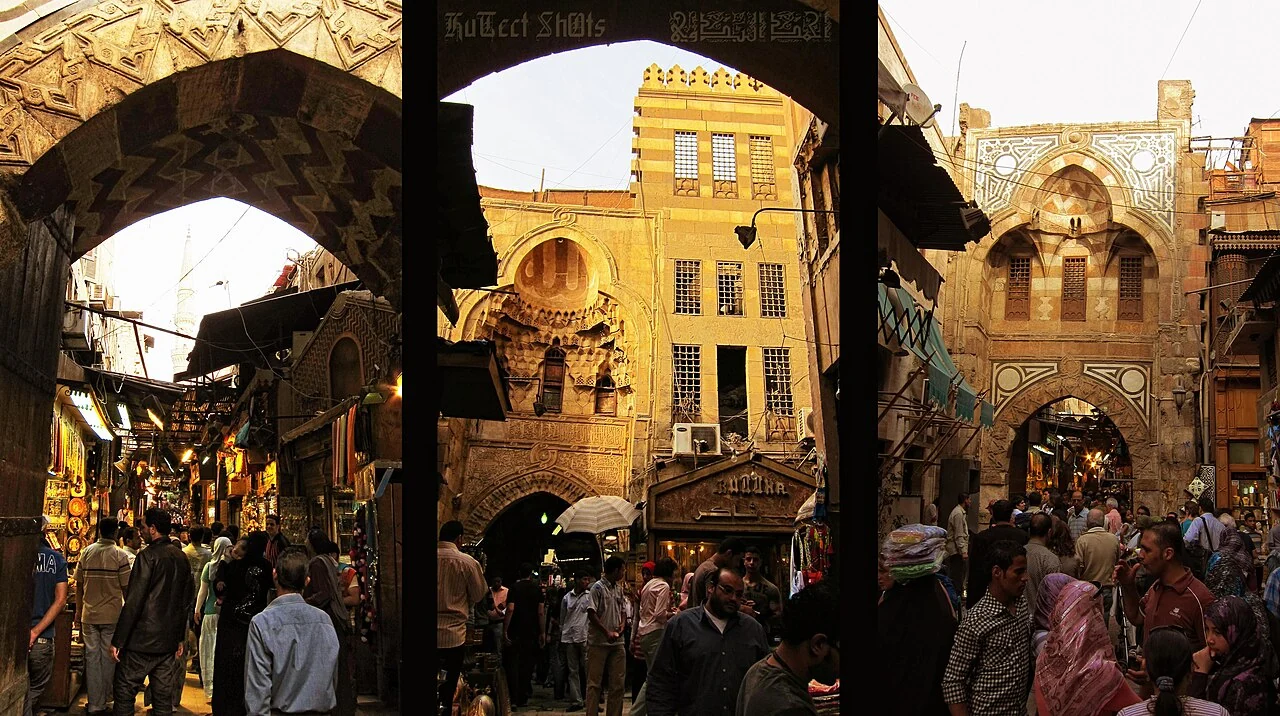
Khan al-Khalili remains one of Cairo’s most recognizable commercial districts, but its long life makes chronological care essential. A photograph from 2010 can reveal a living, sometimes crowded market street. It cannot by itself demonstrate the appearance of the same street in 1730. The district’s history extends back into the Mamluk period, and subsequent centuries brought renovations, new buildings and different business networks. Ottoman-era shoppers would have encountered goods, workers and transactions shaped by the period’s economic institutions, not a fixed heritage display created for visitors. Food, textiles, coffee and metal goods were part of evolving markets, but exact shop inventories changed constantly. Modern tourism photography often foregrounds picturesque lanterns and souvenirs, categories that should not be automatically projected backward. An accurate source caption should therefore label the visible scene as a real modern photograph of a surviving historic district, not as an Ottoman eyewitness picture. Its use is to connect past geography with a place that still exists.
Markets, price controls and court records
Markets operated within systems of official oversight, taxation, judicial disputes and negotiated practice. Ottoman Cairo maintained legal institutions in which merchants and residents could register contracts, property transfers, debt and other claims. Such records reveal economic relationships that architecture alone cannot show. The Ottoman state’s representatives, local elites, merchants and neighborhood actors interacted through complicated arrangements rather than following one rule applied uniformly from Istanbul. Public authorities had interests in food supply, weights and measures, revenue and market stability. But the extent of regulation differed with circumstance, and a traveler complaining about corruption is not sufficient proof of universal abuse. Historians examine repeated archival cases, not just dramatic anecdotes. Environmental changes, Nile flood conditions, epidemics and political conflicts could disrupt commerce and affect the cost of everyday necessities. A consumer purchasing bread and a wealthy trader financing regional goods experienced these pressures differently. Any discussion of trade must keep that inequality visible.
The Red Sea and connections beyond Cairo
Cairo’s commercial importance depended partly on routes extending toward the Red Sea, Nile Valley and eastern Mediterranean. Egyptian merchants and intermediaries participated in networks involving spices, textiles, coffee and other commodities. The port of Suez and the caravan routes linking it to Cairo played roles long before the nineteenth-century maritime canal. Goods arriving from Yemen or the Indian Ocean did not move invisibly: they required transport, inspection, warehouses, financiers and people to distribute them. International relations could affect the availability and prices of products. Yet it would be inaccurate to say that all commerce was foreign, or that the city was merely a depot between Europe and Asia. Many exchanges were local and regional. The wealth recorded in select monuments cannot measure the purchasing power of ordinary households. Cairo’s trade history is therefore a story of physical routes and social infrastructures, both of which change as political regimes and technologies evolve.
Bayt al-Suhaymi and the street outside
The domestic residence of Bayt al-Suhaymi makes a powerful companion case to the commercial streets. Its documented construction phases of 1648 and 1796 show an urban elite investing in courtyards, privacy, woodwork and service spaces during Ottoman rule. Household life did not exist apart from commercial society: acquiring timber, hiring craftsmen, maintaining a garden and feeding residents all depended on markets and labor. A single residence cannot represent the daily routine of all merchants or artisans, but the surviving materials make these connections tangible. Kemet Vault’s detailed study of the house provides dates and primary-source attribution. The street and the interior thus reveal different scales of social history. To understand the period’s governor, Mamluk households and political history, read the distinct Ottoman Egypt 1517–1805 guide. A reader should not have to wade through the same conquest story in every article about urban life.
Why surviving images need honest labels
The illustrations reproduced here are two different types of source. The Wellcome Collection’s historic print shows a Cairo coffeehouse through a nineteenth-century artist’s interpretation after Carl Werner. It is not a camera image and was created after much of the history discussed. The street photograph of Khan al-Khalili, by contrast, was taken in 2010. It is a genuine modern photograph of a historic district, not a recorded Ottoman crowd. Both images are useful when those limits are explicit. Historical illustrations can preserve costume, architecture and perceptions from a given date, but they also reveal the artist’s selection and possible idealization. Modern cameras accurately capture light from an existing scene, but a conserved street may have changed enormously since 1750. A museum-worthy article should avoid using a later view as unqualified evidence for earlier practices. Where specific historical details depend on documentation, texts and archives take priority over visual atmosphere.
Sources and questions for further research
Was Khan al-Khalili founded by the Ottomans? No: the district’s origins precede the conquest, although its activities continued and changed under Ottoman rule. Were Cairo’s coffeehouses open to everyone? No single answer captures differences in clientele, status and gender. Was every merchant rich? Certainly not; trade included people working on different scales. Did the al-Ghuri wikala belong to the Ottoman period? It was built around 1503–1504 under a Mamluk sultan and later existed in an Ottoman city. Sources include the Egyptian Ministry’s wikala entry, Pascale Ghazaleh’s research on artisans and guilds, and the Wellcome Collection coffeehouse visual record. Compare Cairo’s much earlier urban institutions in Kemet Vault’s Fustat history. Photograph and historical print are credited independently; editorial review completed 25 October 2026.