Berenike was a major Ptolemaic and Roman harbor on Egypt’s southern Red Sea shore. Excavations reveal maritime equipment, imported goods, inscriptions, temples, households and cemeteries, offering a rare view of contact between the Mediterranean, Africa, Arabia and South Asia. This study distinguishes firmly excavated evidence from broader stories about the Indian Ocean trade.
The site-specific evidence comes from the Berenike archaeological project and peer-reviewed recent research. For chronological context, see Egypt’s archaeological atlas and the different inland settlement study Roman Karanis in the Fayum.
What made Berenike different from a simple trading post
Berenike was a settlement and harbor on Egypt’s southern Red Sea coast, with a history spanning the Ptolemaic and Roman periods into Late Antiquity. Its excavations bring together harbor installations, religious buildings, households, documents, foreign goods, faunal remains and burial sites. A port of this kind was not merely a market stall where Egyptian merchants met distant visitors. It was a place where people lived, worked, worshipped, repaired equipment and negotiated changing political and environmental conditions. The Berenike Project, coordinated by the University of Warsaw’s Polish Centre of Mediterranean Archaeology and its collaborators, describes a long sequence from the third century BCE to around the sixth century CE. Individual features belong to different phases; the site should not be imagined as one perfectly simultaneous Roman city.
Berenike offers a concrete way to study Egypt’s connections with the broader Indian Ocean, rather than treating trade routes as lines floating across a map. Archaeologists investigate shoreline changes, ports and landing places, warehouses, finds in domestic spaces and the networks implied by inscriptions. Some commodities arrived from far away, but the port also depended on the Eastern Desert and the Nile valley for people, food, water and movement inland. Current archaeological publications reveal complex histories of reuse and change, not an unbroken golden age of prosperity.
A Ptolemaic foundation and the problem of elephants
The Berenike expedition describes the port as originally established in the Ptolemaic world in connection with elephant acquisition. War elephants formed part of the military ambitions of Hellenistic rulers. Linking the foundation to that strategic purpose is supported by research on the early harbor, but it should not be stretched into a claim that all structures, monuments and finds were built to house elephants. Berenike later developed economic and social roles far beyond its original function. Archaeology must therefore distinguish early Hellenistic deposits from later Roman-period imported goods and still later occupation.
The name Berenike appears in more than one historical context; identifying this specific Red Sea port requires its archaeological geography and research history. Ancient references, modern satellite coordinates and a fieldworker’s excavated locus are not interchangeable. The modern name can be used to find the regional site, while an object with a Berenike provenance requires a particular excavation record for stronger placement. Similarly, no present visitor facility should be assumed simply because the ruins are on a digital atlas. A research entry can cite a site and its evidence without encouraging unsupervised travel to protected archaeological zones.
Roman maritime trade and goods from India
During the Roman period, the Egyptian Red Sea ports helped connect Mediterranean markets with Arabian and Indian Ocean networks. Archaeological evidence at Berenike includes luxury goods, ceramics, glass, papyri, ostraca and materials whose study informs the geography of exchange. The Berenike team documents products, people and ideas arriving from different regions. A commodity produced in India does not by itself reveal which individual ship carried it, whether it stopped at multiple ports, or who purchased it after arrival in Egypt. Cargo origins, transport routes and consumption histories are separate research questions.
The history becomes clearer when commercial texts are read alongside excavation. A trader’s account may identify quantities and payments; an imported object can show that goods crossed great distances; an excavated room reveals a local context of use or disposal. None alone supplies a complete economic map. Connections with the Arabian Peninsula, the Red Sea littoral, the Indian subcontinent and the Nile valley can overlap rather than form a simple east-to-west chain. Instead of describing the city as an effortless global superhighway, Berenike should be studied as a demanding, seasonally constrained harbor whose success relied on environmental knowledge and labor.
Harbor equipment, water and the Eastern Desert
Excavation in the southern harbor has documented maritime-associated materials such as ship boards, ropes and mooring lines, along with buildings interpreted in connection with the port’s operation. These material traces help test claims about maritime traffic. Ropes and wood decay or survive selectively, so finds depend on the conditions of deposition. Identifying one object as nautical equipment is not the same as reconstructing the precise shape of an entire ship or the annual count of arriving vessels. Archaeologists examine the material, date and context before drawing larger conclusions.
The geographic setting is equally important. Vessels reaching the coast still required a connection inland to Egypt’s settled valley. The Eastern Desert presents logistical challenges involving travel routes, water availability and the transport of people and cargo. Any map of Berenike that shows only the harbor and a line toward India omits the infrastructure that joined the port to inland consumers and administrators. Modern paved roads should not be copied as exact ancient routes. A useful archaeological atlas distinguishes the excavated port, the approximate inland corridor and documented route stations where sufficient evidence exists.
Inscriptions, scripts and the people who used them
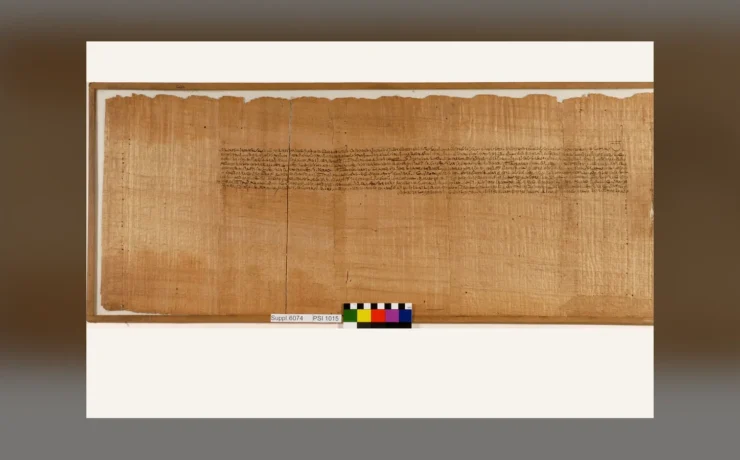
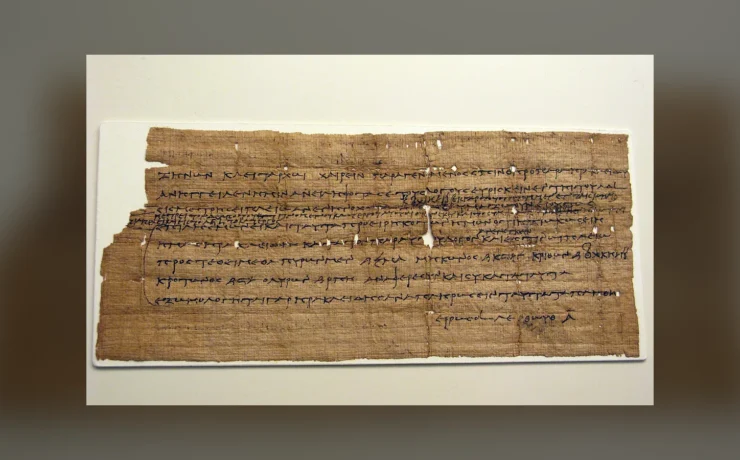
One of Berenike’s striking features is the variety of written evidence connected with different populations and activities. Excavations have produced ostraca and papyri, while recent scholarship examines a Sanskrit inscription together with representations associated with the Indian subcontinent. These records show that people with varied linguistic and religious backgrounds were present in or connected with the port. It would be an overstatement to assign a modern national identity to each person who used an unfamiliar script, or to assume everyone speaking a particular language belonged to one trade guild.
Languages and objects move in complex ways. An inscription can document a dedication or a named individual; it is not a census of the port’s entire population. Archaeological context and dating are crucial, particularly where the same building saw multiple uses. The first-person voices preserved by documents may be partial, administrative or formulaic. The best approach is to ask what a text specifically says, how it was recovered and which other evidence supports the proposed interpretation. Research on Berenike gains depth by keeping inscription, object, person and modern scholarly translation distinct.

Indian religious objects and why their context matters
A 2025 study in the Jahrbuch des Deutschen Archäologischen Instituts examines six Indian-related objects recovered in Berenike excavations, including Buddha statuettes, a Sanskrit-and-Greek inscription and other material connected with South Asian traditions. The paper emphasizes that some objects were locally produced, an important warning against assuming every object associated with India physically traveled all the way from the Indian subcontinent. Religious images can be carried, copied, reinterpreted or made by craftspeople working far from the place where a tradition emerged.
The presence of such objects is remarkable evidence of connection, not proof that the entire settlement shared one religion or that one recoverable traveler brought all the finds. The chronology also matters: deposits documented from different excavation seasons and occupation levels cannot be collapsed into one single visit. Using the scholarly article together with the project’s site database allows a reader to understand which claims depend on a particular inscription or excavated artifact. It also helps prevent viral claims that every isolated symbol at an ancient port proves a lost transoceanic civilization.
Religion at the port: Isis, temples and changing communities
Berenike’s archaeological record includes a central Isis temple and other religious structures and objects. Religious practice at a major trading settlement could include traditions familiar from Egypt alongside the material traces of visitors and migrants. Identifying a temple of Isis does not imply that every person in the city followed identical rituals, or that the building remained unchanged throughout the entire Roman period. Excavated architectural phases, offerings, inscriptions and later adaptations must be read together. The project’s investigations emphasize both religious buildings and evidence for a diverse population.
An Egyptian goddess appearing at a Red Sea site is therefore not a shortcut to describing the whole urban community. Temples also belong to local political and economic life, and their use can change when regional networks change. The surviving evidence may include repairs, reuse and objects brought from elsewhere. Readers familiar with the famous sanctuary of Philae should resist drawing an automatic institutional connection merely because both places honored Isis. A shared deity can inspire comparative research, but proof of a specific administrative or ritual relationship would require more than a repeated divine name.
Animal burials and the pet cemetery
Berenike researchers have also documented a cemetery containing dogs, cats and monkeys. This finding is especially informative because it concerns the lives and relationships of people who occupied the port beyond the grand narratives of trade. It is tempting to call any ancient animal burial a formal temple cult, but the project’s description instead highlights a pet cemetery. The distinction matters. Animal bodies can reflect care, companionship, religious practice or other traditions depending on context; these explanations should not be assumed interchangeably.
The identification of burial arrangements requires archaeological study of remains, deposition, age, health, location and the wider settlement. A cemetery of companion animals does not mean all animals at the port were pets, and it does not establish a uniform attitude among all inhabitants. Researchers also investigate animal bones and other biological remains related to food, transport and environment. Such evidence can test the changing daily-life demands of a port engaged in distant trade. Berenike is a useful reminder that an international harbor was an inhabited place, not just a container of exotic cargo.
Post-Roman Berenike and the Blemmyes
The settlement did not simply disappear the day Roman imperial control weakened. Recent research has investigated post-Roman occupation and burial grounds, including areas associated with the Blemmyes and Eastern Desert communities. A 2026 archaeological study examines tombs of the late fourth and fifth centuries, their spatial organization and relationships with settlement. Such work changes how historians describe the transformation of the Red Sea coast after Roman political structures shifted. Instead of a neat event labeled the end of trade, excavated layers show transitions among groups, burial customs and settlement practices.
It is especially important not to treat Blemmyes as a single timeless label for every person in the Eastern Desert. Written sources and archaeology provide different kinds of evidence for changing communities. A grave’s orientation or architectural form can be a strong contextual observation without securely revealing an individual deceased person’s ethnicity. Scholarly interpretations should remain open to revision as more graves and dates are published. A layered atlas entry should represent these later contexts as a distinct phase of the site, rather than hiding them beneath a single Roman label.
Why museum objects elsewhere must not be assigned to Berenike
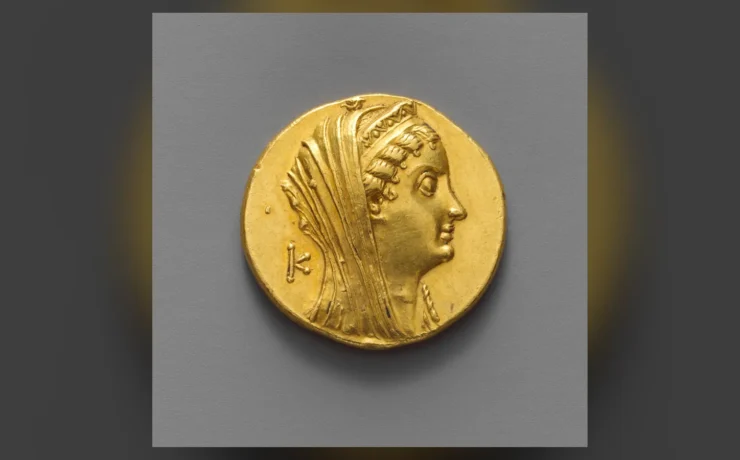
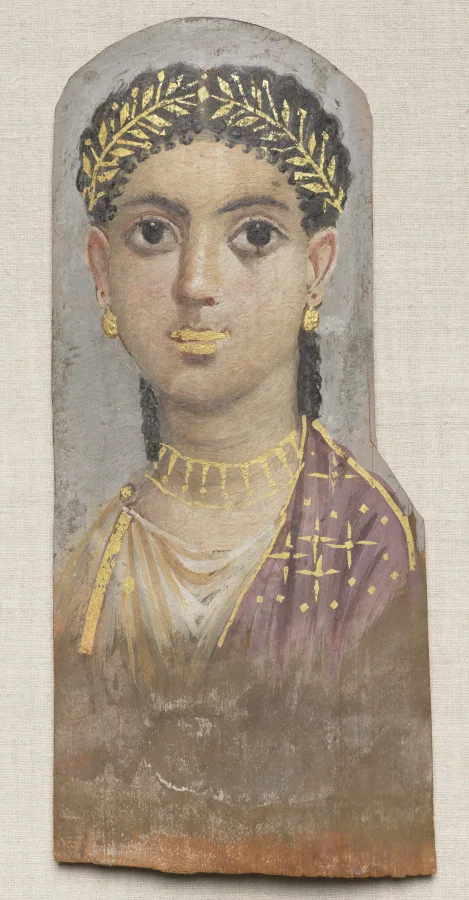
The two genuine museum photographs included here are used as broader period comparisons: a Ptolemaic Egyptian small sculpture and a Roman Egyptian funerary portrait. The Cleveland Museum of Art holds these objects and supplies their individual accession numbers. They have not been presented as finds excavated at Berenike. That distinction is essential: a museum catalogue entry saying an object is from Roman Egypt does not locate it at this particular Red Sea port. For claims about Berenike itself, readers should use the excavation project’s published finds, loci, photographs and associated records.
This approach may seem less dramatic than illustrating a harbor with every eye-catching Egyptian object available online. It is more accurate. The site includes an impressive range of material, but each record needs a specific excavation provenance before it can be attached to one trench or room. The photographs help readers compare visual traditions across the wider historical period while preserving their original contexts. The same rule applies to map coordinates: the location of a holding museum in Cleveland is not evidence for where the object was produced or used in antiquity.
Evidence table, atlas entry and unresolved research questions
The most important questions about Berenike concern change through time: how early strategic activity became a wider commercial port, how goods and people moved from the coast inland, and how religious and social life changed across centuries. Excavated finds suggest far-reaching connections, but reconstruction of individual journeys requires caution. Maritime materials document activity at the harbor; foreign objects suggest contacts; written evidence identifies some people or transactions. None should be promoted into a universal itinerary for every merchant. Even modern excavation maps may mark loci more precisely than the evidence can identify ancient street names or movement patterns.
This article treats Berenike as a research location rather than a promise of visitor access. Users of a digital atlas should see a regional coastal site, its Ptolemaic-to-Late-Antique periods, the names of authoritative excavation sources and warnings about geographic precision. Anyone seeking travel arrangements needs official current permissions and practical conditions. The historical value lies in the record of a living, changing settlement connected with Egypt, the Arabian Peninsula and the Indian Ocean across many centuries. Its archaeology is stronger when exotic finds and ordinary evidence of households, worship and burial are read side by side.
What archaeological evidence does and does not establish
| Evidence type | Responsible conclusion |
|---|---|
| Imported objects | Long-distance connections; not a complete voyage or personal identity. |
| Harbor boards and ropes | Ship-handling activities; not a full surviving fleet manifest. |
| Foreign-language inscriptions | Individual textual contacts; not the ethnicity of every resident. |
| Animal burials | Documented settlement practices; not automatically a formal temple cult. |
| Late antique cemetery | Changing post-Roman communities; not a single unchanged cultural identity. |
| Museum comparison photos | Authentic ancient objects, but not excavated at Berenike. |
Archaeological sources, interpretation and photographic rights
- Berenike Project, Polish Centre of Mediterranean Archaeology, University of Warsaw.
- Berenike team, current research projects and excavation scope.
- Sidebotham and colleagues, Indians in Roman Berenike, Jahrbuch des Deutschen Archäologischen Instituts (2025).
- Berenike of Blemmyes: post-Roman transformation (2026), published archaeological research.
- Cleveland Museum of Art, 1914.575, CC0.
- Cleveland Museum of Art, 1971.137, CC0.
Evidence and image rights checked 1 November 2026. Images are explicitly marked as comparators from the wider historical period, never as artifacts excavated at Berenike.