For more than five thousand years, two Egyptian bodies carried images that could not be clearly read until scientists examined their skin with infrared photography. The mummies from Gebelein, Upper Egypt, are older than Egypt’s first fully developed dynasties. The discovery of animal figures on the arm of a male mummy, and different designs on a female mummy, changed the history of documented African tattooing. But it is also a lesson in how archaeological evidence should be handled: the male and female are separate people, their dates are ranges rather than exact birthdays, and a hypothesis about a tattoo’s meaning is not a translation of the person’s thoughts.
This Kemet Vault study examines accession numbers EA 32751 and EA 32752, the 2018 peer-reviewed research, the 2012 CT investigation, and the ethics of imaging and museum collection history. All on-page images are authentic licensed museum or landscape photographs, clearly distinguished from the diagnostic infrared plates on which the discoveries were based.
Before the pharaohs: a body with an unexpected story
The Gebelein mummies connect two forms of evidence that are rarely visible together: the soft tissue of an ancient person and the symbols that person chose to place on their skin. The British Museum preserves naturally mummified individuals from Gebelein in Upper Egypt whose bodies came from a period before the establishment of Egypt’s First Dynasty. In 2018, a research team led by Renée Friedman and Daniel Antoine published the results of infrared examinations identifying tattooed imagery on a male and a female mummy. The images pushed back the history of surviving figured tattoos in Africa, while leaving many questions about their cultural role unresolved. These are human remains rather than fictional specimens, and their preservation should be approached with the care normally expected in archaeology and museum interpretation. Looking at them raises basic questions. How did bodies survive without the elaborate embalming familiar from later dynasties? Why did the tattoo marks look like ordinary stains for so long? What can the animals depicted on the man’s arm establish, and what remains speculative? A strong account must distinguish the photographed remains from published diagnostic infrared images. It must also identify the two accession numbers correctly and avoid inventing individual life stories simply because we can see hair, skin and skeletal traces. The real discovery is about scientific re-examination, not a supernatural secret revealed after five thousand years.
Where is Gebelein? Geography, archaeology and chronology
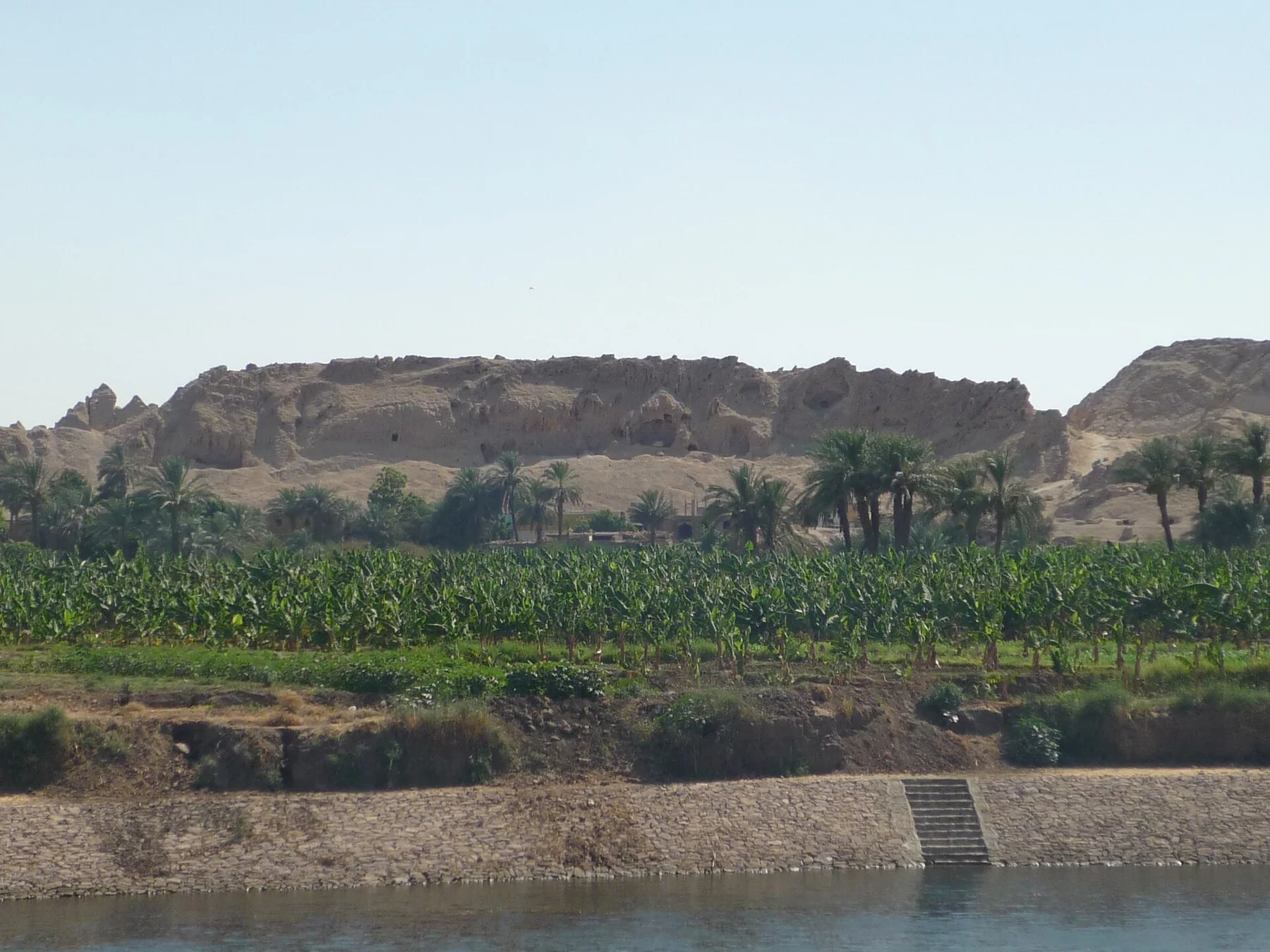
Gebelein, a pair of prominent hills in Upper Egypt between Luxor and Esna, had a long history of settlement, cemeteries and regional importance. Later Egyptian and Graeco-Roman materials are also associated with the area, so an object found at Gebelein is not automatically Predynastic. Its date must be established from context, radiocarbon analysis and the museum record. The group examined in the 2018 research comes from shallow graves traditionally associated with the fourth millennium BCE. These burials predate the developed pharaonic burial programs that many tourists know from the Valley of the Kings. The site’s location matters for preservation: dry sand, low moisture and the body’s direct contact with the soil can slow normal decomposition under some conditions. But geography is not an automatic explanation for every individual, since graves differ in depth, disturbance, wrapping and microenvironment. We cannot assume these exact conditions apply throughout Egypt. A historical photograph of the hill today shows the broad location, not the exact prehistoric landscape or a particular burial pit. Changes in settlement, river course, cultivation and excavation make it misleading to use a modern landscape image as a reconstruction of the grave itself. The relative geographical position is nonetheless essential for understanding why the bodies survived and why British Museum researchers could study their skin so closely more than a century after acquisition.
1900 and the museum: how the remains entered a collection
The British Museum acquired Gebelein human remains around the turn of the twentieth century, and records identify the famous male as EA 32751, registration 1900,1018.1. Museum acquisition history is a different matter from the original burial history; neither label proves that people in the fourth millennium BCE knew the English nickname subsequently used in display. The original excavation circumstances and early collecting practices need to be discussed with awareness that archaeological methods and ethical expectations were not the same as today’s. When remains are moved from graves into a foreign museum, information about burial arrangement and associated goods can be lost or transformed by handling and documentation. The famous displayed figure, historically nicknamed “Ginger” because of the visible hair, is an identifiable collection item rather than a source for an invented personal name. The British Museum’s human-remains inventory lists multiple Predynastic individuals from Gebelein. Its 2018 article identifies the tattooed man as EA 32751 and the woman as EA 32752. A caption that assigns EA 32752 to a photograph of EA 32751 would collapse two distinct human biographies into one. That error would be especially harmful here because the study specifically compared tattoos of different sexes. Proper attribution and collection accession numbers are the foundation of responsible public archaeology.
Natural mummification: preservation without a New Kingdom ritual
The word “mummy” often evokes a sequence involving embalming, natron, removal of organs, canopic equipment and fine linen wrappings. Predynastic Gebelein individuals do not demonstrate that this later ritual had already been standardized. Their preservation is predominantly natural: the desert environment produced rapid desiccation that restricted decomposition in some shallow graves. The British Museum’s conservation discussion describes how heat, salinity and the dry environment could preserve skin, hair and other tissues. These conditions help explain why scientific imaging could recover evidence of marks applied while the people were alive. Yet “natural” should not imply that the dead received no intentional funerary attention. A body placed in a flexed posture, perhaps with wrapping or mats and grave goods, reflects human choices about burial. The difference is between deliberate disposal and full artificial embalming. Not every Predynastic body was preserved, and future scientific work may reveal variation in treatments and materials. The reliable statement concerns the examples under study, not all Egyptians everywhere for a thousand years. For comparison, Kemet Vault’s guide to the later mummification process explores methods that developed over time, rather than projecting them backward onto every prehistoric grave. Distinguishing periods protects the value of both stories.
EA 32751: what makes Gebelein Man scientifically identifiable
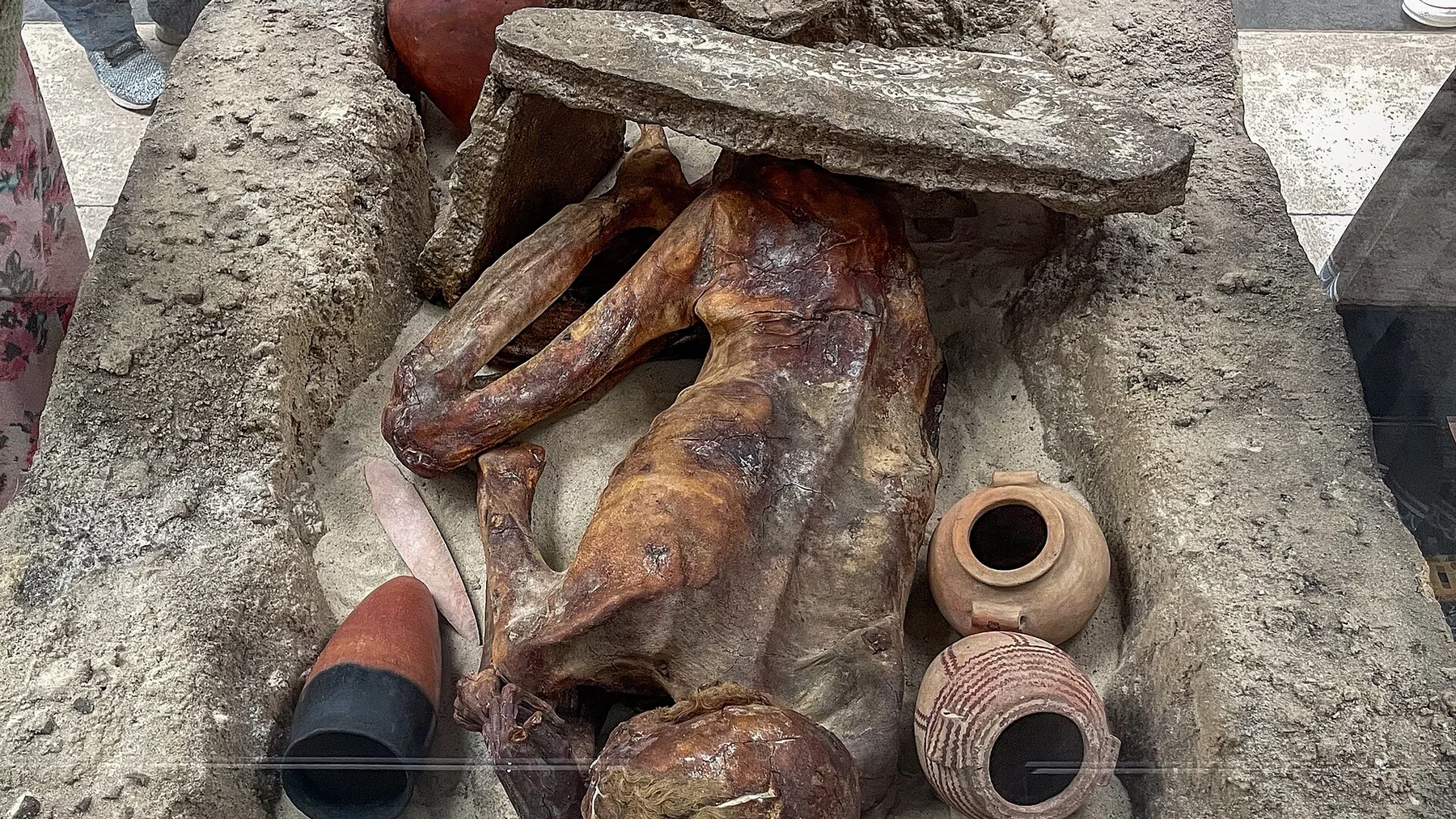
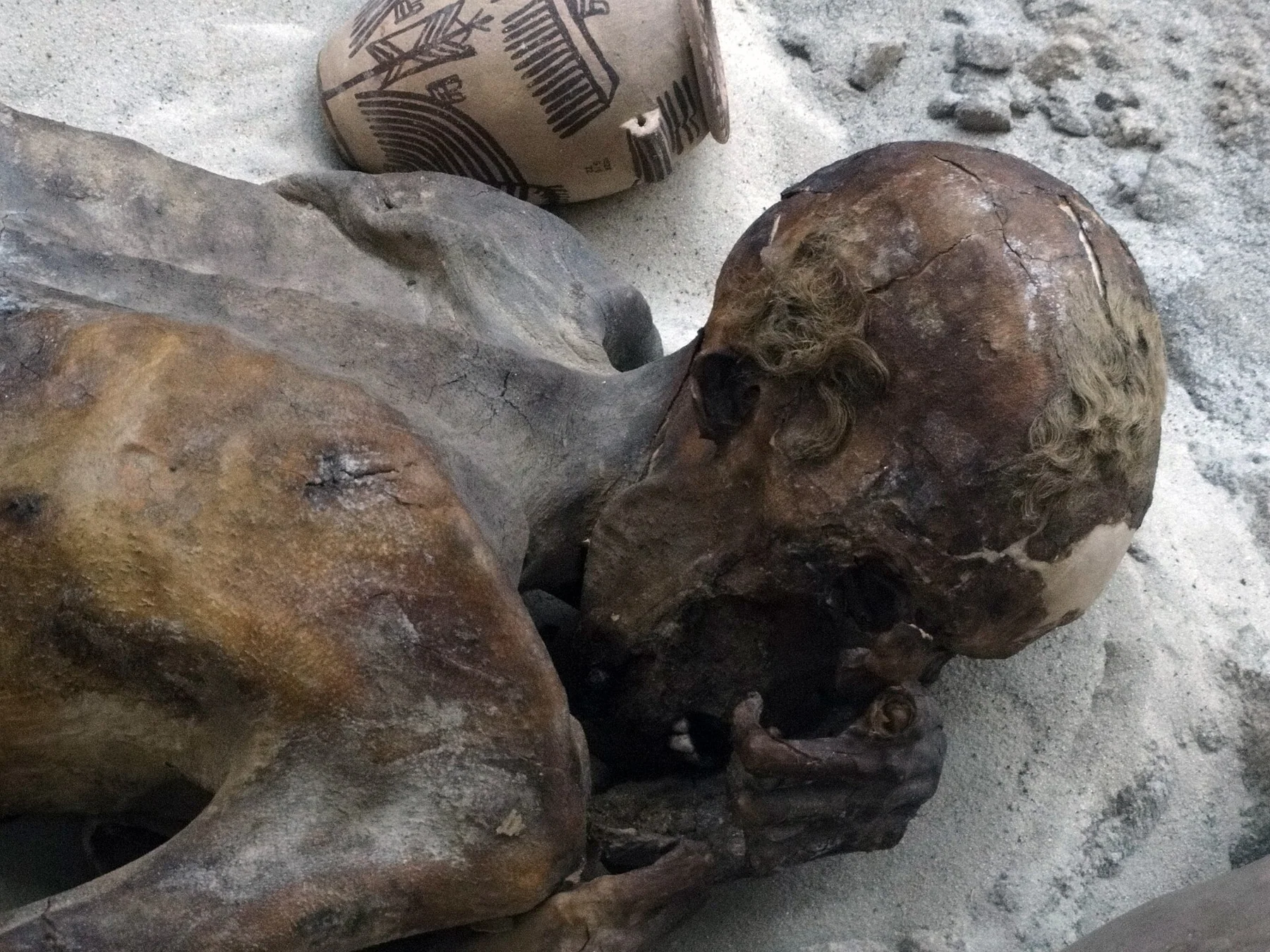
The best-known body belongs to an adult male, British Museum object EA 32751, kept in a flexed position with remarkably preserved soft tissue. Photographs of the real remains can be matched to the museum’s catalogue entry and published scientific reports. A 2012 CT scanning project made it possible to examine anatomical features below the surface without invasive dissection. The Museum’s earlier documentation and subsequent public display describe evidence of trauma consistent with a sharp-force injury, leading researchers to discuss a violent death. That medical assessment does not tell us the name or motives of an attacker, or whether the event was linked to a regional political conflict. Claims that one individual was killed during a specific war between named Predynastic kings have no adequate foundation. CT visualisations can reveal aspects of skeletal damage, internal organs and position, but the technology cannot recover a person’s conversations or entire life history. The same limits apply to modern display nicknames. The ordinary-light photograph below shows the actual individual. It is not itself the infrared image on which the tattoo publication based its identification. A museum photograph can establish object identity and preservation while a different imaging method reveals details invisible to the naked eye.
Infrared imaging: why the tattoos were missed
The researchers examined the skin of naturally preserved human remains using photographic equipment converted for infrared imaging. At ordinary visible wavelengths, the tattoos on Gebelein Man could appear as dark, ambiguous smudges. In infrared photographs the pigment contrasts more clearly with the surrounding skin. This allowed the team to distinguish intentionally arranged figures, and to compare them with shapes known from Predynastic art. The result is not the same thing as digitally painting modern animal outlines onto the mummy. Scientific imaging exposes differences in light absorption and reflection that help conservators interpret a physical mark already present in skin. Such methods depend on camera setup, wavelength and preservation condition, and not every dark spot on ancient tissue is a tattoo. The team published its findings in the peer-reviewed Journal of Archaeological Science in 2018, after imaging and associated dating work. Responsible reporting therefore credits the published analysis rather than claiming a website editor has independently discovered the images by studying a general museum photograph. The distinction matters for the illustrations in this article: the Commons photographs shown here are authentic visual documents of the object and location, but they are not reproductions of the copyrighted diagnostic infrared plates from the academic paper.
The animals on the man’s right arm
The male mummy carries two figurative designs on the right arm. The research team interpreted the dark outlines as horned animals, probably a Barbary sheep and a wild bull, with partly overlapping forms. These interpretations fit the broader visual repertoire of late Predynastic Egypt, where dangerous or imposing animals could have symbolic importance. Calling them the earliest surviving figural tattoos known from the relevant corpus is defensible within the study’s dating and comparison. Calling them a complete personal coat of arms, an exact military insignia or a protective spell is not. There is no accompanying text identifying what the wearer intended the animals to mean. Different hypotheses, including status, bravery, ritual expertise or protection, have been discussed by researchers as possibilities. The choice of animal motif might express social identity as well as personal aesthetics, but the surviving evidence cannot resolve the precise motive. The fact that the designs occur on a man’s arm also challenges an older scholarly assumption that tattooing in ancient Egypt was exclusively a female practice. That earlier interpretation had largely been built from figurines and later visual evidence rather than from documented male tattoos of comparable date. The new discovery changes the evidentiary basis of the conversation without establishing how widespread tattooing was across the entire Nile Valley.
EA 32752: the female mummy and her geometric marks
The second tattooed individual was female, British Museum EA 32752. Infrared photographs identified a series of S-shaped motifs near the right shoulder and another curved linear design on the upper arm. The marks differ from the two animal figures on EA 32751, and the paper compares them with Predynastic ceramic decoration and other artistic motifs. Similarity is a research clue, not an automatically readable symbolic dictionary. The motif may have had ritual, social or protective meanings, but no inscription has survived to tell us exactly what it meant to this woman. Its position on the shoulder and arm may have been publicly visible under some forms of dress, yet evidence for her particular clothing and daily movements remains scarce. An especially common online error is to show a museum photograph of Gebelein Man and label it “the woman with the oldest tattoos.” No such substitution is acceptable here. The illustrated male photographs are explicitly labeled EA 32751. The female’s designs are discussed using the archaeological publication and accession record; we do not pretend to possess a freely reusable photograph of EA 32752 when one has not been separately cleared for this page. Her importance as a distinct individual must not disappear simply because one museum photograph is more widely shared than another.
Radiocarbon dating: what 3351–3017 BCE really means
The 2018 study reported dates placing the tattooed individuals near the end of the fourth millennium BCE. Published calibration ranges for samples associated with the two mummies extend approximately from 3351 to 3017 calibrated BCE at two sigma, reflecting different specimens and probability distributions. These are not exact birth or death certificates. Radiocarbon dating measures the remaining proportion of carbon-14 in organic material, and calibration accounts for changes in atmospheric radiocarbon through time. The actual laboratory measurement, sample material, contamination treatment and calibration curve all affect how a date is stated. The team obtained new radiocarbon dates from hair and other material, using the results alongside art-historical comparisons. Such combined evidence is why an archaeological claim is stronger than a label that simply says “5,000 years old.” Readers should also distinguish a point estimate from a probability range. Saying one individual died precisely in 3300 BCE would be a false precision. More responsible wording places the individuals in Egypt’s Predynastic horizon and reports the approximate calibrated interval. The calendar range is especially significant because it places the tattoos before or near the early development of the unified Egyptian state, while not telling us which rulers or events these people may have lived alongside.
Are these the world’s oldest tattoos?
The article’s central scientific claim is carefully framed: the two Gebelein bodies provided some of the oldest known surviving examples of figurative tattoo designs. Earlier preserved tattoos were known on the Alpine mummy Ötzi, but those designs were primarily geometric rather than depictions of recognizable animals. The Gebelein research therefore moved the earliest documented figurative evidence in a particular direction; it did not establish that humans invented tattooing in Egypt. Tattooing may have had a much longer history whose bodily evidence has not survived. The absence of earlier tattooed skin from another environment is not proof that the practice did not exist there. The museum’s own report emphasizes that the new Egyptian evidence pushed back Africa’s physically documented tattoo history substantially and confirmed that both women and men were involved. Archaeology deals with the oldest surviving evidence, not the absolute moment an idea first entered the human imagination. We should also resist sensational claims that the marks were “magical code,” “secret royal documents” or alien symbols. The motifs are real, but their meanings remain open. The best way to explain the discovery is to connect what infrared imaging actually revealed with the limits of archaeological inference.
Who applied the pigment, and with what tool?
The presence of dark pigment below the surface of the skin is consistent with a deliberate tattooing procedure. Researchers have suggested that carbon-based substances such as soot may have been used. But the exact instrument and procedure employed on either Gebelein individual have not been recovered from a labeled toolkit in the burial. A contemporary needle found at a different site does not prove it touched this man’s arm. The historical reconstruction should therefore remain cautious about whether sharp implements, multiple punctures or other techniques were employed. Nor is it possible to establish that a professional full-time tattoo specialist worked in this community. The mere fact that an image survives does suggest bodily skill, willingness to endure discomfort and knowledge of how to insert pigment into the skin. That is meaningful evidence for craft beyond ceramics and stone carving. By comparing the animal designs with contemporary art, archaeologists can explore whether body decoration was part of a shared visual vocabulary. We can understand tattooing as an intentional cultural practice while acknowledging that the actual maker’s identity, social standing and particular techniques are unknown. This attention to limits is what distinguishes a measured account from a story invented to fill every silence.
Predynastic animal art: similarities without a universal code
Predynastic decorated pottery, stone palettes and tomb paintings preserve many images of animals. Boats, wild cattle, desert fauna and combinations of real and fantastic creatures appear in different contexts and dates. The Gebelein tattoos are unusual because the design medium was living human skin, later preserved in the grave. Researchers compare their shapes with those of painted or carved objects, but do not assume that one motif must have had precisely the same meaning across a jar, a tomb wall and a person’s arm. Visual similarities can support cultural relationships while leaving individual intention unresolved. At the site of Nekhen, the painted decoration of Tomb 100 and the carved Two Dogs Palette provide a different body of Predynastic evidence about visual imagery. Kemet Vault’s Hierakonpolis archaeological encyclopedia examines those objects with their own specific dates and findspots. Gebelein’s tattoos are a separate, bodily form of evidence and should not be treated as direct copies of the painted tomb’s scenes. If a viewer sees a horned animal on two ancient objects, a scholarly account asks whether their date, pose and context really align before proposing common symbolism. A motif alone is not a script that can be translated word for word.
Conservation, photography and respect for human remains
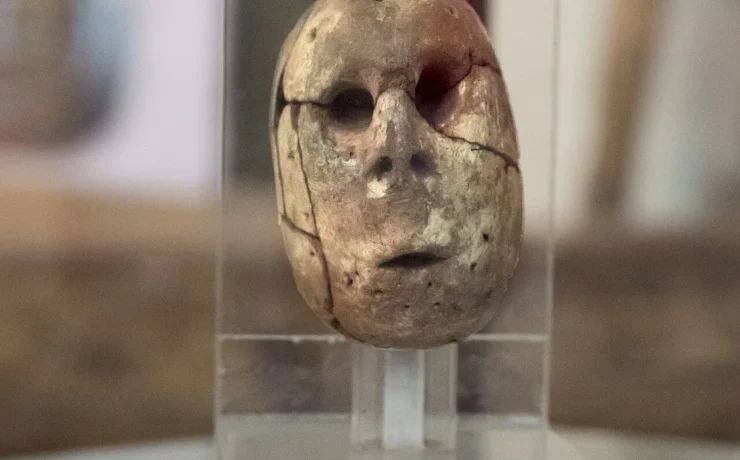
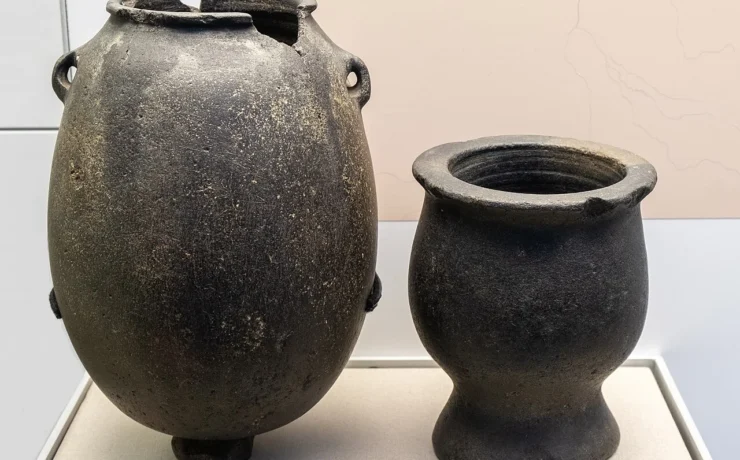
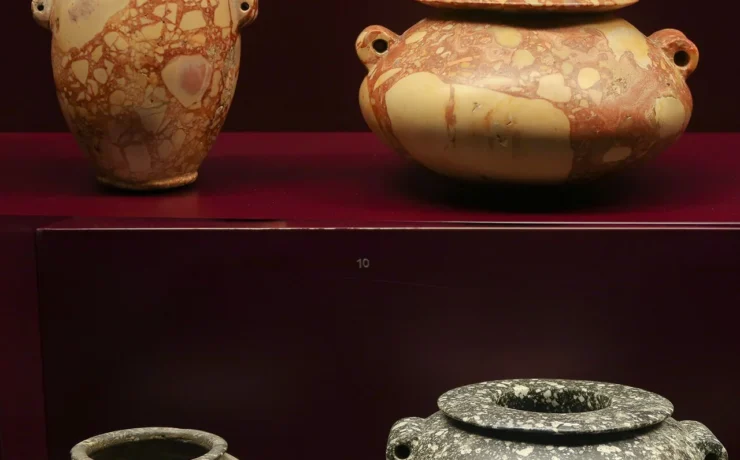
The British Museum’s ongoing research demonstrates how conservation and non-invasive methods can produce important discoveries in older collections. CT scans record internal structures, while visible and infrared photography can document skin and pigment without removing significant tissue. Even so, these methods raise curatorial and ethical questions. Ancient human remains were once buried as people, not collected as anonymous scientific specimens. Museums have obligations to handle, conserve and display them responsibly, to explain collection histories, and to be transparent about what is known. An editorial website faces a related responsibility: captions should identify which object is depicted and avoid decorative reuse of human remains as a generic Halloween image. The cover image is a genuine photograph of EA 32751 but is handled as an archaeological record, with location, approximate date and accession number made clear. Two images here depict the same man from different photographers and years; a third shows the Gebelein landscape. None is falsely captioned as a high-resolution view of the female tattoos or a direct scene from their original funeral. The scientific research report remains the appropriate source for the infrared images and their interpretation. That approach gives the reader evidence without pretending that every type of source is interchangeable.
What the bodies do not establish about Egyptian mummification
The Gebelein discoveries are often used in search results for the history of embalming, but they establish a different point. Natural preservation in hot, dry sand is not evidence of an organized chemical embalming industry already operating in every Predynastic community. The well-known later funerary process developed through centuries of experimentation, religious practice and social difference. The survival of skin at Gebelein made the tattoos visible, yet similar skins would ordinarily have been lost in more humid or disturbed burials. This is a preservation bias: communities that left no tattooed bodies might still have practiced tattooing, while a single naturally preserved body can become disproportionately famous. The 2018 study’s conclusions are strong within their scope, but they should not be expanded to all forms of tattooing, all Egyptian populations or all later funeral traditions. For an overview of diverse burial goods and how the dead were protected, Kemet Vault’s history of Egyptian coffins provides complementary evidence. The two topics work together because body preservation and burial-container production are related but distinct. One explains how human tissue could survive; the other follows how people constructed protective material around the dead.
What new technology changed about an old collection
The power of this discovery lies partly in its timing. The mummies entered the British Museum long before imaging methods reached their current levels. Decades of visitors could observe preserved bodies, but a small set of poorly understood spots only became interpretable after targeted technical work. This is a reminder that museums are not merely warehouses of already solved facts. Collections retain unexplored evidence, and scientific questions can change when a researcher applies a new method. A methodological advance does not guarantee that an interpretation will never be revised; published imagery, sample dates and alternative readings permit later specialists to assess the work. One can imagine future improvements in infrared methods, pigment analysis or computational imaging producing clearer evidence, but it would be speculative to promise a particular new discovery. For now, the established results are sufficient: two Predynastic bodies were found with deliberate tattooed motifs, both sexes were represented, and the male designs include recognizable animal figures. The implications go beyond a museum headline. Body art becomes part of the history of early Egyptian people rather than an unsupported theory inferred only from figurines or later burial practices.
Comparing the evidence: what is certain and what is not
The strongest account of Gebelein separates object identity, observation and interpretation. EA 32751 is a naturally preserved male body; the infrared study reports two animal designs on its right arm. EA 32752 is female; the same study reports S-shaped and linear marks on the shoulder and arm. Radiocarbon results place both in the late fourth millennium BCE, although a stated interval is not a precise death year. The origins of pigment, exact tattooing tools, social status of the wearers and meaning of each design are not conclusively known. This is neither a failure of archaeology nor an invitation to invent a more entertaining answer. It is a map of what kinds of evidence remain missing. Museums can offer object records and images, scientific journals can explain the imaging and dating, and comparative archaeological research can investigate similarities with other Predynastic art. No single photograph does all three jobs. By combining them, readers can assess the reasoning behind the claims and understand why it matters that a practice once thought to be represented chiefly by women was documented directly on a man as well. This is an exceptional body of research precisely because it both expands knowledge and clearly defines its limits.
Object and evidence cross-reference
| Item | Directly documented observation | What remains unclear |
|---|---|---|
| EA 32751 male | Natural preservation; infrared animal motifs on right arm | Exact significance and tattooing instrument |
| EA 32752 female | S-shaped and linear motifs recorded with infrared imaging | Specific intentions and individual biography |
| Radiocarbon | Late fourth-millennium calibrated ranges in the 2018 study | Exact calendar day of death |
| 2012 CT | Non-invasive examination of anatomical and traumatic evidence | Identity of an attacker or precise event |
| Three documentary images | Two photos of EA 32751; one of Gebelein landscape | They do not show EA 32752 or the diagnostic IR plates |
Scientific references and image provenance
British Museum research repository, peer-reviewed 2018 Journal of Archaeological Science paper; Peer-reviewed 2018 study published in Journal of Archaeological Science; British Museum collection research newsletter 2019; British Museum conservation study Regarding the Dead (2015); British Museum list of human remains and accession entries; British Museum 2014 report on CT scanning of Gebelein Man. The 2018 paper in Journal of Archaeological Science is the core basis for the infrared identification and dating claims. The Museum’s own accession documentation is used for specimen identification. Photographs are separately credited in their captions; none has been digitally altered to fabricate tattoos. Reviewed 25 October 2026.
Frequently asked questions
Is Gebelein Man the oldest mummy in Egypt?
No universal ranking is justified by this evidence. He is a remarkably preserved Predynastic individual, and his tattoos are particularly early examples of figurative body art.
Were the tattoos discovered in 1900?
The remains were collected around that time, but the marks were identified as tattooed motifs through later infrared imaging, published in 2018.
Are both mummies shown in the photographs?
No. The museum photographs depict male EA 32751; the female EA 32752 is discussed from scientific publication. The site photograph shows the broad Gebelein landscape.
Are these elaborate embalmers’ mummies?
The preservation is predominantly natural, associated with arid burial conditions, not the developed later funerary embalming system.