Did Egypt become fully independent in 1922? Britain ended its formal protectorate by a unilateral declaration on 28 February 1922, but reserved four major questions for its own control or further negotiation. Egypt’s April 1923 constitution then established a parliamentary framework, without immediately resolving British influence or tensions with the monarchy.
The period from the 1919 Revolution to Egypt’s 1923 Constitution is often compressed into one misleading phrase: ‘independence was achieved and democracy began.’ The sources tell a more complicated story. National mobilization, British conditions, a powerful king, party competition and repeated parliamentary crises shaped the following decades. This article concentrates on what the declaration and constitution actually changed, using the Egyptian Parliament’s constitutional history and Cambridge University Press scholarship.
Further relevant reading includes Egypt’s 1919 Revolution and its broad national coalition and the 1952 Revolution and the end of the monarchy. These subjects offer background context without duplicating this article’s evidence.
From wartime protectorate to the demands of 1919
Britain declared a protectorate over Egypt during the First World War, formalizing a relationship of external control that had grown out of the occupation established in 1882. Wartime requisitions, economic pressures and restrictions on political life formed the background to national mobilization. The events of 1919 involved more than elite negotiations: students, workers, women, rural communities and political leaders demanded a new relationship between Egypt and Britain. This social history is essential to explaining why a constitutional change became urgent after the war.
The protests were not one continuous meeting with a single leader, and they did not deliver a complete settlement immediately. Saad Zaghloul and Wafd representatives became closely associated with the national cause, but the forms of participation and political goals were varied. A careful history treats the popular movement as the force that made the existing arrangement harder to sustain while distinguishing it from the separate diplomatic and legal steps that followed.
The declaration of 28 February 1922
On 28 February 1922 the British government issued a unilateral declaration ending the protectorate and recognizing an independent Egyptian state. The official Egyptian Parliament’s constitutional history identifies this as a decisive legal step. But the declaration did not amount to a bilateral agreement settling every part of Egyptian sovereignty. Britain explicitly retained major reserved questions, leaving political conflict over the meaning of independence unresolved.
A headline saying that Egypt ‘won full independence’ in 1922 therefore erases an essential part of the document. A more accurate formulation is that the formal protectorate ended and the monarchy entered a new constitutional setting, while British influence remained decisive in named areas. The difference is not pedantic: it helps explain why national activists continued their campaigns and why political crises persisted after the recognition of statehood.
The four British reservations
Cambridge University Press’s history of the period lists four issues reserved by Britain: defense against foreign aggression or interference, the security of imperial communications including the Suez Canal, protection of foreign interests and minorities, and the status of Sudan. These were not tiny administrative footnotes. They touched military power, strategic routes, diplomatic relationships and territory. Their presence shaped the practical meaning of sovereignty and became subjects of later political negotiations.
It is important to distinguish the terms of the declaration from a claim that Britain controlled every individual government action in Egypt. Domestic authorities still acted, negotiated, made laws and competed for public legitimacy. But major subjects lay beyond a simple account of full national autonomy. Describing the reservations directly gives readers a basis for understanding why the new state was both legally changed and politically constrained.
King Fuad I and the new political framework
The monarchy was a central part of the post-1922 system. Sultan Fuad became King Fuad I after the declaration, and the constitutional settlement had to determine the powers of the king in relation to ministers and parliament. Cambridge historian Afaf Lutfi Al-Sayyid Marsot describes tensions between the palace’s preferences and constitutional proposals that would limit royal authority. The resulting framework was a compromise, not the simple adoption of an unrestricted parliamentary republic.
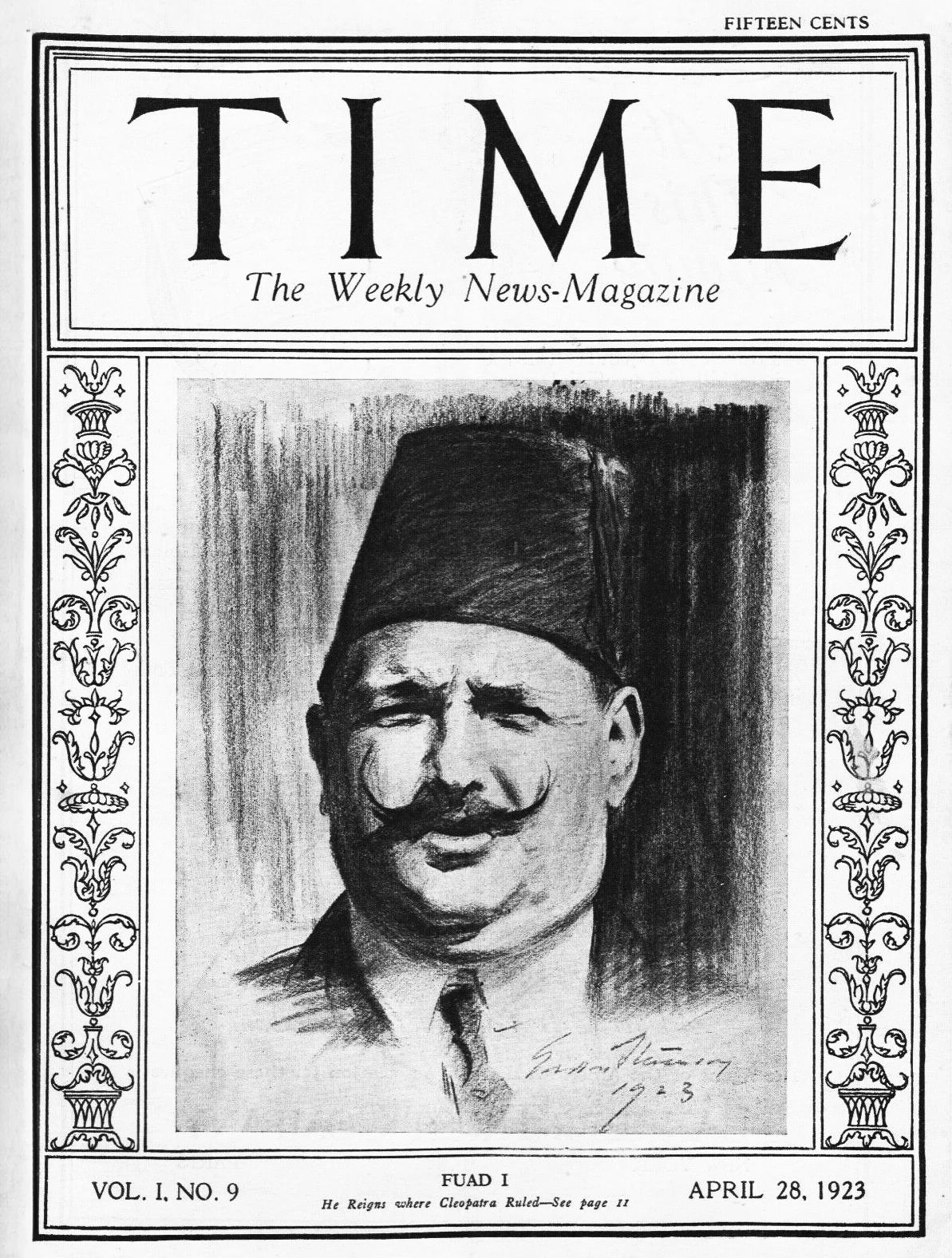
Royal images from the period can document the public person of the monarch, but they do not prove the private motives of every political decision. The 1923 magazine illustration used here is explicitly labelled as a period illustration. It provides historical visual context, while the actual distribution of powers must be read through the constitution and later official histories. Confusing an image with documentary evidence for a law is a common problem in online historical summaries.
How the 1923 Constitution was prepared
Egypt’s constitutional history records that the charter was issued in April 1923 after a drafting process by a committee of thirty members. The committee included political and public figures, but the existence of a committee does not mean that every political movement agreed with its composition or every provision. Debates over popular representation, royal prerogatives and Britain’s unresolved position formed part of the environment in which the document took shape.
The constitution organized state institutions through legal provisions instead of relying only on the claims of a particular king or party. Its design drew on parliamentary principles and placed the government in a relationship of accountability to elected representatives. At the same time, the king retained important powers. Understanding both sides avoids simplistic descriptions of a fully powerless monarch or a parliament with unlimited control.
Two chambers: the Chamber of Deputies and the Senate
The 1923 Constitution provided a bicameral parliament: a Chamber of Deputies and a Senate. According to the Egyptian Parliament, members of the Chamber of Deputies were elected, and their term was five years. Three-fifths of the Senate were elected while the remaining two-fifths were appointed. The constitutional arrangement gave the two chambers substantial legislative roles, with exceptions. These details matter because they show how representation was structured rather than leaving the vague impression that a modern election system appeared fully formed.
An elected chamber does not make every resident a voter or guarantee that every decision was democratic in practice. Suffrage rules and administrative conditions were subjects of their own historical development. Researchers should therefore avoid assuming universal equal participation from the existence of elections alone. Parliamentary structure establishes institutional rules; studying who participated, how contests operated and when parliament was dissolved is a separate investigation.
Cabinet responsibility and the King’s power to dissolve parliament
The constitution made ministers responsible to parliament and recognized parliamentary mechanisms for confidence and oversight. It also preserved royal powers, including the ability to dissolve parliament and call sessions. The Egyptian Parliament’s history highlights this tension between formal checks and the capacity for political interference. Constitutional design depends not only on the wording of rights and duties but on the relationships among officials and political forces attempting to use them.
Royal prerogatives could therefore become politically decisive even when elections produced a majority. A government supported by parliament could still face challenges from the palace or British pressure. The legal text cannot be understood in isolation from its application. This explains why histories of the 1923 Constitution often balance its importance as a step toward representative government with its limitations as a framework for stable autonomy.
Saad Zaghloul, Wafd and the electoral experiment
Saad Zaghloul and the Wafd became central actors in electoral politics after the declaration. The political movement developed from a delegation demanding national representation into a mass party with strong popular support. Elections and parliamentary debates offered one arena for its ambitions, but the party also faced rival groups, pressure from the palace and disputes over how best to negotiate with Britain. The story is therefore not only about one leader’s popularity.
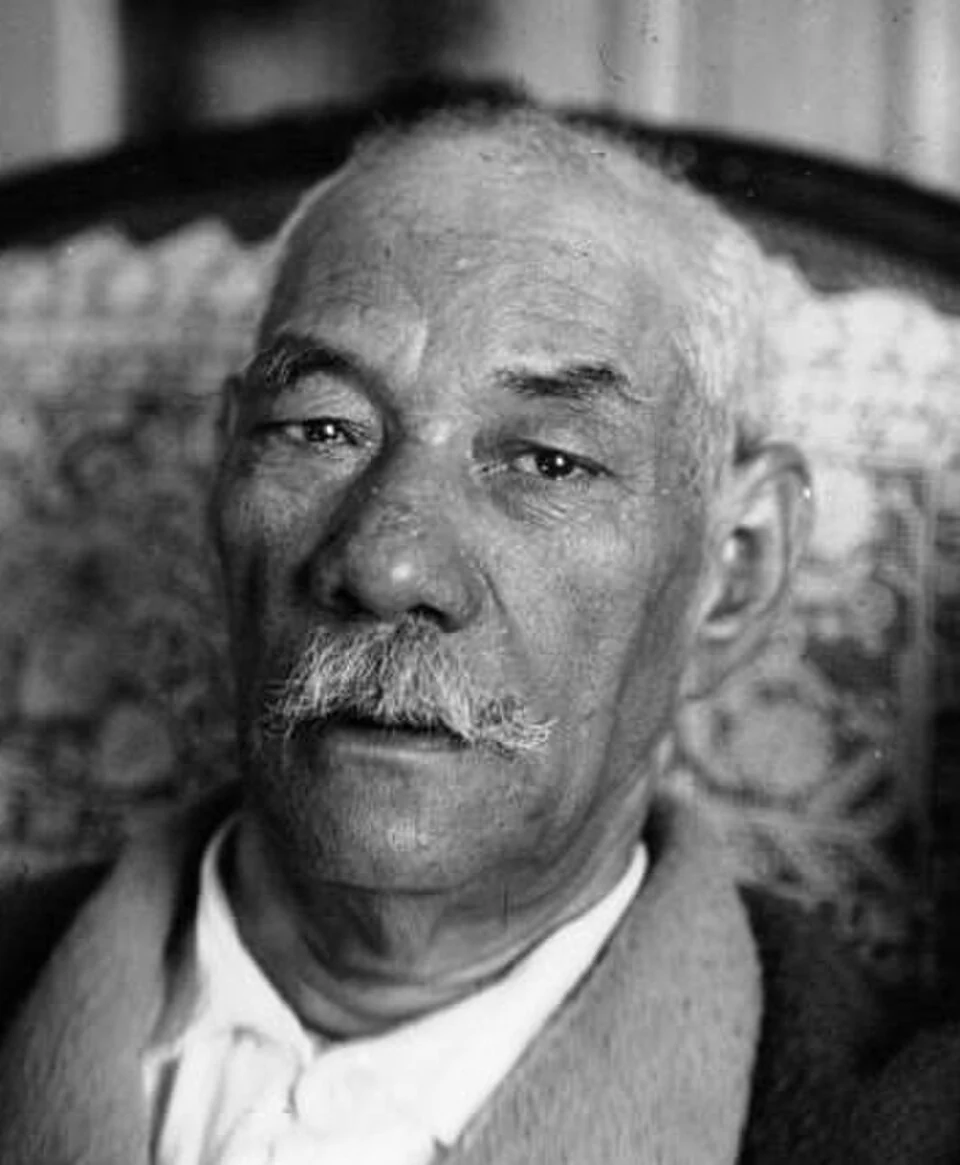
The authentic 1924 photograph used here dates to the constitutional period, allowing readers to encounter one of its principal personalities without inventing a scene at the constitutional committee. A single portrait cannot show the whole political coalition or the participation of women and workers during the 1919 uprising. Those actors deserve their own contextual history. This article focuses instead on the institutional questions the Wafd confronted under the new legal framework.
The constitutional settlement did not end British influence
The reserved matters remained a major source of conflict after 1922. Egypt had its own institutions and government, yet British power over defense, imperial communications and Sudan limited the independence national activists sought. Political leaders differed over how to handle negotiation, parliamentary pressure and relationships with the monarchy. The result was not a stable two-party contest in which everyone accepted the rules of the game.
Cambridge’s account emphasizes the continuing struggle between ideal constitutional principles and the political settlement accepted by the king and Britain. That is why a serious history should resist judging the decade only by the date of the constitutional announcement. Examining what happened after the charter provides a test of whether formal institutions could govern amid competing centers of authority. The ambiguity of 1922 remained visible throughout the parliamentary experiment.
Parliamentary dissolutions and interrupted constitutional life
Egypt’s own parliamentary account records recurring dissolution of representative institutions and intervention by the palace and the occupying power during 1923–1952. The existence of parliament did not ensure continuous parliamentary government. Changes in ministries and repeated crises show how the constitutional framework was exposed to political conflict. The Egyptian Parliament describes the period as one of limited democratic advances interspersed with substantial setbacks.
These events should not be used to declare the constitution historically meaningless. Its provisions established a language of rights, responsibility and elections through which people argued about legitimate government. Nor should the formal text be praised without acknowledging the weakness of implementation. The evidence supports a mixed account: important institutional change together with persistent struggles over sovereignty and royal power.
The 1930 Constitution and the return to 1923
A new constitution issued in 1930 replaced the 1923 framework for a period, demonstrating the fragility of the earlier settlement. Egyptian parliamentary sources describe the later restoration of the 1923 constitution in 1935. These shifts were not mere changes of wording; they reflected political arguments over representation and control. They also created complicated timelines in which governments could act under different constitutional regimes within a single decade.
Readers comparing the period should therefore specify the relevant year rather than speak of ‘the 1923 constitution’ as if it operated uninterrupted until the 1952 Revolution. Election rules, chamber membership and parliamentary practice changed over time. The restored text regained significance, but its application still faced political constraints. A timeline with the dates 1922, 1923, 1930 and 1935 conveys the constitutional sequence more accurately than a single declaration of independence.
What changed by the time of the 1952 Revolution
The monarchy and the parliamentary constitutional framework came under increasing pressure in the years leading to 1952. The July 23 movement that eventually ended the monarchy belongs to a later political and military context, and should not be reduced to a straightforward sequel to the constitutional disputes of 1923. The earlier period nonetheless shaped the institutions and rivalries against which the Free Officers later acted.
The Egyptian Parliament records that the 1923 constitution ceased to be the country’s operating framework after the events of 1952. Its historical significance lies in the political language and institutions it established and in the limits of the sovereignty it operated under. To understand the later republic, readers need a separate history of the Free Officers, the abolition of the monarchy and the subsequent constitutional changes rather than assuming that one 1923 document explains them all.
How to use primary constitutional evidence
The safest way to study 1922–1923 is to begin with the text and institutional history of the British declaration and Egypt’s constitution. Dates, powers and representation should be traced to these records, then interpreted through historical scholarship such as Cambridge University Press. Official histories supply valuable legal details, but their account of political practice can be compared with independent academic work. Neither a social-media quote nor a photograph of a politician is a substitute for the constitutional provisions.
Period images have a narrower role. The public-domain photograph of Saad Zaghloul dates to 1924, and the illustrated cover of King Fuad belongs to 1923. They show contemporary visual representations of principal figures, not an original signed constitutional document or an image of the committee writing its text. Accurate captions ensure that photography enriches the account without making false claims about what the camera witnessed.
A more accurate answer to Egypt’s independence question
The 1922 declaration and the 1923 constitution marked real changes in Egypt’s legal and political status, but they did not complete the struggle for sovereignty or create permanently stable parliamentary rule. Britain reserved major questions, the monarchy retained significant powers, and parliamentary life was repeatedly interrupted. Those facts can coexist with the significance of elections, the formation of institutions and the public political culture they supported.
Understanding this period means keeping dates and powers attached to their exact documents. A historical account that simply celebrates independence or dismisses every institutional gain misses evidence. Reading the Egyptian Parliament’s official history with Cambridge’s scholarly analysis and the record of 1919 offers a more precise picture of a state whose constitutional forms developed under continuing contestation.
Evidence table: distinguishing historical fact from interpretation
| Source or issue | Documented conclusion | Limit |
|---|---|---|
| 28 February 1922 | The British protectorate formally ended | Four major subjects were reserved |
| April 1923 constitution | Bicameral parliamentary framework and ministerial responsibility | Royal prerogatives and political constraints persisted |
| Chamber of Deputies | Members were elected with five-year terms in the charter | Representation did not equal universal participation |
| 1930 and 1935 | Interruption and later restoration of the 1923 constitutional system | The charter did not operate uninterrupted |
| Historical images | Zaghloul 1924 photograph and Fuad 1923 illustrated cover | Not photographs of constitution drafting |
Institutional sources and original image credits
The links below identify dated primary institutions or specialist scholarship. Photographs are licensed documentary originals and are not represented as maps or records of events they did not photograph.
- Egyptian Parliament: history of the 1923 Constitution
- Afaf Lutfi Al-Sayyid Marsot, The Liberal Experiment, 1922–52, Cambridge University Press
- Egypt State Information Service: Saad Zaghloul and the 1922 declaration
See Egypt’s 1919 Revolution and its broad national coalition and the 1952 Revolution and the end of the monarchy for the wider period. Evidence reviewed: 3 November 2026.