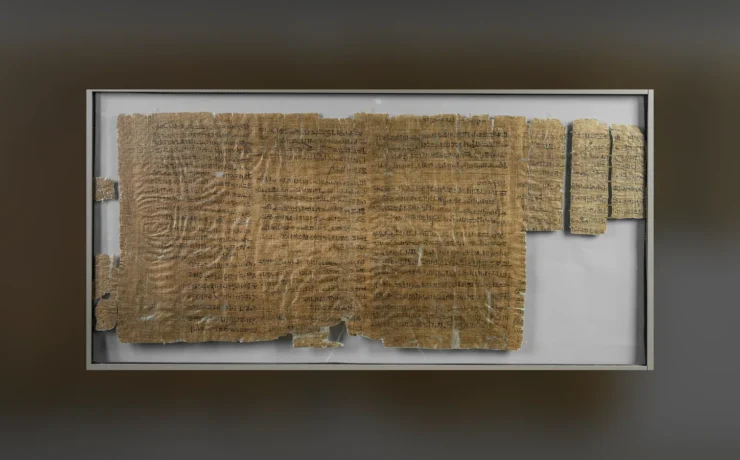
A roll of papyrus more than eighteen metres long sits in the care of Leipzig University Library. It doesn’t tell the story of a king or a battle. Instead, it records what ancient Egyptian healers thought they could do about sore eyes, painful stomachs, wounds, parasites and many other problems of the body. Some passages sound recognizably practical. Others turn to spoken protection and ritual. Both belong to the same medical world.
This is the Ebers Papyrus, one of the richest surviving sources for ancient Egyptian medicine. Its value isn’t that its remedies should be tried today. It is that we can read the questions, methods and limits of a healing tradition that existed roughly 3,500 years ago.
The long manuscript and its unusual journey to Leipzig
The scroll dates to the later sixteenth century BCE, a date supported by a calendar on its reverse and radiocarbon work cited by Leipzig University Library. It was acquired in Egypt in 1872–73 by the Egyptologist Georg Ebers and has belonged to the university library since 1873. Ebers arranged for a facsimile edition in 1875, which later became important for preserving the appearance of sections that suffered damage.
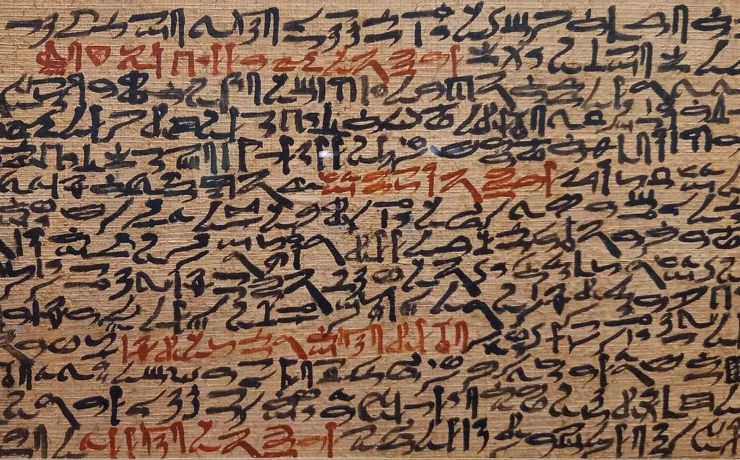
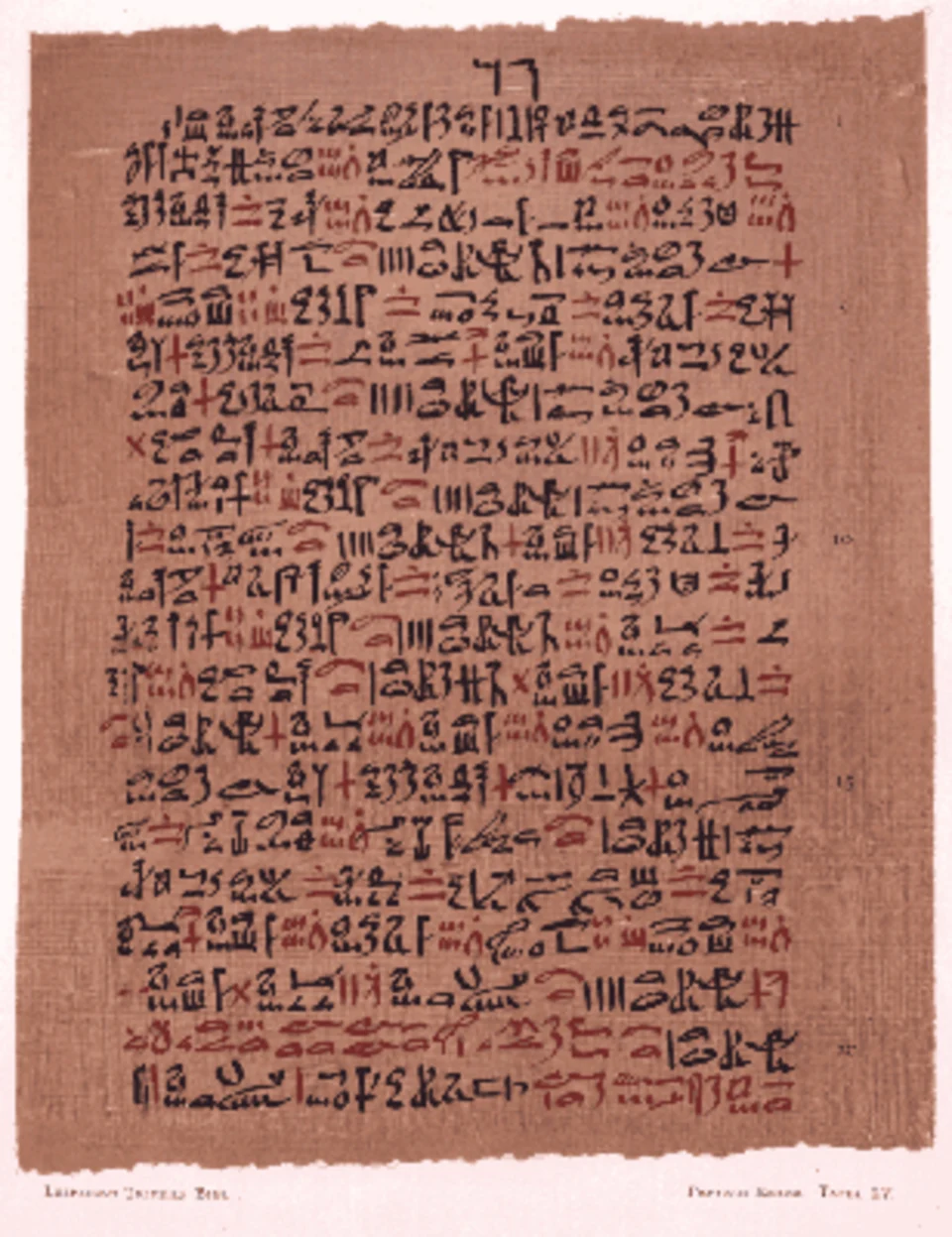
The papyrus measures about 18.63 metres in length. It was written largely in black ink, with red used for headings, quantities and other distinctions. The script is hieratic, a cursive writing system suitable for manuscripts rather than the monumental hieroglyphs visitors see on temple walls.
Conservators later divided the scroll into sections to reduce the risk of damage. A full-length replica, rather than the fragile original in one continuous roll, has been displayed in the Bibliotheca Albertina foyer. For anyone hoping to see it in person, that is an important distinction. Check the library’s showroom information before a trip.
Why do some sources say 108 columns and others say 110?
Leipzig’s own description uses both numbers, but for different reasons. The library describes 108 surviving columns of text and an established sequence of 110 numbered columns. The papyrus suffered loss and damage after its original preservation; the old facsimile helps scholars understand the missing material. Treating the two counts as if one side had made a simple error hides the history of the object.
The library identifies 879 individual texts within the manuscript, many concerned with medical complaints, preparations and treatments. They are not 879 treatments independently proven to work. Some are instructions, others involve diagnosis, protective utterances or related medical knowledge. The number tells us about the manuscript’s organization, not the effectiveness of its contents.
Another striking detail is how the scribe handled an omission. Leipzig points to a passage inserted above a column, marked in red to indicate where it belonged. The papyrus was a working intellectual product, created and corrected by a real scribe. It wasn’t a magically perfect record handed down unchanged.
What the Egyptian healer might have been asked to treat
The material covers everyday troubles as well as serious illness. The surviving categories include internal complaints, eye diseases, skin conditions, problems with limbs, dental and ear complaints, gynecological matters and passages about the heart and vessels. The texts show an interest in observing symptoms and preparing substances, but they don’t map neatly onto today’s medical specialties.
A section on the cardiovascular system is historically significant because it associates the heart with bodily channels. That does not mean the author possessed the modern scientific account of blood circulation. Ancient anatomy, religious ideas and practical observation were woven together in ways that require careful translation rather than retrospective claims of medical breakthroughs.
Eye complaints receive a large section, which gives a vivid sense of the kinds of problems a healer might meet. The list of materials used in different preparations includes plants, minerals and animal products. Leipzig cautions that most of the recorded ingredients cannot now be securely identified. Reconstructing a recipe from a translated ancient word is therefore much more uncertain than copying a modern pharmaceutical label.
Why written remedies and spoken protection appear together
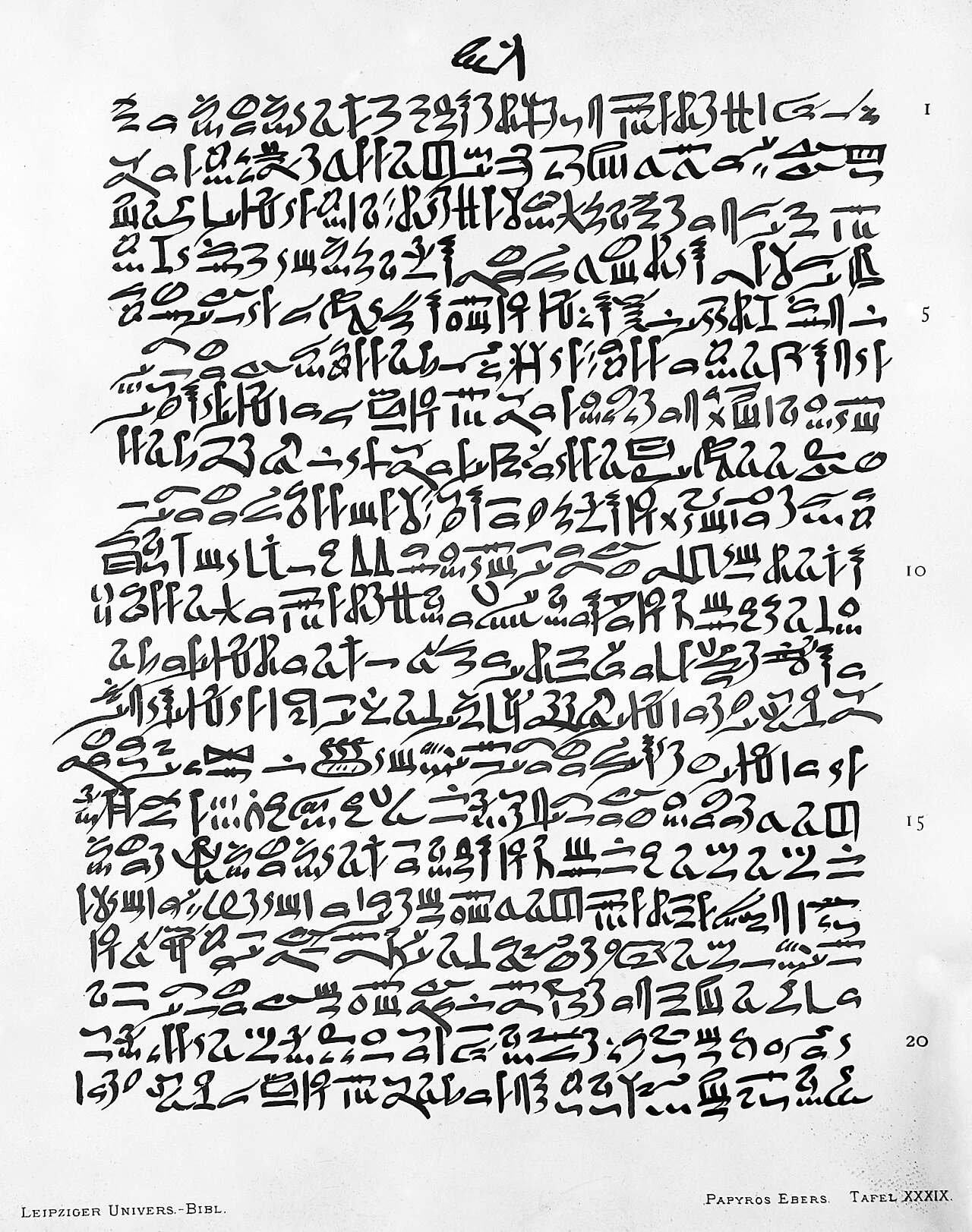
Modern readers often want to separate an ancient prescription into ‘science’ on one side and ‘magic’ on the other. The Ebers Papyrus resists that division. Spoken formulas could accompany preparation and treatment, and references to divine forces appear alongside instructions for physical complaints. To the people who wrote and used the texts, these practices belonged to a shared approach to illness and protection.
That doesn’t require us to endorse the medical claims. A translated spell cannot be used as evidence of a successful treatment, and even a recipe listing recognizable ingredients is not a safe instruction for contemporary use. Historical medicine is valuable as history. Anyone dealing with a health condition today should use qualified medical guidance, not ancient recipes involving unidentified substances.
The surviving text tells us far more about the literate people who compiled medical knowledge than about every sick person’s experience. We cannot know from this single scroll how widely an instruction was used, who could afford it or how a particular patient responded. Those questions are part of the limits of the evidence.
Reading the papyrus is not the same as reading hieroglyphs on a wall
Hieratic script was adapted to writing on papyrus. A trained scribe could produce dense lines of connected signs much more quickly than monumental hieroglyphs were carved in stone. The Ebers manuscript makes that difference visible: columns, red headings, abbreviations and revisions are part of its design.
Our guide to phonograms and determinatives explains how Egyptian writing combines signs with different functions. It is a useful companion, but the medical scroll also demands knowledge of hieratic paleography, grammar and specialized vocabulary. A casual glance at a photographed page cannot establish a disputed translation.
Some modern publications reproduce individual passages without their column numbers or surrounding text. Leipzig’s dedicated digital project gives readers a stronger way to locate the actual manuscript, understand its conservation and follow scholarly translations.
What makes Ebers different from the Edwin Smith Papyrus?
The two famous medical papyri are often mentioned together, but their surviving emphases differ. Ebers is a broad compilation covering many complaints, substances and spoken formulas. The Edwin Smith Papyrus is especially notable for structured descriptions of injuries, examination and prognosis. Neither should be used as a simple ranking of which ancient Egyptian doctors were more ‘scientific’.
For a closer examination of that contrasting source, see our Edwin Smith Papyrus study. Comparing the manuscripts is most useful when we look at specific textual practices, not when we turn one into a modern hospital manual and dismiss the other as superstition.
Where to begin if you want the original evidence
| Question | Start with |
|---|---|
| How long is the roll? | Leipzig’s measured 18.63 m manuscript description |
| How much survives? | 108 surviving columns, numbered within a 110-column sequence |
| How many medical texts? | Leipzig’s catalogue of 879 individual texts, not proven cures |
| Where can I see it? | The university library’s original conservation and replica-showroom information |
| Can I follow the text? | The library’s digitized manuscript and translation resources |
Start with the University Library’s own account and the scroll project’s detailed description. The fragile original, its nineteenth-century facsimile, today’s online reproductions and a modern exhibition replica are related, but they are not the same object.
The lasting impression of Ebers isn’t that ancient medicine knew everything we know now. It is that healers and scribes had already built a remarkably substantial body of texts around the everyday vulnerability of being human, long before the language of modern medicine existed.