What is the Coptic Museum in Cairo? Founded through the efforts of Marcus Simaika Pasha and opened in 1910, the Coptic Museum in Old Cairo preserves about 16,000 artefacts relating to Egypt’s Christian history and associated artistic traditions. Its collection includes manuscripts, icons, sculptures, textiles and architectural details.
This evidence-led study explains the museum’s history, collections, distinct location within the old Babylon fortress area and major restoration milestones. Two original photographs show the actual museum and one architectural element, each with its own verified rights and attribution.
Why the Coptic Museum matters in Cairo
The Coptic Museum is a specialist institution in Old Cairo dedicated to the material record of Egyptian Christianity and the broader cultural worlds in which it developed. The Ministry of Tourism and Antiquities describes a collection of around 16,000 objects, including sculpture, manuscripts, textiles, icons and architecture. It is different from the National Museum of Egyptian Civilization and from the Egyptian Museum in Tahrir. Each institution has a distinct collecting history and emphasis, even when the same historical period appears in several galleries.
The museum’s purpose is not to offer a timeless image of a single religious community. Its objects document transformations across Roman, Byzantine, medieval and later Egypt. Artists worked in different languages and materials, and objects passed through changing social, religious and political settings. A textile fragment or wooden panel can speak about craft as well as worship. Visitors who read provenance labels carefully can learn more than those who treat the collection as a gallery of interchangeable decorative styles.
Marcus Simaika Pasha and the founding of the museum
The museum was established through the efforts of Marcus Simaika Pasha, whose advocacy and collecting played a leading part in preserving Coptic heritage. Official ministry sources place the beginning of construction in 1908 and the opening on 14 March 1910. Cairo Governorate’s historical account also describes collaboration with church authorities and the transfer of objects from earlier institutions. The museum began with specific practical efforts to protect historic material rather than emerging fully formed through a single government declaration.
Its foundation belongs to Egypt’s modern history of museums and heritage policy. The selection and movement of objects often reflected concerns about deterioration, rebuilding or the need for public display. A serious account should acknowledge that collections acquire their meaning through original context, subsequent ownership and museum interpretation. The institution’s role in conservation is important, but displaying an object does not erase the questions of where it originated and how it was acquired.
Why Old Cairo was chosen
The museum stands inside the historic religious landscape commonly called Coptic Cairo, near the remains of the Roman fortress of Babylon. The Ministry situates it close to the Hanging Church, Abu Serga and the Ben Ezra Synagogue. These neighbours belong to different moments and traditions in the area’s long history. Their physical proximity demonstrates the layering of Cairo rather than suggesting that they were all built in the same century or served identical communities.
Location gives the institution a direct relationship to architecture outside its galleries. Visitors can move from museum displays to streets where historic walls, churches and places of worship have been preserved or altered over centuries. However, modern access arrangements vary. Being next door to a church does not mean a museum ticket grants unrestricted access to services or religious interiors. Respecting the living use of those neighbouring buildings is part of responsible cultural travel.
The collection: manuscripts, icons and textiles
The official museum description places manuscripts, icons, woodwork, frescoes and textiles among its important holdings. Each category requires different questions. A manuscript is an object made to be handled and read; an icon may have a devotional setting; a textile can contain evidence of weaving, trade, workshop practice and daily life. A richly decorated fragment is valuable not only because of its appearance but because its material, construction and original context can reveal connections between communities.
The word Coptic should not be used as an undifferentiated label for every Christian object from Egypt. Dates, languages, materials and use matter. Some artefacts relate to religious ceremony, while others to clothing, domestic spaces or administration. The museum’s broader value comes from demonstrating that Egypt’s Christian heritage developed in conversation with existing Egyptian, Hellenistic, Roman and later Islamic artistic traditions, not inside a cultural vacuum.
Sculpture and architectural fragments
The Coptic Museum preserves carved stone and woodwork associated with buildings and religious life. Architectural pieces can offer evidence of how spaces were decorated and how craftspeople adapted motifs over time. But removing a capital or panel from its original building can make interpretation harder. Museum labels and conservation records are therefore especially important for understanding what is original, what is restored and where an object once stood.
A decorative pattern should not automatically be assigned to one community or period because it looks familiar. Plant designs, geometries and reused architectural parts can cross cultural and chronological boundaries. The strongest evidence comes from datable contexts, inscriptions, material study and comparative scholarship. The museum’s collection allows such questions to be asked, although a visitor photograph is not a substitute for full object documentation.
Egyptian art across Christian and Islamic periods
Coptic art developed through engagement with older Egyptian and Mediterranean practices. The museum’s own presentation emphasises influences that include Pharaonic, Greek, Roman, Byzantine and Islamic contexts. That sequence does not imply a simple unbroken stylistic line from a pharaonic tomb to a medieval icon. Objects were made for different purposes and audiences across many centuries, and particular motifs may have moved through craft traditions for complex reasons.
The term Egyptian art is wide enough to contain religious, domestic and administrative artefacts produced under changing rulers. Understanding this range helps readers resist the idea that Egyptian cultural history stops at the end of the pharaonic period. For comparison, Kemet Vault’s Red Monastery study examines painted architecture preserved at an original monastic site, while the museum gathers movable objects and architectural fragments from multiple locations. Their evidentiary roles are different.
Two actual photographs of the museum
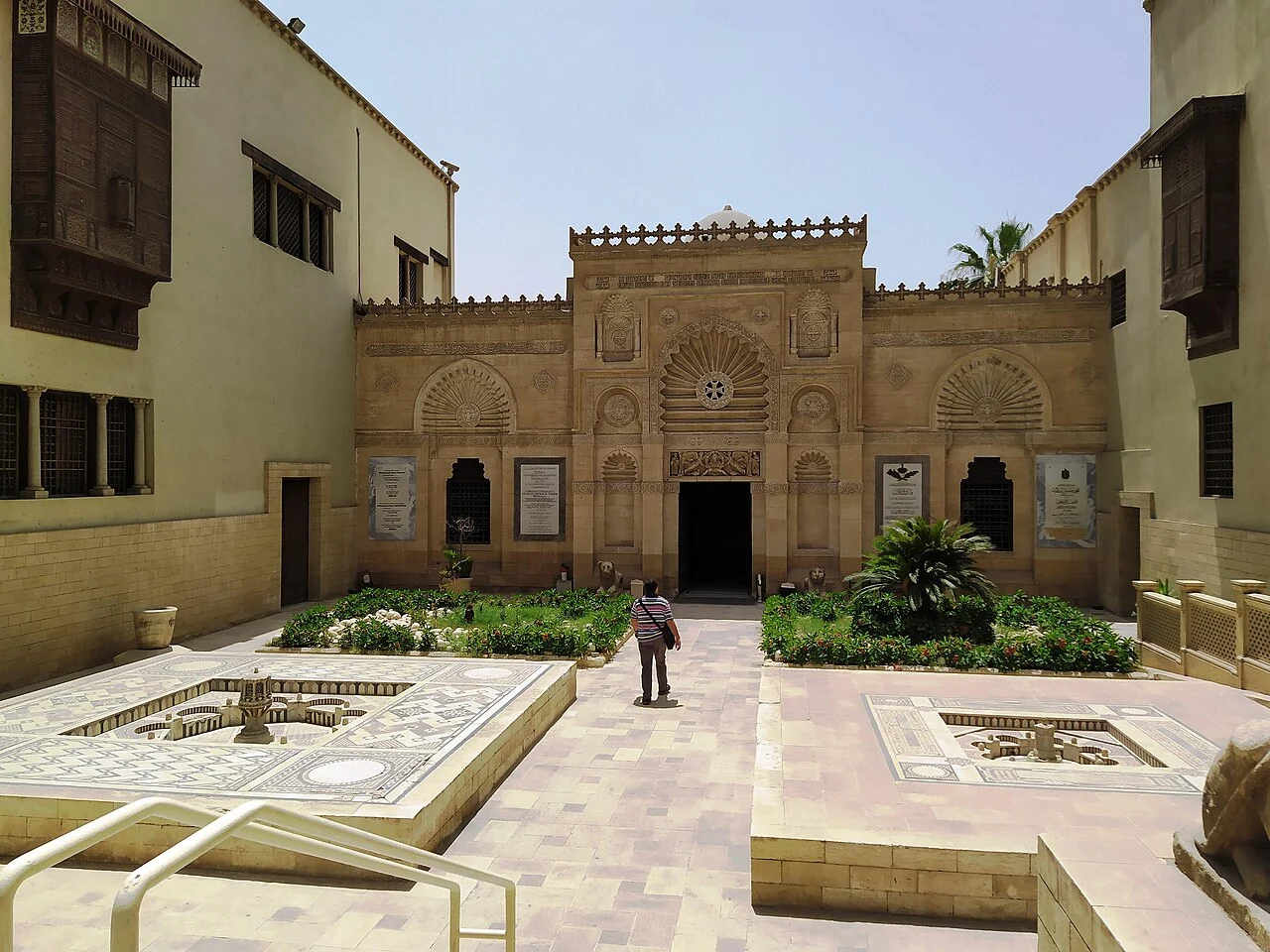
The first original image documents the exterior of the Coptic Museum in Cairo, photographed by Radosław Botev in July 2019 and shared by the Nomos Foundation under Creative Commons Attribution 3.0 Poland. It proves the appearance of the visible museum building at that date, not the current arrangement of every exhibition room. An independent reader can examine the camera location and original author information in the Commons file record.
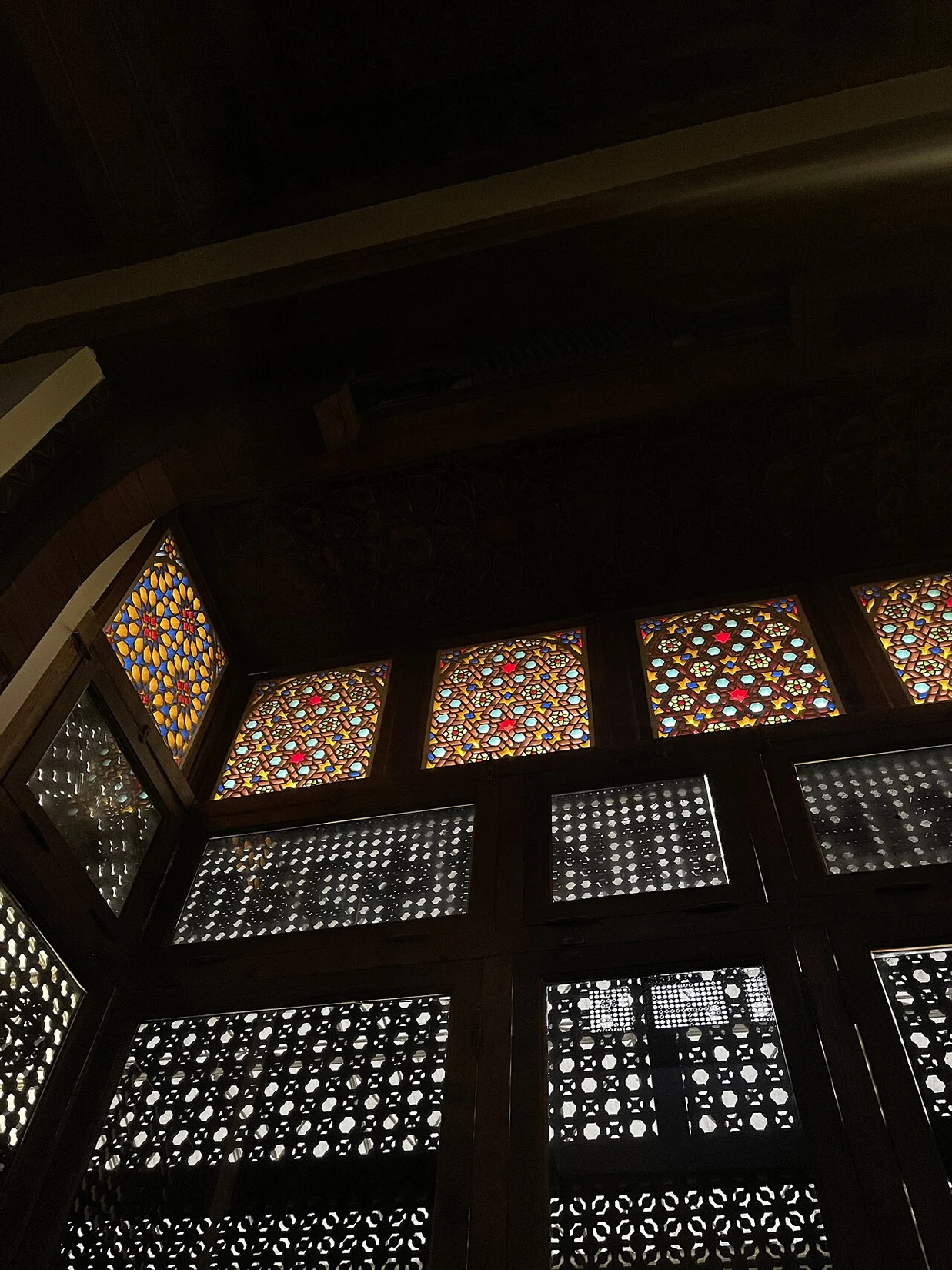
The second photograph by Alessiaazari was taken inside the museum in August 2025 and illustrates an architectural mashrabiya element. It is authentic museum photography released under Creative Commons Attribution 4.0. Its subject should be called a photographed architectural detail, not an unidentified original fifth-century church window. By choosing two genuinely different images, this article shows both the museum setting and a real part of its material presentation without reusing the same picture across unrelated heritage posts.
The museum’s move into state administration
Cairo Governorate’s history describes the museum’s transition from its original patriarchal administration to state ownership in 1931. That was not the same as its foundation in 1910, and treating the two dates as alternatives would confuse two separate institutional milestones. Over subsequent decades the museum’s buildings and displays were expanded and modified. The city archive records a new wing in 1947 during the reign of King Farouk.
A museum’s organisation can change while its stated mission of preservation continues. Public authority, collection management and exhibition priorities are all part of its historical development. The use of an old museum photograph should therefore be dated carefully: the building visible in a particular image may reflect extensions or renovations carried out after the foundation. A modern institution is an evolving archive, not a frozen room from the year it opened.
The 1992 earthquake and later conservation
A major earthquake struck Egypt in October 1992 and damaged historic buildings in Cairo, including parts of the Coptic Museum. Cairo Governorate’s account describes substantial restoration work and a reopening in 2006 after a prolonged closure. The museum’s history thus contains periods when preservation needs took priority over public display. Visitors can appreciate the collection without assuming that all visible finishes or structural interventions are unchanged from 1910.
Museum conservation involves very different materials. Fragile manuscripts and textiles need environmental monitoring, while woodwork, stone and wall paintings present other practical challenges. Restoring galleries does not by itself determine the ancient date of an individual object. A clearly documented intervention should be treated as part of responsible stewardship rather than evidence that the entire collection is modern or artificial.
What makes a useful visitor itinerary
The location in Old Cairo makes the museum part of a wider historical visit. The Hanging Church, Abu Serga, Ben Ezra and the fortress remains have their own narratives and current operating rules. Grouping the places on an itinerary is sensible because they are near each other, but a single paragraph cannot explain the history of each. The museum should have its own time for reading labels and examining categories of artefacts.
A practical visitor plan should confirm official opening times, ticket requirements, photography policies and accessibility information before setting out. These can change with conservation works or institutional decisions, so permanent prices and promises of access are inappropriate. Travellers interested in museum collections elsewhere can read the National Museum of Egyptian Civilization guide to understand how a different institution presents Egyptian history across multiple periods.
The museum and Egypt’s broader heritage
The collection offers a corrective to accounts that equate Egyptian heritage only with pharaohs, pyramids and royal mummies. Manuscripts, religious sculpture, textile technology and architectural details reveal other phases of the country’s history. Their importance is not reduced because they are later than the monuments of Giza. The museum’s location and holdings connect material culture to living social and religious communities, which should be treated with respect rather than used as a decorative backdrop.
Readers who want to extend this history can compare Abu Mena’s early Christian pilgrimage site and Saint Catherine’s monastery. These pages differ in setting, chronology and preserved evidence: one concerns an archaeological town, another a functioning monastic institution, while the Coptic Museum is a collecting and conservation body. Together they broaden the Egyptian timeline without duplicating the same search intent.
What to verify when researching an object
A reliable object description identifies where the object is held, a catalogue reference if available, material, date or dating range, place of origin and any documented restoration. A style alone may not determine the place where an artefact was made. Researchers should also distinguish institutional interpretation from a direct translation of an inscription. The Coptic Museum’s official pages provide a starting point for understanding the scale and diversity of its holdings, rather than a licence to attribute individual works without records.
The museum is a suitable subject for historical research and cultural tourism because it provides evidence for Egypt across many centuries. Its strongest presentation respects that complexity, dates institutional changes, gives clear image provenance and directs visitors to the current authority for practical questions. That approach is more useful than an undated list of supposed treasures without locations, identification or source links.
Conservation provenance and the difference between display and origin
One of the most useful habits in a museum is distinguishing where an object is now from where it was originally used. The Coptic Museum holds material brought together through collecting, transfers and conservation, so a sculpture displayed in Old Cairo did not necessarily originate in the neighbourhood. A manuscript may have passed through several libraries, and a wooden panel can have been removed from an architectural setting long before the present gallery display. Visitors should therefore read the provenance, material and dating statements where available rather than assuming that every exhibit was excavated at the museum site.
Modern conservation can improve stability without recreating a lost original context. A restored carved panel or repainted gallery wall needs to be distinguished from the ancient artefact itself. Museum photography should identify the real subject and the date of the photograph, not imply that a 2025 interior view proves the building looked identical in 1910. Those distinctions are practical principles for heritage research and for the accuracy of educational image captions.
Official primary museum sources
Institutional dates, the foundation story and the collection size come from the Egyptian Ministry of Tourism and Antiquities Coptic Museum record, the ministry’s museum anniversary article and Cairo Governorate’s museum history. Captions use two distinct and openly licensed original museum photographs, with their dates and the specific objects they depict stated clearly.