What can visitors see at the Bibliotheca Alexandrina? The modern Library of Alexandria, inaugurated in 2002, includes reading facilities, four specialist museums, exhibitions, guided tours and a planetarium programme. General library admission, inclusive museum tickets and planetarium visits have different conditions, and opening times must be checked against current official notices.
This independent cultural guide explains the actual building and museum choices rather than confusing the modern institution with the lost ancient Library of Alexandria. It uses the library’s own visitor and admission pages, alongside two licensed photographs of the real site.
The modern Bibliotheca Alexandrina is not the ancient Library
The Bibliotheca Alexandrina is a modern cultural and research institution overlooking the Mediterranean in Alexandria. It was inaugurated on 16 October 2002, a date confirmed by the library’s own announcement. Its mission explicitly recalls the ideals associated with the famous ancient Library of Alexandria, but the current building is not an excavated surviving wing of that Ptolemaic institution. This distinction is fundamental for visitors seeking historical accuracy as well as for photographs and maps.
The building belongs to contemporary Egyptian history and its cultural life, with libraries, museums, exhibition spaces and science activities. It does not claim to house the original entire manuscript collection of the ancient library. Readers interested in Hellenistic Alexandria should use Kemet Vault’s Ptolemaic Alexandria research dossier, which examines a much earlier institution. A modern visitor guide has different practical questions: which building to enter, which ticket to choose and what can be seen on a particular date.
Where the library stands in Alexandria
The Bibliotheca Alexandrina’s contemporary building is a conspicuous feature of the city waterfront near the university district. Its setting is useful for planning a cultural day, but a picturesque photograph of the Mediterranean does not tell a traveller which entrance or ticket office is required. The library’s official admission instructions identify a ticket office on Port Said Street, while its visitor information gives entry procedures and guided-tour arrangements.
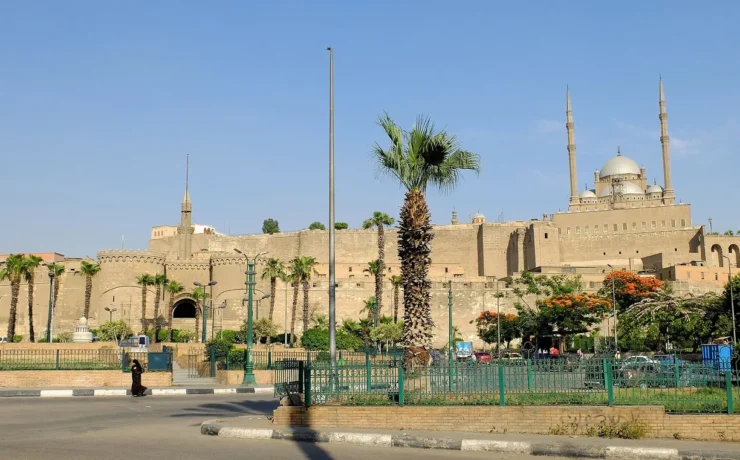
Alexandria has multiple nearby cultural landmarks with very different histories, including the site of the Roman-era catacombs and other archaeological museums. A visitor should not assume that every historic attraction is within a short walk or included in a library admission. The Alexandria one-day heritage route addresses the wider city, while the present article concentrates specifically on the library’s own buildings and services.
The building’s contemporary architecture
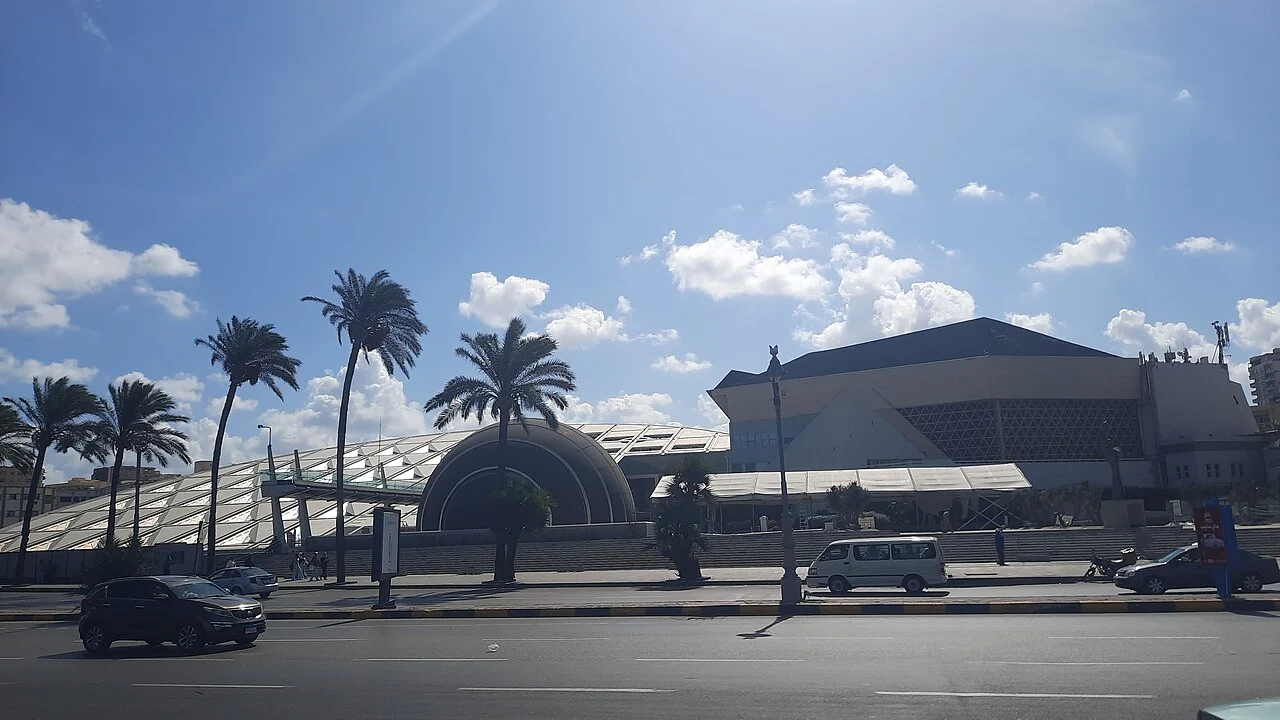
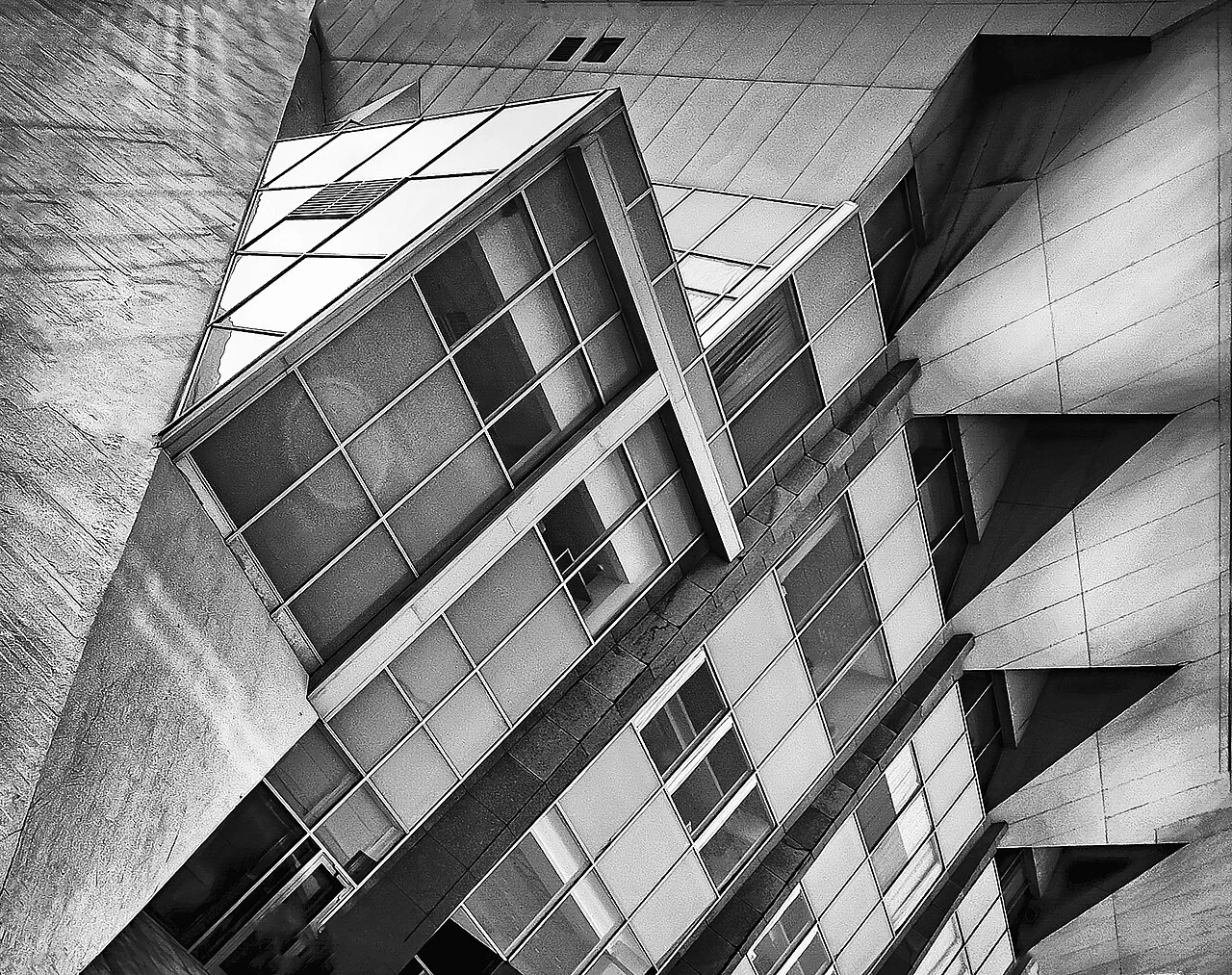
The new library is recognised for its large circular form, sloping roof and monumental exterior, reflecting a deliberate architectural response to its coastal location. Such a building is an interpretive statement about a modern knowledge institution rather than a literal reconstruction of an ancient palace. Two original photographs provide independent documentary views of its actual facade. Their captions distinguish the precise dates and photographers, avoiding the common mistake of using imagined Roman-era library illustrations as pictures of the existing building.
The distinctive architecture is worth appreciating from the outside, but the exterior is not the whole reason for a visit. The interior contains reading areas, exhibition spaces and visitor facilities, and access to some parts depends on tickets, membership, age or current institutional rules. An attractive drone-style image should never substitute for checking the precise entrance and programme a particular guest plans to use.
The four museums inside the institution
The official Bibliotheca Alexandrina website describes four museums: the Antiquities Museum, Manuscripts Museum, Sadat Museum and History of Science Museum. Each has a distinct remit. The Antiquities Museum is notable for displaying material found at the site of the new library; the Manuscripts Museum concerns written heritage and collections; the Sadat Museum documents a chapter of modern Egyptian political history; the History of Science Museum addresses scientific learning.
A visitor must check the current status of each museum before buying a package. The library’s official admission page has listed the History of Science Museum as closed for maintenance, a reminder that a permanent article cannot promise it is always open. Different ticket categories also apply across the institution. A general entrance to the library does not necessarily mean entry to every paid museum or performance. The exact inclusion should come from the current official ticket description.
Main Library ticket versus an inclusive ticket
The library’s official ticket guidance distinguishes admission to the Main Library from an inclusive ticket. The Main Library ticket lists guided tours, Culturama shows, the Sadat Museum and access to permanent and temporary exhibitions, while the inclusive option adds access to the Antiquities and Manuscripts museums. The planetarium is identified separately and may require its own ticket. These differences matter more than a headline price in a travel blog.
Fees differ by visitor eligibility, including Egyptian or non-Egyptian status and age or student categories. Published amounts and waivers can be revised, and a page captured today cannot guarantee a price in the future. The safest approach is to open the official admission page immediately before the visit, identify the planned components and confirm the total. The article deliberately avoids treating a single dated price chart as a permanent promise.
Guided tours in different languages
Bibliotheca Alexandrina advertises guided tours in Arabic, English and French, and its official planning page provides time slots by day and language. This is useful information for visitors who want more than a photograph of the facade. Guided tours explain the history of the ancient institution, the revival project and services of the modern building. The advertised language and hour, however, do not guarantee that a particular slot will always have places available.
Large groups, school visits and individual reservations may follow different procedures, and some experiences require advance booking. The library’s official plan-your-visit page is the appropriate source for current arrangements. A tour agency’s promotional description is not a substitute for an actual institutional booking, nor does a hotel reservation automatically grant a guided library visit.
Reading rooms, learning and research
The modern institution functions as more than a tourist attraction. Its reading areas, collections, digital resources and learning services are intended for students, scholars and general readers. This matters because a visitor with a camera and a researcher seeking access to particular resources can have different practical needs. Membership, permitted areas and the conditions of using computers or collections should be checked through the library’s own rules.
The building also hosts cultural programmes, temporary exhibitions and public events. These evolve over time and are not all offered every day. A credible travel guide separates permanent institutional features from scheduled activities and respects restrictions intended to protect readers’ quiet. A photograph of the reading room or a former event does not prove that a particular programme is available on a future date.
The Manuscripts Museum and written heritage
The Manuscripts Museum has its own educational and collecting identity within the Bibliotheca Alexandrina. It is a particularly suitable stop for visitors interested in the relationship between material books, scripts, conservation and historical knowledge. Museum-specific regulations can differ from the general library guidance. The official museum site describes rules on photography, noise, children and group sizes, illustrating why visitors should not assume one ticketing or behaviour policy covers every section.
A manuscript displayed in a gallery is not necessarily an original book from the ancient Ptolemaic library. Objects can come from much later periods and different cultural traditions. Reading the label for date, place of origin and material helps prevent a false impression of continuous custody over more than two millennia. The museum offers a chance to understand how writing survives, changes hands and is studied in contemporary collections.
The Antiquities Museum and site archaeology
The Bibliotheca Alexandrina Antiquities Museum describes its displays as including objects discovered at the location where the modern library stands, a noteworthy relationship between urban excavation and a new public institution. This is not proof that every object in its galleries came from a single excavation pit or dates to the Ptolemaic library. Museum presentation draws on different sources and periods, and the specific provenance of each item requires a label or catalogue record.
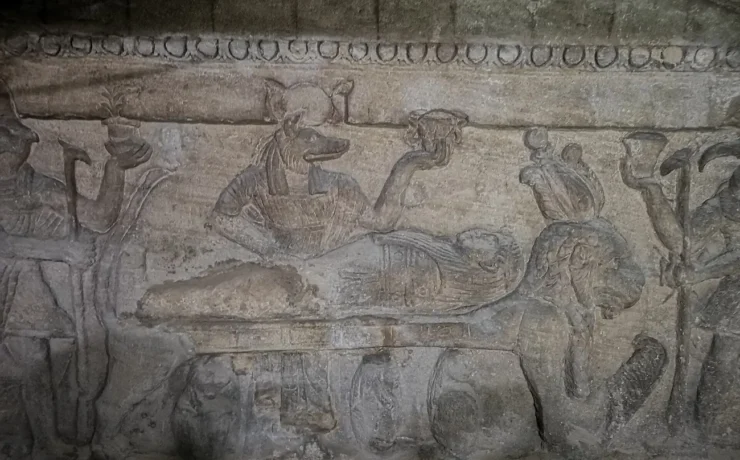
For people who have seen museums of pharaonic Egypt elsewhere, this collection can offer a different perspective on ancient Mediterranean Alexandria and subsequent cultural layers. The Kom el-Shoqafa guide provides related context about the city’s Roman-era burial practices. The museum and catacombs serve different visitor intents, so a sound itinerary gives each a distinct description rather than calling them interchangeable ancient attractions.
Culturama, exhibitions and the planetarium
The library’s cultural programme includes Culturama experiences and a planetarium science centre alongside exhibitions. The official FAQ explains that some programmes require booking and that admission conditions differ. A visitor planning a family outing should verify the programme’s suitability for children and the current availability of activities rather than relying on a video uploaded several years earlier. The separate planetarium arrangements are especially important when comparing an inclusive library ticket with a show ticket.
Temporary exhibitions can be valuable but cannot be promised on a permanent page without dates. Exhibition titles, accessibility, opening hours and programme schedules should be read from the institution’s live official listings. The value of a visitor guide is to explain how the institution is organised and which choices matter, not to invent an everlasting schedule of shows and activities.
Two genuinely different photographs of the modern library
The first documentary image is a 2026 exterior photograph by Hassan Hamdy Wahidy, uploaded through a Wikimedia Egypt community documentation initiative and released under Creative Commons Attribution-ShareAlike 4.0. It shows the actual Bibliotheca Alexandrina and its modern facade. The second is a separate 2023 photograph by NAHEDISMAEIL66, shared under the Creative Commons CC0 public-domain dedication. These are different photographs with individually recorded dates and rights, not duplicate generic stock images.
Both pictures document the modern institution. Neither can be used as evidence for the physical appearance of the ancient Great Library or its long-lost shelves. The image captions state the building and photography dates, while the historical text addresses the modern 2002 opening. This distinction also prevents search engines and readers from confusing a modern landmark with a speculative ancient architectural reconstruction.
Planning a visit without misleading opening hours
The library’s official web pages include visiting hours for different components, and these can vary between reading rooms, museums, tour departures and ticket windows. Some official landing pages have displayed schedules that differ from a separate working-hours page. Because of that discrepancy, a responsible article should not select one timetable and claim it is guaranteed for every department. Instead, visitors should verify the institution homepage and the specific museum or visitor page for the date they intend to attend.
Plan enough time for the selected museum or guided tour and note that group programmes can require reservations. Access rules for photography, age and quiet zones vary within the complex. A visitor who needs step-free access or other accommodations should request property-specific guidance rather than infer it from a wheelchair symbol on a search listing. The physical building can be a striking stop, but the best experience depends on the exact purpose of the trip.
What the modern library contributes to Egyptian cultural history
The revival of the Library of Alexandria is an important story about contemporary Egypt’s investment in scholarship, research and cultural exchange. Its 2002 inauguration placed a modern institution in conversation with the memory of Alexandria’s ancient intellectual life. That is a symbolic continuity, not proof that the ancient book collection survived intact inside the new structure. Modern collections, digital facilities and cultural programming make the institution significant on its own terms.
The library also connects different subjects across Kemet Vault: Ptolemaic Alexandria, Roman archaeology, Egyptian manuscripts and modern tourism. These links should lead readers to distinct studies with genuine value rather than creating dozens of thin location pages from the same paragraph. This guide’s specific contribution is practical interpretation of the current building, ticket choices and programmes using the institution’s own sources.
Official booking, collection and source links
All admission, museum and tour distinctions were checked against the Bibliotheca Alexandrina admission page, official tour arrangements, museums overview and 2002 inauguration record. The images link to their original Wikimedia Commons files with separate author and reuse terms. Confirm operational schedules and tickets directly before a visit.