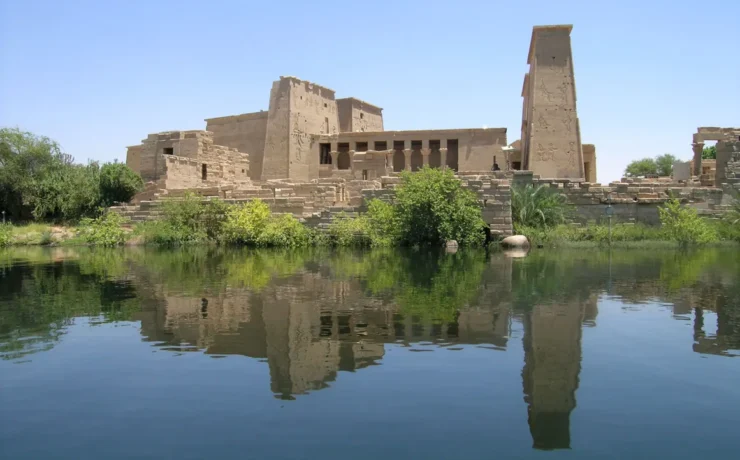
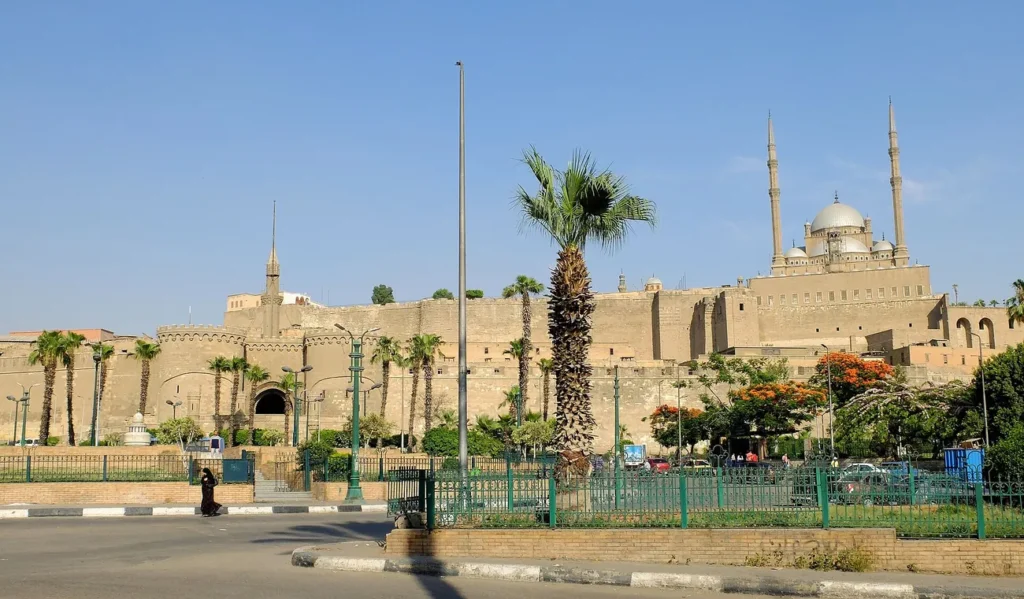
From the streets below, Cairo’s Citadel looks like one enormous fortress topped by a white-domed mosque. Walk through it and that first impression begins to fall apart. Parts of the defensive walls belong to a medieval project begun by Saladin, a Mamluk mosque stands close to later buildings, and the Ottoman-style silhouette of Muhammad Ali’s mosque belongs to the nineteenth century.
That’s what makes the Citadel worth visiting with a little historical context. You’re not entering a single building created by one man. You’re moving through a place where successive rulers used the same commanding hilltop to express power, faith and control over Cairo.
A fortress begun in 1176, not finished in Saladin’s lifetime
Saladin ordered construction on the Muqattam hills in 1176 CE, according to Egypt’s Ministry of Tourism and Antiquities. The elevated position gave the site excellent views and a defensible setting above the city. But the work was not complete when he died. The Ministry dates its completion as an official royal residence to the reign of al-Kamil in 1207 CE.
It’s a useful correction to the familiar label ‘Saladin’s Castle’. That name identifies the founder of the project, not the builder of every wall, tower and monument within the modern visitor complex. The fortified site continued to develop under later Ayyubid, Mamluk and Ottoman rulers. Its political importance lasted into the nineteenth century, before Khedive Ismail moved the seat of government to Abdeen Palace.
Two mosques that tell two different histories
The most conspicuous building is the Mosque of Muhammad Ali Pasha, sometimes called the Alabaster Mosque. Its grand domes and tall minarets are part of the nineteenth-century transformation of the Citadel, not a surviving mosque from Saladin’s own reign. The Ministry’s monument record describes the mosque’s Ottoman-influenced arrangement, monumental central dome and marble-lined surfaces.
A short distance away, the Mosque of Sultan al-Nasir Muhammad belongs to an earlier world. It was ordered built in 1318 CE and rebuilt in 1335, during the Mamluk period. Its courtyard, porticoes and unusual minarets offer a vivid contrast with the later Muhammad Ali Mosque. The Ministry identifies it as the royal mosque for the Citadel’s Mamluk occupants.
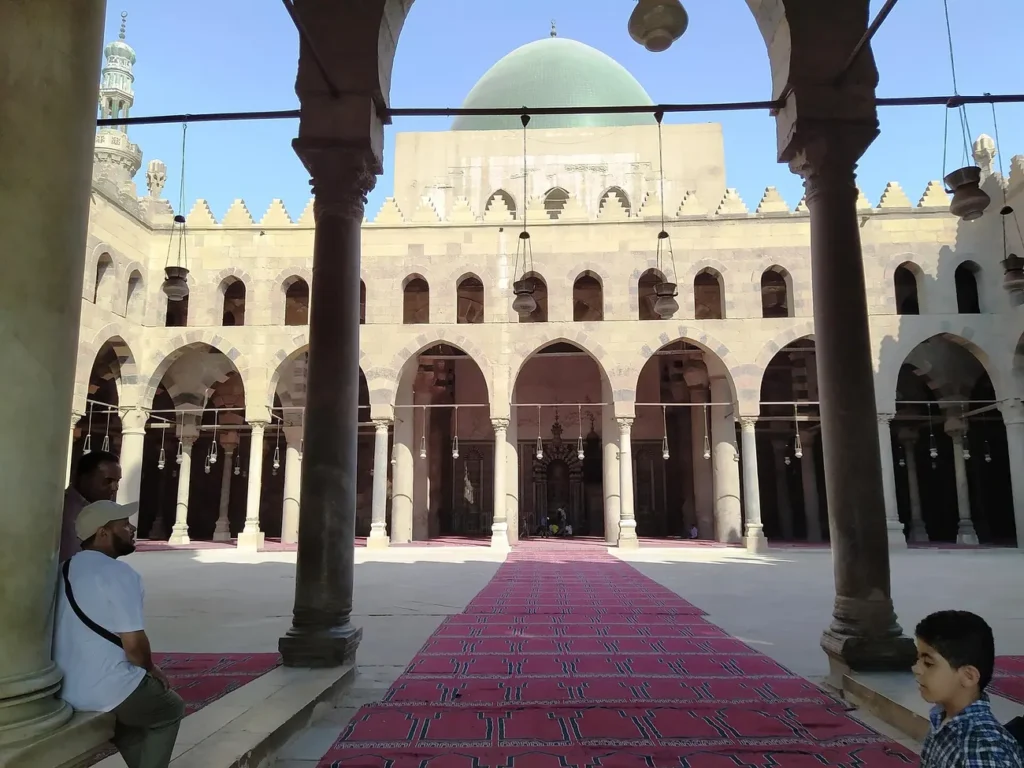
If you only have time for two monuments inside the complex, comparing these mosques can be more revealing than racing through a long list of structures. Notice the proportions of the spaces, the stonework, the shapes of the domes and the position of the courtyards. Their differences reflect centuries of political and artistic change.
What else is inside the walls?
The Citadel includes the Ottoman-period Mosque of Sulayman Pasha al-Khadim and museum spaces, such as the Military Museum, Police Museum and Al-Jawhara Palace Museum. Their availability can change with conservation work or operational decisions. Don’t assume that every museum mentioned in a tourism directory is open on the day you arrive; check the site’s official notices if a particular collection is essential to your plan.
The surrounding fortifications are also worth attention. The walls, gates and towers were not all constructed in one campaign. The Ministry’s description of the Citadel towers explains the distinction between the defensive northern area and the southern section used for residential and ceremonial purposes. That difference helps explain why the complex can feel like a series of connected places rather than a single enclosed castle.
From viewpoints over the city, Cairo extends across the horizon. The panorama is part of the reason the hill was strategically important. Today’s buildings are different from the medieval city below, but the elevated position still makes the logic of the fortress easy to understand.
A sensible first-visit route
Start with the main public entrance and orient yourself using the official site plan. Visit Muhammad Ali Mosque for its monumental nineteenth-century architecture, then make your way to al-Nasir Muhammad Mosque to compare an earlier royal religious building. From there, choose one museum or defensive area that is open and appeals to your interests, before spending some time at an accessible panoramic viewpoint.
There’s no need to pretend every visitor needs the same minute-by-minute schedule. Crowds, heat, access restrictions and the pace of your group matter. The pathways and stairs may be difficult for some visitors, so people with mobility needs should ask about the route and available assistance before setting out. Respect religious spaces, follow photography guidance and avoid treating fragile surfaces as props for pictures.
| Part of the visit | Why spend time there? |
|---|---|
| Muhammad Ali Mosque | See the nineteenth-century architectural layer most visible in Cairo’s skyline |
| Al-Nasir Muhammad Mosque | Compare an earlier Mamluk royal mosque with the later monument |
| Fortifications and towers | Understand why the hilltop became a strategic defensive center |
| One museum if open | Explore a particular collection without rushing every possible display |
| Panoramic viewpoint | Relate the fortress to the modern city below |
Tickets, opening times and the square below
The official Citadel page publishes hours and admission charges for different visitor categories. Check it shortly before arriving, because prices and access arrangements can change. The Ministry separately lists al-Nasir Muhammad Mosque as included with the Citadel ticket, but some museums or special areas may have their own access arrangements or periods of closure.
Don’t confuse the Citadel entrance with the broader Salah al-Din Square at its foot. The square is a distinct public space, surrounded by major historic buildings, including the Mosque and Madrasa of Sultan Hasan and al-Rifa’i Mosque. Walking around the square does not mean you’ve purchased admission to those monuments or the fortress above.
If you’re exploring more of historic Cairo, our Al-Muizz Street walking route takes you into a different group of monuments and urban spaces. Our modern Cairo history guide follows the later downtown districts and public buildings. These stories connect, but each deserves its own time.
What stays with you after a careful Citadel visit isn’t just the view over Cairo. It’s the realization that one fortified place can contain the ambitions of rulers separated by hundreds of years, and that the buildings make more sense when you stop asking which single king ‘built the whole thing’.