Alexandria is a difficult city to squeeze into a day. The sea keeps pulling you toward the Corniche, yet some of its most revealing history is hidden a few streets inland. If you have one full day, resist the temptation to visit every monument on a map. Three stops offer a far better introduction: the excavated city at Kom el-Dikka, the modern Bibliotheca Alexandrina, and Qaitbay’s fortress at the harbor’s edge.
They also tell a surprisingly coherent story. You begin among the remains of Roman and Byzantine urban life, move into the city’s present-day culture, and finish at a medieval fort built on a site once associated with one of antiquity’s great landmarks. This is a route for people who want to understand what they see, not collect photographs of every famous name.
Morning: begin where the Roman city still survives
Kom el-Dikka is a useful first stop, particularly if you are arriving by rail and planning the day around central Alexandria. Beneath the modern streets, archaeologists uncovered a small Roman-period performance building, baths, lecture rooms and houses with mosaics. The Ministry of Tourism and Antiquities describes the site as a residential and civic quarter used between the second and sixth centuries CE.
The most photographed feature is the semicircular seating of the odeon, often called the Roman theatre. It is tempting to imagine Cleopatra watching a performance there. The dates rule that out: the visible building belongs to a much later Alexandria. The more interesting story is that the city remained a center of public life and education long after the Ptolemaic kings had gone.
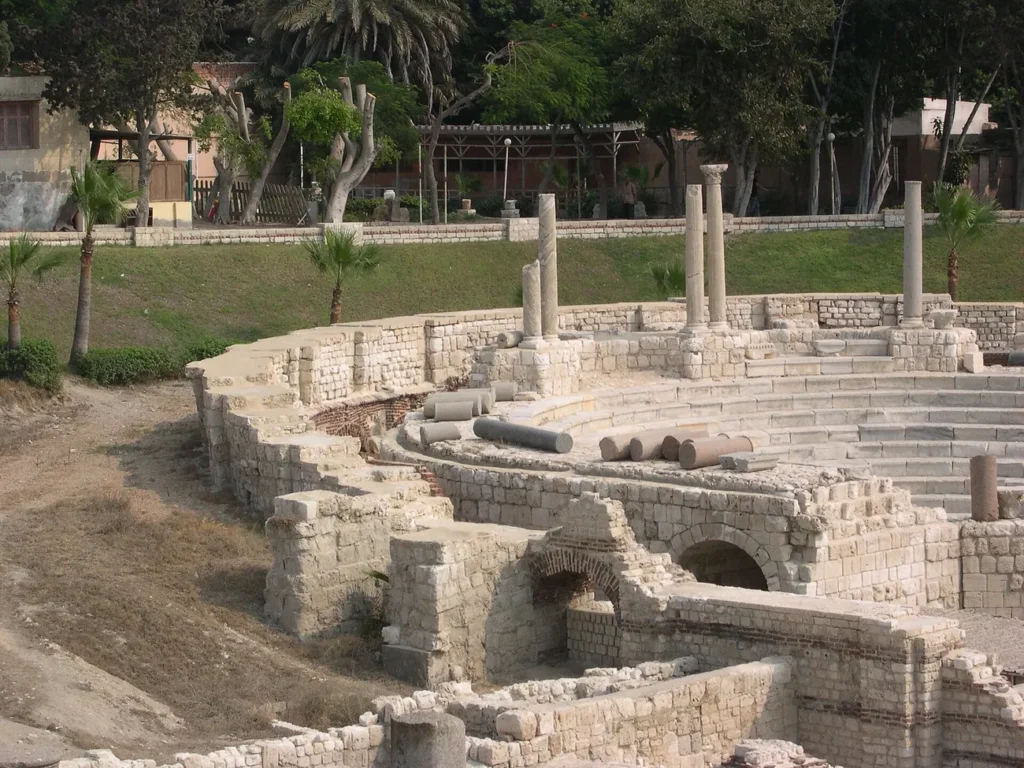
Rather than rushing from the theatre to the gate, spend some time looking at the relationship between the seating, the surrounding rooms and the rest of the excavated quarter. The official Kom el-Dikka description identifies the lecture halls, Roman baths and the Villa of the Birds. Which parts you can enter may depend on conservation work. Checking current access matters more than a rigid promise to be finished in forty-five minutes.
Late morning: see what Alexandria has built for the future
From Kom el-Dikka, make your way toward the waterfront and Bibliotheca Alexandrina. This is a modern library and cultural complex, not a reconstruction of the lost ancient Library of Alexandria. The distinction doesn’t make it any less worthwhile. A city associated with ancient scholarship now has an institution dedicated to books, exhibitions, museums and public events.
Before deciding what to visit inside, check the Bibliotheca’s official opening and visitor information. Its published schedule distinguishes reading areas from tours and museums; Fridays are normally closed, and Saturday hours are shorter. Those details can change, so avoid building an itinerary around an old screenshot. If a tour is running, it may be the best way to understand the building; otherwise choose one exhibition or museum instead of attempting every space at once.
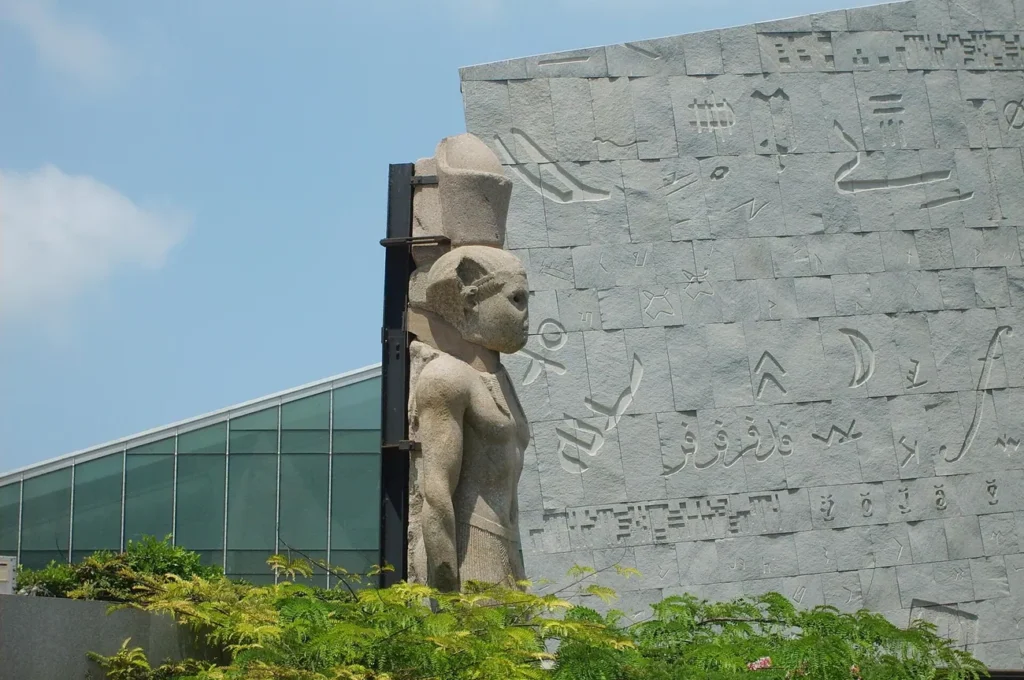
The library stop provides a useful contrast with the archaeological site. At Kom el-Dikka, surviving buildings reveal traces of the past. At the Bibliotheca, contemporary architecture and collections show how people continue to interpret that past. If the subject interests you, the site’s dedicated library guide goes deeper into what to prioritize on a visit.
Lunch and the Corniche: let the city be a city
Alexandria is not a museum with traffic between galleries. Its Mediterranean setting is part of the pleasure. Leave room for a meal and a walk along a section of the Corniche, depending on the weather. On a windy day, the sea may make a waterfront stroll brief. On a crowded afternoon, a taxi or other suitable transport may be more sensible than attempting the entire shoreline on foot.
The key is to keep the day geographically coherent. You are working westward from the modern library toward the Eastern Harbour and Qaitbay Citadel. A leisurely lunch beats a frantic detour to an attraction at the opposite end of the city. People spending two days in Alexandria can afford more museums and the eastern districts; this single-day route deliberately trades breadth for time to look properly at the places it includes.
Afternoon: finish at Qaitbay’s fortress
At the western edge of the Eastern Harbour stands Qaitbay Citadel, a fifteenth-century fortress built under the Mamluk sultan al-Ashraf Qaitbay. According to Egypt’s monument authority, construction took place from 1477 to 1479 on the site of the ruined ancient lighthouse. That makes it an extraordinary place to think about Alexandria’s coastline across different eras, but the fortress is not the lighthouse itself.
Walk through the defended courtyard, look toward the harbor and consider what this location meant to ships entering the city. The ministry’s Qaitbay monument record explains the towers and fortifications. A visitor center, announced by the ministry, adds panels and maps about the ancient port, later coastal defenses and the lost Pharos. Such materials help connect what survives with what archaeologists and historians reconstruct.
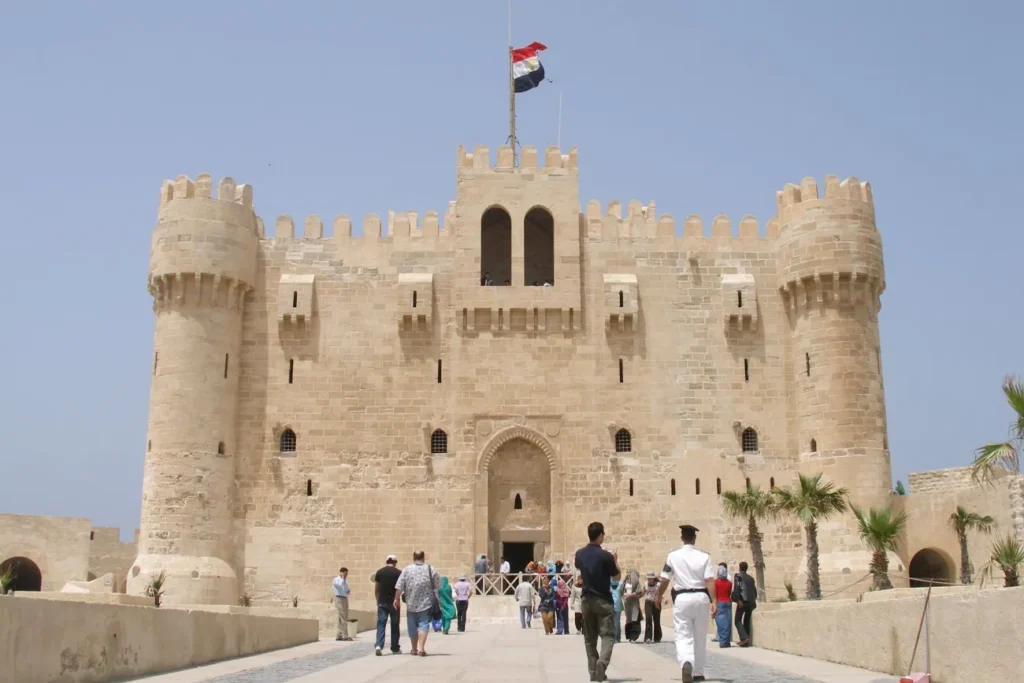
This is an atmospheric place to end the day, but don’t promise yourself a sunset entry without checking the actual closing time. Opening conditions, tickets and weather may change. Arriving while access is definitely available matters more than following a picturesque schedule copied from a travel blog.
If one stop doesn’t fit, what should you change?
| Your situation | A more useful plan |
|---|---|
| Arriving from Cairo late in the morning | Choose Bibliotheca Alexandrina and Qaitbay; leave Kom el-Dikka for another visit. |
| Visiting on a Friday | Check current Bibliotheca closures before travelling; consider an outdoor and archaeological route instead. |
| More interested in ancient burial culture | Consider substituting the Kom el-Shoqafa catacombs for one stop, rather than adding them as a fourth rushed attraction. |
| Limited mobility or travelling with children | Contact sites about accessible routes and steps, and prioritize fewer stops with longer breaks. |
| Staying overnight | Use the two-day cultural route to give the museums and waterfront proper time. |
For the fullest day, reserve the morning for archaeology, the middle of the day for the library and lunch, and the afternoon for the harbor. It is a plan with breathing space, not a claim that you can predict Alexandria’s traffic or museum access to the minute.
Before you leave
Confirm site opening information with the Ministry’s Kom el-Dikka page, Bibliotheca Alexandrina and the official Qaitbay listing. Keep flexible transport plans, allow more time than a map suggests and be ready to swap a stop if a site is closed.
One day won’t tell you everything about Alexandria. But it can leave you with something more useful than a crowded camera roll: a sense of how this very old city has continued to rebuild itself, from the Roman streets to the library and the Mediterranean harbor.