Ancient Egyptian beauty was not a single timeless image of dark eyeliner and royal gold. The archaeological record reveals eye cosmetics, stone kohl vessels, metal mirrors, grooming tools, textiles and ornaments used and valued by people in different circumstances. This illustrated guide shows what genuine excavated possessions reveal, and why elite tomb finds cannot stand for every household across three thousand years.
Ancient Egyptian beauty: key evidence
1. Beauty as a part of everyday material culture
Ancient Egyptian cosmetic objects offer evidence for personal appearance, household possessions and the hopes expressed in funerary provision. Kohl jars, mirrors, applicators and boxes survive from different times and social settings. They tell us something concrete about what people owned and sometimes used, but cannot capture every aspect of grooming among people whose objects have not survived.
The most striking museum pieces often belonged to privileged households or royal circles. A gold-rimmed jar excavated from a princess’s burial is not proof that everyone owned the same luxury object. A careful history separates widely attested practices from elite materials and unusual archaeological finds.
2. Kohl and the painting of the eyes
Kohl was an eye cosmetic known in ancient Egyptian contexts. The Met documents kohl jars associated with both men and women and notes surviving residues in some examples. The word kohl in modern English does not imply every ancient formulation had identical ingredients or that its use was the same across all periods.
Modern internet articles sometimes prescribe ancient kohl mixtures as beneficial for the eyes. That is a mistake: an archaeological report can establish what people used without endorsing a contemporary medical or cosmetic practice. Certain historical pigments could contain harmful substances, and museum catalog research should not be converted into self-treatment advice.
3. The royal kohl jar of Sithathoryunet
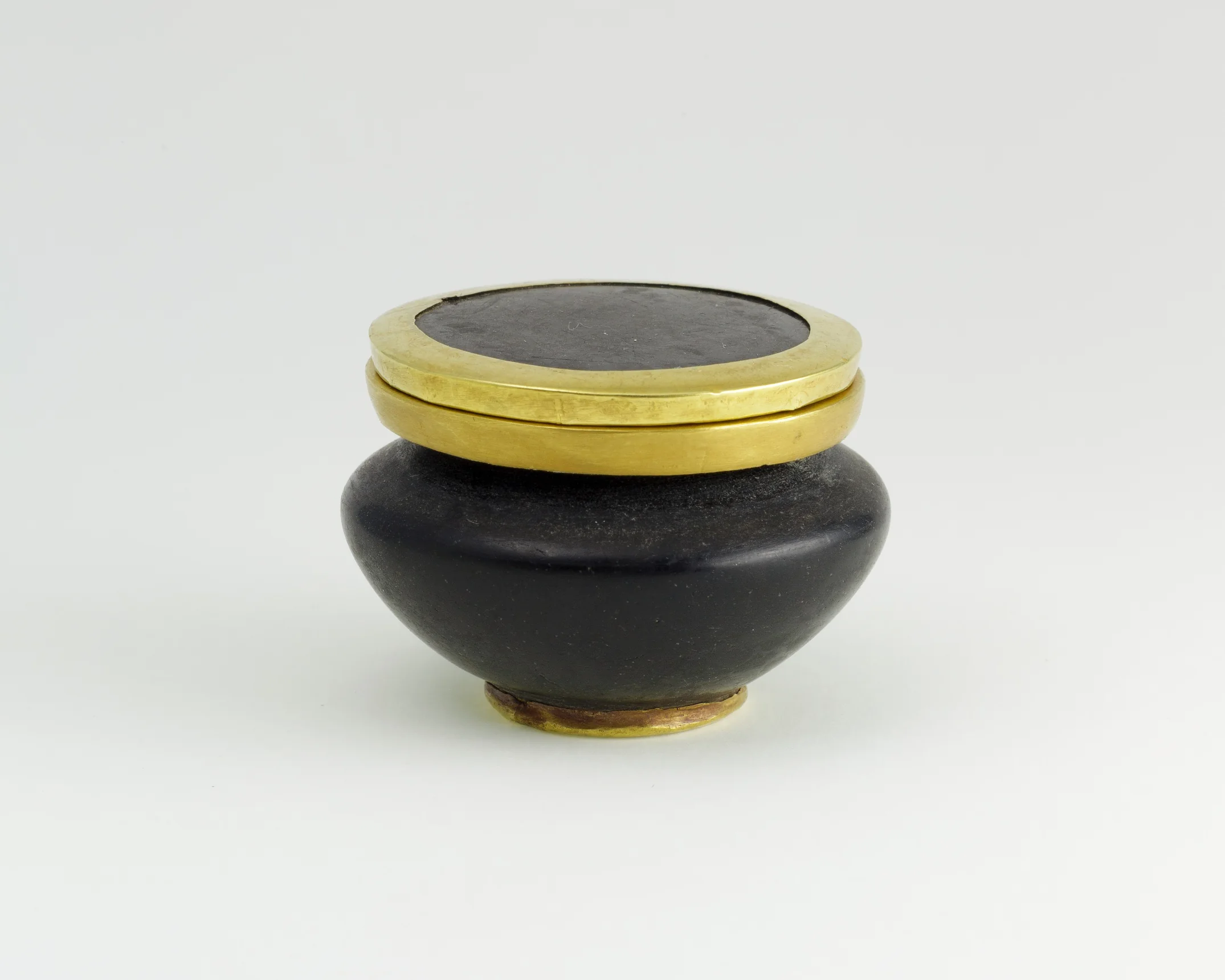
One small object in The Met, accession 16.1.6a,b, belonged to the burial equipment of Princess Sithathoryunet at Lahun. Its obsidian body and gold detail make it a remarkable luxury possession from the Middle Kingdom. The jar illustrates how everyday functional forms could be transformed into elite craftsmanship.
The object’s extraordinary finish reveals status and specialized material production. It should not be labeled “a typical Egyptian makeup jar” without qualification. Comparing it with less elaborate vessels helps explain why a single museum photograph can be beautiful but socially unrepresentative.
4. Cosmetic jars in a lived New Kingdom household
A kohl jar from Hatnefer’s tomb, The Met 36.3.63, had a wooden applicator associated with it, and the museum records residue identified as galena. The excavated assemblage gives the object a much stronger context than an unprovenanced vessel. The catalog suggests that Hatnefer had used the object during her lifetime.
Yet even such a personal possession cannot reveal her complete daily routine or what every woman in Egypt wore. The date, burial setting and connections to other objects establish the limits of reasonable interpretation.
5. Mirrors and the act of grooming
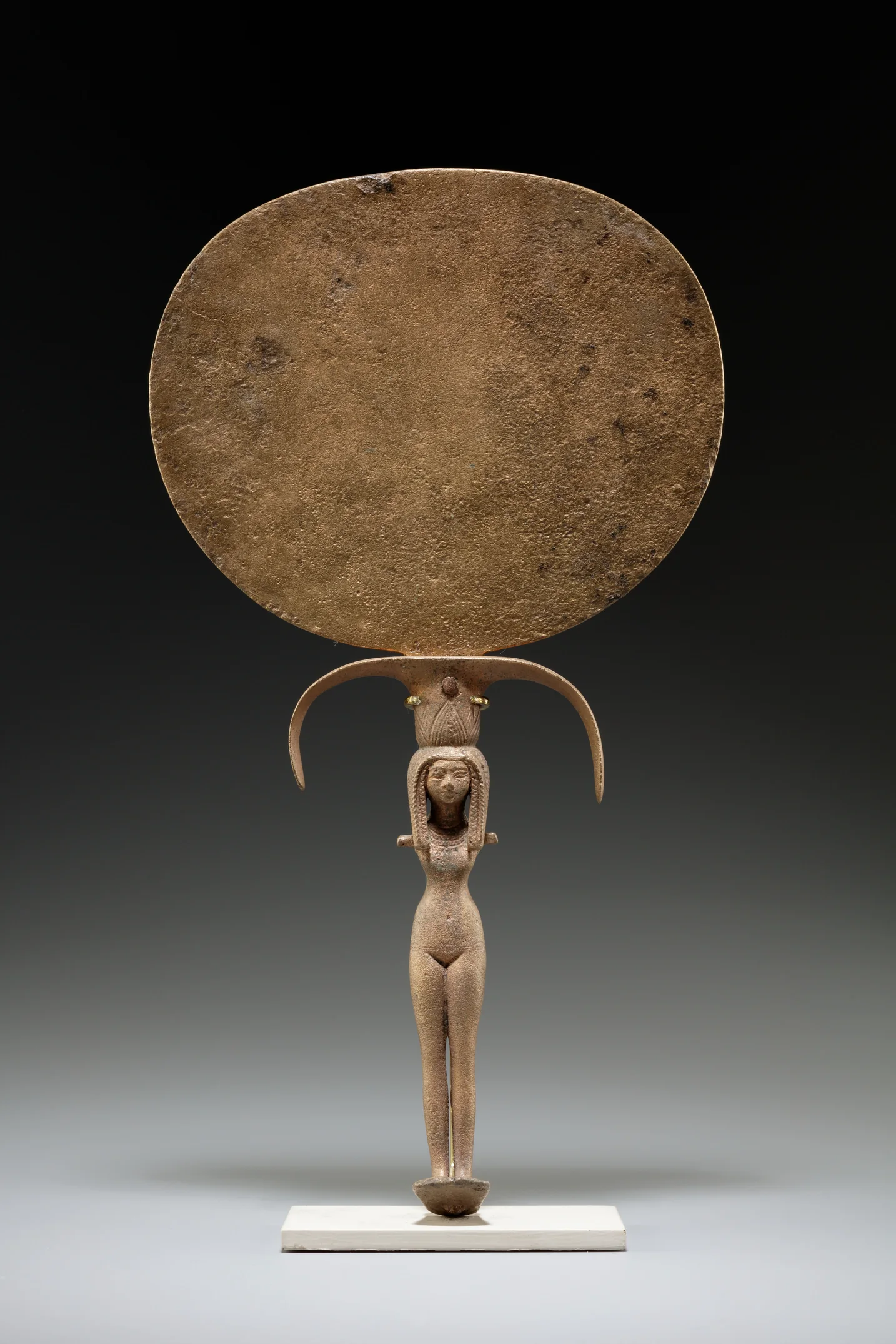
Ancient mirrors could be made from polished copper alloy and supported by handles in different materials. Reflective metal surfaces produced a different experience from modern glass mirrors. Their presence in burials can suggest that grooming equipment was valued and that such personal objects also acquired funerary significance.
The Met’s mirror 10.130.1311 is an authentic New Kingdom example. A museum photo can show its general shape and material, but it does not reconstruct how brightly it reflected a person’s face at the moment of original use.
6. Cosmetics and gender
Ancient Egyptian cosmetics were not exclusively associated with women. Museum commentary identifies kohl use among both men and women. Artistic conventions vary across royal, religious and everyday contexts, and social roles influenced what objects were available to particular individuals.
Modern claims that all Egyptians followed one glamorous beauty regimen reduce a vast culture to a costume. It is more useful to distinguish evidence of practices from the idealized appearance of sculpted and painted figures.

7. What were cosmetic containers made from?
Stone, glazed materials, wood and metal appear in surviving cosmetic equipment. Materials affected the vessel’s cost, durability and appearance. Some containers were functional, while some were elaborate objects that communicated wealth or belonged to ritual or funerary contexts.
A name in the form of a royal cartouche can indicate an object was given in a royal setting, but it should not be mistaken for evidence that the king personally applied cosmetics from that jar. The inscription’s meaning and the item’s findspot have to be assessed together.
8. A Thutmose III royal gift and the limits of attribution
The Met preserves a diorite and gold-leaf kohl jar from a tomb connected with the foreign wives of Thutmose III. Its inscription bears the king’s royal name and the catalog describes the associated goods as royal gifts. It belongs to the material history of elite relations and courtly exchange.
This jar is useful for discussing luxury and political networks, not as a direct picture of the Battle of Megiddo or the personal face of Thutmose III. An image may be historically connected to a ruler without documenting his activities in that photograph.
9. Hairstyles, wigs and represented appearances
Images and surviving objects show complex forms of hair arrangement, head covering and ornamentation in different periods. Wigs appear in certain artistic and material contexts, but identifying the exact hairstyle of every social group is difficult. Paintings may use conventions that emphasize identity, occupation or status rather than replicate individual appearance.
Surviving combs, hairpins and grooming items can add information, but they rarely reveal the entire routine of their ancient owner. A careful article avoids assuming that a sculpted hairstyle is an exact record of how a person woke up each morning.
10. Clothing, linen and status
Linen was a major textile in ancient Egyptian clothing, but clothing styles, fabrics, quality and access varied across centuries and regions. Textile survival is uneven, and elite tomb depictions tend to be overrepresented in museum illustrations. The simplest garment and a finely pleated royal costume were not necessarily made or worn under the same conditions.
Material culture helps historians ask questions about weaving, fiber preparation, labor and decorative finish. A modern costume advertisement cannot serve as evidence for the full range of ancient Egyptian dress.
11. Jewelry and protective meaning
Beads, necklaces and amulets could combine beauty with religious or protective symbolism. Their value lay not only in the materials used but also in iconography, craftsmanship and personal associations. Gold and semiprecious stone objects attract attention, yet plain ornaments may have been more accessible to people of limited means.
An amulet’s presence in a burial must be interpreted within funerary choices, not automatically as a daily item worn by the deceased. Some possessions could be new funerary goods, inherited objects or items adapted for burial.
12. Scent, unguents and hygiene
Vessels are sometimes identified as containers for oils, unguents or other cosmetics through comparison or excavated residue. The survival of a container does not guarantee that its original contents are known. Archaeological residue analysis, inscriptions and associated tools can strengthen identification, while simple resemblance to modern perfume jars is not sufficient.
Claims about specific perfumes of Cleopatra or exact ancient soap recipes should be treated cautiously unless grounded in identifiable texts and material studies. Beauty advice and historical research are different kinds of writing.
13. Burial goods and actual use
Cosmetic equipment placed near a coffin could be possessions used during life, gifts for the deceased or objects serving an idealized afterlife. An archaeologically documented set may allow specialists to make narrower arguments than a beautiful unprovenanced object. Hatnefer’s assemblage is a useful case because the mirror, jar and applicator can be studied together.
Students should compare the findspot and accompanying objects before inferring the owner’s routine. This is a wider method that applies to everything from writing tools to food models.
14. Why images of queens can mislead
Royal portraits communicate power, beauty ideals and religious symbolism through conventions. The presence of elaborate eye lining or jewelry in royal art is not proof that every Egyptian person dressed alike or used the same materials. Sculpture can be highly standardized even when intended to represent a particular individual.
A documentary photograph of an excavated jar is a different kind of evidence from a painted portrait or a digital reconstruction. Captions should identify which kind of source the reader is seeing.
15. Did ancient cosmetics improve health?
Historical texts and museum records may discuss beliefs about protection or therapeutic effects, but the evidence does not justify advising readers to use ancient chemical formulations today. Lead-bearing or otherwise contaminated eye products can carry real health risks. A safe educational article describes the history of use without presenting recipes for experimental application.
For students, the central question is what people believed and practiced, not whether an ancient substance should be commercially marketed as a miracle treatment in the present.
16. Comparing four authenticated objects
Study the Met’s luxurious Middle Kingdom jar, a New Kingdom personal kohl jar, a bronze mirror and a royal gift jar from Thutmose III’s reign. Record accession, provenance, date, material and object context. Which object documents actual cosmetic residue? Which documents elite expenditure? Which might have been used in a household?
A good conclusion can explain that the group spans different social positions and dates and therefore does not establish one universal cosmetic routine. Multiple authentic photos permit interpretation when they are captioned precisely.

17. Frequently asked questions
Did men use kohl? Surviving evidence and museum summaries indicate that both men and women used eye cosmetics. Were all cosmetics made from the same ingredients? No. Was gold makeup equipment common? Luxurious gold-bearing artifacts reflect privileged contexts. What were ancient mirrors made from? Often polished copper alloys, sometimes with decorated handles. Did all women wear wigs? The evidence does not justify such a universal claim. Are ancient kohl recipes safe to copy? They should not be treated as modern medical or cosmetic advice.
Why put grooming objects in tombs? They could be valued possessions or part of funerary provision, depending on the specific excavation context.
18. How to investigate beauty without stereotypes
Begin with the actual object, not a film costume. Note its date, findspot, materials and possible residues. Separate ordinary personal care from funerary symbolism and elite social display. Then compare different periods to identify continuity and change rather than claiming there was a single unaltered Egyptian beauty ideal.
Use authoritative museum records and avoid uncredited stock photos or digitally invented reconstructions. Kemet Vault’s first-party photos preserve the scholarly link from object to catalog.
Verified objects and related culture
The Met: Sithathoryunet kohl jar; The Met: Hatnefer kohl jar and applicator; The Met: bronze mirror; The Met: royal gift kohl jar. Explore Ancient Egyptian Daily Life, Middle Kingdom Material Culture and the Digital Museum.