The Amarna Letters are an archive of diplomatic messages written on clay tablets in the fourteenth century BCE and found at the royal city of Akhetaten, modern Tell el-Amarna. They preserve negotiations, complaints, gift exchanges and urgent appeals sent to Egyptian rulers by distant monarchs and local governors. Their importance is not that they contain one universal peace treaty, but that they document international politics through individual letters written for particular audiences. Reading the tablets requires separating what a sender asserted from what historians can independently demonstrate.
Why clay tablets belong in an Egyptian royal archive
The most striking feature of the Amarna archive is its script. Much of the correspondence was composed in cuneiform, often using Akkadian as a diplomatic medium, rather than the hieroglyphic signs familiar from Egyptian monuments. This contrast is historical evidence. Egypt participated in a network of courts where written communication had to cross linguistic and geographical borders. A clay letter received by the pharaoh could be read through scribal expertise, interpreted within an administrative setting and retained for later reference. Surviving tablets do not reveal the full organisation of every Egyptian foreign office. They do, however, show that rulers invested in specialised literacy and durable administrative records. The Metropolitan Museum’s study of the Amarna Letters describes how tablets, messengers and accompanying gifts could contribute to court ceremony. When considering an individual tablet, the exact language, format and accompanying historical names matter more than the convenient modern label ‘ancient Egyptian letter’. Not every message was an Egyptian composition; many were sent to Egypt by people pursuing interests elsewhere.
The excavation at Akhetaten and the limits of a recovered archive
The tablets emerged from the ruins of Akhenaten’s capital, Akhetaten, at Tell el-Amarna in Middle Egypt. Some were connected to an area understood as a records office. Their discovery occurred through a mixture of local recovery, antiquities activity and later archaeological work, so the surviving collection is not one uniformly excavated sealed box. Several messages date from the reign of Amenhotep III, Akhenaten’s father, indicating that correspondence could be transported from an earlier administrative setting to the new city. The Met describes roughly 350 letters preserved in the ancient storage context, while broader catalogues count more tablets and fragments under the name Amarna corpus. Counts differ because fragments, duplicates, related texts and definitions of the archive are not identical. No historian should imply that every message ever sent to Egypt was preserved. Clay can survive where papyrus disappears, and the surviving archive reflects accidents of storage, abandonment, destruction and modern discovery. The documentary record is extraordinarily informative precisely because its gaps can still be discussed.
Amenhotep III, Akhenaten and the problem of dates
Many Amarna letters belong to the diplomatic worlds of Amenhotep III and his successor Akhenaten in Dynasty 18, around the middle decades of the fourteenth century BCE. Exact absolute dates for Egyptian reigns depend on chronological reconstruction, so museum ranges should not be silently converted into one certain calendar year. The British Museum catalogues a letter from Tushratta of Mitanni to Amenhotep III as approximately 1350 BCE and records the original findspot as Amarna. That museum attribution ties one surviving object to a specific correspondent without claiming it was written on a specific day. A second tablet, the request from Yapahu of Gezer, may have been addressed to Amenhotep III or Amenhotep IV: the catalogue preserves the uncertainty rather than pretending the recipient is certain. The broader Kemet Vault chronology guide explains why an Egyptian reign date and a modern estimate are not interchangeable. The archive’s value increases, rather than diminishes, when its limits are stated.
Great kings calling each other brothers
Some correspondents were rulers of powerful states including Babylonia, Mitanni, Hatti and Alashiya. Their letters use diplomatic language of brotherhood, reciprocity and requests for material or symbolic recognition. Such vocabulary should not be read as evidence that the monarchs were biological brothers. It was part of a hierarchy of political relationships, negotiated through repeated exchange. To address the Egyptian king as an equal could itself communicate status. Yet the language of equality did not remove competitive demands. Kings complained about inadequate gifts, delayed deliveries, insufficient respect and unequal treatment. Even when a king uses affectionate language, the content may be highly practical: gold, skilled workers, horses, textiles or a marriage arrangement. Each petition also reflects its author’s desired outcome. A powerful ruler praising an Egyptian monarch need not provide an impartial assessment of Egyptian strength. By comparing letters across correspondents, historians identify conventions, recurring problems and divergent political interests. The documents demonstrate an international communication system without proving it was harmonious or modern in its assumptions.
Tushratta of Mitanni: marriage, gold and diplomacy
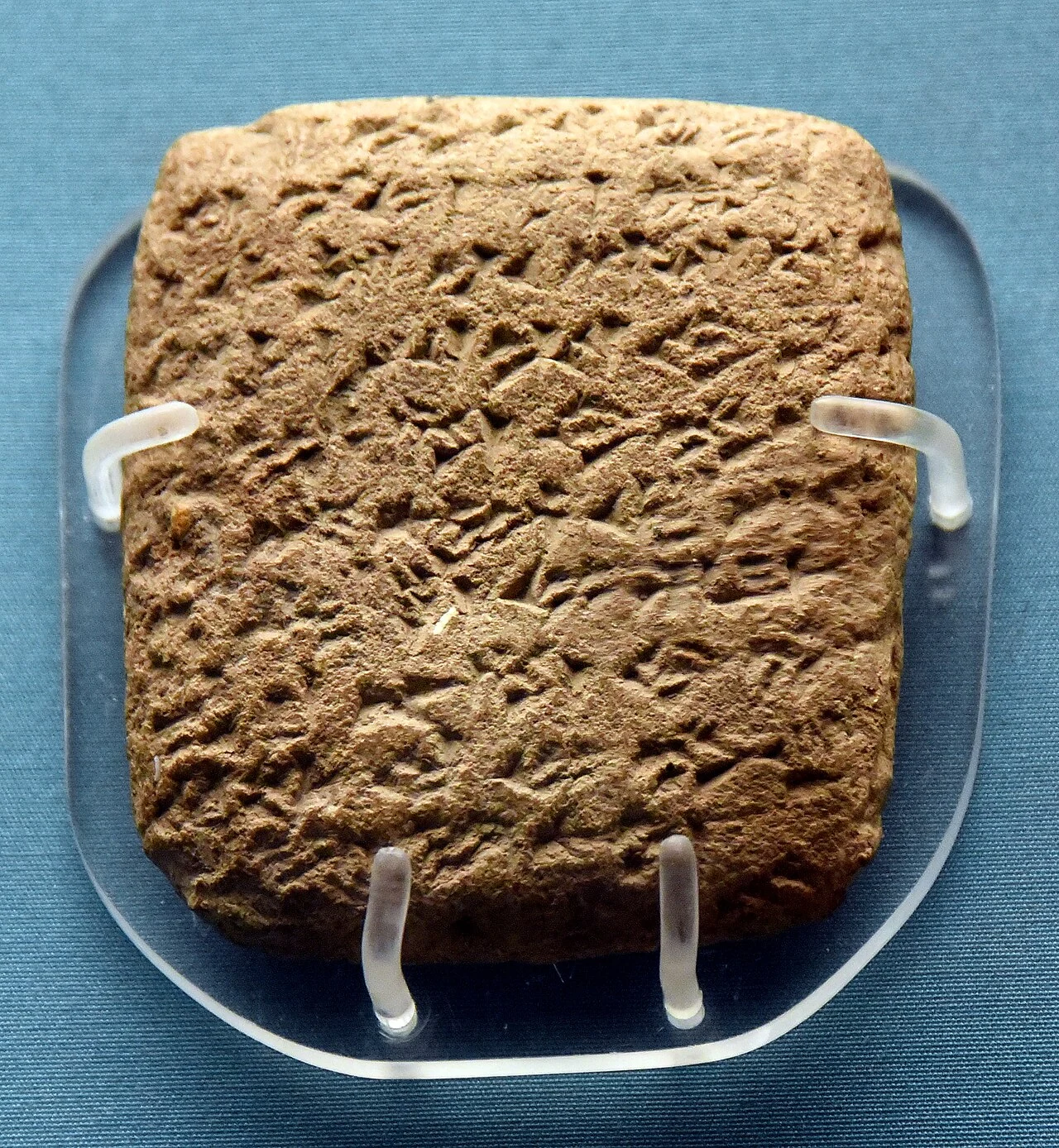
Tushratta’s correspondence with Amenhotep III provides a particularly vivid example of dynastic relationships in diplomacy. A British Museum tablet, registered as a letter from Tushratta and catalogued under the Amarna series, was photographed in a genuine museum image. Its text concerns relations between the Mitannian and Egyptian courts, including gifts and marriage politics. The archive preserves repeated discussion of gold and the expectations attached to earlier transactions. An ancient sender might emphasise a friendship already demonstrated by the previous generation in order to demand similar treatment now. That rhetoric is evidence of political persuasion, not an independently audited ledger. Some surviving photographs show the front of a tablet, while signs may continue along its edge or reverse. Translation depends on careful specialist examination of marks, broken surfaces and parallel textual formulas. It is misleading to suggest a visitor can simply read a cuneiform photograph as though it were an English letter. The physical tablet records the diplomatic relationship more concretely than a fictional reconstruction of two kings meeting face to face.
Alashiya, copper and the Mediterranean exchange
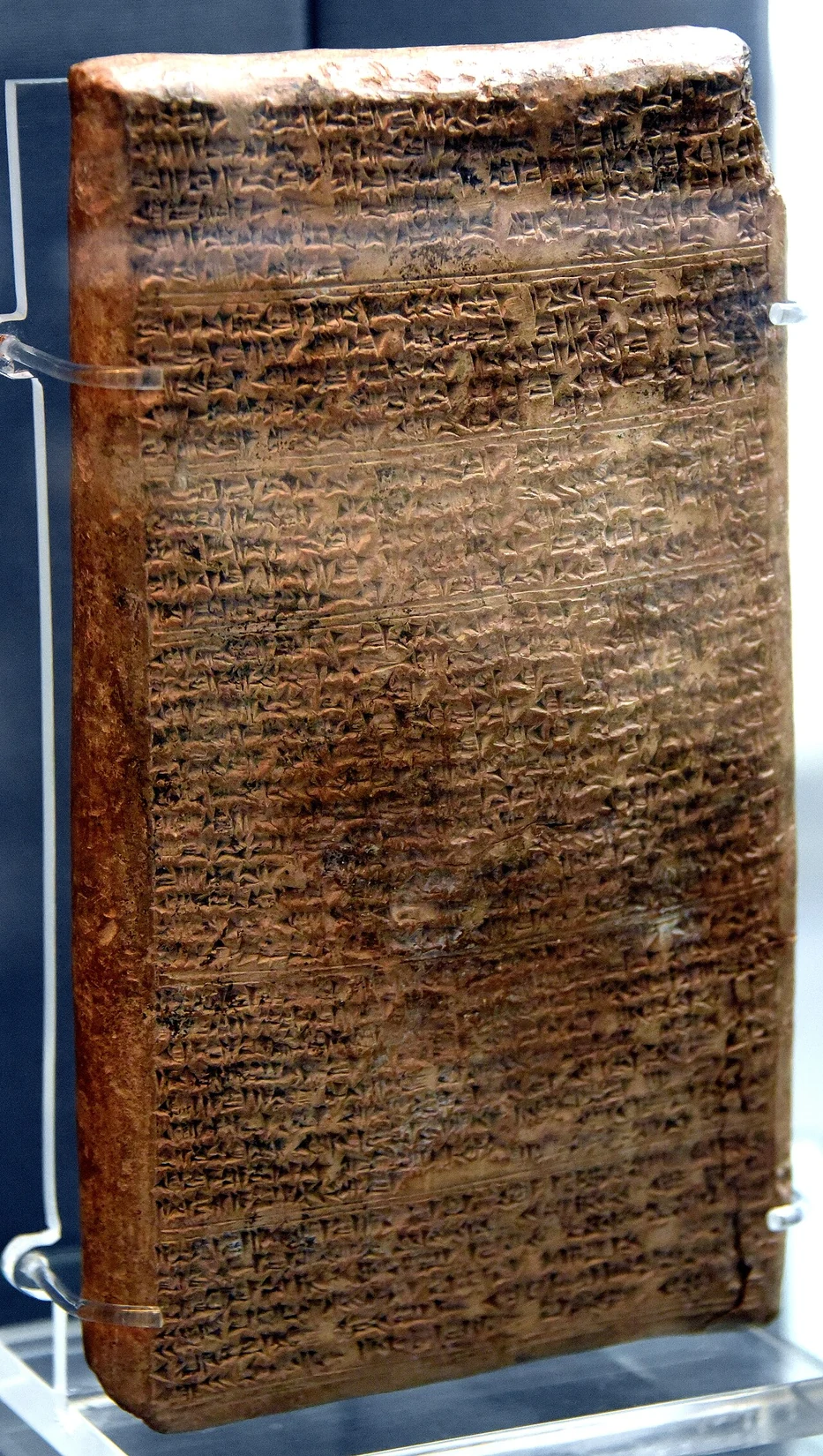
An Amarna letter from the king of Alashiya describes expectations involving copper, gifts and the relationship between royal courts. The British Museum records one such tablet as correspondence from Alashiya to Egypt, with reference to valuable Egyptian goods and a complaint concerning unfulfilled deliveries. Alashiya is commonly associated with Cyprus in scholarship, but the identification should be explained through research rather than taken as a label that every excavated tablet visibly carries. Copper was strategically important in a world that used bronze for tools, objects and weapons. The exchange was not necessarily a simple commercial sale. Prestigious reciprocal gifts could secure political ties while still moving economically important materials. When a royal letter requests an ebony bed, chariot or oil, it does not describe the standard purchases of ordinary rural families. Court exchange and routine village markets operated on different scales. The archive shows how foreign rulers presented their interests to the Egyptian court and why the ability to mobilise goods mattered for prestige as well as practical supply.
Local governors, loyalty and the geography of Egyptian influence
Other letters came from rulers and governors in the Levant, where Egyptian royal influence was mediated by local political struggles. A governor might reassure the pharaoh of loyalty while accusing a neighbour of rebellion, trespass or failing to provide required support. This makes the correspondence valuable but politically partial. An accusation is not equivalent to a verified military report. The tablet associated with Yapahu of Gezer is documented by the British Museum as a request for assistance and a statement about hostile people. Scholars debate many ethnic and social labels appearing in the letters; it is particularly risky to equate every ancient term with a modern national or religious identity. The language of loyalty could be strategic, designed to trigger Egyptian aid or frustrate a rival. The archive thus provides a map of overlapping concerns rather than a neatly bounded imperial atlas. Physical location matters too: a letter found at Amarna was not necessarily written there. The findspot is where the tablet was recovered, while the place of composition may have been a distant court.
Cuneiform signs, translations and the scribe’s work
A tablet’s wedge-shaped signs are not decorative marks added after the message. They formed a writing system mastered through extensive training, using signs that could express syllables, words and conventional expressions. Foreign-language communication required expertise in the diplomatic register as well as knowledge of palace expectations. The letters sometimes preserve local linguistic features behind their common administrative medium. Students should distinguish a modern transliteration, which represents cuneiform signs according to scholarly conventions, from an English translation that interprets their meaning. Tablet breaks and uncertainties produce brackets and editorial marks in scholarly editions for good reasons. The photographs themselves can be challenging: light from different angles changes the appearance of shallow wedges, and a reverse side may have been damaged. The study of Egyptian scribes and writing provides a contrasting view of scripts employed within Egypt. Together the articles show a multilingual administrative world, not a country with one writing technology.
A letter’s voice is an argument, not a neutral transcript
What can the letters tell us about what actually happened? They show that a sender chose to say something at a particular moment and expected that message to reach someone with authority. They may record claims about armies, the number of ships, tribute or a promised bride. But those claims were not verified by a contemporary fact-checking office. A governor who reports a crisis may be pleading for troops; a ruler who expresses indignation may be bargaining for a better response. Diplomatic language is full of conventions, including titles, formulaic greetings and expressions of subservience. Historians compare those conventions across the archive and against external evidence, including inscriptions, archaeological destruction levels and documents from neighbouring states. If the record is silent after a request, it does not prove the pharaoh refused it. A response may simply have been written on a lost document. This interpretive discipline separates source analysis from historical fiction and helps readers understand why a small clay fragment can prompt substantial debate.
Marriage politics and the limits of royal biography
Diplomatic marriages could consolidate relations between Egyptian and foreign royal families, but the Amarna evidence should not become an imagined catalogue of the brides’ emotions or private conversations. Negotiations recorded in letters concern status, safe travel, gold and expectations between households exercising public power. A daughter’s journey to another court could be described as an alliance, yet the written surviving voice is generally that of elite men and their scribes. Historians must therefore ask whose perspective is absent. Marriage transactions were also connected to political memory: appeals to earlier exchanges could help a king insist that a successor honour the same arrangement. Named women in the correspondence deserve accurate identification rather than being conflated with every princess shown in Egyptian tomb art. The existence of dynastic diplomacy does not demonstrate that foreign royal women were simply anonymous objects. Nor does it provide enough evidence for individual life stories when documents do not survive. The distinction between what is recoverable and what is not makes the corpus a valuable basis for studying power and gender.
How the Amarna archive connects to later conflict
The letters belong to a world in which Egyptian influence extended into neighbouring regions, but they predate important later confrontations such as the Battle of Kadesh under Ramesses II. That chronological distinction matters when comparing the diplomatic practices of successive periods. The Kadesh study examines a later military confrontation and the politics of remembering it. The Amarna letters instead offer a set of contemporary correspondence concerned with ongoing relationships, local loyalties and reciprocal demands. Both kinds of sources are selective. A monument commissioned by a king can magnify victory, while a private diplomatic appeal can exaggerate urgency. Studying them together teaches a historical method: identify who produced a source, who was supposed to read it and what actions the author hoped to influence. Neither medium is a transparent mirror of events. The meaning of continuity between diplomatic periods must be established rather than assumed because two sources mention the same region.
Museum catalogue numbers and the ethics of looking
A reliable account of the Amarna Letters can identify individual objects rather than merely describing an anonymous ancient tablet. The British Museum lists its Tushratta letter as a clay cuneiform object from Tell el-Amarna with a known modern registration number. Another entry identifies Yapahu of Gezer and notes the uncertainty surrounding its Egyptian royal recipient. The catalogues supply information about acquisition, condition and current display, alongside historical interpretation. One museum photograph does not document the whole series or its full excavation history. Reproducing an image also carries a separate modern obligation to verify the photographer’s license, credit and terms of adaptation. An illustrative picture should not be captioned as a different letter simply because the tablets look similar. This article uses two individually identified documentary photographs and links to their original Wikimedia descriptions. The archive’s history is complex enough without silently borrowing unrelated clay tablets for decoration. Responsible captions give the reader a way to trace the claim back to a physical object.
Original records and source limitations
Start with the Metropolitan Museum’s curatorial essay, then compare the British Museum’s documented Tushratta tablet, its Yapahu letter and a separate Alashiya letter. Together these records identify dates, senders, material, findspot and interpretive limits without asserting a single fixed rule for every message. Source review: 31 October 2026. Images are documentary photos of archaeological tablets, not reconstructed correspondence.