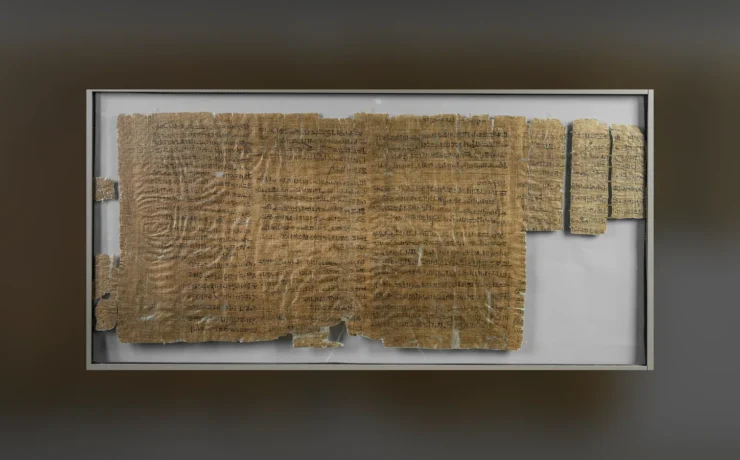
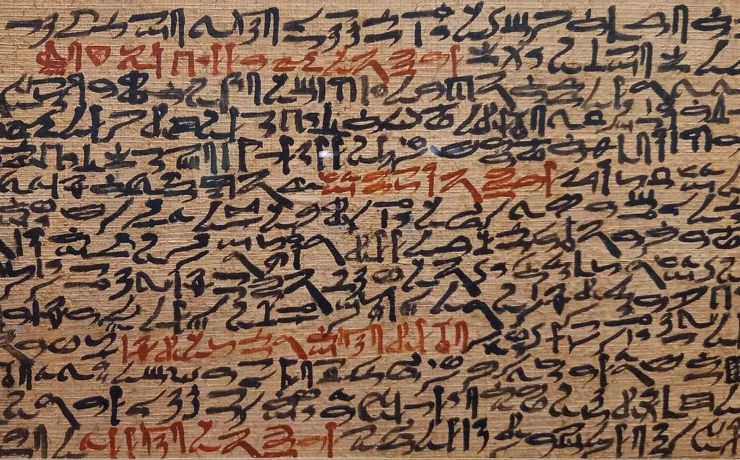
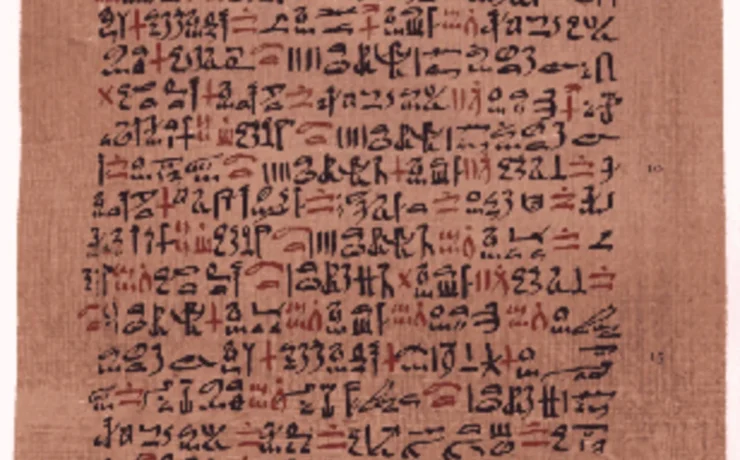
A man away from home learns that the harvest has been poor. He starts writing instructions: rent more fields, collect what people owe, and reduce the grain allotted to members of his household. Then, amid all this accounting, he has to deal with an entirely different problem. His wife is being mistreated by some of the people who live under his roof.
That is the world of Heqanakht, an estate manager in early Middle Kingdom Egypt. The surviving letters have none of the grandeur of a royal monument. They are urgent, practical, sometimes uncomfortable, and unusually revealing. Almost four thousand years later, they give us something rarely preserved from antiquity: a view into how one family argued, worked and tried to survive a difficult agricultural year.
The letters that were never delivered
Heqanakht lived during the early Twelfth Dynasty, around the reign of Senwosret I. He was associated with Thebes and served as a ka-servant, responsible for the mortuary cult of a high official and the lands that supported it. The original papyri were found in 1921–22 by an expedition from the Metropolitan Museum of Art, in a tomb connected with the funerary complex of Ipy at Deir el-Bahri.
Several documents were still folded, tied or sealed when excavators recovered them. According to the museum’s account, they had been stored in a nearby tomb that was subsequently used for a burial, leaving the papers enclosed. Some of the messages were apparently never sent. That accident of preservation matters: the documents were not carefully copied to celebrate a king. They were working papers left behind by people with other priorities.
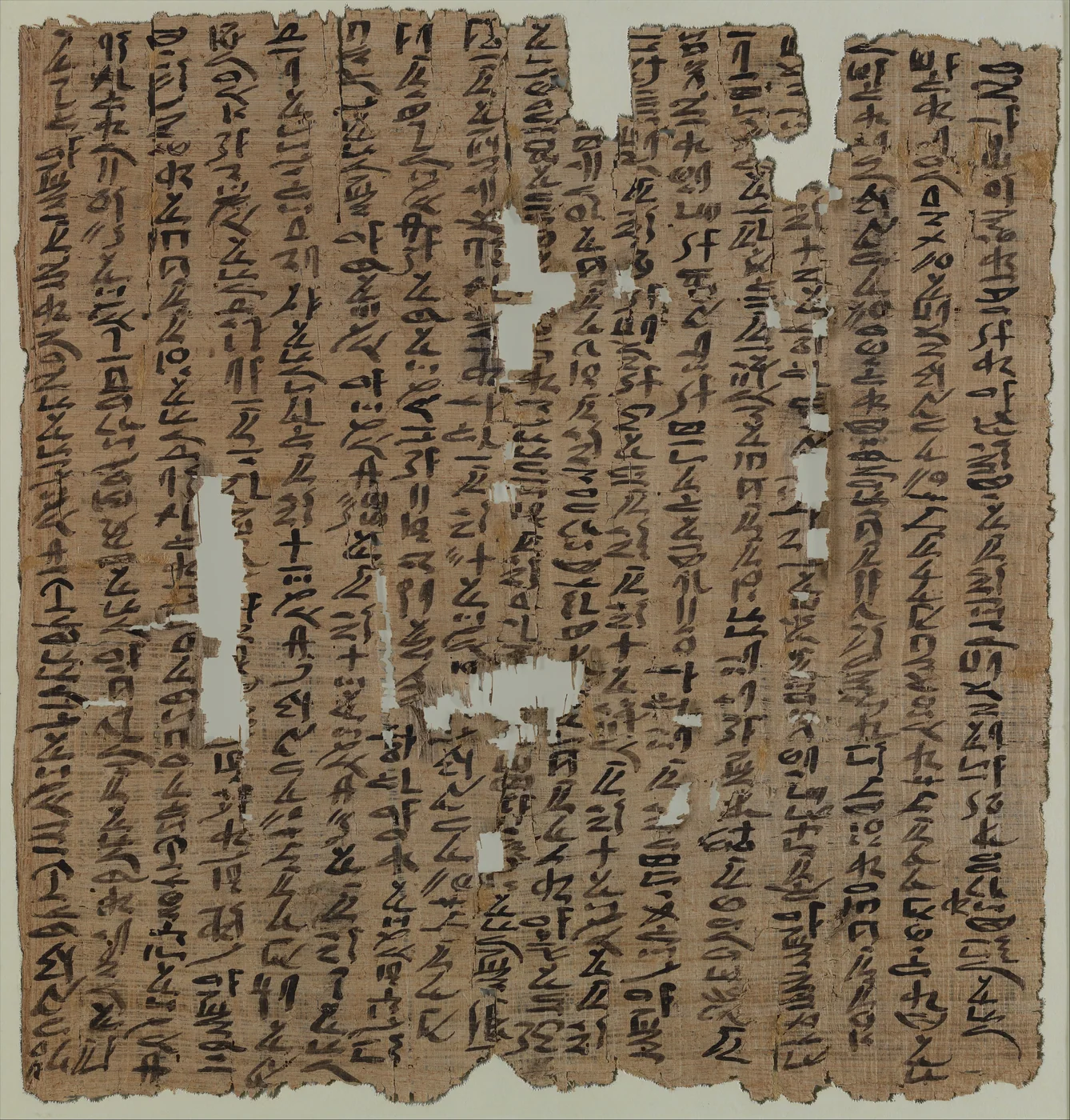
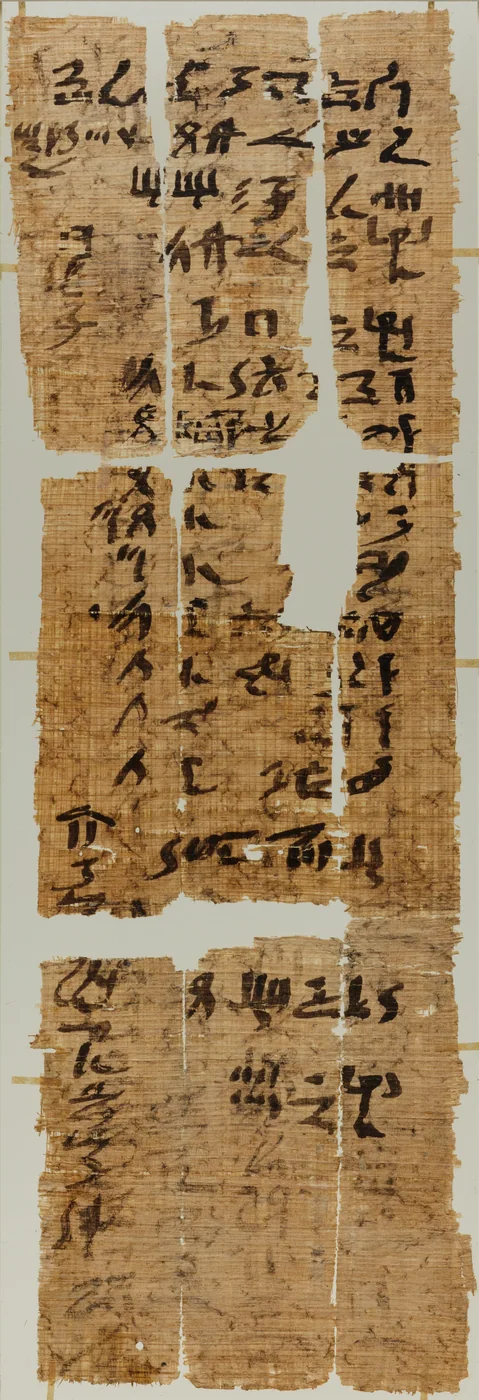
Today, the Met catalogues the first letter as 22.3.516. Its black hieratic signs run in columns across a sheet of papyrus. A reader can inspect the real object and its museum translation instead of relying on a dramatized reconstruction of the family.
A low Nile flood turns into a household problem
The Met explains that the grain yield had been unusually low after a poor inundation the previous year. In a society where fields depended heavily on the Nile’s annual rise, a disappointing harvest could create an immediate problem for anyone managing land and people. Heqanakht was not trying to solve an abstract economic puzzle. He needed enough grain to carry his household until another harvest, while allowing for the possibility that the next flood might also be poor.
Three responses emerge from the documents. He wanted to collect grain debts already owed to him, arrange additional farmland for future production, and reduce the grain payments going to members of the household. Those decisions show how an estate manager might balance immediate shortages against longer-term obligations. They also show who carried the costs when resources tightened. A reduced ration was a number in an account, but it was also somebody’s food.
The distinction between one household’s experience and conditions across all Egypt is important. These letters do not prove a nationwide famine or provide a universal wage scale. They reveal what happened within a particular network of estates, workers and relatives during a period of pressure.
Letter I: lease the land, send the men
In the first letter, Heqanakht writes to a man called Merisu, who handled affairs at home. He gives directions for Nakht and Sinebniut to travel to Perhaa and arrange the leasing of fields. He also comments on rent already paid for land and how provisions should be distributed to someone carrying out the journey.
These details are easy to miss if the papyrus is treated as nothing more than evidence for a low flood. The letter reveals a chain of delegated responsibility. Someone had to travel, negotiate, receive provisions and report back. Written instructions allowed an absent manager to influence decisions made far away.
The document doesn’t tell us exactly how long every transaction took. It does establish that leasing land and paying people in grain were familiar enough arrangements to be discussed in direct administrative instructions. For a wider account of how Egyptian institutions used documents and measurements, our guide to Egyptian writing offers an introduction to the script traditions behind records like these.
Letter II: grain payments and an unwelcome wife
The second letter is a more intimate document. The Met’s catalogue of Letter II, 22.3.517, describes instructions for distributing salaries and addresses the mistreatment of Heqanakht’s wife by members of his household. In the museum’s interpretation, she seems to have been a newcomer who had not been welcomed.
That juxtaposition is what gives the papyri their particular force. A dispute about grain rations sits alongside friction within the family. Heqanakht tries to direct the material arrangements and household relationships from a distance. We hear his version of events, not an independent account from everybody involved. The position of his wife and the reactions of others reach us through a document produced within a hierarchy of authority.
It would be easy to turn that conflict into a fictional family drama. The documents support a narrower, more valuable observation: economic stress, household power and personal relationships were intertwined. The surviving voices are uneven, and the people receiving orders did not all get the chance to leave their own explanation.
The grain account written on an older letter
One papyrus is especially revealing about the practical life of writing material. The Met holds a grain-and-flax account, 2018.595.1, written over an earlier letter whose ink had been erased. Beneath the accounting were traces of a message from Intef to a steward concerning copper and two female servants.
The reused sheet doesn’t provide a neat modern narrative. It shows a real working document treated as a resource. Papyrus could be wiped and written over, and written records of different transactions could end up occupying the same physical object. Today that overlap preserves a little more about communication and labor than a clean accounting form would have done.
What the letters let us compare
| Document | What survives | What it helps explain |
|---|---|---|
| Letter I (22.3.516) | Instructions to Merisu on leasing fields and provisioning messengers | Managing land and delegating work over distance |
| Letter II (22.3.517) | Grain payments and instructions concerning family relations | How household finances and authority overlapped |
| Account (2018.595.1) | Grain and flax quantities on an erased earlier letter | Accounting practice and the reuse of writing material |
These aren’t three versions of the same story. They are different kinds of surviving evidence that happen to overlap in one person’s working life. The financial entries explain pressures that the letters discuss, while the letters reveal relationships and expectations that bare figures cannot.
Why these scraps matter more than an idealized picture
Royal inscriptions often show Egypt as its rulers wished it to be seen: ordered, prosperous and victorious. Heqanakht’s papers show the awkward business of getting through a bad year. The manager’s orders could sound harsh. The people to whom they were addressed had limited control over the record that survives. Yet the papyri bring an ancient economy into unusually sharp human focus.
The broader Middle Kingdom is also a period of ambitious royal building and administration. Our study of Senusret III approaches a later king through monuments and frontier inscriptions. Heqanakht’s letters illuminate something else entirely: work, family obligations and the small decisions by which institutions ran.
For primary evidence, start with the Met’s digitized catalogue entries above, which include photographs and translations. Barry J. Kemp’s Ancient Egypt: Anatomy of a Civilization is useful for framing larger questions about Nile ecology and the state, but the individual details here come from the actual museum-recorded papyri. That difference is what makes this a history of people, not just a collection of general statements about a distant civilization.