What is Emeco Travel Egypt? Emeco is a Cairo-based travel and destination-management group that traces its foundation to 1976. Its published services include inbound Egypt tours, outbound travel, event management and transport. The Egyptian Travel Agents Association also lists separately named Emeco entities with individual licence numbers and dates; travelers should verify the exact legal contracting company before booking.
This evidence-led profile covers the firm’s history, published service network and official register entries without treating company marketing claims as independent awards.
What Emeco Travel is and why its name appears in Egypt tourism
Emeco Travel presents itself as an Egypt-based destination-management and travel-services group founded in 1976. Its business includes inbound tourism, outbound packages, corporate travel, transportation and meetings, incentives, conferences and exhibitions, commonly shortened to MICE. That combination makes it different from a website whose only role is to resell an individual sightseeing ticket. A destination-management company can coordinate accommodation, transport, group logistics and local suppliers for a larger itinerary. Emeco’s corporate website identifies its Cairo head office at 2 Talaat Harb Street in downtown Cairo. That published address is useful for recognizing the company, but it is not proof that every website using a similar name is an authorised sales channel. This profile combines the firm’s own account with the Egyptian Travel Agents Association’s independently searchable company records, and distinguishes corporate history from current licence verification. It is not a paid listing or an assertion that one travel company is objectively the best in Egypt.
A 1976 founding and the role of Elhamy Elzayat
The company traces its foundation to 1976 and identifies Elhamy Elzayat as its founder. Its account emphasizes the ambition to provide travel services in Egypt to international standards and notes later work representing international airlines. An organisation can begin under one commercial identity and subsequently operate through related named legal entities; this matters when comparing company history against tourism-licensing records. The founder’s role is an independently checkable detail within the corporate story, but claims about commercial leadership are self-descriptions unless supported by objective benchmarks. The Egyptian Travel Agents Association’s database includes several Emeco-named records with different dates, a useful reminder not to force the corporate birthday and every operating licence into one identical year. A balanced historical profile states what the company says about its origin, identifies the actual registry entries and leaves current legal standing to the licensing authority. Understanding that structure is more useful to consumers than treating a marketing anniversary as a complete business registry.
What the Egyptian Travel Agents Association records actually show
The Egyptian Travel Agents Association publishes an entry for EMECO TOURISM under licence number 180, with a recorded creation date of 10 January 1977 and an address at 2 Talaat Harb Street in Cairo. A separate entry identifies EMECO TRAVEL, licence number 904, dated 12 October 1992, and another lists Emeco Voyage, licence number 1308, dated 28 March 2005. These are distinct database records, not three independent proofs that the same legal person held one uninterrupted licence. The public pages display company names, location details, associated representatives and dates, but an online listing alone should not be treated as an up-to-the-minute certificate of renewal, suspension status or a regulator’s legal opinion. The practical value is that a traveler can verify which legal name is printed on a contract and compare it with a published record. If a salesperson quotes a licence number, ask which entity is responsible for providing the services and issuing the receipt. Similar group names make that question essential.
Destination management is broader than arranging a day tour
A destination-management company, or DMC, coordinates multiple elements of a journey within a country. On its official website, Emeco describes inbound leisure travel, ground transportation, corporate arrangements and event management. Those service families can share suppliers while serving very different customers. An independent traveler may want a private cultural route in Cairo, whereas a conference organiser needs rooms, delegate movement, scheduled activities and contingency planning across several days. The existence of a service category on a company website does not confirm availability for every date or group size. Travellers should request a written proposal identifying the itinerary, hotel categories, transfers, included admission costs and any third-party companies performing key activities. A proper offer should also specify what happens when a flight is delayed or an attraction is closed. This is where professional travel management can add value beyond a generic online itinerary. The important test is a verifiable, itemised contract, not a flattering service description.
Inbound Egypt tours and cultural destinations
Emeco’s public website advertises inbound travel and lists Egyptian destinations including Cairo, Luxor, Aswan, Abu Simbel and Red Sea locations. These names indicate areas in which the firm promotes its services, but an advertised destination is not a promise that every monument or hotel has a confirmed allocation on a particular date. A traveler considering a culture-focused tour should ask for an explicit sequence of days and meaningful time at each site. A route that visits Giza, Luxor, Aswan and Abu Simbel may involve flights, trains, boats or lengthy drives. Our Egypt ten-day cultural itinerary provides a neutral framework to help assess whether a proposed schedule is plausible. Real destinations are important, but a trip becomes excellent or disappointing through logistics. The right questions involve the number of nights in each place, whether entry tickets are included, the quality of local guiding and whether transport arrangements accommodate the traveler’s mobility and interests.
Outbound travel and airline representation are separate businesses
Emeco’s corporate history describes general sales agent representation for international airlines, alongside its development of outbound tourism. In a GSA arrangement a company can represent specific commercial services of an airline, but that does not mean it owns or operates the aircraft. An outbound holiday involves travel from Egypt to another country and brings different visa, consumer protection, insurance and carrier-rule questions from an inbound Egyptian itinerary. A traveler should therefore identify which legal business is selling the service, which airline actually operates a ticket and which contract governs any changes. The company website advertises GSA and outbound travel as distinct business lines. Historical corporate claims about former airline representations should not be assumed current without a dated agreement. Those distinctions matter particularly when a group booking combines hotel accommodation and air transport. A professional agency may coordinate the components, but each supplier still carries responsibilities that should be identified clearly in the paperwork.
MICE, events and corporate travel coordination
The company highlights MICE, short for meetings, incentives, conferences and exhibitions, as an important area of experience. That description is meaningful because such events require more than purchasing ordinary sightseeing tours. Organisers need venue contracts, guest movement, room blocks, translation or technical services, scheduling and a plan for disruptions. Emeco also advertises corporate travel management, which may support regular business journeys and reporting. A company’s ability to offer these categories does not independently establish the success of every event or the size of its present staff. Prospective clients should ask for references relevant to their event type, a written list of deliverables, an escalation contact and a financial schedule. If transport is subcontracted, responsibilities should be transparent. The strongest procurement decision compares comparable proposals and contract terms, not generic claims of excellence. A leisure traveler may have little use for MICE services; a multinational company may care about them more than a specific excursion to the pyramids.
Cairo, Alexandria and the regional office question
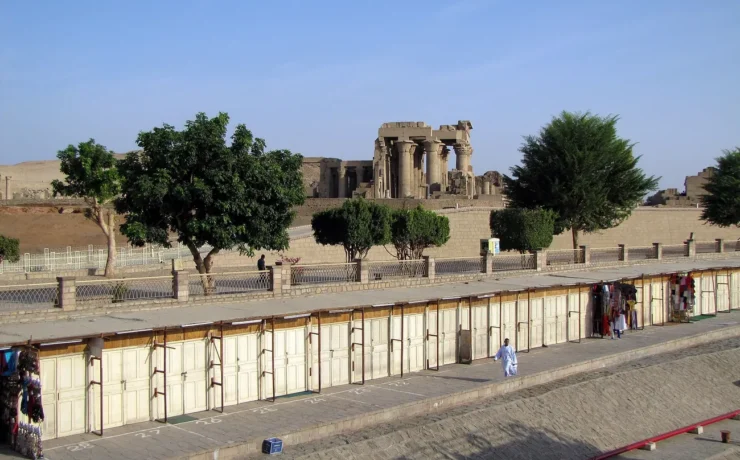
Emeco’s official contact page lists a headquarters on Talaat Harb Street and additional Egyptian offices in Alexandria, Abu Simbel, Aswan, Luxor, Hurghada and Sharm el-Sheikh. This published footprint suggests attention to practical destination support across several tourism regions. It should not be treated as a promise that an office is open every day or that every advertised service can be handled without prior arrangements. Office locations, telephone numbers and staff assignments can change, particularly when online pages retain old contact details. A traveler should use the company’s current official contact channel to confirm their booking. The first photograph in this article shows the actual Talaat Harb Square environment in downtown Cairo, not the interior of Emeco’s office. The building and street context help locate the firm’s stated headquarters area without inventing branded premises or using a misleading stock image of an agency reception desk.

The Abu Simbel example: why regional expertise matters
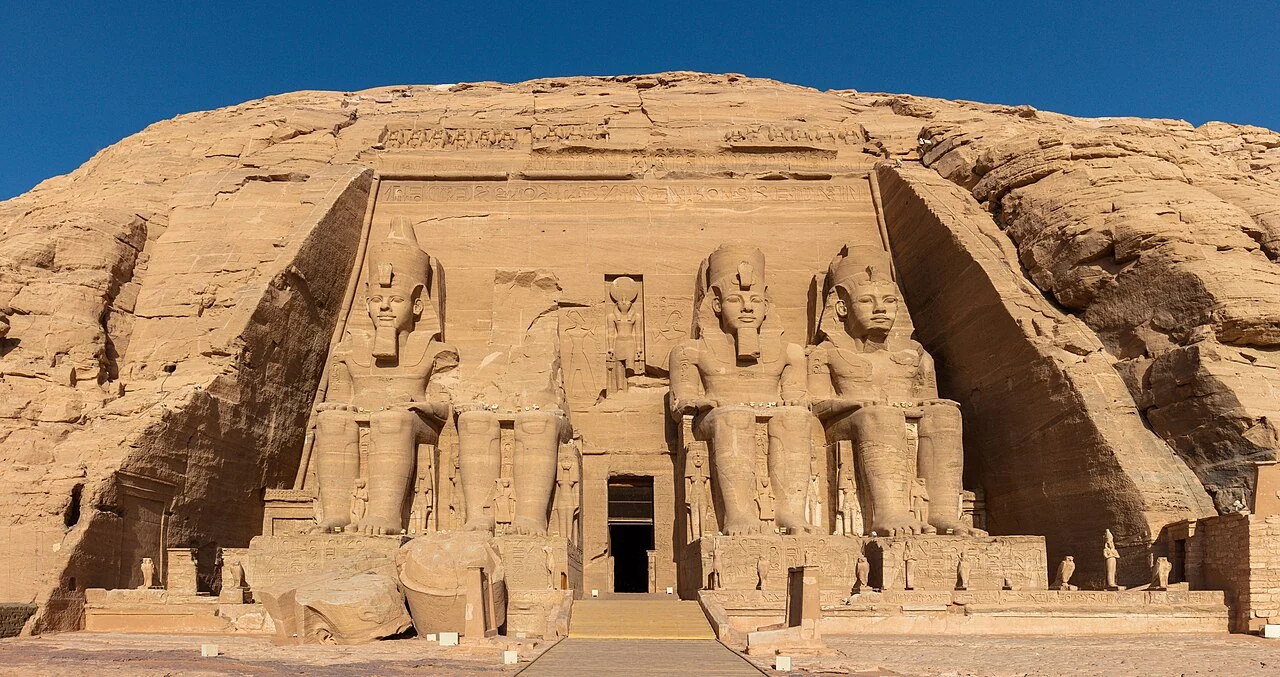
Abu Simbel is a useful test of a tour organiser’s practical expertise. The temples are a significant heritage destination in southern Egypt and require attention to transportation, time on site and the conditions of a particular itinerary. Emeco’s official contact page lists an Abu Simbel office, but that fact alone cannot establish an excursion’s departure time, type of vehicle or hotel arrangement. Ask whether a proposed visit is a return trip from Aswan, part of a longer route or arranged with a flight. The Kemet Vault Abu Simbel cultural guide explains why the visit should not be reduced to a hurried photograph. Our second illustration documents an authentic Egyptian destination often featured in the country’s tourism market; it is not evidence of Emeco ownership of the temple or proof of a particular company tour. This distinction is essential in independently researched company profiles.
How to verify a real travel agency before paying
Before sending money, compare the legal company name in the offer with the name and number shown in the Egyptian Travel Agents Association directory. Ask the organiser to identify the contracted entity and the official recipient account or payment processor. Check whether hotel names and room types are confirmed or merely examples. The contract should specify inclusions, exclusions, refund terms, dates, passenger names and responsibilities if local services change. No directory should be mistaken for a guarantee of excellent customer service; it is only one verification input. Our independent Egypt operator verification checklist explains these steps across the whole industry. This Emeco profile has a different intent: it focuses on one named business and its multiple registry records. An agent requesting payment through an unrelated personal account or refusing to state the legal supplier deserves additional scrutiny regardless of how convincing its logo looks.
Why licence numbers and dates can disagree with a marketing timeline
The contrast between a 1976 corporate founding claim and association records dated 1977, 1992 and 2005 is not automatically a contradiction or proof of wrongdoing. A group may have more than one legal company, business division or subsequently incorporated entity. Conversely, a shared address is not proof that all records are interchangeable. The responsible method is to preserve each record as published. Emeco Tourism’s 180 entry and Emeco Travel’s 904 entry contain their own dates. A supplier contract naming one entity should be checked against that entity, not against another record with a familiar brand name. The association’s creation-date field has a narrower purpose than the company’s general statement that it was founded in 1976. It would be misleading to turn the different years into one confident story about renewals or mergers without supporting corporate documentation. For the consumer, the present contracting identity and clear written terms are more consequential than an anniversary slogan.
Pricing: request an itemised offer, not an invented 2026 tariff
Tour prices vary according to the season, group size, hotel standard, transportation, number of guided visits and whether internal flights are included. Emeco’s website describes bespoke services rather than a universal published price list for all possible tours. It would be unsound to invent a standard 2026 cost for a seven-day private itinerary and attribute it to the company. Instead, ask for the same brief to be priced by each provider: dates, travellers, rooms, destinations, languages of guides, accessibility requirements and any desired Nile cruise. Request an itemised quote that separates mandatory charges and optional extras. When two itineraries have different inclusions, comparing their top-line totals alone is unhelpful. An apparent bargain may omit flights or admission tickets, while an expensive offer may include a premium hotel not needed by the customer. Ask what is already confirmed and what remains dependent on supplier availability. That approach produces a usable buying decision without fabricating rates.
Comparing Emeco with other Egyptian tour operators
Our Travco Travel profile and Memphis Tours profile examine other travel businesses with different histories and propositions. A neutral comparison should focus on the itinerary and contract the traveller can actually obtain. Some customers want a fully customised archaeology trip, while others need group travel logistics, corporate arrangements or a lower-cost shared excursion. Being a long-established brand does not automatically make a particular package superior. Check who will provide the guiding service, whether transportation is shared, what happens if a hotel becomes unavailable and how emergencies are handled. Do not rely on an unverified top-ten ranking or assume that a company in one sector personally performs every service listed on its website. Emeco is a useful addition to Kemet Vault’s Egyptian tour-company directory precisely because its independently identifiable corporate and association records support a detailed, distinct profile rather than another generic listicle.
Sources, images and editorial independence
The 1976 corporate history and current service categories are based on Emeco’s official About page and published contact directory. Independent company-specific listings come from the Egyptian Travel Agents Association: Emeco Tourism, number 180, Emeco Travel, number 904 and Emeco Voyage, number 1308. Dates in those records are presented individually; no claim about real-time regulatory renewal is made. Two authentic reusable Commons photographs show the general downtown Cairo setting and an Egyptian heritage destination, not an invented Emeco company building or a company-controlled monument. This independent article does not accept payment for a ranking, copy company descriptions as objective awards or state unsupported traveller satisfaction scores. Procurement and licence details should be checked again with the relevant operators before a transaction.