Is Memphis Tours a licensed Egyptian tourism company? Yes. The Egyptian Travel Agents Association’s public record lists MEMPHIS TOURS as a Category A operator with licence number 30 and a creation date of 25 August 1955. The company’s official website confirms the long-established brand and describes its tailor-made travel services. The licence is a verified identity record, not a guarantee of any particular itinerary.
This independent profile examines Memphis Tours as an Egyptian travel business, explains what the official registry actually proves, and shows how to assess a quote before paying. Unlike a generic tour-operator checklist, it focuses on this named company’s records, heritage and booking questions. The real Egyptian landmark photographs provide destination context and are not falsely presented as company-owned assets.
What is Memphis Tours and what can be independently verified?
Memphis Tours is an Egyptian tour operator whose name is recorded in the Egyptian Travel Agents Association registry. Its listing identifies a Category A travel company with tourism licence number 30 and a creation date of 25 August 1955. These are concrete, externally checkable facts and a stronger starting point than claims that a website is the oldest, largest or best in Egypt. The directory also links the company name to its official web address, which helps distinguish its actual brand from copycat travel sites.
The company describes itself as having begun as a family business in Port Said in 1955. That account is consistent with the registry’s dated company record, although a company-produced history should still be identified as self-description where it goes beyond the official listing. The company’s current international website speaks of matching travelers with local agencies across numerous destinations, so it is important not to assume that every trip outside Egypt is directly operated by the exact Egyptian legal entity.
The word licensed should not be treated as a universal guarantee of every online package. A legitimate company may have different affiliates, contracted service providers and booking platforms. Before buying, identify the specific contracting entity, compare its details with the recognized registry and request a complete itinerary in writing.
The Egyptian Travel Agents Association listing
The ETAA public registry entry lists MEMPHIS TOURS, Category A and licence number 30. It also provides a historic creation date, website reference and named company officers. These fields make a useful verification tool for readers and allow an independent article to cite a government-adjacent trade directory rather than merely repeating marketing slogans. The record can change, so travellers should consult its current form instead of relying on a permanent screenshot.
The registry address information is not necessarily identical to the contact location displayed on every sales page. An office, operating location, registered address and destination meeting point are different things. If a traveller sees conflicting addresses in an official record and the company’s own website, the right response is not to invent a reconciliation. Confirm the legal identity and booking contact directly through the verified site before transferring money.
This company-specific case illustrates the general method in Kemet Vault’s guide to checking Egyptian tour operator licences. The general checklist teaches the procedure, while the Memphis Tours article records the actual official listing and the practical questions relevant to this operator. Their search intents are deliberately different.
The Port Said origins and Egyptian tourism history
The company’s own verified reference document traces its beginning to Port Said in the mid-twentieth century, when shore excursions and organised visitor services were important forms of tourism. This historical context is more informative than making unsupported claims about the company’s position in a modern market ranking. Egypt was developing travel infrastructure and new types of itineraries while continuing to draw visitors to well-known archaeological sites.
Port Said’s connection with the Suez Canal placed it within an international network of maritime movement. Excursion services for people arriving by ship were therefore a plausible foundation for a tourism business, but the exact clients, staff size and turnover of a company in each early decade require independently documented records. Its own timeline should be read as corporate history, not automatically as the full social history of travel in Egypt.
Egyptian entrepreneurship in travel is a useful modern-history topic in its own right. The history of an operator helps explain how visitors reached cultural sites, how packages evolved and how services were commercialised. It should also acknowledge that the story of Egyptian tourism involves guides, drivers, cultural institutions, transport workers and local communities beyond the company founder.

A company profile is not a booking recommendation
This article is an independent identification and verification profile. It does not claim that Memphis Tours is necessarily the best choice for a particular traveller, nor does it endorse every current tour package. An operator may offer valuable services while its suitability depends on the exact itinerary, language, group size, accommodation, accessibility and cancellation conditions being sold. The official licence confirms a specific registered entity, not the quality of each trip.
The company’s own website advertises tailored journeys, guided services and a broad network of destination partners. Those statements are useful for understanding how it describes its business model, but the buyer should still request exact details about who provides each service. If a Nile cruise, hotel or excursion is supplied by a separate operator, that supplier’s identity, responsibility and conditions belong in the contract.
Independent editorial standards forbid fabricated review scores, invented awards or claims of guaranteed safety. We do not publish staff phone numbers copied from informal profiles or a current price that may disappear tomorrow. The reader gets a source-based framework for deciding whether a particular offer meets their needs.
Private trips, small groups and who supplies the service
Private, small-group and tailor-made are different contractual terms. A private vehicle may still carry a group to a shared archaeological-site entrance; a private guide may meet visitors for only part of an itinerary; and a bespoke tour may include scheduled shared transport elsewhere. Each sales page can define the terms differently. Ask which days are private, whether the guide travels with the group, how many participants can join and whether a vehicle is exclusive.
The company’s reference document describes private and small-group itineraries, but this does not establish availability for every date or destination. Different local partners may handle separate travel components. For long itineraries involving Cairo, Luxor and Aswan, identify domestic flights or train segments, whether the tour includes any baggage restrictions and whether transfers are included on arrival and departure days.
A realistic itinerary should allow meaningful time at monuments rather than assume that three distant cities can be visited comfortably in a single afternoon. The actual dates and transport modes matter more than the company’s marketing label. Request a day-by-day schedule with hotel names and contingency arrangements.
What genuine photographs show, and what they do not
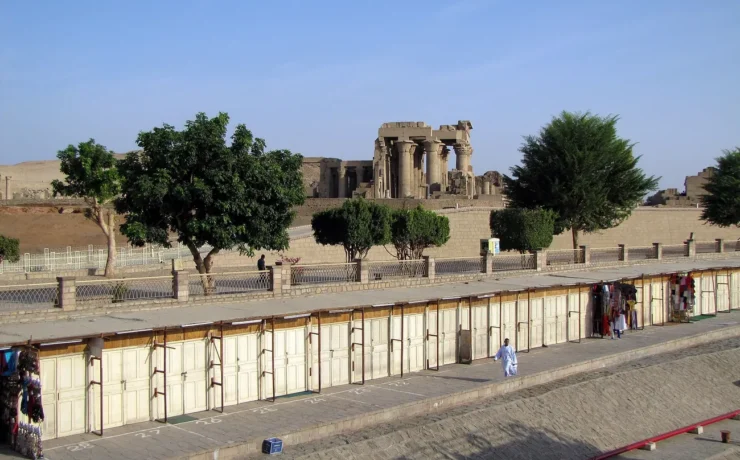
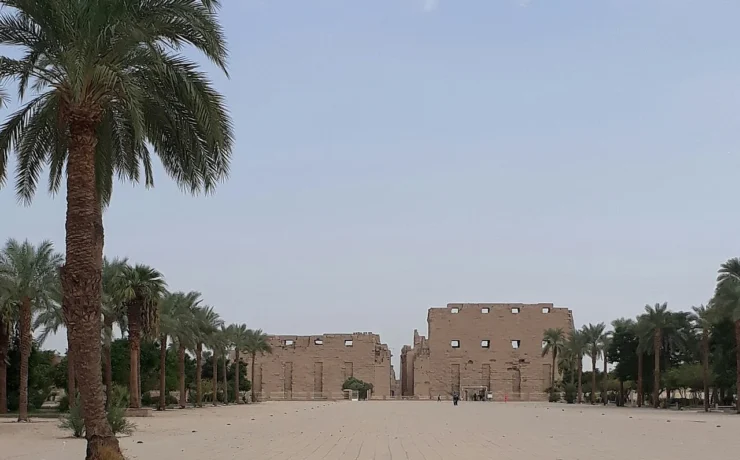
The accompanying Giza Pyramids panorama is an original licensed photograph by Benjamin Inbar, dated July 2023. It shows the actual archaeological landscape that a traveller might wish to visit. It is not an image of a Memphis Tours employee, group or proprietary vehicle. The second photograph documents real architecture at Karnak Temple near Luxor, again independently photographed and released under a Creative Commons licence.
This distinction prevents a subtle advertising problem. A travel agency can sell a trip that includes Giza and Karnak, but a public photograph of those sites does not prove it presently operates a specific itinerary or that the photographer received services from the agency. Company-owned photographs or official gallery images would need separate authorisation for reproduction; Kemet Vault instead uses original, licensed documentary views with clear captions.
The value of the images is geographical and historical context, not commercial evidence. For travel planning, the appropriate proof of service is the company’s dated written itinerary and supplier confirmation. For archaeology, institutional records and original site guides remain the standard.

Booking an Egypt itinerary without itinerary inflation
A proposal that covers Cairo, Luxor and Aswan can be appealing, but the actual value depends on how many nights and effective sightseeing hours are allocated to each place. Ancient sites are widely separated, subject to admission rules and affected by traffic, heat and visitor movement. A company profile cannot know the true pace of a tour without the complete schedule, so it should not claim that a standard programme suits everyone.
Ask whether the pyramids are visited in the morning or afternoon, whether the Egyptian Museum or Grand Egyptian Museum is named precisely, and whether a guide, internal transport and admissions are included. Luxor’s east and west bank attractions require separate planning, while Aswan’s monuments can involve river transport. A vague brochure describing all of Egypt is not an itinerary.
For a baseline geographical route, consult Kemet Vault’s realistic ten-day Egypt route. That independent resource allows a traveller to test whether a proposed paid package devotes credible time to transfers and sites rather than treating distances as invisible.
Booking verification, deposits and payment safety
After confirming the official Memphis Tours name against the ETAA listing, use contact information on the verified official domain. Scam pages can mimic logos, reproduce itinerary text and display borrowed customer testimonials. Avoid sending money to a personal account merely because a message uses the company’s name. Verify any changed payment instruction through an independent channel before transferring funds.
Ask for the registered name on the invoice, the name of the party issuing the booking, the total price and currency, tax or fee treatment, deposit deadline and refund rules. Any tour involving a cruise or flight should identify the appropriate provider and policy. Where the seller is an intermediary for another operator, understand who handles cancellations, missed services and emergency assistance.
The company publishes contact routes and says it offers around-the-clock support, but a promotional availability promise should be checked against the actual booking’s assistance conditions. Keep copies of the written confirmation, receipts and any supplementary agreements. Reputation is not a substitute for a clear contract.
Tour guides, languages and cultural interpretation
Professional cultural guiding can determine whether a visitor understands Egyptian monuments or merely photographs them. Ask which languages will be used on which days and whether the guide assigned to the itinerary is appropriately qualified. The presence of multilingual marketing on a website does not prove that every language is available on every departure. A named guide may also change, so obtain clarity about what the company guarantees.
An evidence-led guide should distinguish uncertain interpretations from documented facts. A visitor asking about Giza’s engineering, Karnak’s successive building phases or Philae’s relocation deserves accurate explanations tied to archaeology and history. The Giza archaeological dossier and other specialist Kemet Vault studies can help a traveller prepare questions independent of a commercial tour.
Tourism can also affect heritage sites. Visitors should respect restricted areas, refrain from touching monuments and follow local conservation rules. No tour operator can legitimately offer access beyond lawful permissions simply by describing a package as exclusive.
Cancellation, accessibility and the meaning of a good fit
The most revealing questions for a tour company are often practical. A visitor with limited mobility needs actual walking distances, vehicle access, steps and bathroom information. A family needs child-occupancy rules, supervision assumptions and sensible daily pacing. A traveller with dietary restrictions needs venue-specific answers, not a blanket assurance that a whole country is easy to accommodate.
Travel contracts should explain what happens if a hotel substitutes another property, a cruise schedule changes or an archaeological visit is unavailable. Does the operator offer a comparable replacement, issue a partial refund or apply a published exception? The answer depends on the exact sale rather than on an enduring claim about service quality. Written confirmation before payment is more useful than a generic online promise.
Company-specific facts and independent consumer judgement should be kept separate. Memphis Tours has an official entry and documented history, but the suitability of a given package remains an individual decision involving services, price, season, accessibility and realistic geography.
Independent licence and company sources
Primary identity is confirmed by the Egyptian Travel Agents Association’s live licence 30 entry. The official Memphis Tours company description and its dated 2026 reference record provide the company’s stated service model and early history. Registry data, company claims and consumer booking obligations are labelled separately. Open the official sources again when booking because contact information, service providers and terms can change.