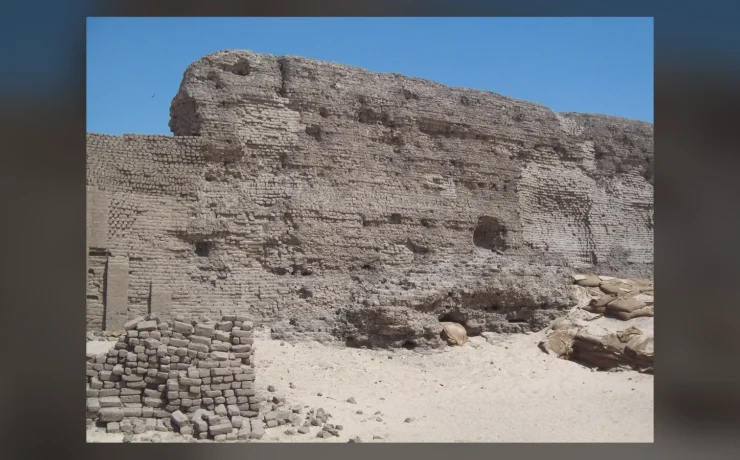
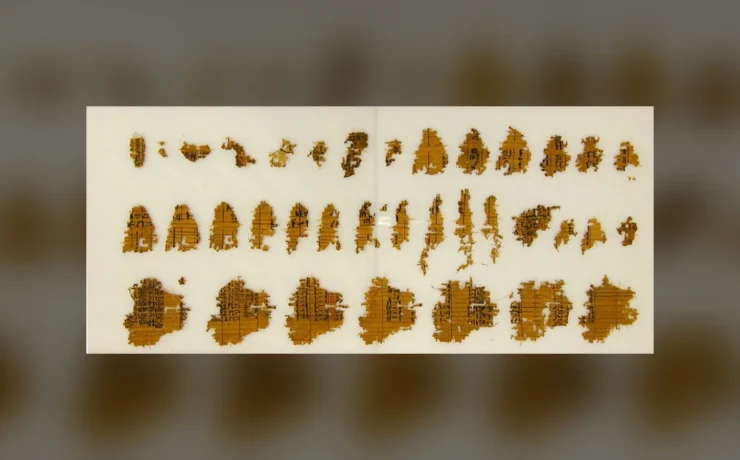
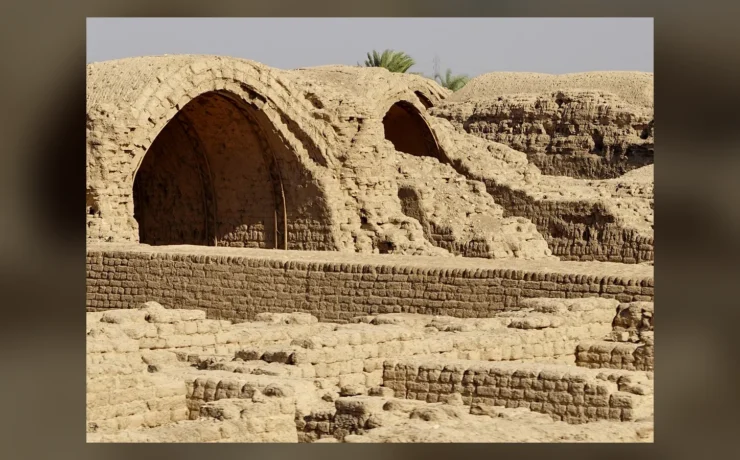
Giza usually gets the crowds. Dahshur, farther south, offers a quieter sight: an enormous pyramid whose edges rise at a noticeably gentler angle. It belongs to Sneferu, the king whose builders were still working out how to turn a stepped monument into the smooth-sided form we now associate with ancient Egypt.
The Red Pyramid is the most persuasive evidence of how far they got. It isn’t famous because somebody found a golden tomb inside. Its importance is in the stone itself, and in the ambitious experiments that came before it.
The pyramid that came after a change of plans
Sneferu ruled at the beginning of Egypt’s Fourth Dynasty, a generation before his son Khufu built the Great Pyramid at Giza. The monuments associated with Sneferu trace a remarkable architectural shift. At Meidum, builders developed a stepped pyramid into a smooth-sided design. At Dahshur, the Bent Pyramid began with steep faces and then changed angle partway up. Nearby, the Red Pyramid kept a consistent, shallower slope.
There is a temptation to tell this as a simple story: the first project failed, the next failed, and the third worked. The evidence is more interesting than that. Meidum’s complicated building history still raises questions, while the Bent Pyramid survives as a substantial monument in its own right. Egypt’s Ministry of Tourism and Antiquities explains the change in angle at the Bent Pyramid as a response to structural instability. The Red Pyramid shows what the builders chose to do next, but we don’t have their engineering notebooks or a diary explaining each decision.
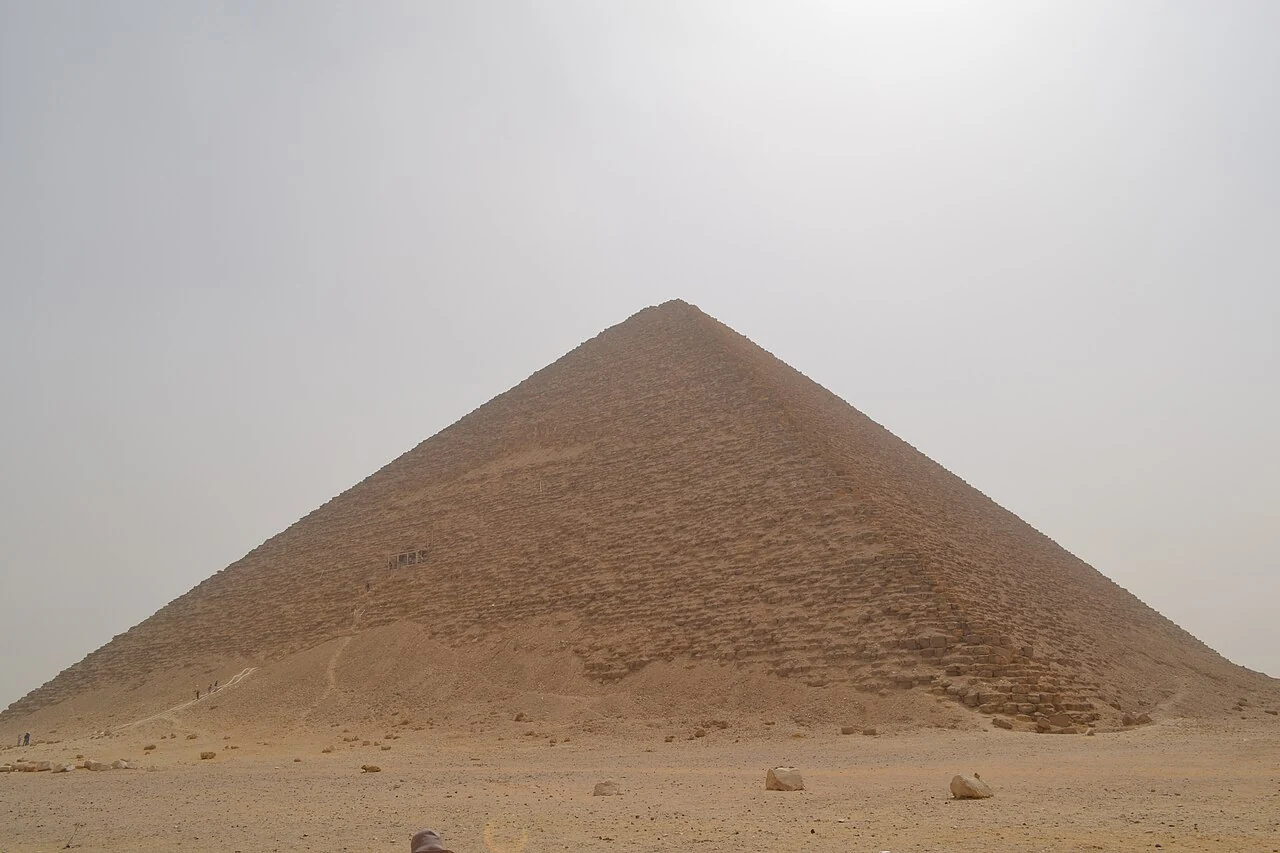
Compare the two Dahshur pyramids visually and one difference becomes immediate. The Bent Pyramid begins at a steep angle before flattening sharply toward the top. The Red Pyramid’s faces are more even from base to summit. Rather than dismissing the earlier building as a mistake, it makes sense to see both as evidence of active experimentation on an extraordinary scale.
For the earlier monument’s design and interior, see our separate account of the Bent Pyramid.
Why the Red Pyramid wasn’t originally red
The name is a small historical trap. The rusty color visible today comes from the exposed masonry. When the pyramid was complete, its outside was covered with fine white limestone brought from Tura. Much of that polished casing disappeared long ago, as it did at other Egyptian pyramids, and the underlying stone became the face visitors recognize.
That missing white surface changes the imagined scene considerably. The original building would have appeared much brighter and smoother than the stepped rows of blocks now visible in photographs. At the same time, we shouldn’t pretend that a modern digital reconstruction can show every missing stone exactly as it once looked.
A narrow entrance, then three surprising rooms
The entrance is on the north side. From there, a descending passage leads inward. The official monument description gives it a height and width of roughly one meter each, which is a useful detail if you’re deciding whether you would actually enjoy going inside. This is not a grand doorway designed for comfortable sightseeing.
At the end of the descent, the space opens into a chamber beneath a remarkable roof. Its masonry courses project inward as they rise, one level above another, producing the inverted-stairway effect known as corbelling. The room feels architecturally different from a modern chamber with a flat ceiling because its high stone walls seem to close together above the visitor.
The route continues to a second chamber farther into the monument. A further passage gives access to the third, generally interpreted as the intended burial room. Together, the three spaces show that the interior was carefully planned; it wasn’t simply a random tunnel dug into a pile of blocks.
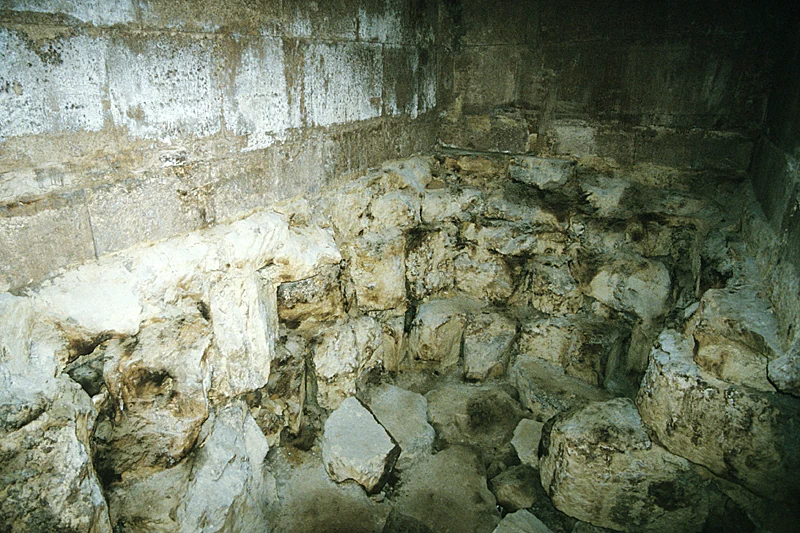
The surviving chambers cannot tell us everything. They do not preserve an intact royal funeral, and their empty state does not prove that the building was never intended for burial. The distinction matters: the monument’s design is physical evidence; the details of what happened inside it thousands of years ago require interpretation.
What the Red and Bent pyramids actually show us
A side-by-side comparison puts the engineering story in focus without suggesting that either monument holds the answer to every puzzle about pyramid construction.
| Feature | Red Pyramid | Bent Pyramid |
|---|---|---|
| External profile | Consistent, comparatively gentle slope | Steeper lower section; angle changes partway up |
| Ancient entrance arrangement | Northern entrance leading to a descending passage | Northern and western entrances |
| Interior | Three connected corbelled chambers | Distinct internal systems, including corbelled chambers |
| What makes it useful to study | The refined smooth-sided design | Visible evidence of changing design decisions |
These contrasts also help explain why Sneferu matters beyond his own reign. The Metropolitan Museum of Art places his building program at the center of the transition to the classic royal pyramid complex. A few decades later, Khufu’s builders would work at Giza with a vastly ambitious plan of their own. The Red Pyramid isn’t a miniature Giza pyramid; it is one of the monuments that make Giza’s development understandable.
Was Sneferu buried here?
The third chamber is usually described as a probable burial chamber. The Egyptian ministry uses the cautious phrase believed to have been. That’s the sensible place to stop. The construction belongs to Sneferu’s royal funerary program, but no complete, undisturbed burial establishes exactly how this room was used.
A visitor may find the uncertainty frustrating. It is also a good illustration of how archaeology works. A building can reveal a great deal about an ancient society’s resources, beliefs and engineering while remaining silent about one person’s final resting place.
Visiting Dahshur with the right expectations
Dahshur rewards a different kind of visit from the busy circuit around the Giza plateau. The exposed masonry is easier to appreciate when you can look at the pyramid’s whole profile and compare it with the Bent Pyramid nearby. If you’re considering entry, remember that the long, low passage is physically demanding. Checking current access, official admission details and site conditions before travelling is more useful than relying on an old price list.
Don’t confuse the Fourth Dynasty monuments with the later pyramids in the wider Dahshur cemetery. For example, the burial history of Senusret III belongs to the Middle Kingdom, many centuries after Sneferu.
The best reason to come here is neither mystery nor spectacle. The Red Pyramid lets you see an architectural idea taking shape across three remarkable monuments, in real stone, in the landscape where Egyptian builders tested it.
Further reading and image credits
The Egyptian Ministry of Tourism and Antiquities’ Red Pyramid entry describes the missing white casing and the sequence of interior chambers. Its Bent Pyramid record explains the change of angle. For the wider Fourth Dynasty and Sneferu’s place before Khufu, see the Metropolitan Museum’s Old Kingdom history. The two photographs above are linked to their separate Commons records and named creators.