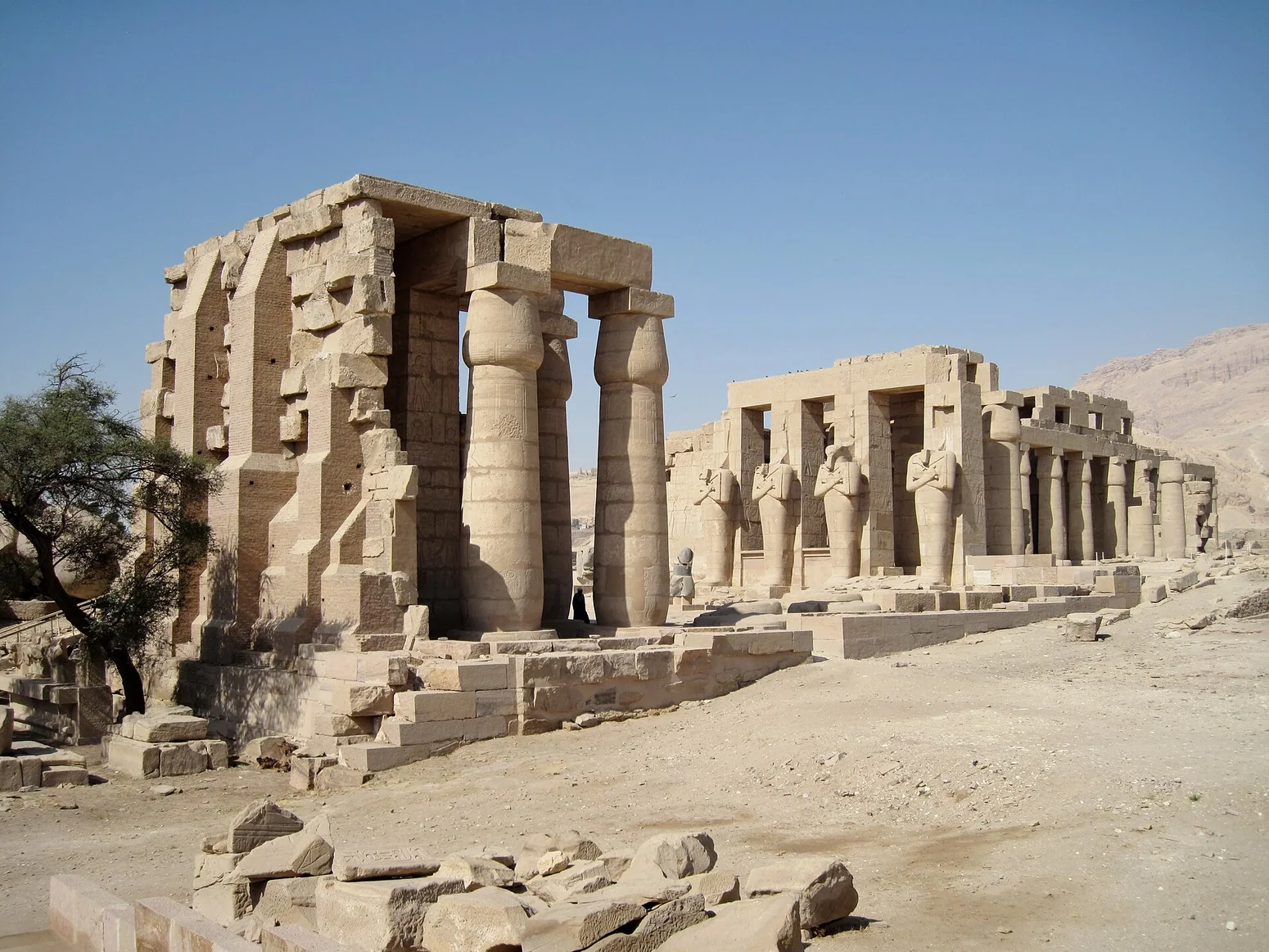
At the Ramesseum in western Luxor, it is easy to look straight toward the monumental remains of Ramesses II’s memorial temple. The broken columns and statues make a powerful impression. Just beyond the grand architecture, however, stand much quieter structures: long mudbrick storage rooms with barrel vaults. They tell a different story about what it took to keep a royal temple running.
Temples needed bread, oil, wine, craftspeople and records as well as priests and ritual spaces. Recent Egyptian-French excavations at the Ramesseum have brought parts of that working world into sharper focus, with evidence for stores, workshops, kitchens and a building described as a House of Life.
The Ramesseum was more than a monument to a king
The site was a royal memorial temple of Ramesses II on the west bank of Thebes. Egypt’s Ministry of Tourism and Antiquities describes its religious and architectural importance. Like other major temple institutions, it required an ongoing system of labor and supplies to support its activities. A stone facade may celebrate a pharaoh, but the institution behind it depended on people doing ordinary jobs.
The term ‘mortuary temple’ can suggest a building used for a funeral and then abandoned. The historical picture is more complicated. These complexes were places of royal cult, administration and economic activity. They changed over time and could be reused long after their original ruler’s reign.
The vaulted magazines are the visible clue
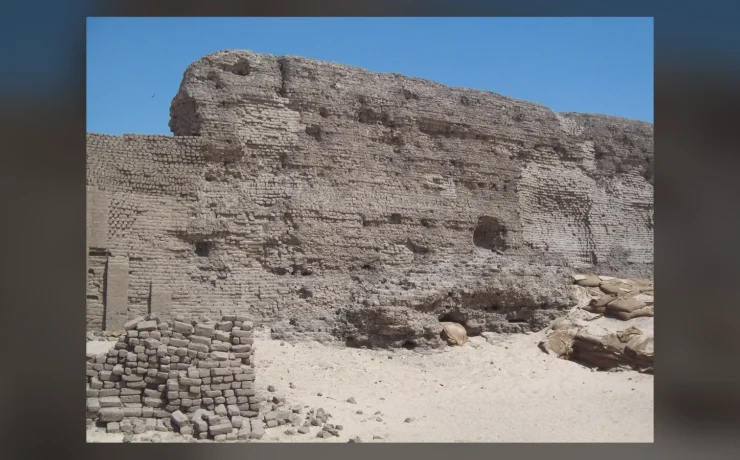
A photograph of the Ramesseum’s mudbrick magazines shows rows of long vaulted structures. These were not improvised storage closets added to a modern monument. They formed part of a purpose-built temple complex where goods could be received, held and distributed.

Their size and arrangement are a reminder that consumption in a major religious center had to be organized. Food, building materials and goods used in temple rituals could not arrive by accident. Workers had to obtain them, carry them, protect them from damage and know when they were needed.
We should not label every visible chamber a ‘wine store’ simply because wine labels have been found in the complex. The exact function of a room depends on its excavation context and associated finds. Storage architecture is evidence for capacity; particular products are identified through objects, inscriptions and residues.
What the 2025 discoveries actually reported
In an official announcement about the Egyptian-French mission, the Ministry reported storage areas associated with olive oil, honey and fats. Other excavated areas included weaving and stoneworking workshops, kitchens and bakeries. On the northern side, researchers studied cellars associated with wine storage and found numerous labels from wine jars.
That list offers a rare look at how many different activities could belong to a religious institution. Weaving and stonework required particular skills. Kitchens and bakeries needed fuel, water and ingredients. Storage areas depended on workers who could record, move and monitor supplies.
A report that a cellar held wine is not a complete balance sheet. Jar labels can record useful information, but until the texts and contexts are studied in detail, we should not infer precise annual consumption or claim that every jar was imported from a particular vineyard. The Ministry’s published discovery notice is strong evidence for the type of finds; it is not an open licence to invent numbers for the temple’s economy.
A House of Life changes the way we picture the temple
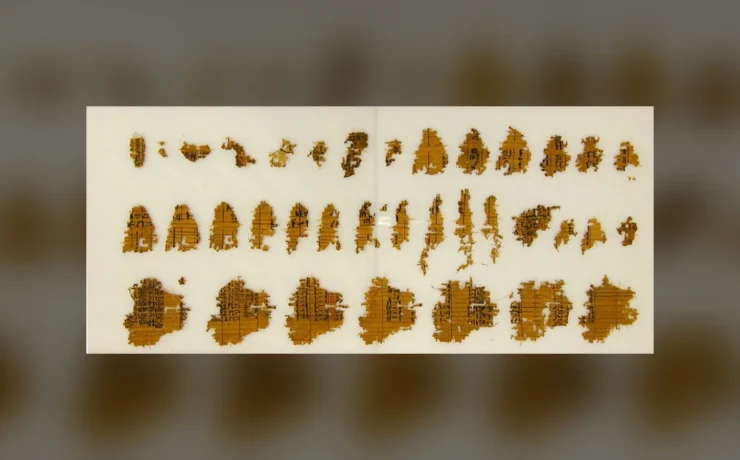
One striking reported discovery was a ‘House of Life’, a term used for institutions associated with learning and specialist written knowledge in ancient Egyptian temple culture. Archaeologists also uncovered drawings and school games in the complex. The Ministry presented this as the first evidence for such a school within the Ramesseum.
It is an appealing discovery because it connects religious institutions with intellectual work. The activities of a temple required written records, ritual knowledge, technical expertise and the training of people who could carry out specialized tasks. A House of Life may provide a setting for parts of that work.
But a new building identification should be discussed with its archaeological context. The existence of drawings and games does not let us reconstruct a precise school timetable, name every student or claim that it functioned like a modern university. What the discovery does show is that the working life of this temple extended beyond ritual and supply storage.
Administrative rooms and the people missing from the statues
The official report also described buildings on the east side that may have served administrative functions. That ‘may’ matters. Archaeologists assign functions by examining architectural plans, objects and their distribution, but the evidence is not always decisive. A room’s appearance alone is rarely enough to identify its occupant or purpose.
Imagine the activity that must have accompanied the movement of goods into and out of the complex. Someone organized deliveries, someone recorded what came, others prepared food, and craftspeople maintained the materials that kept the institution operating. Their names are not necessarily preserved beside the royal names on the monumental walls.
This is why the food and administrative evidence at Giza’s workers’ settlement makes a useful comparison. It comes from a different period and setting, not the same institution; the parallel is methodological. Archaeologists use traces of kitchens, stores and written administration to recover activities that kings’ monuments rarely emphasize.
What the building’s later history adds
Not everything unearthed around the Ramesseum belongs to Ramesses II’s lifetime. The Egyptian-French mission also reported burials dating to the Third Intermediate Period, including coffins and funerary objects. These finds show that people continued to reuse areas of the site for purposes different from those intended when the temple was first built.
There is a risk in presenting every artifact discovered within a large ancient precinct as though it belongs to the temple’s founding year. A wine label, a later burial and a fragment of monumental relief can have different dates and contexts. The record becomes clearer when these phases are separated instead of compressed into a single story of Ramesses II.
Why this is a better way to read a royal temple
| Archaeological evidence | What it helps us understand | What remains uncertain |
|---|---|---|
| Vaulted mudbrick magazines | Spaces designed to hold and manage supplies | The contents of every surviving room |
| Wine jar labels | Records linked to wine storage and handling | The precise annual volume without full analysis |
| Bakeries and workshops | Production and maintenance within the temple economy | Every worker’s identity and conditions |
| House of Life evidence | Knowledge and educational activity connected with the temple | A full reconstruction of the teaching system |
| Later tombs | Reuse of the precinct in subsequent periods | That these burials belonged to Ramesses II’s reign |
The Ramesseum rewards a visitor who looks beyond its most famous statues. A vaulted storeroom can be as revealing as a carved royal scene when the question is how an institution actually functioned. The Ministry’s detailed discovery notice is a strong place to begin, while continuing excavation reports can refine the interpretation.
The temple was built to proclaim a king’s enduring importance. Its stores, workshops and records reveal the much larger community of workers who made that claim possible.