A stone noticed by a resident in Egypt’s Nile Delta has led to one of the most intriguing archaeological discoveries announced in October 2026. At Behbeit el-Hagar in Gharbia Governorate, a rescue mission from the Supreme Council of Antiquities recovered the remains of two colossal royal statues and a pink-granite block bearing hieroglyphic titles. One head is identified as Ramesses II. A second royal figure probably represents the same king, although that attribution remains provisional. The finds were announced on 13 October 2026.
The site’s importance extends well beyond the excitement of a huge statue. Behbeit is famous for a much later temple of Isis, yet researchers had already identified Ramesside material there before this discovery. The real question is whether the new pieces can help reconstruct an earlier monumental phase of the sanctuary or settlement. This investigation follows the documented objects, the 2026 interviews and photographs, and the scholarly history of the site without converting tentative suggestions into established fact.
October 2026 discovery: facts at a glance
| Evidence | What was reported |
|---|---|
| Announcement date | 13 October 2026 |
| Location | Behbeit el-Hagar, Gharbia, Nile Delta, Egypt |
| Excavation | Supreme Council of Antiquities rescue mission |
| First royal head | About 1.60 metres tall; identified as Ramesses II, wearing the Double Crown |
| Original height estimate | About 8.5 metres including the base, not an intact standing statue |
| Second royal sculpture | Surviving portion about 2.40 metres, provisionally identified as Ramesses II |
| Granite inscription | Pink block around 1.30 metres long, with royal titles |
| Current research status | Excavations and assessment of the archaeological context continue |
These details are based on the Egyptian antiquities announcement as reported by Ahram Online on 13 October and Euronews on 20 October 2026. Estimates can be refined after a full technical study.
How a resident’s discovery became an official excavation
According to the contemporary statements, a local resident noticed an inscribed stone while working on land in front of his home. He reported it to the antiquities inspectorate instead of attempting to extract further objects on his own. Archaeological staff inspected the stone, recognised its ancient character and initiated the procedures necessary for a rescue excavation. An Egyptian specialist team then uncovered the two royal figures and the additional block.
Arabic reports identify the resident as Khaled Khalil, with some English reports giving the fuller name Khaled el-Shahat Khalil. The differences reflect shortened names and transliteration rather than evidence for separate discoverers. His decision to report the stone was fundamental to preserving both the antiquities and information about where they were found.
Rescue archaeology is sometimes portrayed as an emergency search for valuable treasures. Its actual purpose is to preserve evidence threatened by modern activity. Where an object lies, how its fragments are arranged, the layers around it and the relationship to architecture can matter more than its monetary or visual value. The team must record those associations before removing fragile stone. Without them, a spectacular sculpture can become an isolated item whose history is harder to reconstruct.
Video: hear how the discovery was reported
This 14 October 2026 YouTube report from Youm7 contains an Arabic-language interview identified by the publisher as Khaled Khalil, the resident who reported the find. It is included as first-person reporting of the discovery process, not as an expert excavation report. The publisher’s description and video identity were checked before inclusion.
Watch the video on YouTube and read the broadcaster’s accompanying report. The interview should be viewed alongside, not in place of, the archaeological measurements given by the excavation authorities.
First statue: the 1.60-metre head of Ramesses II
The most securely identified new object is a head measuring approximately 1.60 metres high. It depicts Ramesses II wearing the Double Crown combining the symbols of Upper and Lower Egypt. The scale alone suggests an imposing royal monument. A head over five feet high would have crowned a figure designed to dominate its architectural surroundings.
Part of the upper back pillar was also found. Its hieroglyphic inscription contains the king’s Horus name, rendered in contemporary reports as Hor Ka Nakht Mery Maat. This matters because a royal name gives a much firmer basis for identification than facial resemblance. Inscribed support structures were part of Egyptian royal statuary, not an afterthought added to satisfy modern archaeology.
From the head’s size, the excavation team estimated that the statue may originally have been approximately 8.5 metres high including the base. Some headlines turn that estimate into the claim that archaeologists unearthed a complete 28-foot statue. They did not. The surviving head and pillar fragments are real; the original total height is an informed reconstruction. Confusing those two forms of evidence would mislead students and visitors.
The crown also has a specific function in royal iconography. It represents unified kingship and should not be misinterpreted as proof that a king personally visited a location. A colossal image was a permanent expression of rulership and divine legitimacy. To establish where this particular sculpture originally stood, archaeologists need foundations, complementary blocks and their stratigraphic relationships.
Second statue: a major fragment, but not yet a confirmed identification
The second royal figure survives in a portion about 2.40 metres long, with its legs and base missing. A damaged nemes headdress frames a face whose features are still recognisable. Because its appearance resembles Ramesses II’s known sculptural representations and it was found close to the first head, excavators believe it may depict the same ruler.
That is a reasonable provisional attribution. It is not identical to reading an attached inscription that conclusively names the owner. Egyptian sculptors worked within formal royal conventions; statues might be transported or reused; several monuments can lie together because of events occurring long after they were made. Further epigraphic and physical studies may strengthen the identification, but for now it remains the probable second Ramesses II statue, not a certainty.
This distinction should shape any serious article. The discovery is about two colossal royal statues, at least one securely associated with Ramesses II. Turning both into confirmed statues for a stronger headline would create an unnecessary factual weakness in an otherwise remarkable finding.
The pink-granite block and the royal names
Excavators also recovered a separate pink-granite block reported at about 1.30 metres long. Its hieroglyphic inscriptions include royal titles of Ramesses II, notably formulations translated as King of Upper and Lower Egypt and Son of Ra. These titles formed part of the royal titulary by which kings located themselves within political and religious order.
The granite block is not necessarily a missing piece of the first statue. Researchers will need to compare stone type, tooling, broken surfaces, inscriptions and positioning. It could have belonged to a monument or building that was later damaged, dismantled or reused. An inscribed stone proves that a royal name was present on a particular object; it does not automatically establish the purpose of the original structure.
Reports distinguish the first statue’s back-pillar Horus name from the additional royal titles on the separate granite block. These details should not be collapsed into a fictional single inscription. The original arrangements of the texts may eventually reveal how many monuments were involved and how they related to the site.
Where is Behbeit el-Hagar, and why is it important?
Behbeit el-Hagar is an archaeological site and village in the Nile Delta’s Gharbia Governorate, in the broader area of ancient Sebennytos. It is famous for the fallen monumental temple of Isis, sometimes called the Iseion. The site preserves enormous stone blocks, decorated architectural elements and inscriptions from a major late ancient Egyptian religious centre.
The temple most recognisable in the material record is much younger than Ramesses II. The Metropolitan Museum of Art describes extensive work by Nectanebo II in the Thirtieth Dynasty and later decoration and additions under the Ptolemies. The surviving granite architecture bears witness to a sophisticated cult complex centred on Isis and Osiris.
The new statues date by royal attribution to a different period. Ramesses II reigned in the Nineteenth Dynasty, during the New Kingdom. The discovery therefore raises the possibility of a significant earlier phase at Behbeit, but the new blocks could also have been moved or reused. No excavated plan yet proves that Ramesses II constructed the later granite temple of Isis.
The historical question is therefore more interesting than a simple ‘lost temple discovered’ headline: how did the site evolve, which monuments stood there at different times and why were Ramesside pieces preserved in the area surrounding the later sanctuary?

The 2017 evidence: archaeologists had already found Ramesside blocks
The strongest background to the October 2026 news is a research paper published in Studien zur Altägyptischen Kultur in 2017. Mahmoud A. Emam and Ehab Abd el-Zaher studied two fragments bearing Ramesses II cartouches from infrastructure works around the temple. Their publication, Two Unpublished Fragments of Ramesses II from the Temple of Behbeit el-Hagar, appears in volume 46, pages 33–37.
The authors suggested that this material might point to an earlier building, perhaps of Ramesses II’s reign or even older, preceding the monumental later Isis sanctuary. Their interpretation was deliberately a hypothesis based on the available blocks rather than proof of a fully excavated Ramesside temple. It established a question for further archaeological study, not a settled architectural chronology.
That context changes how the new discovery should be understood. Ramesses II’s name was not wholly unexpected in Behbeit before 2026; evidence had already prompted scholarly debate. The new finding is remarkable because large pieces of royal sculpture now join those smaller inscribed fragments. The amount, size and new excavation context may allow researchers to investigate earlier activity much more closely.
See the University of Heidelberg’s abstract record and the peer-reviewed publication listing. The article’s abstract supports the earlier-buildings hypothesis; detailed conclusions must be judged from the full paper and new excavation evidence.
The later Isis temple and the earlier royal landscape
One of the biggest errors in reporting archaeological discoveries is to assume that all stone at a site belongs to the same building phase. Ancient Egyptian sanctuaries could undergo centuries of reconstruction. Blocks were cut, damaged, moved and incorporated into newer buildings. Architectural styles and inscriptions from different periods can survive together even without a single uninterrupted structure.
The Metropolitan Museum of Art’s record of Seated Osiris-Anedjty places Behbeit’s Isis temple in its wider Late Period and Ptolemaic religious context. Another record, Nectanebo II Offers to Osiris Hemag, discusses its complex building history and worship of Osiris. These objects provide independent scholarly grounding for the site’s later religious significance.
But the newly recovered Ramesside material cannot simply be assigned to those later walls. It could suggest a predecessor sanctuary, royal activity elsewhere within the settlement or an episode of later reuse. Each scenario would teach us something different about Behbeit’s long life. Stratigraphy, foundations and inscriptions will matter more than an attractive digital reconstruction made before the evidence is complete.
What physical examination could reveal next
Future examination could identify chisel marks, dressing techniques, tool traces, joins, fracture surfaces and differences in stone provenance. Survey records can establish how pieces were distributed before removal. High-resolution photography and three-dimensional modelling may help compare broken edges or reconstruct proportions, but the October announcement does not report that a complete digital reconstruction has already been proven.
The original placement remains especially important. Were the statues found beside an ancient foundation? Did their pieces lie in a coherent destruction layer? Did later builders incorporate them into another monument? Were they transported from elsewhere? An object can have a royal inscription and still be centuries removed from its first setting when archaeologists uncover it.
Conservation is part of this process. Large stone heads can be vulnerable to cracks, unstable soil and difficult lifting. Proper documentation should precede movement, while long-term display decisions require condition assessment. The present reports identify continued excavations, not a finished conservation programme or confirmed permanent exhibition location.
Who was Ramesses II, and why did he commission colossi?
Ramesses II, usually dated to 1279–1213 BCE, was one of the most prominent rulers of Egypt’s Nineteenth Dynasty. Monumental stone images were a means of expressing permanent kingship, local authority and relationships with Egypt’s gods. The Double Crown, the royal names and the sheer physical size of a colossus carried messages that an ancient viewer could understand before reading any inscription.
Such works appeared in temples and other ceremonial environments across Egypt. Yet the presence of a huge statue does not independently prove that Ramesses personally visited the location or ordered every surrounding structure. A monument can be moved or reused; its original setting must be investigated rather than inferred from the fame of the king.
The newly found head has relevance to the king’s broader northern monumental programme, but Behbeit has its own local history. For religious background rather than claims about the specific excavation, readers can explore Isis and her cult, Ra and solar theology and Kemet Vault’s Digital Museum.

Where to see real photographs of the new statues
The actual 2026 excavation photographs, including the colossal royal head and inscribed stone, appear in the original news reports credited to Egypt’s Ministry of Tourism and Antiquities. Readers should examine those pictures separately from the historic contextual photographs shown on this page.
See the illustrated Euronews report dated 20 October and Ahram Online’s original 13 October account. Those photographs remain credited to the ministry and are not reproduced here without verified reuse rights. This distinction protects image provenance and prevents the common error of passing off an older Ramses II statue as the newly found object.
What the discovery means and what is still unknown
The evidence confirms two newly recovered royal statue remains, a separate inscribed stone, and at least one strong attribution to Ramesses II. The estimated size of the first monument, the presence of the Horus-name inscription and earlier scholarship on Ramesside fragments make Behbeit a promising place to investigate earlier monumental activity.
What is not yet established is equally important: the exact original position of the sculptures, a confirmed identification for the second figure, the layout of any proposed Nineteenth Dynasty building or the route by which fragments reached their present context. Neither the press statement nor the video proves that archaeologists have discovered an intact previously unknown temple or a hidden royal burial chamber.
Future publications could transform the interpretation. A secure foundation, connected inscription fragments or a mapped group of statue bases would offer stronger architectural evidence. If the blocks were moved, that would still reveal the history of reuse in a major religious landscape. The strongest historical outcome will come from the careful description of what was found, not a headline that pretends all uncertainty is gone.
Five questions to follow as excavations continue
Original placement: can the royal figures be linked securely to foundations, statue bases or a specific architectural phase? Second identification: will additional inscriptions confirm or revise the provisional attribution to Ramesses II? Earlier buildings: will the 2026 context support the 2017 suggestion of a Ramesside predecessor structure? Reconstruction: can joins and measurements refine the estimate of the first statue’s original height? Conservation: what arrangements will preserve the fragments and make the excavation records publicly accessible?
These questions should guide updates to this page. An archaeological discovery is not a one-day story: new finds, laboratory work and publication can change the picture over months or years. The value of Behbeit’s October 2026 evidence lies partly in the possibility of revising a site history that already spans different dynasties and religious building phases.
Frequently asked questions
What was found in Behbeit el-Hagar in October 2026? Two colossal royal statue fragments and a separate pink-granite block with hieroglyphic titles were uncovered in an Egyptian rescue excavation.
Was an intact 8.5-metre statue discovered? No. The first head measures approximately 1.60 metres. About 8.5 metres is the proposed original height of the complete statue including its base.
Are both statues definitely Ramesses II? One is identified as Ramesses II; the second is thought to represent him but remains a provisional attribution.
Who alerted archaeologists? The original find was reported by a local resident named Khaled Khalil, also referred to as Khaled el-Shahat Khalil. His report prompted specialist inspection and excavation.
Did Ramesses II build the later Isis temple? There is no published proof of that claim. The monumental temple best known at Behbeit largely reflects later construction, while Ramesside fragments suggest earlier activity or reuse.
Can the newly discovered statues be visited? The October news reports do not establish a permanent public display for the fragments. Official announcements should be checked before any visit.
Sources, image credits and research record
Contemporary news: Ahram Online (13 October 2026); Euronews (20 October 2026); HeritageDaily (October 2026).
Video: Youm7 YouTube interview with the resident (14 October 2026) and publisher’s context report. The video source and description were verified before embedding; its subject is personal reporting of the find.
Previous archaeological research: Mahmoud A. Emam and Ehab Abd el-Zaher, Two Unpublished Fragments of Ramesses II from the Temple of Behbeit el-Hagar, Studien zur Altägyptischen Kultur 46 (2017), 33–37; scholarly volume abstract. Later temple context: The Metropolitan Museum of Art, Seated Osiris-Anedjty and Nectanebo II Offers to Osiris Hemag.
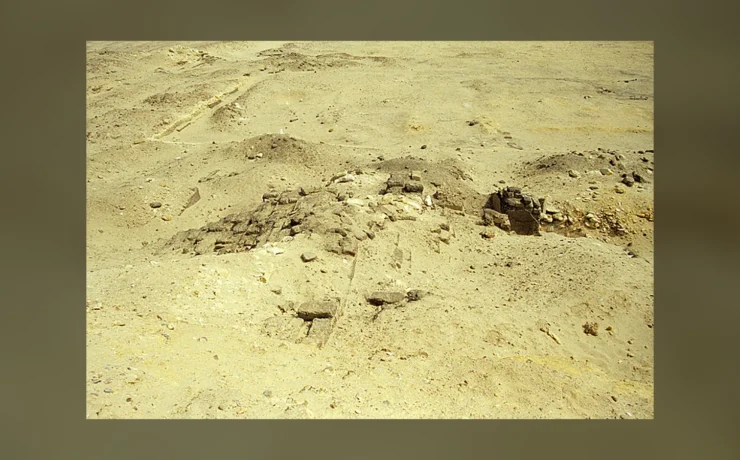
Photographic licence: the contextual featured image and related comparison are based on Warren LeMay’s 2019 CC0 Ramesses II photograph. The Behbeit site photograph was made by Roland Unger in 2008 and is reused under CC BY-SA 3.0. These are documented contextual photographs, not depictions of the newly discovered fragments. Editorial verification: 20 October 2026.