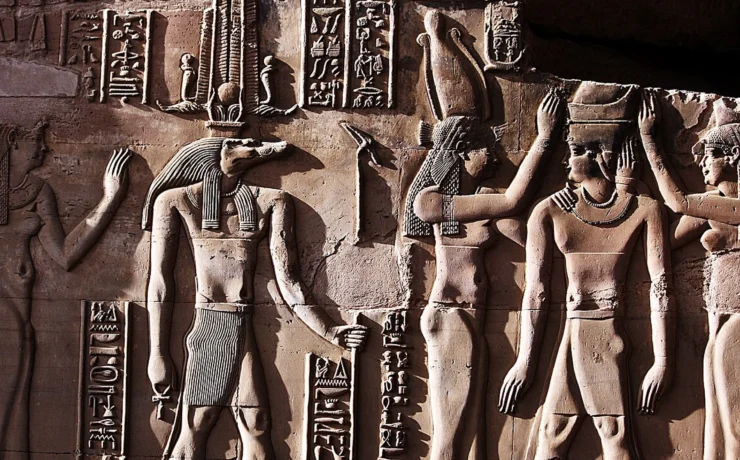
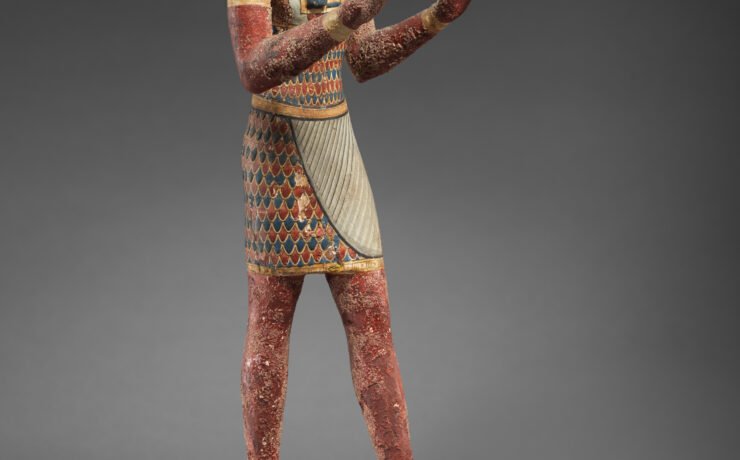
Isis was one of ancient Egypt’s most influential deities. Her character cannot be reduced to a single image of a grieving wife or a mother holding her son. Across different periods and regions, she was invoked as a protector, a skilled wielder of effective sacred speech, a supporter of legitimate kingship, and a figure whose cult eventually reached communities far beyond the Nile Valley.
A dated sculpture of the goddess and a story about her actions answer different questions. Explore the evolving Isis–Osiris–Horus narrative for the succession story, and the separate historical evidence for Horus as child, protector and royal falcon for the iconography. Neither page implies that one version of the myth remained unchanged through Egyptian history.
Research quick facts
Who was Isis, and what does her name mean?
The Egyptian name commonly rendered Aset or Iset is represented by a throne sign. The relationship of her name to the throne helps explain why images of her can include a throne-shaped emblem above the head. This name alone does not establish that all the goddess’s associations were identical across Egyptian history. The safest way to study Isis is to put each text, object and ritual in its own period and setting. Her powers were expressed through family relationships as well as protective rites, and her appearance changed across centuries.
Isis and the Egyptian divine family
Isis is a daughter of Nut and Geb in the influential Heliopolitan divine genealogy, and is associated with Osiris, Seth and Nephthys. Divine genealogy served religious thinking, not a modern biological reconstruction. The gods’ roles overlap, change and sometimes conflict in local theological systems. Isis’s central relationship with Osiris links her with protection of the dead, while her relationship with Horus connects her with the survival of royal succession among the living.
Magic as knowledge, speech and effective action
English discussions often translate the Egyptian term heka as magic, but this does not imply an outsider’s superstition separated from religion. Sacred speech, names, rites and protective gestures were treated as effective forms of power within Egyptian worldview. Isis is celebrated for knowing and acting where danger threatens. The famous narrative in which she obtains Ra’s hidden name illustrates the religious significance of names and verbal knowledge; versions and dating must be checked against the relevant manuscripts before claims are assigned to all periods.

Why Isis mattered to Horus and the king
In stories of Horus’s vulnerable childhood, Isis protects him against danger and disease. Her actions make the survival of the legitimate heir imaginable even after the death of Osiris. This relationship could express a broader principle: kingship needs protection, continuity and authorization. Historical pharaohs could draw upon Horus symbolism without claiming that every story about the goddess literally happened to an Egyptian monarch.
Maternal images: how to identify Isis and Horus
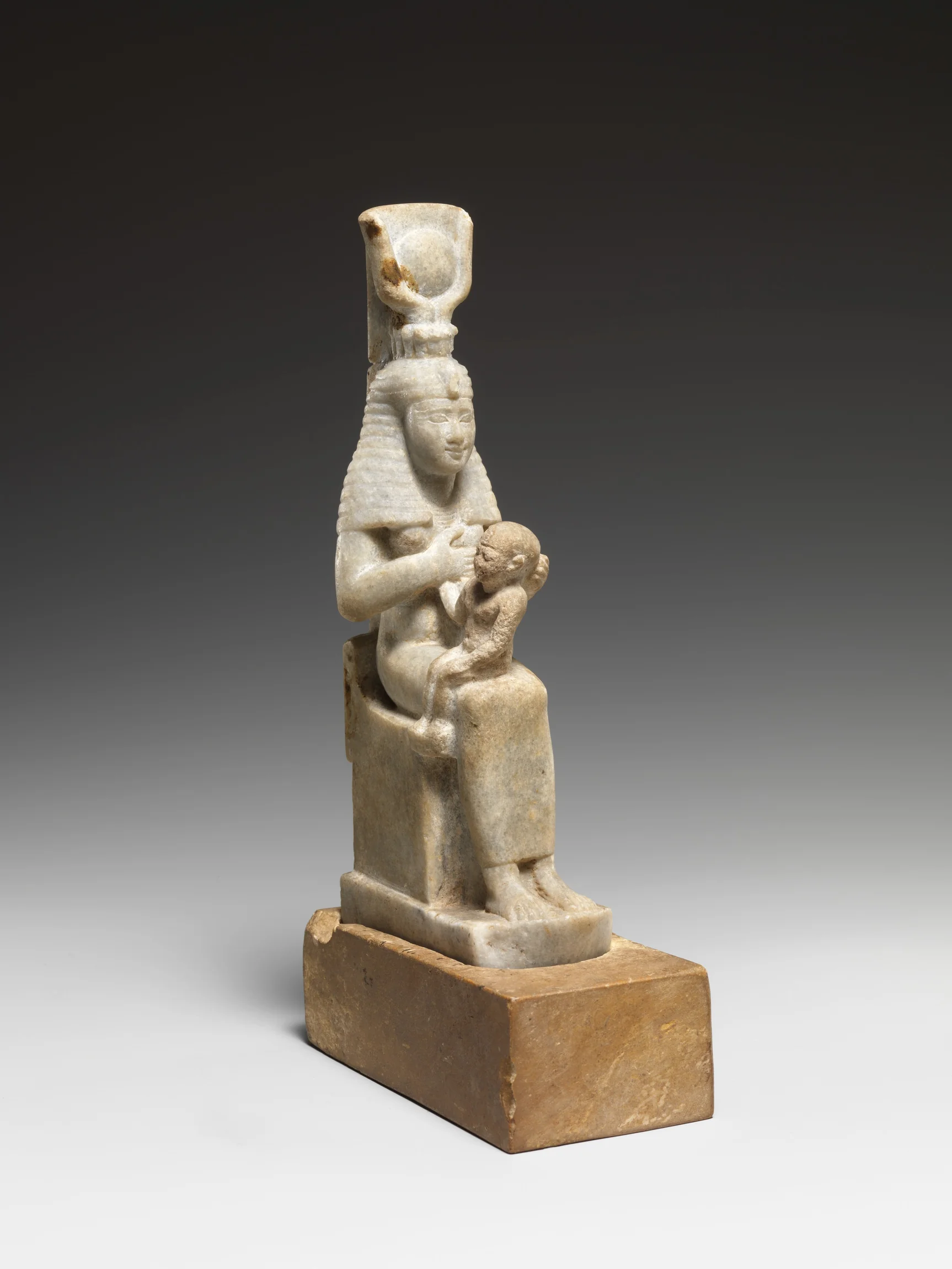
Images of a seated woman nursing a child became a significant visual form for Isis and Horus, especially in later periods. The child may be represented quite differently from a modern portrait of infancy, and crown forms differ according to the date. Museum identification depends on attributes, provenance, parallels and inscriptions, rather than the assumption that any Egyptian mother-and-child sculpture must depict Isis.
The throne crown, horns and solar disk
The throne sign is a distinguishing attribute, but Isis also appears in forms associated with Hathor, especially with cow horns and a solar disk. Shared visual language does not mean the deities were always interchangeable. Date, sanctuary, object type and inscriptions determine how an image should be understood. Students should describe the physical attributes first, then compare the object’s official museum record before identifying its theological meaning.

Isis and funerary protection
Isis and her sister Nephthys are prominent in traditions of mourning and protection of Osiris and the deceased. Protective figures and ritual speech express concern that the dead should remain whole and receive continuing care. Funerary uses of the goddess developed across time; the Pyramid Texts, Coffin Texts and later mortuary papyri must not be collapsed into one unchanging liturgy. The goddess’s importance is religious history, not evidence that any divine event took place as a recorded human occurrence.
The tyet knot and protective amulets
The tyet sign, frequently associated with Isis, could function as a protective amulet. Its materials and funerary placement matter to interpreting individual finds. An amulet’s meaning is not fully explained by identifying the outline: a responsible record asks where it was discovered, its date, its substance and whether accompanying texts clarify its intended function. Wearing or burying an object is also different from placing a large votive sculpture in a sanctuary.
Isis, healing and the Horus child traditions
Protective texts centered on the endangered young Horus show the relationship between storytelling and therapeutic ritual. Ancient participants could invoke the success of Isis in protecting her child as a model for overcoming dangers encountered by living people. Texts and objects such as healing stelae have different provenances and purposes. Their presence proves the importance of religious healing practices, not the effectiveness of any contemporary medical claim. This distinction is particularly important in educational presentations.
Isis in Egyptian temples and festivals
Isis was worshiped in many places, including the important later sanctuary at Philae. A temple’s reliefs, processions, written hymns and ritual spaces document how the goddess was understood by the community and priesthood that maintained them. The visible architecture at Philae largely belongs to later phases, so it should not be represented as a photograph of an Old Kingdom cult center. Visits to monuments today are best handled in a separate cultural travel guide.
From Egypt to the Mediterranean world
In Ptolemaic and Roman times, worship of Isis spread across parts of the Mediterranean. Her cult acquired forms that reflect contact among Egyptian and other traditions. This was not simply the export of one completely unchanged set of Nile Valley rituals. A Roman-period inscription or sanctuary needs to be read in its own setting, with attention to the language and social circumstances of the people who used it.
What artifacts tell us about Isis
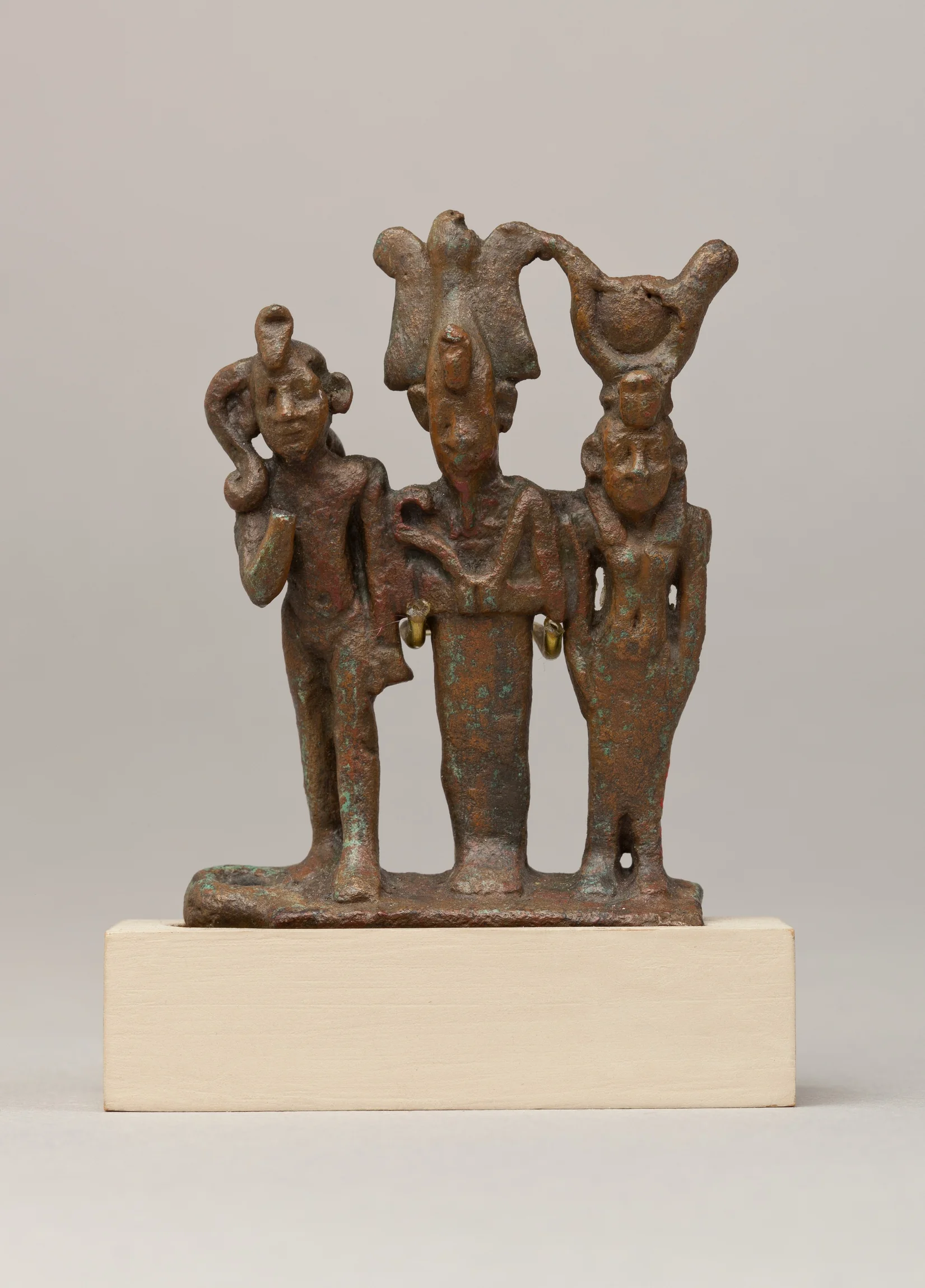
A bronze or copper-alloy statuette represents a historically dated act of devotional imagery. A gold amulet offers evidence of portable religious symbolism, and a marble sculpture may illustrate the goddess’s changing visual language. Objects should be studied with their accession numbers. Different museum dates do not make the goddess herself originate on the date of a surviving object. Later depictions testify to ongoing and changing religious significance.
How the Isis–Osiris story should be read
The popular continuous tale in which Isis finds Osiris, restores him and secures Horus’s succession is a synthesis of different traditions. Ancient Egyptian writings attest central themes long before Plutarch’s later narrative, but the fullest familiar plot draws on a Roman-period Greek author. Scholars must separate an early funerary allusion from a later literary scene. The distinction makes the goddess more interesting because it reveals development rather than a frozen legend.
Researching Isis responsibly
Students can begin with an authenticated image and its catalog record, then identify a contemporary or later text that supports a particular interpretation. Record object date, material, accession number, provenance and rights status. Compare an Old Kingdom funerary reference with a Late Period figurine without pretending they were made at the same time. When a claim depends on Plutarch, name his work and period instead of attributing the line to an unnamed ancient Egyptian manuscript.
Frequently asked questions about Isis
Was Isis a real queen? No; she is a deity known through ancient religious texts and images, not a verified historical queen. Was she always shown with wings? No; winged forms are one expression of her protective role. Why does she hold Horus? Such imagery symbolizes care, protection and royal continuity. Is Isis the same as Hathor? Their attributes sometimes overlap, but they are distinguishable deities and contextual evidence matters. Were all Isis statues made in the Old Kingdom? No; many surviving votive objects are much later.
Learning pathways and authentic sources
The Metropolitan Museum of Art’s Open Access collection documents particular representations of Isis with accession numbers and public-domain photographs. Egypt’s temple records and scholarly discussions of funerary texts supply a complementary perspective. For a classroom essay, compare what an object shows visually with what a translated religious text actually states. Do not mistake a modern paraphrase or tourism claim for a primary ancient inscription.
How to identify Isis in a museum collection
When studying a museum image, begin with the object’s recorded date and provenance rather than treating every female figure with a child as Isis. The goddess may wear the throne-shaped sign associated with her name, and later representations can also show horns framing a solar disk. Yet such attributes vary with date and artistic context, and some are shared with other deities. An inscription, a securely identified object record or a carefully argued iconographic comparison is stronger evidence than appearance alone.
Material matters too. A small amulet suggests a different setting and audience from a monumental temple scene or a coffin painting. The survival of one kind of object does not establish that the same ritual was practiced by all Egyptians. This is why documented accession numbers, excavated contexts and reliable collection descriptions are included in Kemet Vault’s artifact-based coverage.
Isis across Egypt and the Mediterranean
Isis remained important across major political and linguistic changes, but the ancient evidence does not support treating her cult as unchanged for thousands of years. In later Egyptian and Mediterranean contexts, visual conventions, languages of devotion and local temple communities developed in distinctive ways. Comparing a Pharaonic protective image with a Greco-Roman cult object can reveal continuity and adaptation, provided the dates are made explicit.
For students, a useful starting sequence is to compare Isis in a documented object with the separate Isis and Osiris story and the Papyrus of Ani. These are different genres of evidence, not interchangeable descriptions of one universal belief. Where a historical source is silent, the article should say so rather than supplying an invented quotation or scene.
Sources and critical reading
Reference objects: The Met accession object 570676; The Met accession object 561570; The Met accession object 552064; The Met accession object 549349. Historical and textual interpretation should be checked against individual funerary texts, original site inscriptions and established museum scholarship. The imagery is Open Access / Public Domain, hosted on Kemet Vault with archival copies and source rights retained. Modern descriptions are original explanatory writing, not fabricated translations of a single ancient manuscript.
Explore the related Isis and Osiris myth and the Egyptian timeline. Browse authenticated objects in our Digital Museum, with catalog links and distinct dates for the surviving artifacts. Objects from later periods must not be misidentified as images made when a myth first developed.