Egyptian faience is one of the most distinctive artificial materials in the ancient Nile Valley. Its brilliant turquoise and deep blue surfaces can look like carved gemstones or ordinary glazed pottery, but the body of many objects consists predominantly of powdered quartz bound and fired with alkaline ingredients. From small amulets to elaborate figurines and inlays, faience shows how craftspeople manipulated colour, heat and mineral reactions over centuries. This guide separates documented manufacturing technologies from guesswork about workshops, and examines real objects whose museum records preserve their individual materials, dates and identities.
Faience is not modern earthenware pottery
The word faience was applied by later scholars and collectors, not necessarily used by the Egyptian makers themselves. In archaeological descriptions, Egyptian faience normally refers to a quartz-rich synthetic body with a vitreous, often colourful surface. Ordinary pottery is based on plastic clay. A blue-green faience amulet may therefore have been formed using quite different techniques from a painted Nile-silt bowl. The distinction matters when discussing labour, resources, kilns and repair. Visual similarity to turquoise or lapis lazuli does not mean an artefact is made from those minerals. Makers could reproduce highly valued colours through chemical reactions while using relatively accessible raw materials. There were regional and chronological variations, and objects may have additional components such as paint, gilding or settings. The Metropolitan Museum’s technical essay is unusually useful because it explains practical production rather than merely celebrating the finished sheen. Students should begin by reading a museum’s material field before relying on an object’s photographic appearance.
Silica, alkalis and colour-producing copper
Many Egyptian faience mixtures included crushed quartz or sand, alkaline salts, a modest amount of lime and a colourant such as copper-rich material. Different combinations and impurities could alter the final shade, gloss and stability of the finished surface. The familiar blue-green effect was frequently connected with copper compounds, but a particular object’s recipe cannot be recovered from its appearance alone. Faience was not a single chemical standard continuously manufactured over four millennia. Samples from different periods and workshops can vary. An image of a turquoise hippopotamus also does not prove that turquoise gemstone was mixed into the body. Laboratory methods can examine elemental composition, glassy phase and cross-sections, while experimental archaeology tests plausible procedures. Those studies need to distinguish original manufacture from burial alteration, restoration and modern cleaning. Even the term glaze requires explanation: a chemical reaction during firing creates a glass-like surface layer that need not have been painted onto the dry body in the manner of some later ceramic traditions.
The efflorescence process and a surface that forms itself
The Metropolitan Museum describes efflorescence as an important self-glazing method. Water-soluble alkaline salts were mixed into the quartz-rich paste; as the moist object dried, some salts could migrate to its surface. During heating, a reaction formed a coloured glassy coating. The process did not involve magic or the spontaneous growth of a mineral skin independent of the ingredients. It depended on physical movement and chemical transformation. Craftspeople could select composition, humidity, drying conditions and firing arrangements to influence results, although ancient workshops are not documented by complete instruction manuals. Slumping and cracking posed challenges because the paste behaves differently from ordinary clay. The Met notes that faience paste is relatively nonplastic and can change handling properties under stress, limiting the forms achievable by some standard pottery methods. A vessel’s final symmetry may thus testify to sophisticated moulding and support decisions rather than to a wheel-thrown clay technique. Experimental reconstructions are valuable, but should be marked as reconstructions, not secretly presented as surviving pharaonic recipes.
Other glazing routes and why one method does not fit everything
Efflorescence was not the only way to produce glazed faience. The Met discusses application and cementation techniques as alternative or related approaches under different production conditions. In an application method, a prepared glazing mixture could be placed on the object; in cementation, an object might be buried within a glazing powder that reacted during firing. These methods can leave different microstructural clues, although later preservation can blur the evidence. A simple museum label that says ‘faience’ does not identify which glazing technique was used. That question may require microscopic or chemical examination. The range of procedures matters because large tiles, delicate figurines and tiny beads created different handling problems. There is no reason to imagine that every workshop made every object through an identical sequence of steps. Claims about an exact ancient firing temperature should reference experimental limits and compositional variation, rather than turn a range into a universal thermostat setting. Understanding alternative techniques makes the material an especially good example of historical engineering problem-solving.
Kilns, temperature and the difficulty of support
Firing transformed a comparatively dull prepared form into a durable object with a vibrant surface. Experimental study discussed by the Met puts important faience firing reactions broadly around 870 to 920 degrees Celsius, although actual ancient processes varied. The supporting arrangement of objects inside kilns remains a difficult archaeological question. Many finished pieces have glaze extending over most of their surfaces without obvious support scars. Possible solutions include small kiln props, dusted surfaces or firing strategies that reduce adhesion. But an attractive hypothesis is not an excavated kiln inventory. Evidence for workshop installations, failed pieces and debris should be studied in context before assigning one method to a site. Too much heat could cause glazing problems, and too little might leave poor fusion, but a surviving defect does not uniquely identify one operator’s mistake. Production required practical knowledge of fuel, atmosphere, shaping and cooling as well as ingredients. The skills were technical and experimental long before modern chemistry gave those transformations their current vocabulary.
William the hippopotamus: a documented blue-green object
The Metropolitan Museum of Art’s famous faience hippopotamus, nicknamed William, is accession 17.9.1, dated to the Egyptian Middle Kingdom, Dynasty 12. Its blue-green surface and plant motifs have made it a recognisable object in museum education. The museum describes the figurine as faience; it was not carved from a giant turquoise stone. Its cultural interpretation belongs to a specific object and historical period, not to a universal theory of animal worship. Hippopotamuses could be feared as dangerous animals and represented within particular landscapes and symbolic settings. A polished photograph cannot reveal the complete manufacture or ancient owner. The museum record, however, can give measurements, accession and a dating range for discussion. Students can compare its rounded shape with the compact proportions of an amulet or shabti: different forms pose different modelling challenges. Do not attribute every blue animal figurine to this famous accession simply because commercial copies exist. The accompanying documentary photograph shows the actual museum object, not a modern souvenir.

Faience shabtis and burial practices
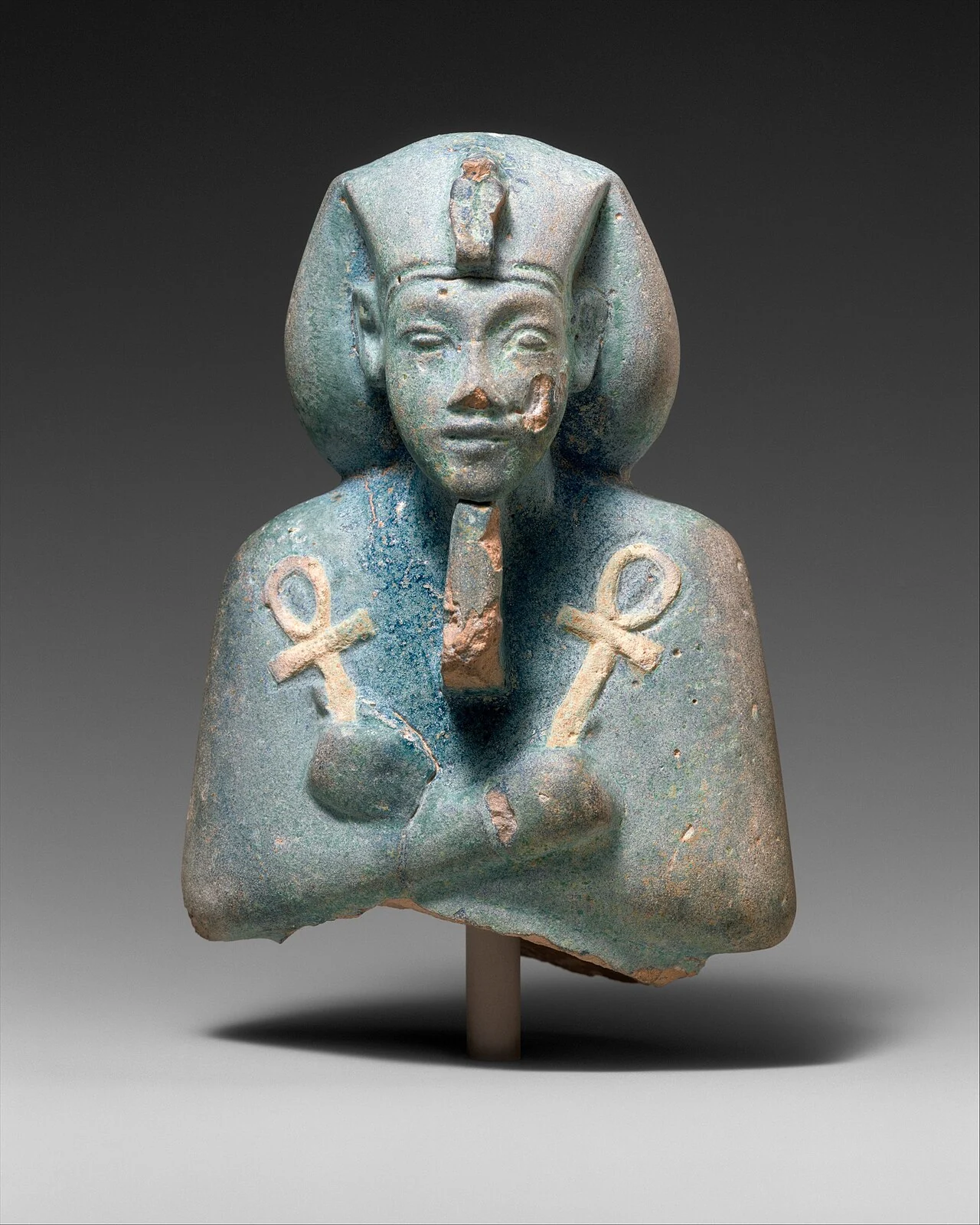
Shabtis are another widespread form of Egyptian figurine, often associated with funerary beliefs about work in the next world. Some were made from faience, while others used stone, wood or different materials. The Metropolitan Museum’s faience shabti of Akhenaten, accession 66.99.37, provides a specific and chronologically distinct comparison with William the hippopotamus. It belongs to the New Kingdom, well after the earliest forms of Egyptian faience were in circulation. That does not mean the hippopotamus and the shabti were made for the same ceremony. A shabti’s meaning depends on burial context, inscriptions, royal identification and period. Some museum photographs show fragments, and the accession may include reconstructions or a restricted surviving portion. The mummification study offers context for other material preparations of the dead. Faience craftsmanship intersects with those traditions without being reducible to the popular claim that every blue object was a magical charm.
Protective amulets, small-scale labour and colour
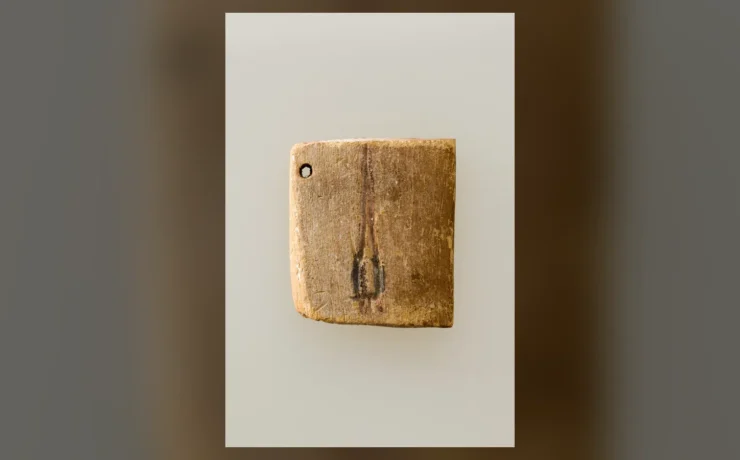
Small faience amulets show how complex technical processes could be mobilised for objects worn or deposited in varied contexts. Some represented deities; others used signs or forms associated with protection, renewal or bodily welfare. Their meanings were not immutable across the whole history of Egypt. A museum object with the form of a god does not prove that every identical-looking ornament had the same owner or function. Archaeologists examine holes for suspension, wear from handling, residues, inscriptions and find context. The small size of many pieces could make moulding and multiple-piece manufacture useful, but the existence of moulds does not mean that workshops were factories in the modern sense. Colour was valuable both aesthetically and symbolically; blue and green could evoke water, vegetation and renewal in some contexts. Yet colour symbolism must not replace material analysis. A well-dated amulet and a later copy may look similar but belong to different social and economic worlds. The material links practical manufacturing skill to the ways people engaged with religious imagery.
Inlays, tiles and architectural settings
Faience was not restricted to palm-sized objects. Egyptian craftspeople used glazed elements for inlays, decorative assemblies and architectural surfaces. Larger components demand different control of drying, firing and handling than tiny beads. A vivid blue tile in a museum case can therefore reveal part of a technical landscape that goes well beyond amulet-making. Its original setting may have required particular fixing systems or complementary materials that are no longer preserved. Museum records describing a tile as faience do not automatically prove the exact building wall on which it originally appeared. Excavated context remains the best safeguard against invented reconstructions. Shape, size, perforations and surviving adhesive residues can support hypotheses but do not substitute for architectural records. The historical development of techniques also depended on available raw materials and access to fuel, as well as the decisions of specialist workers. These objects encourage a view of ancient Egyptian art as physical manufacturing rather than just religious symbolism photographed under museum lights.
Comparing faience with glass and stone
Faience, glass and hard stones can sometimes have similar colours, but they are not identical technologies. A faience body is typically quartz-rich and partly sintered or bonded, while glass is generally a more thoroughly vitrified material. Gemstones such as turquoise or lapis lazuli are natural minerals, carved rather than created through one of these artificial glazing procedures. Some objects combine substances, requiring a careful reading of the museum’s material list. Broadly speaking, the manufacture of vivid blue objects offered alternatives to particular scarce stones, but price, value and status depended on context. One cannot conclude that a quartz-based object was necessarily inexpensive or socially unimportant. Labour, iconography, workmanship and access could matter greatly. An expert assessing the object may study microstructure, chemical composition and tool marks. An ordinary photograph provides important evidence of shape and colour, but cannot always distinguish an ancient faience artefact from later restoration paint, glaze replacement or a miscatalogued modern replica.
The workshop evidence we have and the recipes we lack
Archaeological work on workshops, kilns, tools, moulds and discarded production materials has developed the history of faience manufacture. Yet much surviving knowledge comes from objects and modern experimentation rather than a single Egyptian technical handbook that lays out every step. Research must infer operations in an order compatible with the physical evidence. This makes it especially important not to confuse an experimental procedure with an ancient witness’s written testimony. Some reconstructions achieve good results using plausible ingredients; that success demonstrates technical possibility, not proof that every workshop followed the same recipe. Material science and cultural history also ask different questions. Chemical analysis may identify copper and glass-forming components without revealing why a household wanted a particular protective image. Conversely, a funerary text may clarify an object’s potential role without documenting the temperature of its firing. Combining the approaches yields a fuller understanding of skilled labour, material transformation and social demand.
A method for reading faience museum records
When visiting a museum, identify whether an object’s material description actually says faience rather than ceramic, glass, steatite or stone. Note its stated date, accession, preserved condition and probable findspot. Compare photographed colour with published analysis only where such analysis exists. For William, use the Met accession 17.9.1, not a commercial copy. For the New Kingdom shabti, use the specific museum number 66.99.37. Their chronology, shape and original uses differ. The Meketre models article shows how another material, painted wood, can be used to study Middle Kingdom ideas and workshop practice. No one medium should stand for all Egyptian craft. Original museum photographs used here retain links to their Commons records and licences, making the distinction between an excavated object, a catalogued museum photograph and an author’s historical interpretation clear to the reader.
Research and object records
The Metropolitan Museum’s technology essay and UCL Digital Egypt’s faience research resources provide independent starting points for manufacturing questions. The Met collection record for William and Met collection of faience figures illustrate the importance of object-specific catalogue checks. Source review: 31 October 2026. Manufacturing temperatures are approximate experimental results, not claims about every kiln.