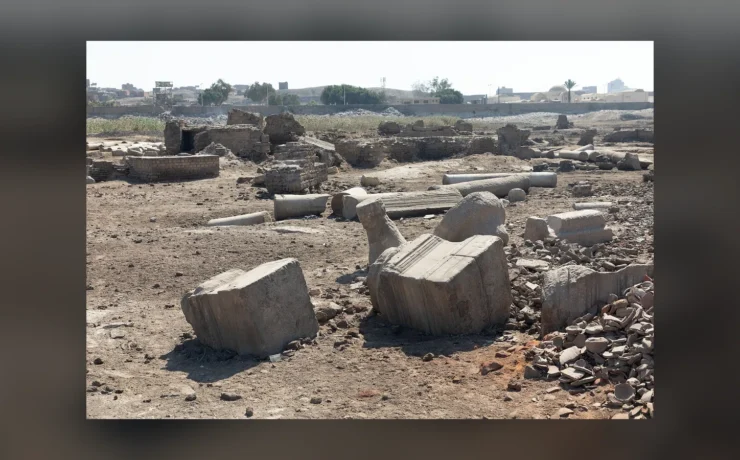
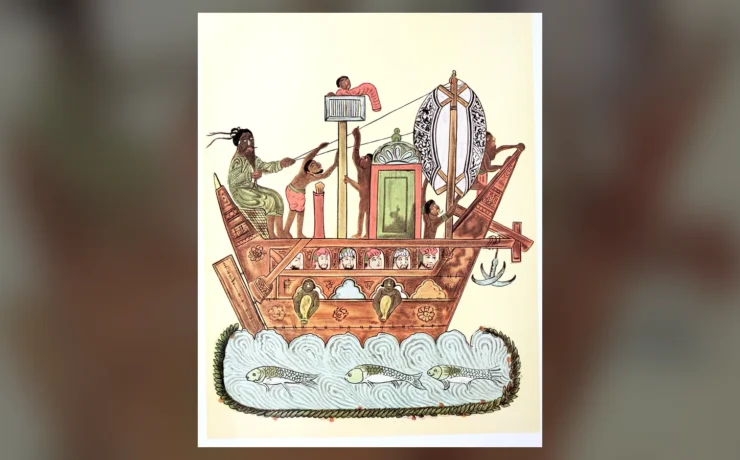
The Cairo Genizah is one of the richest surviving archives for the social history of medieval Egypt and the wider Mediterranean. Its fragments emerged from a storeroom associated with the Ben Ezra Synagogue in Fustat, where worn texts were deposited over many centuries. Alongside scripture and prayer books came contracts, business letters, medical writing, lists, marriage records and accounts. The collection does not offer an unbroken diary of all Egyptian society, but it preserves voices otherwise almost invisible in political chronicles. This research guide explains what the documents reveal, what they cannot establish and why their modern conservation and cataloguing histories matter.
Fustat and the building that preserved the manuscripts
Fustat developed as a major urban and commercial centre after the Muslim conquest of Egypt. Jewish residents participated in its markets, communal institutions and religious life over many centuries. The Ben Ezra Synagogue’s storage room, or genizah, accumulated discarded or retired manuscripts, particularly writings containing sacred names that members of the community did not wish to destroy. Cambridge University Library explains that the practice extended beyond religious texts to an extraordinary range of everyday records. The fact that such documents were stored together does not mean they formed one intentionally arranged government archive. A shopping list, a prayer text and a legal contract reached the space for different reasons. Their shared survival is partly the result of local custom and later discovery. The city itself was not static, and documents associated with Fustat also connect to Cairo and long-distance destinations. Compare Kemet Vault’s history of Fustat’s foundation for the earlier urban setting. The present article concerns manuscript evidence accumulated across later centuries, not the story of the city’s original layout.
What a genizah is and what the name does not mean
The Hebrew term genizah broadly refers to a repository for texts no longer in ordinary use, often because they carry religious significance. It is not accurate to portray every document as a secretly concealed royal decree or a lost scripture. The Ben Ezra collection includes mundane writing whose preservation is historically surprising: people placed records of normal business and family obligations alongside religious works. That mixture is the archive’s greatest strength. It is also a source of bias. The selection of materials depended on local custom, personal decisions and the changing use of a building. Some documents may have entered from other sites or at later stages; not every surviving leaf can be assigned an original place of writing. Modern scholarship uses internal references, scripts, language, material and relationships between fragments to establish provenance where possible. A claim that the genizah records literally everything about medieval Cairo is therefore indefensible. Its significance is an unusual concentration of written evidence from connected communities, rather than completeness or uniform representation.
How many centuries of evidence survive?
Cambridge University Library dates much of the classical corpus to the period beginning around the eleventh century, with important documents from the eleventh through thirteenth centuries. Yet material was deposited over a far longer span, and later Mamluk and Ottoman records expand the chronological picture. A Cambridge-hosted scholarly volume published in 2026 specifically addresses Ottoman-era Genizah documents and warns that later Arabic and Ottoman Turkish materials have received less attention than the classical medieval corpus. That observation should correct the habit of treating the genizah as though every surviving paper belonged to one medieval century. Dating can depend on a document’s explicit date, a named historical figure, the shape of letters or other codicological evidence. An old manuscript might have been preserved for generations before being deposited. Conversely, a modern archive acquisition date is not its ancient or medieval writing date. The diversity of periods makes the collection valuable for tracing change, but encourages caution about the apparent continuity of religious, financial or legal practice across the centuries.
Letters, handwriting and the voices of ordinary people
Personal and commercial letters are among the genizah’s most important sources. A letter may identify a sender and recipient, refer to goods, record travel difficulties or describe a family obligation. It provides evidence about what the writer wanted another person to believe or do. Historians should not treat every account of hardship as an impartial statistical report, any more than a modern business email would provide an objective history of a market. Repeated letters between correspondents can nonetheless reveal the rhythms of work, friendship, marriage and conflict. Different languages and scripts also matter: Hebrew, Judaeo-Arabic and Arabic texts reflect practical communication within interconnected communities. A Judaeo-Arabic letter is not necessarily written in Hebrew language simply because its script resembles Hebrew. Reading the documents requires linguistic competence and understanding of scribal practice. The mixture of genres challenges histories that treat common people as silent because royal inscriptions dominate museum displays. Here a debt, a family problem or a shipping delay can be the subject of surviving written evidence.
Mediterranean merchants and trade connections
Merchants writing from Egypt were connected to ports and trading centres across the Mediterranean and Indian Ocean commercial worlds. Letters and accounts mention shipments, partnerships, money, prices, delays and the trust required for business across distance. However, a phrase identifying a ship or a port must be checked in its textual context before being treated as proof of one exact route for every commodity. Historians such as S. D. Goitein have used the Genizah to reconstruct aspects of Mediterranean society, but subsequent research continues to revise interpretations and add newly identified fragments. Commercial documents preserve the interests of their authors. A successful trader’s letters may be abundant while the work of porters, farmers or women appears through indirect references. This is a classic archival bias. Fustat’s location near Nile transport and international routes made it an important node, yet the network did not begin or end within one religious community. Using the evidence well means situating Jewish merchants within the multi-confessional societies and economies of medieval Egypt.
Marriage, divorce and the architecture of household records
Contracts concerning marriage, divorce, inheritances and household obligations reveal dimensions of law and family life rarely described in royal narratives. But a legal formula is not a description of how every relationship actually worked. People entered recorded agreements in particular circumstances, and only some of their documents survived. Cambridge’s descriptions of the collection include marriage contracts and divorce deeds as well as personal letters. These sources can reveal property expectations, named participants and disputes, but they should not be converted into a universal model of medieval Egyptian marriage. The social history of women is especially dependent on reading documents carefully, since women’s roles may appear through contracts, financial activity or evidence of disputes even when a text was drafted by a professional male scribe. A surviving signature or named witness is also not the same as proof that every participant could read the whole document. Historians compare the form, language, physical condition and connections of each fragment before suggesting a broader pattern.
An original legal document from 1104
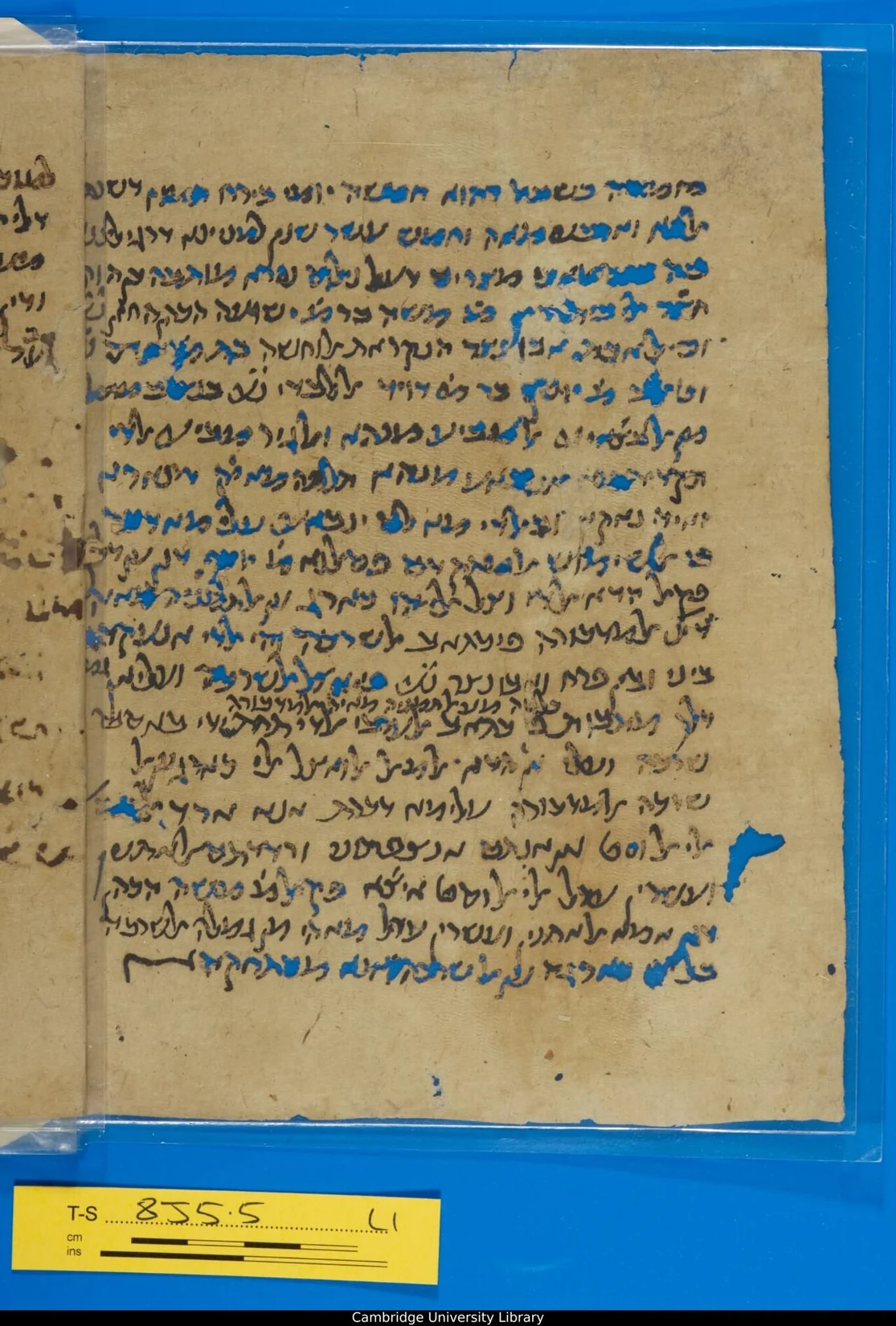
One surviving manuscript represented in the Commons collection is Cambridge’s Taylor–Schechter 8J5.5, dated 30 June 1104. Its description identifies proceedings relating to a partnership dispute involving al-Wuhsha and Joseph Lebdi. This is the sort of specific material that gives the Genizah its power for social history. A legal text is not just an illustration of generic medieval calligraphy: names, relationships, dates and financial claims can link multiple people within a real legal and commercial community. The photograph preserves the shape of a surviving written page, although viewers cannot verify its full interpretation without an edition and translation. Repeated names must not be assumed to identify the same people unless contextual evidence supports the link. A legal dispute also does not prove that the entire community was unusually litigious. It survives because it was written, kept, deposited and later collected. The case is valuable precisely because a particular event leaves a trace within a much larger, uneven documentary record.
A second document from 1135 and the danger of treating pages as interchangeable
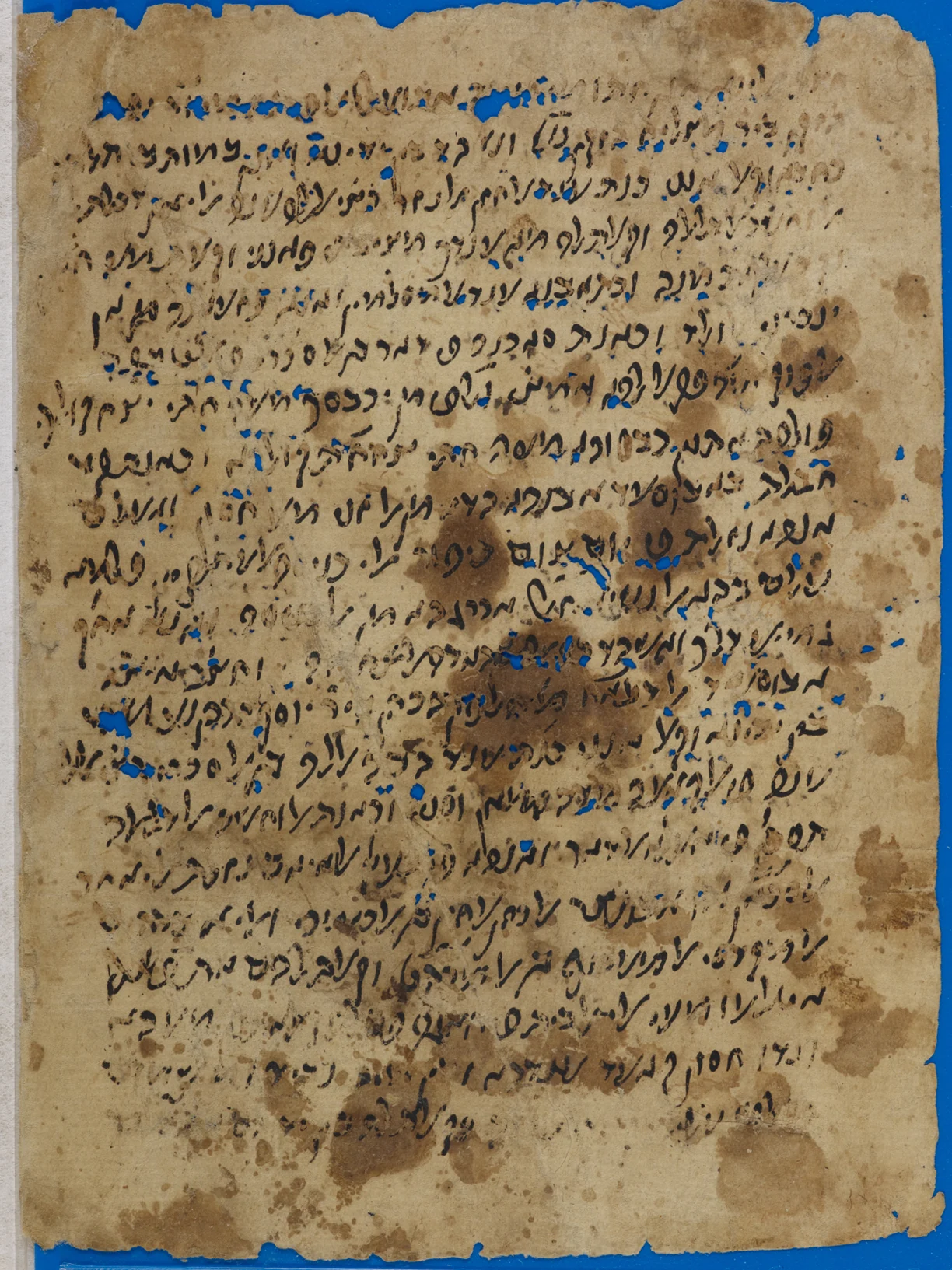
Another Cambridge legal document attributed to the hand of Halfon b. Manasseh is dated to 1135 and concerns a different personal matter. It has an independent museum and archive identity from the 1104 page. Using both documents as illustrations is therefore more informative than repeatedly cropping one photograph. When a page is catalogued through a physical shelfmark, the shelfmark matters: it makes the object traceable through scholarship and prevents unrelated documents from being mistaken for one original book. A photograph may depict only one side, while the reverse carries further writing or later annotations. Dating and the identification of a scribe depend on specialist work, not on a casual resemblance of handwriting. The two images cannot alone reconstruct the complete court system or prove that a particular dispute was resolved. They show that specific legal and social claims were written and circulated in Fustat’s world. Each has to be read on its own terms before inclusion in any broad account of medieval law.
Religious texts, medicine, philosophy and mixed libraries
The genizah holds much more than commercial paperwork. Cambridge describes biblical and liturgical manuscripts alongside medical texts, philosophy, poetry, magical or protective writing, and literary works. This diversity matters because it reveals a world of learning and practical knowledge in contact with other cultural and religious traditions. Manuscript fragments can preserve otherwise lost textual versions or unusual readings, but claims that a page transforms all known religious history should be treated sceptically. A text’s age, copied language, authorial attribution and surviving completeness require separate verification. Medical manuscripts can document ideas and remedies without showing how frequently those remedies were used or whether they worked. Literary works can circulate across languages without providing a direct biography of their ancient author. The archive is an intersection of writing practices, not a single coherent library planned for modern readers. Its cross-disciplinary research value comes from careful fragment-level scholarship: philology, palaeography, history, conservation and digitisation working together.
Solomon Schechter, the Lewis-Gibson sisters and modern collecting
The modern history of the Cairo Genizah includes the work of Agnes Smith Lewis and Margaret Dunlop Gibson, who helped bring the material to wider scholarly attention in the 1890s, and the later efforts of Solomon Schechter with Charles Taylor. Cambridge University Library discusses how the Taylor–Schechter, Mosseri and Lewis-Gibson collections came to be held, conserved or digitised by institutions. The transfer of manuscripts to European collections is part of the story rather than an inconvenient footnote. The significance of a modern shelfmark depends on the collecting history through which the fragment reached its present location. Institutional accounts can document acquisition and conservation procedures, while historians should also ask whose voices shaped the decisions. It is tempting to imagine a single heroic discovery when the reality involved local custodians, collectors, scholars, donors and later librarians. The scholarly value of today’s digital archive does not erase the cultural and ethical questions raised by dispersal. A good public encyclopedia explains both the documents and their modern custodial history.
Conservation, joins and digital reconstruction
Many genizah pieces survived as damaged fragments, sometimes with folded edges, staining, losses or writing visible on both sides. Conservators must stabilise them without creating a modern artefact that disguises its condition. Cambridge’s conservation research describes treatment and cataloguing of the Lewis-Gibson material. Digitised photographs allow scholars to compare handwriting and discover joins between pieces now in different collections. Such a proposed join must be supported by physical and textual evidence; software matching alone does not settle a difficult historical attribution. A transcribed text may indicate lost characters with editorial conventions, and the reader must know which words are securely visible and which are reconstructed. When several fragments are virtually reunited, their current museum locations remain separate facts. High-resolution digital access improves scholarship but does not make the artefacts immune to the limits of dating, uncertain original order or incomplete contextual information. The right digital experience pairs an attractive image with its shelfmark and the scholarly source explaining what it shows.
Why this archive belongs in an Egyptian history encyclopedia
The Cairo Genizah shows how Egyptian history includes cultural communities and written traditions beyond the ruling dynasty’s own monumental texts. It documents city life, craft, business, travel and family negotiations across a connected Mediterranean world. It also raises questions about what history looks like when records survive through a synagogue storeroom rather than a royal office. The Rawda Nilometer study offers a contrasting source for the relationship between state administration and Nile resources. Together with Fustat’s history, these are different windows onto medieval Egypt, not competing copies of the same article. A legally dated manuscript can establish a particular transaction, while an architectural monument reveals investment and planning at a larger scale. Neither source alone tells us the life of every inhabitant. What matters is joining the evidence without flattening religious differences, linguistic complexity or the history of preservation. The genizah is central to Egyptian social history precisely because it exposes details of lives that political chronicles often leave behind.
Research collection and source limits
For original archival context, consult Cambridge’s Taylor–Schechter collection overview and its manuscript conservation account. For the long life of the archive, compare the scholarly 2026 study of Ottoman-era documents and the Commons image catalogue. Collection shelfmarks and photograph provenance are separate from historical claims. Reviewed 31 October 2026.