Imagine arriving by the Nile and seeing Fustat for the first time. You would be looking at the commercial heart of medieval Egypt: merchants, workshops, river traffic and houses that impressed visitors enough to describe them in detail. Some travelers wrote of astonishingly tall buildings and markets filled with goods from far beyond the Nile Valley.
Those descriptions are exciting. They are also difficult evidence. A traveler could exaggerate what seemed remarkable, misunderstand a local custom or write with a particular audience in mind. The best way to explore medieval Fustat is to place those words beside the physical remains of the city and objects that survived its markets.
First, Fustat was not the same as the later city of Cairo
Fustat emerged after the Arab conquest of Egypt in the seventh century, near the older Nile-side settlement zones. It grew into a center of government, trade and urban life. When the Fatimids established Cairo farther north in 969, Fustat did not simply disappear. The new court city and the older commercial city remained connected, with different functions and histories.
That distinction matters when reading medieval accounts. A writer describing the prosperous markets of Fustat is not necessarily describing the palaces or streets of Fatimid Cairo. Our Fustat foundation history follows the city’s establishment. Here the focus is on how later observers portrayed its everyday urban life.
UCL’s Digital Egypt Fustat project provides archaeological background that can be compared with literary descriptions. The city changed over centuries, and a surviving excavated wall belongs to a particular phase rather than standing for everything that happened there.
Why did travelers marvel at the houses?
Medieval authors including Nasir-i Khusraw, Ibn Hawqal and al-Muqaddasi described aspects of the city in different periods. Accounts of unusually tall houses became part of Fustat’s historical reputation. Some passages give very high numbers of storeys. It is better to read them as a witness’s description of striking urban density than to turn every number into a surveyed architectural measurement.
Nasir-i Khusraw visited Egypt in the eleventh century and wrote about its urban life. His descriptions were shaped by a traveler’s interests and expectations. A phrase emphasizing height or luxury may reveal what astonished him, but it does not prove that a particular excavated building had exactly the same number of levels.
Archaeologists look for physical signs such as foundations, walls, stairways and floor levels. Few medieval houses survive in a condition that lets researchers reconstruct every upper storey. This is where a travel narrative and an excavation record answer different questions. One records what a visitor claimed to see; the other records what was preserved in the ground.
The markets connected a Nile city to distant places
Fustat’s position beside the river helped the movement of food, materials and finished goods. Merchants and craftspeople operated in a wider network linking Egypt with Mediterranean and Red Sea trade. The city’s reputation for commercial variety is supported by material evidence, but the exact route of each object has to be established rather than imagined.
The city was also a place of production. Ceramic vessels, glass and other artifacts reflect local craftsmanship as well as tastes and techniques that crossed cultural boundaries. A beautiful surviving bowl is evidence for a particular object and tradition; it is not an inventory of every shop in one Fustat market.
The Metropolitan Museum of Art’s object 63.16.3 is a useful example. It is a luster-painted earthenware bowl made in Fustat during the second half of the tenth century. The vessel has an opaque white glaze with a lustrous painted surface. Those details tell us much more about material and technique than a vague claim that medieval Egyptian markets sold ‘luxury goods’.

One bowl from a vanished city
When we look at the bowl, it is tempting to picture a customer buying it from a particular merchant on a busy street. That scene might be plausible, but the museum object does not name its original buyer or seller. It identifies a place of manufacture, a broad date, material, measurements and a later collection history.

The bowl is particularly valuable beside travelers’ accounts because it offers another kind of evidence. People could be impressed by painted pottery and other skilled products, but the technical appearance, date and surviving form can be checked independently. The object does not resolve every question about the city’s markets, yet it makes the economic story more concrete.
The distinction also prevents an easy mistake: calling any shiny Islamic bowl ‘Fustat lusterware’. Production and styles moved among regions. A museum’s specific attribution and supporting research matter when connecting one object to one place.
What happened to the city the travelers described?
Urban places rarely disappear in a single moment. Fustat suffered major destruction during the political conflicts of the late Fatimid period, including the fire associated with 1168. Later rebuilding, abandonment of some areas, reuse of materials and modern construction changed the landscape further. The surviving excavation site is therefore a layered historical place, not a complete snapshot of one prosperous century.
Egypt’s Ministry of Tourism and Antiquities describes the historical significance of the archaeological area. Its role today is different from that of the bustling markets encountered by medieval visitors. Modern access, excavations and conservation projects also change, so a historical article should not assume unrestricted access to every trench.
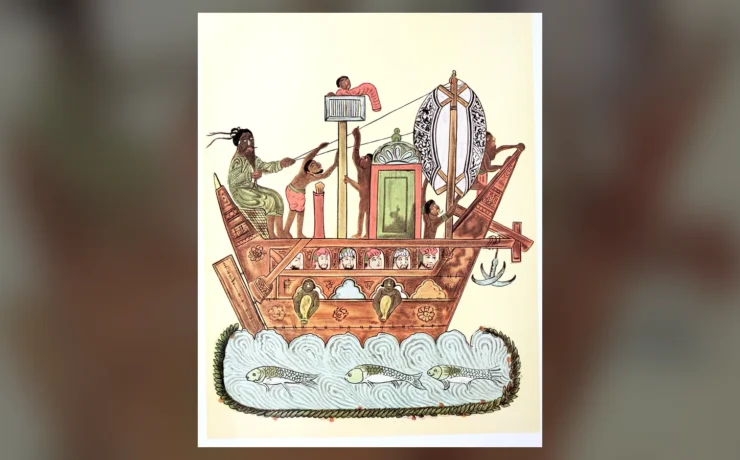
For readers interested in the political world around the city’s trade, our Fatimid navy study examines the ships and administration that formed part of medieval Egypt’s wider economic and military life. The two subjects connect, but they do not share the same archaeological evidence.
How to compare a witness and an excavated object
| Kind of source | What it offers | What needs caution |
|---|---|---|
| Travel narrative | What an observer found noteworthy about streets, buildings and people | Exaggeration, period, language and the writer’s purpose |
| Excavated buildings | Surviving construction and specific urban phases | Lost upper floors and gaps in excavation |
| Fustat lusterware bowl | Material, technique and a broad production date | Unproven stories about an individual owner or sale |
| Later city histories | Political changes and the city’s long afterlife | Projecting one century’s conditions onto another |
Fustat deserves more than a picturesque story about unusually high houses. It was a place where people worked, traded, built and left behind objects that still invite questions. The most interesting city emerges where the travelers’ words meet the excavated streets and the things once made in its workshops.