Where does a classic Esna–Aswan dahabiya sail? Multi-night dahabiya itineraries typically board near Esna and continue along the Nile toward Aswan, with possible cultural stops at Edfu, Gebel al-Silsila and Kom Ombo. A traditional sailing vessel may use a separate tug when the wind is weak. Actual stops, boardings and inclusions depend on the specific boat and booking.
This practical guide focuses on river logistics, smaller landings, the meaningful archaeology of the route and how to compare real cabin contracts rather than inventing prices or promising an unverified schedule.
What a dahabiya actually offers on the Nile
A dahabiya is a relatively small Nile passenger vessel commonly associated with lateen sails, a limited number of guest cabins and a slower pace than a large motor cruise ship. Modern operators differ considerably in size, equipment and propulsion arrangements, so the word should not be treated as a legally standardized cabin category. Many advertised sailings cover the stretch between Esna and Aswan. Travelers may find the boarding point near Esna while the marketing package is described as starting in Luxor, which can include a road transfer. That distinction matters more than a romantic photograph of a sail. A proper booking must specify where passengers actually meet the vessel, where they disembark and what transport is included. The appeal is a river journey with time for scenery and potentially smaller cultural stops, not a guarantee that every advertised site is open or that wind power will be used continuously. This guide is about that particular river journey and its practical decisions.
Esna is an embarkation point, not another name for Luxor
Esna lies south of Luxor and often appears as the real departure town for smaller sailing boats that are sold within a Luxor-to-Aswan holiday. Some operators include pickup from Luxor hotels and arrange a transfer to Esna, while others list a meeting point at the dock. Travelers should ask precisely where and at what time they must appear. Even a confirmed Luxor hotel reservation does not by itself confirm transportation to the vessel. Esna is historically notable for its Temple of Khnum and its river setting, but whether a particular journey includes a temple visit depends on the contract and opening arrangements. A boat embarking below the Esna lock may follow different operational logistics from a larger vessel sailing through it. Rather than invent a single boarding address for all dahabiyas, the itinerary should identify the operator, the boat and the embarkation confirmation. Guests should retain the exact dock contact and transfer instructions in writing.
What actually happens on a four- or five-night sailing
Published example schedules show dahabiyas traveling from Esna to Aswan over several days, often with stops or guided excursions around Edfu, Gebel al-Silsila and Kom Ombo. Some vessels also include El Kab or island landings, depending on river conditions, local permissions and the operator’s itinerary. A four-night program and a five-night program are not interchangeable merely because both show the same end cities. Time spent sailing, sleeping at moorings and visiting archaeological sites can differ. Examine whether an excursion is included, optional or arranged independently. Ask how much of each day is assigned to the river rather than to road transfers. An itinerary claiming ten archaeological monuments on a short trip may leave little time to appreciate the slower style being sold. The best route is one that matches the traveler’s interest and actual calendar, with allowances for the unexpected. A dated sample schedule should always be labelled as one operator’s example, not a universal Nile timetable.
The importance of wind and auxiliary towing
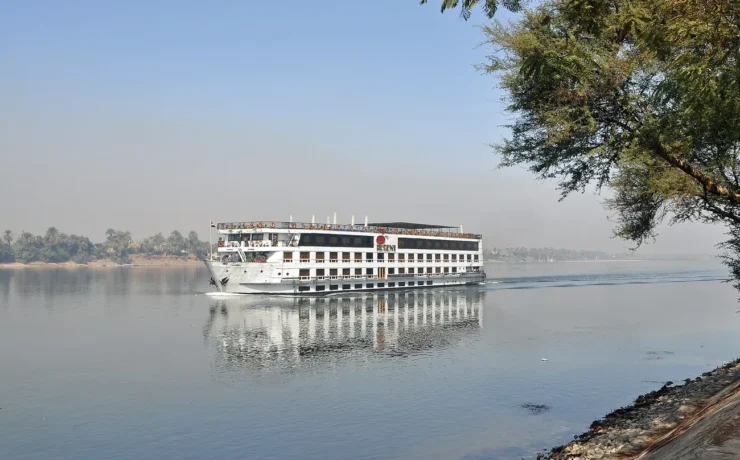
Traditional dahabiyas are associated with sails, but a particular modern journey may involve towing by an accompanying motorboat when wind conditions are unsuitable. A source-led industry explanation describes many classic vessels as reliant on sails or an external tug, while some newer designs have their own engines. The vessel’s exact configuration should be verified rather than inferred from a photograph showing two masts. This distinction matters for noise, the experience of moving along the river and what happens on a calm day. Marketing phrases such as ‘silent cruise’ or ‘only wind-powered’ should be checked against the operator’s actual practice. A boat under tow is not automatically defective, and an engine-equipped vessel is not necessarily falsely named. What matters is transparent disclosure and compliance with relevant navigation and safety requirements. Ask how the boat normally handles low wind, navigation schedules and emergency needs before booking. That knowledge is more useful than a broad claim that dahabiyas never use motors.

First cultural stop: Edfu Temple and the journey inland
Edfu Temple is dedicated to Horus and lies on the western bank of the Nile. Egypt’s Ministry of Tourism and Antiquities dates the beginning of construction to 237 BCE under Ptolemy III and its completion to 57 BCE under Ptolemy XII. These dates concern the surviving Ptolemaic temple, not the modern dahabiya industry. A river stop may require transport from the docking area to the monument. Visitors should confirm whether admission, guiding and transfer are included and whether the temple is open when the boat arrives. The monument itself merits time to examine the large pylon, courtyard and successive halls rather than a hurried stop at a single photograph angle. Our Edfu archaeological dossier provides the deeper historical record. This trip guide deliberately concentrates on planning the visit as part of a river journey rather than repeating the entire temple’s architectural history.
Gebel al-Silsila: a quarry landscape and a real research stop
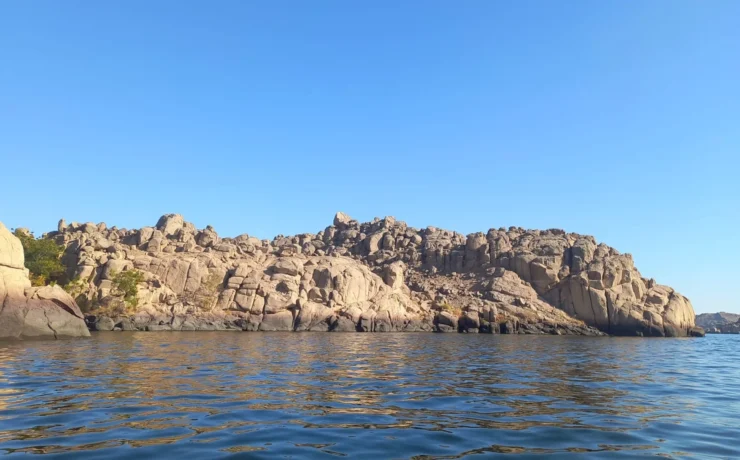
Gebel al-Silsila is a Nile-side sandstone quarry landscape, not an invented island or simply a scenic stretch of river. Egypt’s official monument authority explains that the stone was quarried across many periods, and the site preserves tool marks, inscriptions and shrines, including the rock-cut Speos of Horemheb. It is historically distinct from Edfu’s Ptolemaic temple and Kom Ombo’s double sanctuary. Some smaller-vessel itineraries mention the location as a landing or nearby excursion, but access and the exact permitted visit route can change. Travelers should not assume that the boat can always stop at any archaeological cliff or that independent climbing is allowed. Ask whether the site will be visited with a guide and how the landing is organised. Our Gebel al-Silsila study explores its documented archaeology. The relevance to a dahabiya journey is that smaller vessels may offer time to consider places overlooked by conventional highlights-only packages, when access is permitted.
Kom Ombo and the two linked ancient cults
Kom Ombo’s riverside temple provides another major archaeological encounter on many routes toward Aswan. The official Egyptian description explains the building’s associations with the crocodile deity Sobek and the elder Horus, Harwer. Their connected sanctuaries give the site a distinctive plan. This does not mean a passenger should expect to see crocodiles swimming alongside the boat; the deity’s imagery and modern wildlife are separate matters. Temple hours, ticket prices and access conditions can change, so rely on the official monument page or verified operator instructions near the travel date. Travelers with mobility limitations should ask about the walking route between landing and monument rather than assume a short distance is level and accessible. Our Kom Ombo research article documents the surviving reliefs and religious context. Within the dahabiya itinerary, what matters is allowing sufficient time for a meaningful guided visit without treating the river itself as merely a transfer service.
Arrival in Aswan is the beginning of another travel decision
Aswan is the usual southern endpoint for many Esna departures, but disembarkation arrangements vary between vessels. A program might end after breakfast, include a local excursion or offer onward transport to a hotel or railway station. Do not assume a flight to Cairo or a visit to Abu Simbel is automatically included. Travelers continuing to another destination should leave adequate time between a moving vessel and a scheduled train or flight. If the boat reaches Aswan at night, the official checkout time may still be the following morning. Review the written itinerary to know when luggage must be packed and which services remain included. Our Aswan cultural guide offers ideas for a different, land-based extension that respects the city’s distinctive Nubian and river environment. A successful trip leaves enough time to experience Aswan instead of reducing it to a departure airport.
What a small cabin count changes for guests
A smaller vessel may feel more personal than a large river ship, but the commercial benefit depends on the actual cabin layout and operating standards. Operator descriptions show dahabiyas with different numbers of cabins, decks and private facilities. Some accommodate groups in ordinary double rooms, while others offer suites, charter arrangements or luxury amenities. A small boat can also have limited storage, steep stairs or fewer public areas. Couples, families and guests with mobility needs should look closely at actual deck plans rather than rely on the generic image of an elegant sailing boat. Ask about cabin location, windows, air conditioning, bathroom arrangements, crew language and safety provisions. If noise is a particular concern, confirm the proximity of generators, tugs and service equipment. Small does not automatically mean quiet, private or accessible. The most useful comparison is with the precise vessel that will carry the passengers, not the broad class name.
Meals, guides and what full board really includes
Many dahabiya packages advertise full-board meals and an accompanying guide, but those labels can conceal important differences. Full board typically concerns meals, not necessarily beverages, dietary accommodations, premium drinks, tips or excursions. A particular group itinerary may share an Egyptologist guide, while a private charter may arrange different guiding terms. Request a written inclusion list covering each day, including whether entrance tickets, transfer vehicles and local landing fees are bundled. Dietary requirements should be communicated before boarding, especially when the boat has a small kitchen and limited opportunity to obtain supplies along the river. Ask whether the crew can reasonably accommodate allergies and whether any ingredient limitation is essential for health. A river journey can provide wonderful meals without requiring the writer to invent a guaranteed menu. The contract and recent vessel-specific information are a better guide than a general luxury-travel description.
Safety, accessibility and river conditions
The Nile is a working waterway, not a privately controlled resort pool. A responsible operator should provide clear information about life-saving equipment, emergency procedures, crew responsibilities and safe boarding. Travelers should pay attention to gangways and changing riverbank conditions at smaller landings. A person who finds narrow steps or uneven surfaces difficult should discuss that need before booking, as heritage-style vessels can have limited accessible routes. Swimming claims deserve special caution: some marketing materials mention swimming stops, but water conditions, local health advice, boat traffic and the skipper’s decision all matter. Never treat an itinerary description as permission to swim anywhere. Weather and river operations can cause route changes, and an honest contract should address them. Children and non-swimmers may need additional supervision even when a vessel feels intimate and relaxed. Good travel writing acknowledges the physical setting rather than romanticizing away its practical risks.
Dahabiya versus felucca: different scale and purpose
The term felucca usually refers to a smaller traditional sailing boat commonly used for shorter Nile experiences, including rides around Aswan. A dahabiya designed for multi-night accommodation has a different function, with passenger cabins, meals and organised itineraries. The second photograph here shows real feluccas on the Nile in Aswan to make that distinction visible; it is explicitly not labelled a photograph of a dahabiya. Our existing Nile cruise versus felucca comparison explains broader categories. This article has a narrower intent: planning the specific Esna-to-Aswan small-vessel route, including actual stops, boarding logistics and package details. Two travel experiences can share sails and river scenery without providing the same accommodation. It would be misleading to quote the price of a brief felucca ride as if it were the cost of a multi-night catered dahabiya cruise.

Prices and cancellation terms: compare the same journey
Dahabiya prices vary by the vessel, number of nights, cabin type, season, group size, private charter arrangements and what the package includes. Published operator examples confirm the range of routes and products, but price tables can become stale and may not include the same items. Rather than invent a universal 2026 cost, request a dated quote for a specific boat and cabin. Ask whether airport or hotel transfers, guiding, monument tickets, taxes, gratuities and drinks are included. Confirm the cancellation deadline, refund method and consequences of navigation changes. For a private charter, clarify how the total changes if the group size falls and whether the vessel is exclusive to your party. The cheapest advertised number is not necessarily the best offer if it excludes meaningful services. A traveler deciding between several boats needs comparable written contracts rather than an unverified ‘starting from’ price that applies only to an unknown past departure.
Photograph provenance and why it matters
The first photograph in this article is a real dahabiya under tow, credited to Jdoniach under a Creative Commons ShareAlike licence. It illustrates a point often omitted in romantic marketing: a sailing vessel may be assisted by another boat. The second is a genuine photograph of Nile feluccas near Aswan, credited to Vyacheslav Argenberg under a separate Creative Commons licence. It is included solely for scale and typology comparison. These images come from two different photographers and represent different subjects; neither is an AI reconstruction or a guarantee about a named commercial vessel. The publication does not claim that the boat in the picture can be booked by a particular provider, nor does it assign invented dimensions to its cabins. Crediting the subject, photographer and reuse conditions makes the travel story more transparent. A true documentary photograph can be attractive without being made to carry unsupported sales claims.
Sources and scope of the route guide
Sample route patterns come from operators’ published Esna–Aswan dahabiya itineraries and an industry explanation of sail and tug arrangements. They are examples rather than a complete timetable of every boat. Historical stop information comes from the Egyptian Ministry of Tourism and Antiquities: Edfu Temple, Gebel al-Silsila and Kom Ombo. The two authentic Commons photographs have individually recorded creators and reuse permissions. This editorial guide was checked in November 2026; no individual operator’s current departure, river access permit or cabin inventory is presented as verified real-time availability. Always confirm the named vessel, dates and contract with the supplier.