A cruise ship on the Nile and a felucca under sail may appear in the same travel brochure. They aren’t two versions of the same booking. One is usually a floating hotel that moves between cities; the other is a much smaller boat that offers time close to the water, often for a short sail around Aswan.
Choosing between them isn’t simply a matter of paying more or less. It depends on whether you want accommodation and temple visits organized around the river, or whether you want to spend an hour or two feeling the breeze and watching the banks pass slowly. Some people will enjoy both, and there is no reason to pretend they must choose just one.
What an overnight Nile cruise actually buys
The familiar Luxor–Aswan river journey uses a larger vessel with cabins, bathrooms, dining facilities and a planned sailing route. Multi-night programs commonly combine onboard accommodation with visits to archaeological sites, although the exact stops depend on the operator. Egypt’s State Information Service describes river cruises and short felucca trips as distinct forms of Nile tourism.
Don’t assume a ticket labelled ‘Nile cruise’ includes every temple between Luxor and Aswan. Ask for the actual route, nights on board, mooring locations and what is included in land excursions. A vessel may spend considerable time docked or waiting for scheduled movement. Its name, age, cabin type, operator and accessibility arrangements can matter more than the broad label ‘five-star Nile cruise’.
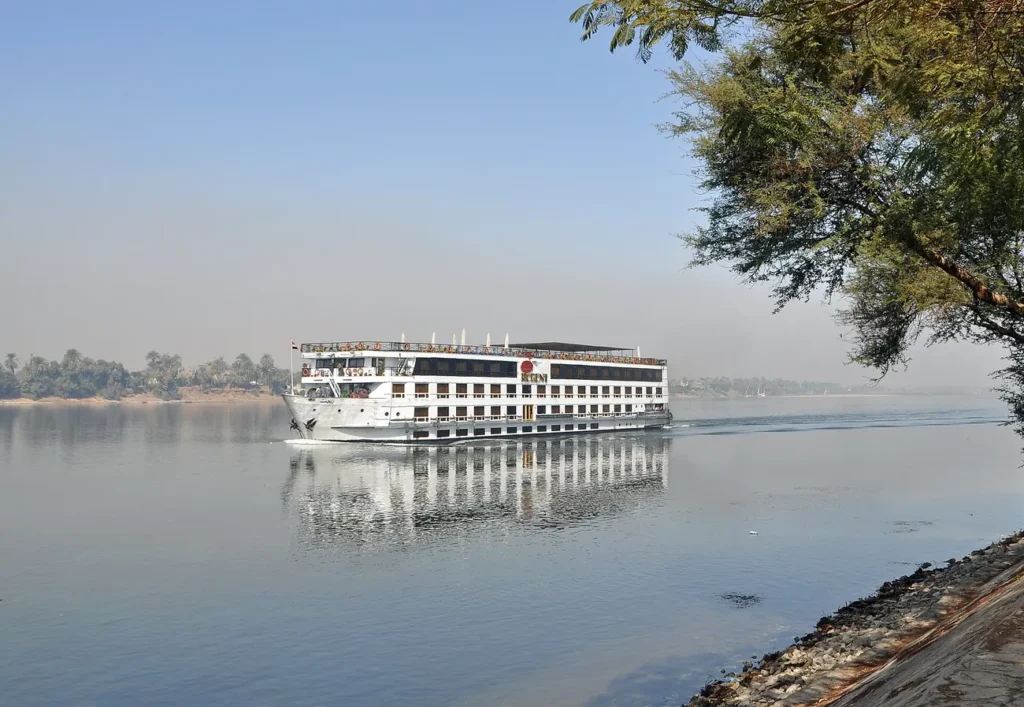
If you dislike changing hotels, the ship-based itinerary can be particularly convenient. You unpack once and travel along the river while your accommodation moves with you. But it is still wise to compare a cruise with an ordinary land trip. On a short holiday, several days aboard may leave less flexibility for museums or independent walking than you expect.
What a felucca gives you instead
A felucca is a traditional sailing craft, usually a smaller open vessel driven by the wind rather than a large powered hotel ship. On a short local trip, the experience is the river itself: the sail changing shape, the view toward the riverbanks and islands, and the pace of a boat that doesn’t operate like a scheduled motor vessel.
Around Aswan, felucca outings are popular because the Nile, islands and granite landscape make the ride especially scenic. They aren’t automatically a substitute for a cabin-based Luxor–Aswan tour. A short felucca hire normally doesn’t include sleeping accommodation, a full restaurant service or a chain of temple excursions.
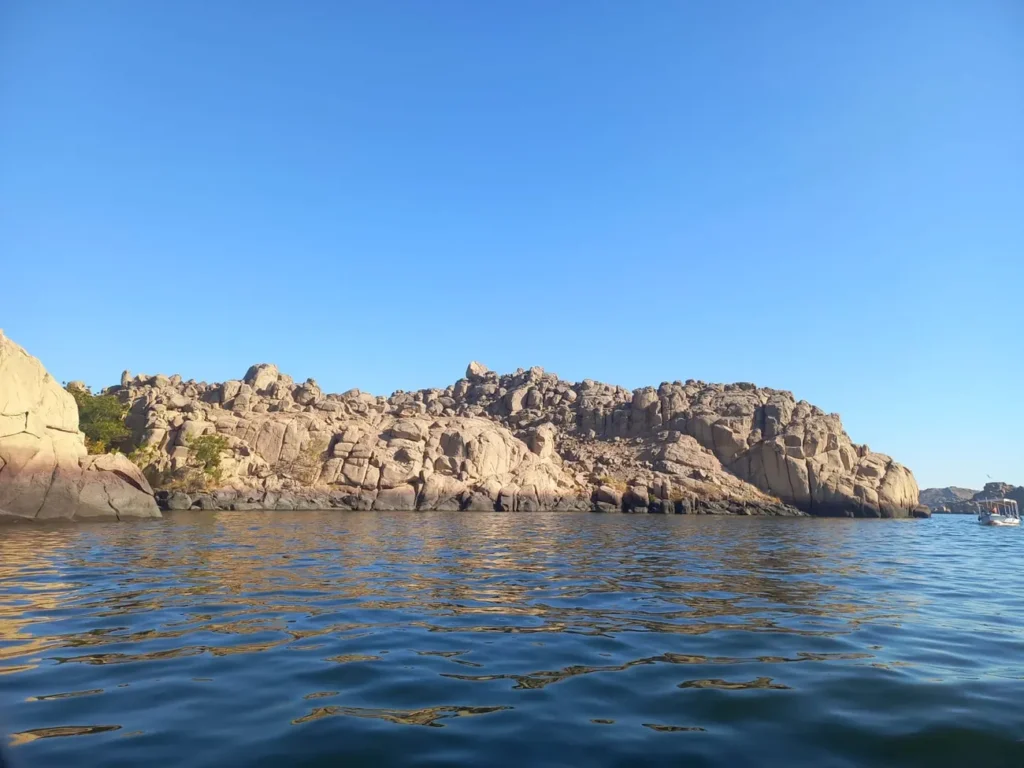
The boat also responds more directly to the wind. Ask about the planned duration, departure point, return arrangements, number of passengers and what happens if sailing conditions are unsuitable. An operator may offer a different route or another arrangement, but the details should be clear before you agree to pay.
Which one fits your actual trip?
| Your priority | Choose a river cruise ship if… | Choose a felucca if… |
|---|---|---|
| Time available | You have several days for a planned river route | You have a shorter window in Aswan or another riverside city |
| Accommodation | You want a cabin, meals and facilities on board | You already have somewhere to stay |
| Archaeological visits | You want structured sightseeing alongside the sailing | You prefer a local river outing separate from monument visits |
| Travel style | You value predictable onboard accommodation | You value open-air sailing and a closer connection to the river |
| Planning details | Confirm vessel, itinerary, guide, tickets and nights | Confirm boat, captain, wind conditions, duration and return |
A cruise can be an excellent choice for a first trip if the main goal is to combine several southern Egyptian sites with hotel-style accommodation. A felucca can be wonderful for someone who has a free afternoon in Aswan and wants a slower experience without committing the rest of the week.
Where Edfu, Kom Ombo and Philae fit
The historical places along the Luxor–Aswan journey are a major reason to choose a cruise, but their geography matters. Edfu and Kom Ombo are separate stops along the river, not attractions that can be viewed in full from a boat deck. A cruise itinerary may require disembarkation and transport to the monuments, with tickets and guiding arranged according to the package.
Near Aswan, Philae’s temples stand on Agilkia Island following their relocation as part of the international Nubian monuments rescue campaign. The UNESCO Nubian Monuments dossier provides the conservation context. A river cruise reaching Aswan doesn’t automatically include a transfer to Philae, nor does a short local felucca sail generally visit its ticketed temple complex.
For a quieter sailing holiday built around a small vessel with cabins, there is a third option worth distinguishing: the dahabiya route from Esna to Aswan. A dahabiya is not the same thing as the small open felucca in the photograph above. Comparing all three keeps expectations realistic.
Costs are only comparable when the products are comparable
The most misleading price comparison is a one-hour felucca hire placed beside a three-night cabin package without accounting for the accommodation, food and excursions. Request the complete quoted cost for the same number of travelers and the correct dates. On a ship, check the cabin category, meals, drinks, guides and monument tickets. On a felucca, confirm whether the fee is for the boat or per passenger and how long the trip will last.
Cancellation conditions matter too. If weather forces a change to a felucca outing, ask what refund or replacement applies. For a multi-night cruise, confirm the policy for schedule changes, substitutions and missed shore excursions. The actual written contract is more reliable than an evergreen price claimed by a tourism blog.
What you should decide before you book
Start with your remaining time. If the Nile is part of a broader heritage journey, compare real cruise itineraries with a land route through Luxor and Aswan. If you have already booked a hotel in Aswan and simply want time on the water, a local felucca trip may be the more sensible addition.
Ask about accessibility, life jackets, the operator’s experience and any transport needed to reach the departure point. River conditions, schedules and permissions change, and a good provider should be willing to explain the arrangements without pretending every sailing is identical.
What you are choosing is a way to encounter the river. A ship can make the Nile part of a multi-day journey through Egyptian history. A felucca can turn a single afternoon into a quiet memory of water, wind and the islands of Aswan. Both are worthwhile when they match the trip you actually want.