The discovery of Tutankhamun’s tomb is often compressed into a single moment: Howard Carter opens a door, sees gold, and the world gasps. Carter’s journals tell a slower, more absorbing story. There was a staircase in the rock, a sealed doorway, a corridor packed with rubble, and another door. Nearly three weeks passed between the first step being exposed and the famous look into the antechamber.
That sequence matters because it is documented. The Griffith Institute at Oxford preserves Carter’s journals, pocket diaries and excavation records, including dated entries for the autumn of 1922. Reading them makes the discovery feel less like a movie scene and more like archaeology: uncertain, painstaking, full of decisions and dependent on a team.
4 and 5 November: a staircase, not a treasure room
Work in the Valley of the Kings resumed on 1 November 1922. The excavation was taking place near the entrance to the tomb of Ramesses VI, where ancient workmen’s huts had stood. On 4 November, the workers uncovered the upper part of a staircase cut into the bedrock. Carter’s pocket diary records the find in a terse note. He did not yet know what lay below.
By 5 November, the clearing had exposed a plastered and sealed doorway. The impressions included the necropolis seal, traditionally featuring Anubis above nine bound enemies. Carter examined the entrance, then had it secured while he contacted his patron, Lord Carnarvon, in Britain. Waiting for him was more than a social formality: the decision delayed the opening of what might have been a significant tomb.
The Griffith Institute’s first-season transcript preserves those separate dates. It is a far better starting point than illustrations showing Carter holding the golden death mask in early November.
23–26 November: two doors and the first glimpse
Carnarvon arrived at Luxor on 23 November, with his daughter Lady Evelyn joining the excavation party. Work continued until sixteen steps and the sealed entrance could be examined. On 25 November, the first blocked doorway was opened. Behind it lay a corridor filled with stones and debris, not a chamber full of treasures.
The following day, 26 November, the team reached a second sealed doorway. Carter made a small opening and looked into the room beyond by candlelight. Furniture, chariots, shrines and statues appeared in the dim light. The scene later became synonymous with the discovery, but the royal burial itself was still behind another wall.
The chronology is worth laying out precisely:
| Date | What the excavation record says |
|---|---|
| 4 November 1922 | Top of the stairway exposed |
| 5 November | First sealed door identified; site secured |
| 23 November | Lord Carnarvon arrived in Luxor |
| 25 November | First doorway opened; rubble-filled corridor revealed |
| 26 November | Second doorway breached; first view into the antechamber |
| 16 February 1923 | Burial chamber opened |
This sequence comes from the Oxford Tutankhamun Spatial Archive’s first-season account, rather than a later story in which every event happened on one day.
What the photographs do and do not show
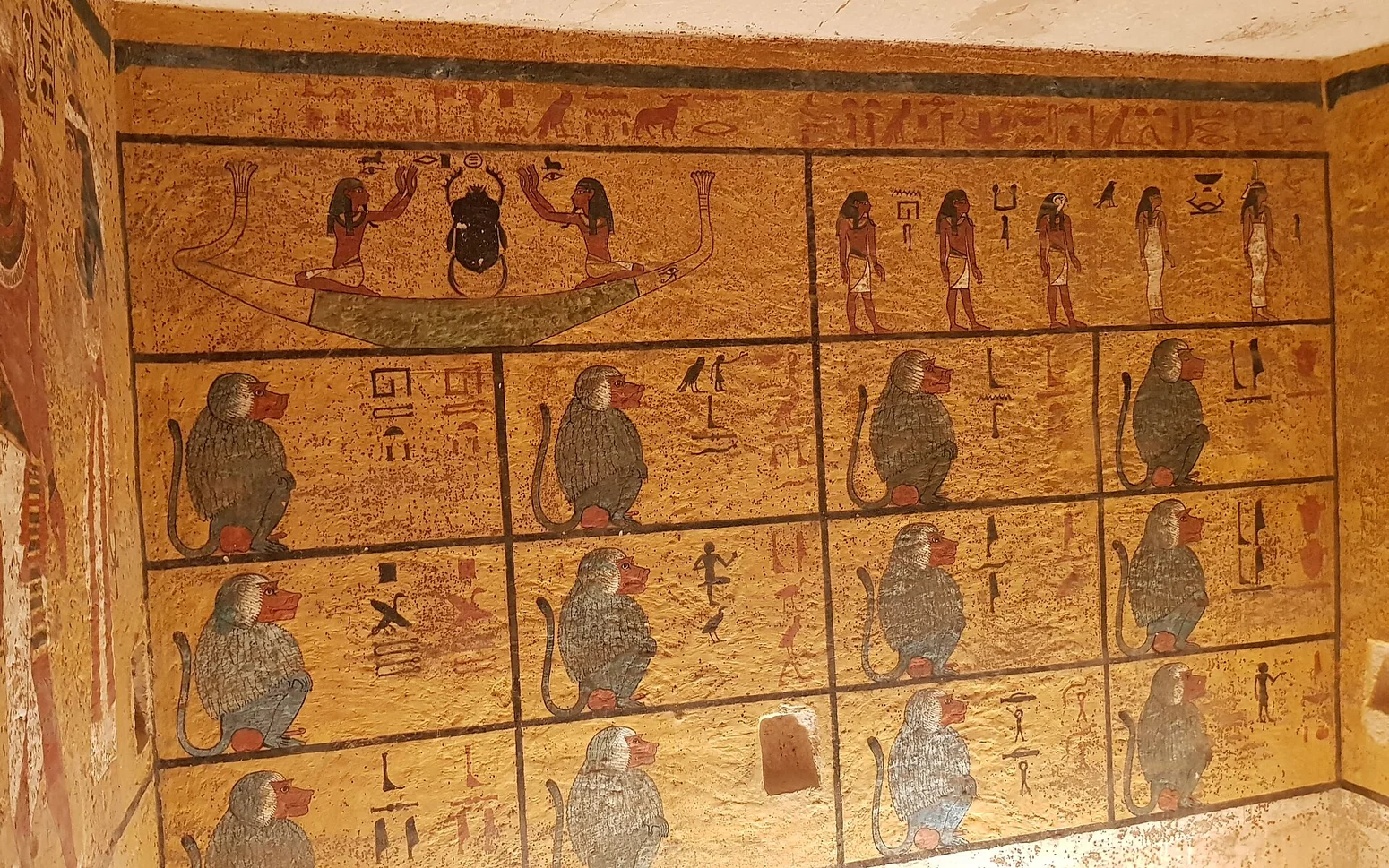
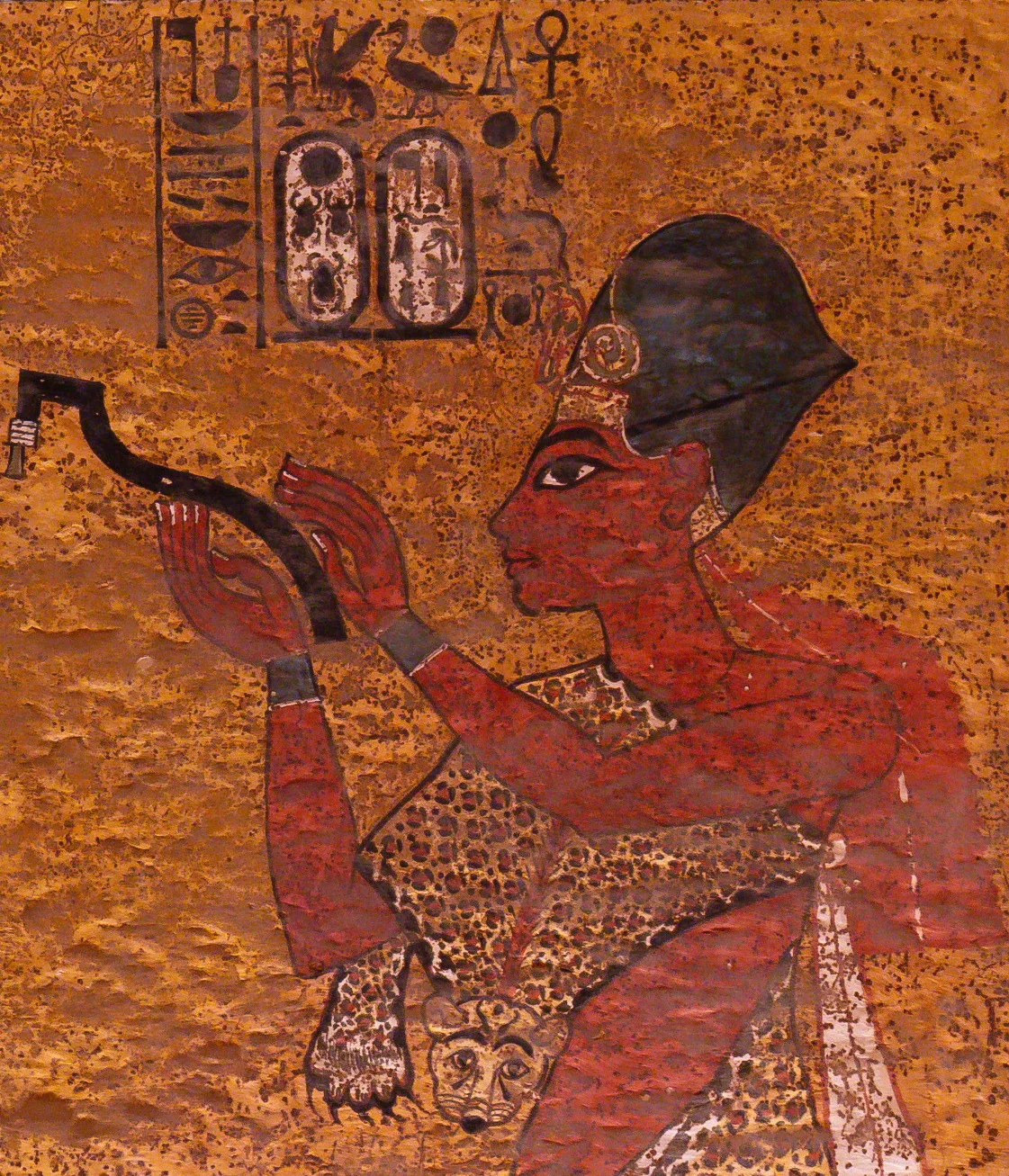
The two photographs reproduced here are of the real tomb, but neither is a 1922 excavation photograph. The first shows the surviving interior in a modern visitor photograph. The second records a painted scene in the burial chamber, where Ay performs the Opening-of-the-Mouth rite for Tutankhamun. They document the ancient setting, not the particular night when the antechamber was first seen.
For pictures of the excavation itself, Oxford’s archival image collection and the Metropolitan Museum’s account of Harry Burton are the proper places to go. Burton’s photographs recorded the arrangement of the objects before they were moved and conserved. Those images are invaluable evidence; they should not be lifted from an archive and relabelled as freely reusable merely because the photographs are old.
The tomb was a crowded workspace
Inside the antechamber were couches, chariots, chests, shrines and many other objects. Their position mattered. Removing an object could alter the evidence for what lay behind it. The team therefore had to photograph, number, describe and stabilize the finds before carrying them away. The excavation became a prolonged process rather than an evening’s triumph.
The work involved Egyptian laborers and skilled specialists as well as Carter, Carnarvon and colleagues who later became widely famous. The archive preserves names and roles unevenly, a reminder that a celebrated archaeological project is not the work of one pair of hands. The surviving diaries and photographic record can help recover parts of that larger story, though they do not make every individual contribution equally visible.
By late December, conservation and recording specialists had joined the work. The tomb’s contents demanded detailed inventories and careful handling. The object cards and photographs still allow researchers to revisit questions about arrangement, context and the life of the young king’s court. The archival value of the excavation is at least as significant as the visual richness of the treasures.
16 February 1923: behind the guardian statues
Two black-painted guardian statues flanked the entrance to a further sealed room. Carter’s team worked through the antechamber before the burial chamber was formally opened on 16 February 1923, in the presence of invited officials. Within lay the great shrines associated with Tutankhamun’s burial.
The date is important. Carter did not see the actual burial chamber when he first peered through the second doorway in November. The structure of KV62, and the distinction among its rooms, can be explored in our separate room-by-room guide to KV62. That companion page addresses the tomb’s plan; this one follows the documented sequence of discovery and recording.
Why the 1922 diary is still worth opening
The discovery is exciting even without a curse, a secret technology or an invented conversation at the entrance. The journal shows how a promising staircase became a sealed doorway, a corridor, an antechamber and finally a burial chamber. Each stage gave the team new information and new practical problems.
The oldest record is not automatically perfect. Carter wrote from his own point of view and did not always describe every Egyptian worker or institutional decision in equal detail. But his entries can be compared with photographs, inventories and other contemporary documents. That combination is what gives the discovery its depth.
For readers who want to follow the days themselves, begin with Carter’s first-season journal and the pocket diary page dated 4 November. There is also an Arabic-language documentary offered as optional background viewing; it should be watched as a later interpretation, not substituted for the archival record.
The extraordinary thing about 1922 isn’t that every answer appeared in a flash of candlelight. It is that the slow work that followed left us an unusually rich record of an ancient royal burial and the modern people who uncovered it.