What is Steigenberger Cecil Hotel in Alexandria? Cecil is a historic four-star property at 16 Saad Zaghloul Square, Raml Station, overlooking Alexandria’s eastern harbour. Its current operator dates its origin to 1929 and lists 85 rooms plus three suites. Previously known under other hotel brands, the building now takes bookings as Steigenberger Cecil Hotel.
This independent hotel profile separates verifiable architectural history from the current bookable product. It discusses the original owners, the changing operator, location, accommodation terms and booking questions, using the hotel’s official listing and two genuine separately licensed photographs of the actual building.
What is Steigenberger Cecil Hotel in Alexandria?
Steigenberger Cecil Hotel is a functioning heritage property on Saad Zaghloul Square, overlooking the eastern harbour of Alexandria. The operator’s official H Rewards page currently describes a four-star hotel dating to 1929, with 85 rooms and three suites. Its identity is distinctive: this is a named historic building at Raml Station, not a broad article comparing every luxury hotel in the city. Travellers searching for the Cecil name should recognise that the building has appeared under several brands across its long history.
The present branded name is important for confirming a reservation. Historic postcards, older guidebooks and archival photographs may label it Cecil Hotel or Sofitel Cecil, while current operator information identifies it as Steigenberger Cecil Hotel. A change in management brand does not erase the building’s history, but it can make an old price list or contact number unreliable. This article therefore separates dated facts about the hotel’s past from the services described by its present operator, and it does not treat a photographed room as the category a guest will automatically receive.
A seafront landmark built in the late 1920s
Both the hotel operator and historical accounts describe Cecil as having opened in 1929. The building rose during a period when the eastern harbour and central Alexandria contained hotels, consulates, cafés, apartment buildings and other markers of a cosmopolitan port city. Its address on Saad Zaghloul Square placed it within the daily movement between the Corniche, Raml Station and commercial streets. The architecture and location help explain why the hotel remained recognisable even as the surrounding city’s social and political life changed.
Some historical sources give a slightly different month or year for an opening event, with one local study reporting a 1930 date. The distinction may reflect construction, the beginning of service or the publication of the record. Without a dated opening document resolving those differences, it is more responsible to state that the hotel traces its establishment to 1929 and note that related milestones may be recorded differently. A historical hotel is worth studying without claiming a precise opening night that cannot be substantiated.
The Metzger family and the original hotel
Research into Alexandria’s architectural history identifies the Metzger family as the original commissioners of the hotel. Ahram Online and a local historical archive connect the family with the 1929 project, while reports surrounding the hotel’s ownership dispute provide another window into its twentieth-century history. The family’s place in Alexandria reflects the diverse communities active in its commercial life. It is historically inaccurate to imagine that the building arrived as an anonymous property owned by a present-day international brand from the beginning.
Different summaries describe the family and the later transfer of property in slightly different ways. Modern marketing typically emphasises memorable guests and decor, whereas archival reporting pays more attention to ownership and politics. Both themes can be examined without reducing the history to a collection of famous names. The building’s continuity depended on local workers, maintenance, transport and visitors whose biographies are usually much less visible than those of internationally known hotel guests.
Alessandro Loria and the facade
The hotel’s design is associated with architect Alessandro Loria, whose work appears in scholarship on the architectural character of Alexandria’s Corniche. Descriptions of the Cecil emphasise a blend of European architectural vocabularies, with balconies and formal street-facing elevations suited to the harbour setting. The building’s appearance has helped it remain a landmark along the square. Calling it simply a generic Victorian hotel would not adequately convey its date, local setting or architectural background.
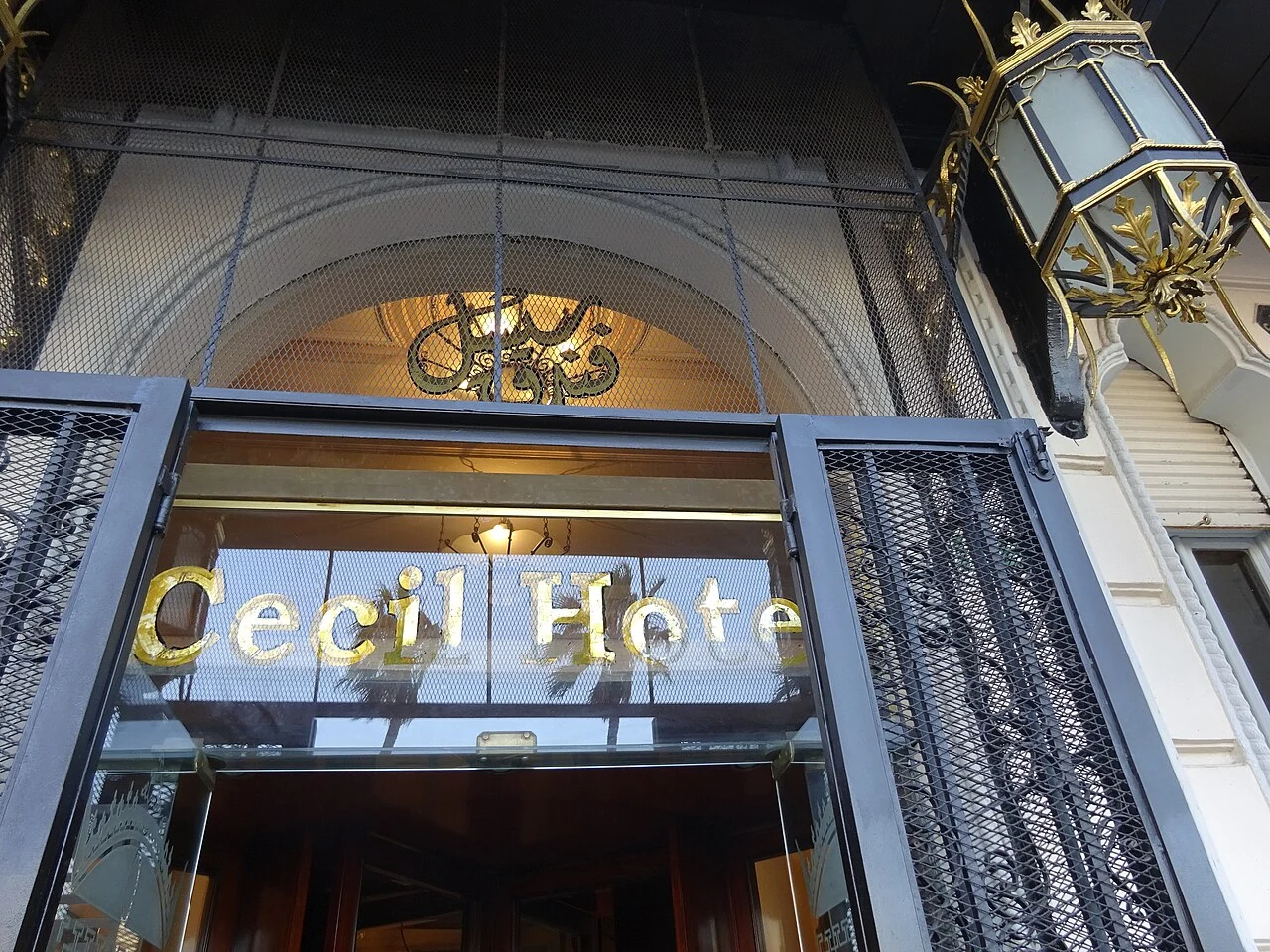
A photograph of the exterior can establish the actual building seen by a person walking around the square, but it cannot verify the original design of every interior or reveal how much was renovated later. Our first documentary image was taken by Wilrooij in March 2016 and identifies the hotel at its precise Alexandria location. This is a real architectural photograph, not a hotel-company advertising render. It predates the current booking being discussed and therefore cannot promise that all guest-room finishes remain unchanged.
From postwar Alexandria to changes of ownership
The hotel’s history reflects the political transformations of twentieth-century Egypt. Journalistic accounts describe state takeover during the 1950s, with some histories citing 1952 and others 1956. This is a meaningful discrepancy rather than a detail to hide. The national political events of 1952 should not be automatically treated as the documented date of every transfer of title or management. A careful account says that the property was taken into state control in this period and identifies the specific source when a narrower year is given.
Reports from 2007 discussed a later legal settlement involving the Metzger heirs and the state’s ownership arrangements. Those accounts are useful sources for the dispute, but a hotel buyer today primarily needs the operating entity and legally binding booking terms. Historic ownership, current hotel management and the organisation that charges a traveller’s credit card are related yet different questions. An independent guide should not make unsupported assertions about present legal title from a brief report published two decades earlier.
The Sofitel era and the Steigenberger name
Older travellers may remember the building as Sofitel Cecil Alexandria. Its public identity has since shifted to the Steigenberger brand, and the current H Rewards property page lists bookings under Steigenberger Cecil Hotel. A guide must be particularly careful at a change of branding: old brochures and cached maps can retain familiar names long after an operator transition, even when the building remains at the same address. Checking the current operator site is more dependable than relying on the logo printed on a dated photograph.
The site-specific profile from the Downtown Alexandria heritage district dates the Steigenberger operation to October 2014. This makes it possible to explain how the change fits into the longer building history without inventing a new construction date. Brand ownership should never be inferred merely from the name of the reservation website, because an international hotel brand may be a manager rather than the legal owner of every property using its sign.
Where exactly is the Cecil Hotel?
The operator lists the address as 16 Saad Zaghloul Square, Raml Station, Alexandria. This places the hotel beside the historic eastern harbour and a central urban square, not on a remote resort beach. Its location can be a strong advantage for visitors interested in city architecture, cafés, seafront walking and museum visits. A short walk within the district is a different proposition from an airport transfer or a trip to a distant ancient site.
Do not assume that the phrase sea-view hotel means every room faces the water. Building orientation, floor and exact room category determine what can be seen. Likewise, nearby cultural attractions should not automatically be described as adjacent without checking practical routes and crossing points. For a broader heritage route, see Kemet Vault’s Alexandria city itinerary and the independent Bibliotheca Alexandrina visitor guide. Each serves a different search intention.
Rooms, suites and operator-listed facilities
At the time of this review, the official H Rewards property page lists 85 rooms and three suites. It describes guest facilities such as air conditioning, a safe, minibar and coffee or tea amenities, alongside hotel dining and meeting spaces. These are operator descriptions, not an independent inspection of all rooms. Room inventory can change during maintenance and availability restrictions, so a statement of total hotel inventory should not be confused with the categories available on a particular night.
The listing also mentions three meeting rooms, with a stated overall capacity that may depend on event layout and services. An event organiser should confirm the actual room, capacity, equipment, catering terms and accessibility requirements in a written proposal. Travellers booking accommodation should likewise verify the exact view, bed layout, occupancy limit, breakfast inclusion and cancellation policy. A heritage hotel’s character is appealing, but it cannot replace the usual contract checks associated with travel purchases.
The two authentic photographic records
The first article image is an original photograph by Wilrooij taken in March 2016, showing the Cecil building from the square and harbour area. The second is a distinct high-resolution view made by Abdelrhman 1990 in June 2022, showing the actual hotel at Raml Station. Both files have individual Wikimedia Commons records and Creative Commons Attribution-ShareAlike 4.0 licences. The photographs are not copied from the hotel’s proprietary booking gallery.
A source photo can be genuine without depicting the room a prospective guest will book. That is why the captions identify these as exterior documentary views of a historic structure, not newly opened suites or a verified contemporary restaurant. The images will be converted to locally hosted WebP for the article while preserving photographer attribution and licence references. A buyer requiring proof of a specific category should request a current image or written confirmation from the hotel itself.

Literature, guests and the Alexandria story
The Cecil has often appeared in accounts of Alexandria’s literary and diplomatic history. Local heritage research associates the hotel with the world of Lawrence Durrell’s Alexandria Quartet, while historical coverage mentions writers, public figures and wartime personnel. Such connections help explain its cultural reputation, but the appearance of a name in a promotional story does not establish that a particular person used an identifiable room in an identifiable year. Some anecdotes have been amplified across decades without traceable archival documents.
The value of the hotel as a historical subject does not rely on repeating every celebrity claim. Its architecture, neighbourhood and ownership record already reveal how Alexandria developed during the twentieth century. A reader may find it rewarding to study the old square, the Corniche and nearby buildings as part of the same urban landscape. For another hotel with a different historic trajectory, see Kemet Vault’s Old Cataract Aswan report, which tracks a documented change of management in 2026.
How to compare bookings without misleading prices
Begin with the current official Steigenberger Cecil page and confirm the exact hotel name and address. Then compare offers for identical dates, guest numbers, board types, currencies and cancellation conditions. An older Sofitel advertisement is not a current room quote, and a rate displayed through a third-party booking service can include different taxes or payment terms. A refundable booking and a nonrefundable advance-purchase offer are materially different products even if the room description is similar.
Questions about sea views and historic character deserve precise answers. Ask whether the bookable category includes a specific orientation, balcony access or particular facilities, and whether any area is undergoing maintenance. If accessible travel is important, request door widths, lift availability, step-free route and bathroom details. Marketing labels and generic accessibility icons are not enough. Save the dated confirmation, and verify any sudden change of payment instructions through the hotel’s official channel.
Visiting the surroundings responsibly
Saad Zaghloul Square is part of a living city, not a museum set created for hotel guests. Nearby residents, shops and people using public transport share the area. Visitors can appreciate the facade from ordinary public space while respecting other people’s privacy and following access rules inside a working hotel. Public proximity does not grant unrestricted permission to enter guest floors, photograph visitors or use facilities reserved for paying customers.
A history-focused visit might combine the square, a coastal walk and a carefully selected museum, but traffic and the visitor’s mobility determine what is realistic. The historic building supplies a link between modern Egyptian architecture and the cultural identity of Alexandria, while the current operator supplies practical accommodation services. Keeping those two dimensions separate is the basis of a useful research and booking guide.
Operator, archival history and source verification
Current branding, listed facilities and address were checked against Steigenberger’s official H Rewards property page. Historic context comes from Downtown Alexandria’s documented Cecil landmark study, Ahram Online’s seafront historic hotel overview and contemporary reporting on the 2007 property dispute. Both article photographs are real Commons-file records with separate authors, dates and licences. None of these sources guarantees a current nightly rate.