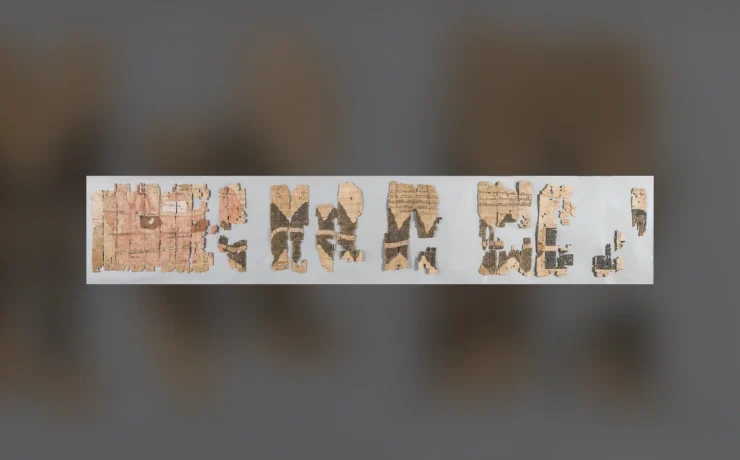
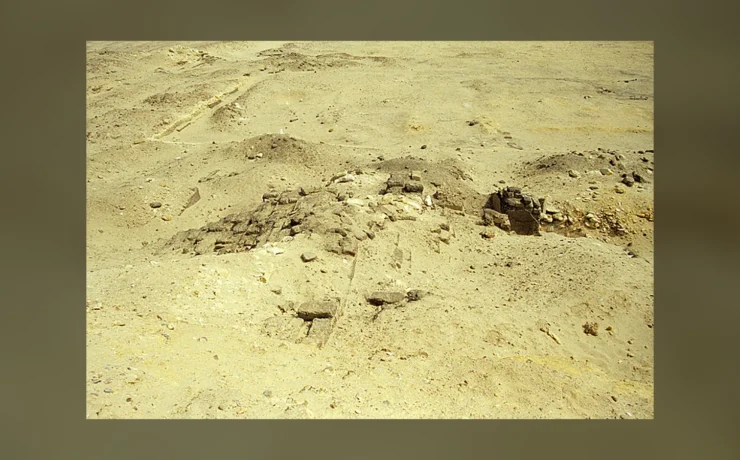
An Egyptian excavation at Saqqara made headlines in August 2026 with an unusual combination of finds: an Old Kingdom official’s inscribed chapel, three sealed stone sarcophagi and more than 100 faience shabtis. Yet the most valuable lesson is chronological. The named official, Sekhentyu-Ptah, belongs to one phase of the cemetery, while connected shafts and later burial objects reveal a more complicated history. Here’s what the evidence actually establishes and why the find matters.
Photographic evidence: The cover now uses real, documented Egyptian antiquities photographs from museum collections rather than a fabricated tomb scene. To see the actual 2026 excavated false door, sarcophagi and shabtis, consult the illustrated excavation report and the official Egyptian announcement. Comparative museum objects below belong to other named individuals and are labelled accordingly.
The 29 August 2026 announcement: what was actually found
Archaeologists working in Sector A west of the Bubasteion necropolis at Saqqara reported a striking combination of material: the Old Kingdom funerary chapel of an official named Sekhentyu-Ptah, interconnected burial shafts, a collection of faience shabtis, and three sealed stone sarcophagi. The Egyptian State Information Service dated its announcement to 29 August 2026, reporting the first excavation season’s results.
The components must be separated chronologically. The official’s tomb chapel is described as Old Kingdom, but other materials in the shafts show later use of the cemetery. An image of shabtis from a later burial should not automatically be presented as the personal equipment of an Old Kingdom official.
This distinction makes the excavation unusually instructive: one location can preserve evidence of changing funerary practices across centuries, including ritual architecture, reoccupied graves and disturbance by robbers.
Evidence summary: inscriptions, architecture and burial objects
Identified individual: Sekhentyu-Ptah, a senior official named in hieroglyphic inscriptions. Material in place: a funerary chapel with a false door still in its original location. Ritual equipment: inscribed alabaster offering and purification pieces, including an offering table, basin, ewer and disc. Later burial evidence: connected shafts, decorated funerary cartonnage and more than one hundred faience shabti figures. Stone burials: three sealed sarcophagi reported in their original condition.
These are archaeological observations and public descriptions rather than a complete inventory of all objects from every shaft. As excavations progress, each object should be assigned to its specific deposit and period.
Who was Sekhentyu-Ptah?
Inscriptions record the official’s name and a set of high-status appointments. He is described as a royal chamberlain, supervisor of the king’s works, overseer of royal documents, priest of Maat and supervisor of scribes. Such titles place him within the administrative and ceremonial networks serving kingship.
Titles deserve to be understood rather than simply admired. A royal chamberlain enjoyed proximity to the institution of the royal household; overseeing works could involve logistical responsibility; supervising documents and scribes connected an official to written administration; and service to Maat belonged to the moral and religious language of order. Which duties were actually combined in practice would require more contemporary records.
The newly found inscriptions do not establish a detailed biography, a birth date or an exact royal patron unless additional dating evidence is published. Nor is Sekhentyu-Ptah a newly discovered pharaoh. The find is valuable precisely because it illuminates an elite non-royal member of Egyptian society.
The false door: an architectural focus of the chapel
The chapel contained a false door still standing in its original position. False doors were shaped like entrances but were not physical passages into an accessible chamber. Within Egyptian funerary tradition they operated as symbolic points of connection through which offerings, names and memory were directed toward the deceased.
Archaeologists recorded alabaster ritual equipment directly before the false door. Their proximity offers a stronger argument for funerary practice than similar objects sold without find context. Inscriptions on the assemblage provide names and titles that help identify the intended recipient.
False doors also allow architectural comparison with other Old Kingdom chapels at Saqqara. Yet individual details differ, and photographs of famous false doors elsewhere must never be presented as images of the newly found doorway. The site reports provide the correct visual evidence for this particular discovery.
An alabaster offering set tells a second story
The collection included an offering table, purification basin, ewer and disc. These objects can be read together as a set of ritual provisions arranged in relation to the chapel. They do not directly prove exactly what a priest said or which liquids were placed in the vessels on a specific day.
Alabaster is a common term in Egyptian archaeology for the pale calcite stone used in many vessels and ritual objects. The distinction between modern commercial stone names and precise archaeological mineral descriptions matters when interpreting materials. A full catalogue should document the fabric and tool marks.
Finding objects in situ permits researchers to study the spatial relationship between equipment and architecture. That context is far more powerful than a disconnected museum photograph.
Three sealed stone sarcophagi: what ‘sealed’ does and does not prove
The mission reported three stone sarcophagi still sealed in their surviving archaeological condition. This is compelling because ancient tomb robberies often disturbed Egyptian burials. However, a sealed stone coffin does not by itself confirm that the entire surrounding complex escaped disturbance or that the sarcophagus contains a complete undisturbed body.
Other parts of the network showed evidence of looting, with openings cut between burial chambers. Researchers must distinguish one sealed container from the history of the wider burial area. The next steps may include conservation, inspection, recording of contents where appropriate and scientific examination. Any conclusion about the occupants must come from those investigations.
Claims of ‘untouched treasures’ or a secret royal burial are unsupported by the announcement. The known significance lies in documented preservation, inscriptions, objects and complex use history.
More than 100 faience shabtis and the changing use of Saqqara

The excavation also produced more than one hundred shabti figurines, alongside painted cartonnage, pottery, human remains and a wooden falcon image. Shabtis were small figures associated with service or labour for the deceased in Egyptian funerary beliefs. Their shapes, inscriptions and abundance changed significantly across periods.
It would be incorrect to make all of these shabtis part of Sekhentyu-Ptah’s original Old Kingdom burial. The official’s chapel and later material appear within a landscape reused across periods. Shabtis, cartonnage and intrusive shafts must be dated and interpreted in their own contexts.
The combination supports a broader question: why did later groups continue to bury people near, through or beside earlier monuments? The cemetery’s history likely involves both the memory of ancient sacred places and practical use of available terrain.
A symbolic visual guide to the burial complex
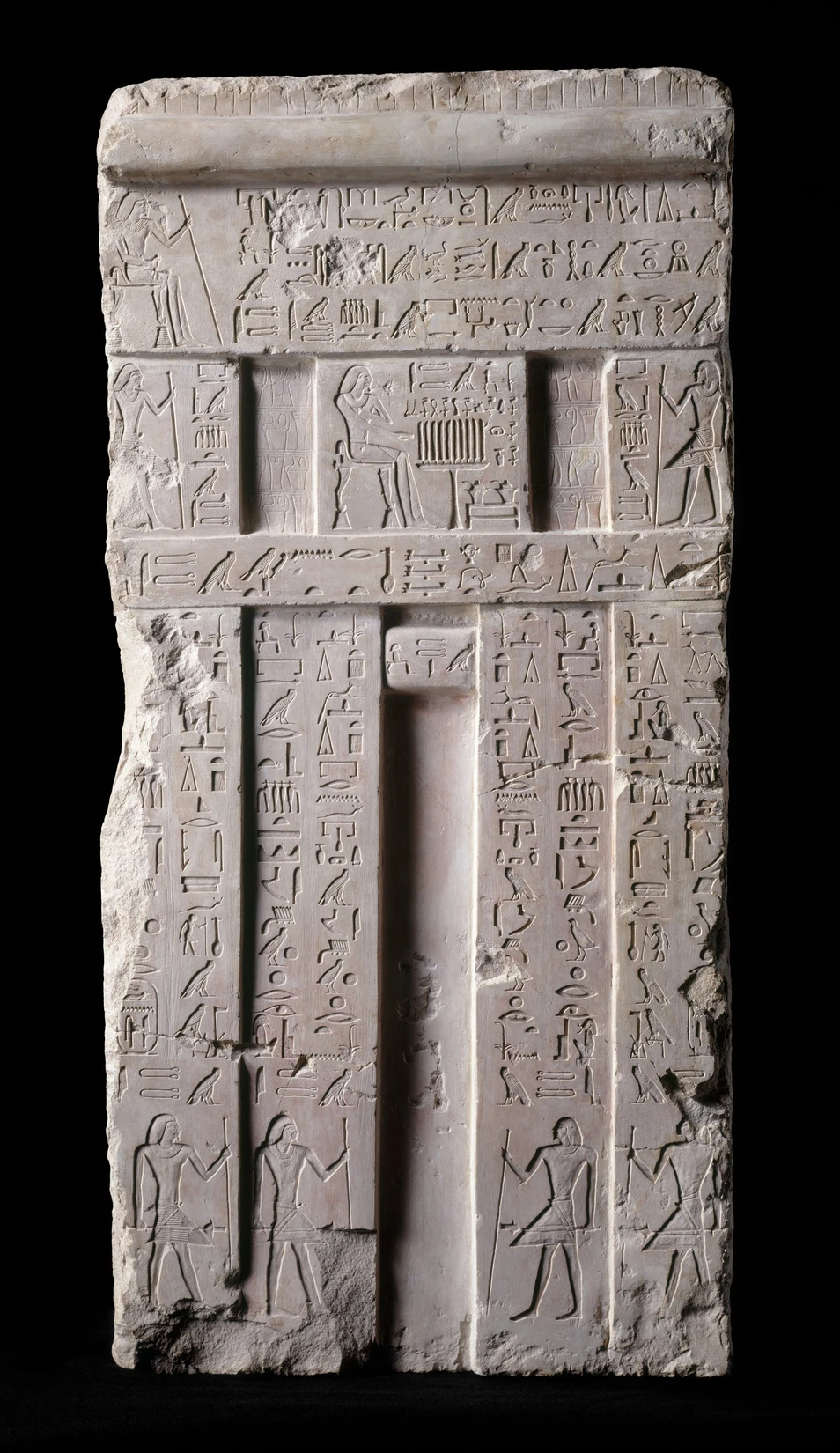
To see real photographs of the August 2026 objects, use the original illustrated reporting from Luxor Times and the official Egyptian announcement. Images attributed to the excavation team have not been copied here without verified reuse permission.
What archaeologists can learn from connected shafts
The excavation reported interconnected burial shafts. Such connections may have several explanations: repeated funerary activity, later adaptation of earlier spaces or tunnels made during ancient robbery. Their geometry, deposits and cuts into existing masonry are essential to distinguish intentional design from later interference.
Scientists can study ceramic chronology, coffins, human remains, inscriptions and burial goods across the shafts to reconstruct the sequence. An isolated object may date one deposit, but it does not automatically date a shaft’s original construction. Layers that have been mixed by tomb robbers demand particular caution.
The new excavation is an opportunity to write a site biography: an Old Kingdom chapel existed; later generations used the necropolis; some graves were breached; and modern archaeologists documented surviving evidence. The precise relationships remain subject to ongoing work.
Why the Bubasteion necropolis matters beyond this burial
Saqqara was part of the broad burial landscape of Memphis, used over a very long historical span. The Bubasteion area includes a rock escarpment and tombs that reflect changes in royal and non-royal religious life. Discoveries from different centuries can sit near one another without belonging to the same historical episode.
A separate July 2026 announcement concerned three New Kingdom rock-cut tombs in another sector of the Bubasteion. Those tombs recorded named officials and family relationships. They are not the same as Sekhentyu-Ptah’s Old Kingdom chapel announced in August; treating the announcements as a single discovery would erase their chronology.
That difference also determines how Kemet Vault organizes its research pages: the August article focuses on Old Kingdom administration, a false door and later reuse, while the July article focuses on the New Kingdom biographies and inscriptions.
How much history can one inscription reveal?
The reported titles help place Sekhentyu-Ptah within a hierarchy of royal bureaucracy, but titles alone are not a comprehensive employment record. Some could represent honours, accumulated ranks or ritual roles. Better understanding requires comparison with other officials, dated inscriptions and the broader royal administration.
The practice of including a deceased person’s name on offering equipment and a chapel’s architectural features helped ensure that a particular person remained identifiable. As material evidence, those names are extremely valuable because they can link a structure to an individual, and sometimes to family networks or institutions.
Nevertheless, claims of a specific political scandal, lost dynasty or hidden treasury need evidence the 2026 announcement did not supply.
The next research questions
Which royal reign best fits the chapel’s inscriptions and construction? Can the three sealed sarcophagi be associated with a particular later phase? Do the shabtis form one deposit or several? Which interconnecting shafts were original and which resulted from later looting? What conservation work will be required for fragile cartonnage and stone surfaces?
Until those questions receive full technical publication, the safest interpretation is an important multi-period funerary complex with a securely named Old Kingdom official and additional burials from later use.
Frequently asked questions
Who was Sekhentyu-Ptah? A high-ranking Old Kingdom official named in newly recorded inscriptions at Saqqara, with titles connected to the royal household, works, documents, scribes and Maat.
Were 100 shabtis buried with him? The mission found over one hundred shabtis in the wider complex. The site’s reuse over centuries means they should not all be assigned to his original burial.
Were the three sarcophagi unopened? They were reported sealed at discovery. That does not establish the condition or contents of every chamber in the cemetery.
Does a false door open? No. It is a symbolic architectural element associated with offerings and communication with the deceased.
Is this the same discovery as the three New Kingdom tombs in July? No. Both were reported from Saqqara in 2026, but involve different individuals, excavation sectors and historical phases.
Evidence and editorial sources
Egypt State Information Service, 29 August 2026; Emirates News Agency, 29 August 2026; Luxor Times excavation reporting. Photographic source disclosure: Featured image is a Kemet Vault editorial arrangement of genuine public-domain museum photographs, not the August 2026 excavation. Left: Metjetji’s false door from Saqqara, Metropolitan Museum of Art accession 64.100. Right: Shabtis of Khabekhnet and Iineferty, The Metropolitan Museum of Art. Both photos are open-access CC0. These artifacts belong to different owners, not Sekhentyu-Ptah; genuine 2026 excavation pictures are linked through the reports above.