The Battle of Megiddo is among the most revealing accounts of warfare in the New Kingdom. Thutmose III’s campaign involved a dangerous mountain approach, a clash with a coalition of local rulers, a lost opportunity to capture the city immediately and a subsequent siege. The famous story comes largely from a royal account at Karnak, so understanding what the record proves is every bit as important as retelling it.
Megiddo at a glance
1. Megiddo and the New Kingdom world
The Battle of Megiddo is conventionally dated to about 1457 BCE, during the reign of Thutmose III of Egypt’s Eighteenth Dynasty. It occurred in the southern Levant, not within the Nile Valley, and formed part of Egypt’s efforts to secure influence in Canaan after the political upheavals of the Second Intermediate Period. The name Megiddo refers to an ancient urban center in present-day Israel, a strategic place at an important crossroads.
The campaign is famous in large part because the king’s annals at Karnak preserve a detailed royal account. Those inscriptions are essential primary evidence, but they were written within an Egyptian ideological setting. They should never be read as a neutral military reporter’s notes. Dates and numbers supplied by modern histories are reconstructions, and exact alternatives exist.
2. A coalition rather than a single enemy king
The Egyptian record depicts a coalition of Levantine rulers gathering against Egyptian power, often associated with the ruler of Kadesh. Local rulers had their own political interests, and their allegiance to great powers could shift. Describing the war merely as Egypt fighting a single modern nation would misrepresent the Late Bronze Age political landscape.
The conflict involved city-state networks, routes and tribute obligations rather than the borders and citizenship of today’s countries. This distinction helps students understand why Megiddo mattered strategically. A fortified urban center could be important because it offered access to routes and local allies, even if it was not a massive imperial capital.
3. Thutmose III and the inheritance of royal power
Thutmose III’s kingship developed in the aftermath of the joint reign associated with Hatshepsut. His later campaigns made military achievement central to his royal self-presentation. Objects bearing his cartouche can confirm how his names and titles circulated, while temple inscriptions explain the larger claims about campaigning and tribute.
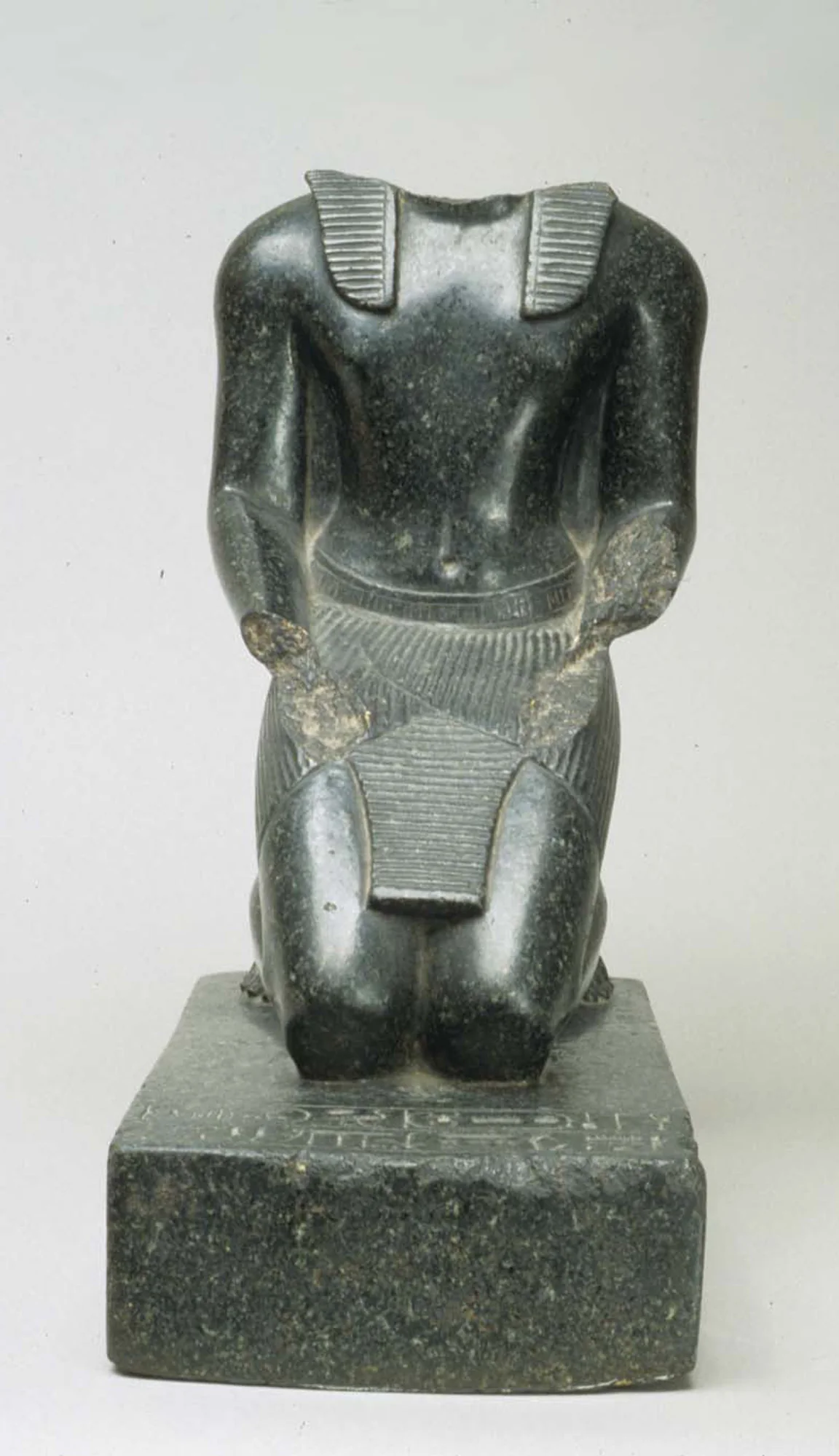
The surviving sculpted head and offering statues of Thutmose III in The Met document royal imagery of the period. They are not documentary photographs of the Megiddo battlefield. It matters that the historian distinguishes a contemporaneous image of the king from material that describes a particular campaign.
4. Why the march to Megiddo was an operational problem
The Egyptian army approached Megiddo through a landscape where roads and passes shaped its movement. The inscriptions describe a crucial decision about the route through the hills. A narrow passage could expose an advancing force, but it could also achieve surprise when opponents expected a different approach.
A modern retelling often reduces this decision to a single brilliant trick. A careful interpretation considers supply, communication, terrain, readiness and possible disagreement among commanders. The real army consisted of people, animals, equipment and transport systems that had to arrive in workable order, rather than an abstract arrow on a map.
5. The Aruna route and the king’s decision
According to the Egyptian account, Thutmose chose the more direct road by Aruna despite concerns that its narrowness could expose the army. The route decision occupies a prominent place in the royal narrative and reinforces the image of a determined commander who accepts danger. Historians can discuss the strategic logic while remembering the passage was selected for commemoration by the winning royal regime.
The exact alignment of every ancient road and the distances between units cannot be reconstructed with the precision of a modern GPS journey. A sketch of the campaign is an interpretation, not an unaltered ancient map. Responsible illustrated history labels such reconstructions clearly.
6. Battle formation and the Egyptian attack
The Egyptian text describes troops drawn up before Megiddo, followed by an attack that defeated the opposing coalition and sent its members retreating toward the city. The royal scene emphasizes the king’s initiative and the enemy’s collapse. Military success at the open battle did not immediately mean Egypt possessed the defended urban center.
The distinction between winning an encounter and securing the objective is crucial. Armies might scatter opponents yet still need a siege to compel surrender. Ancient inscriptions regularly omit or reshape details that would dilute the celebration of a monarch, so certainty about every tactical action is unwarranted.
7. The opportunity lost to plunder
The annals include a striking claim that Egyptian soldiers stopped to plunder the defeated enemy’s camp, allowing survivors to escape behind Megiddo’s walls. Whether every detail occurred as narrated cannot be independently confirmed, but the episode conveys a recognizable military problem: immediate rewards can interfere with the primary strategic objective.
In this case it also strengthens the monarch’s role in the story: the king apparently urged his men to complete the capture, while their diversion explains why the city did not fall instantly. The anecdote is memorable, but an evidence-based textbook must disclose that its surviving wording is a royal account.

8. The siege and the city’s surrender
The aftermath of battle involved a siege of Megiddo. The inscriptions describe pressure around the city and the eventual submission of the opposing rulers. Sources often give the siege’s duration as approximately seven months, but modern summaries should treat that figure as a reported ancient detail rather than an independent measurement.
Siege warfare depended on containment and supply as well as direct force. A defensible city could remain politically significant even after nearby troops were defeated. The capture of Megiddo helped reinforce Egypt’s position in the region, although maintaining authority required further diplomacy and campaigns.
9. What did Egypt actually gain?
Egypt’s victory brought booty, submissions and political leverage. The annals’ lists of goods, prisoners and tribute are valuable for studying royal priorities, regional resources and the public accounting of conquest. They are not necessarily a complete neutral inventory of what was taken. The claim of victory also justified the king’s authority within Egypt.
Long-term influence depended on relationships with local leaders and the ability to project power after the main army had moved elsewhere. A historian must distinguish an immediate royal victory from the durable administration of every associated settlement. The campaign was part of a larger New Kingdom regional system.
10. Karnak’s annals as a historical source
The record on the walls of Karnak’s Temple of Amun is a primary source produced in the Egyptian royal context. It includes campaign episodes and accounts of tribute and offerings. Its monumental setting matters: the king’s successes were publicly linked to Amun and the theology of royal legitimacy.
The inscriptions should be compared with archaeological evidence and the broader diplomatic history of Late Bronze Age cities. Students can trust the text as evidence that Egyptian rulers commemorated the campaign in a particular way without assuming the reported speech and troop figures represent an objective verbatim transcript.
11. Objects from the reign: what images really prove
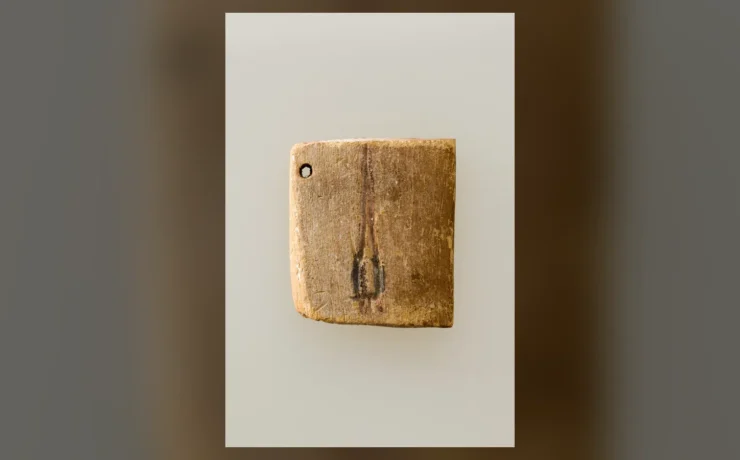
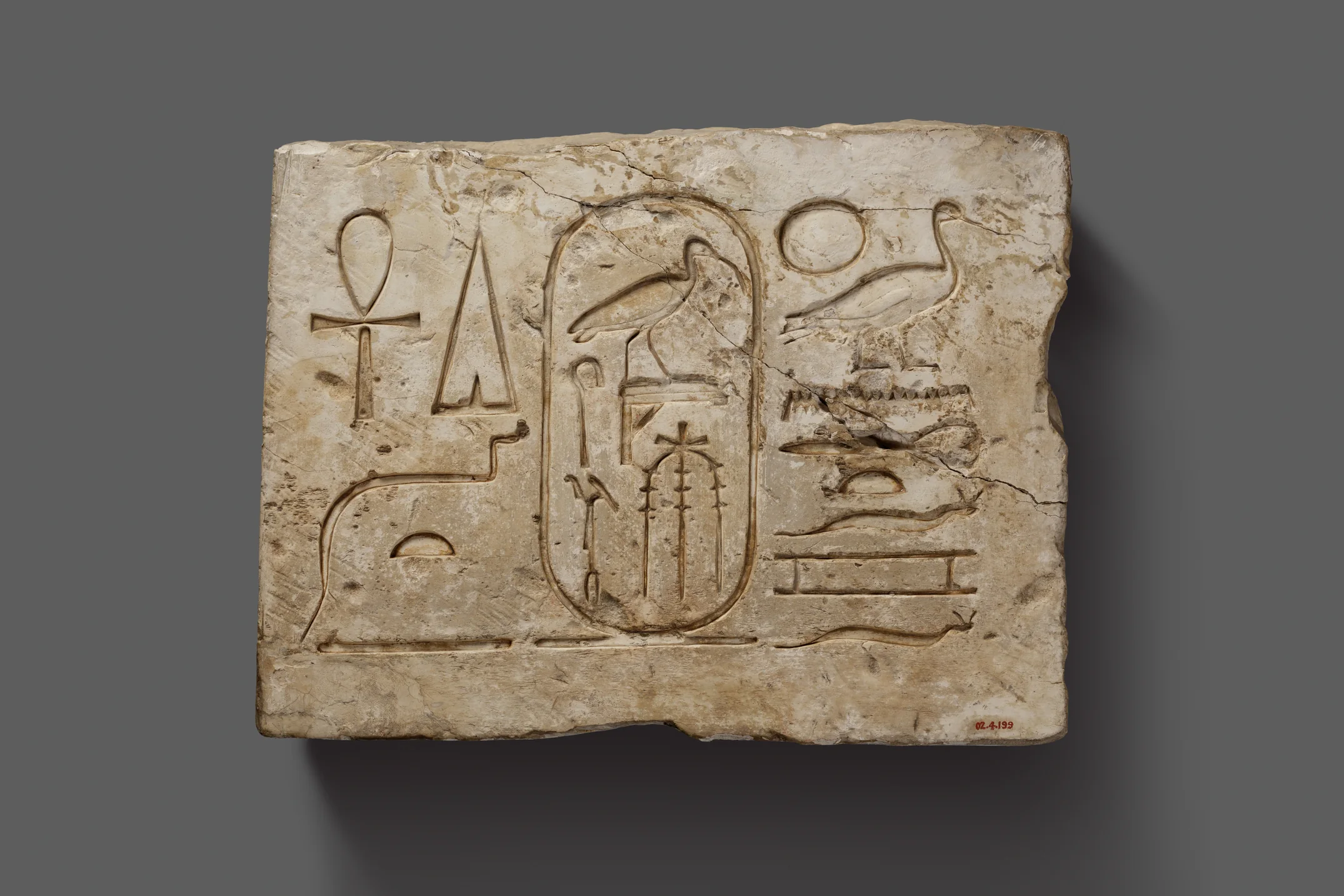
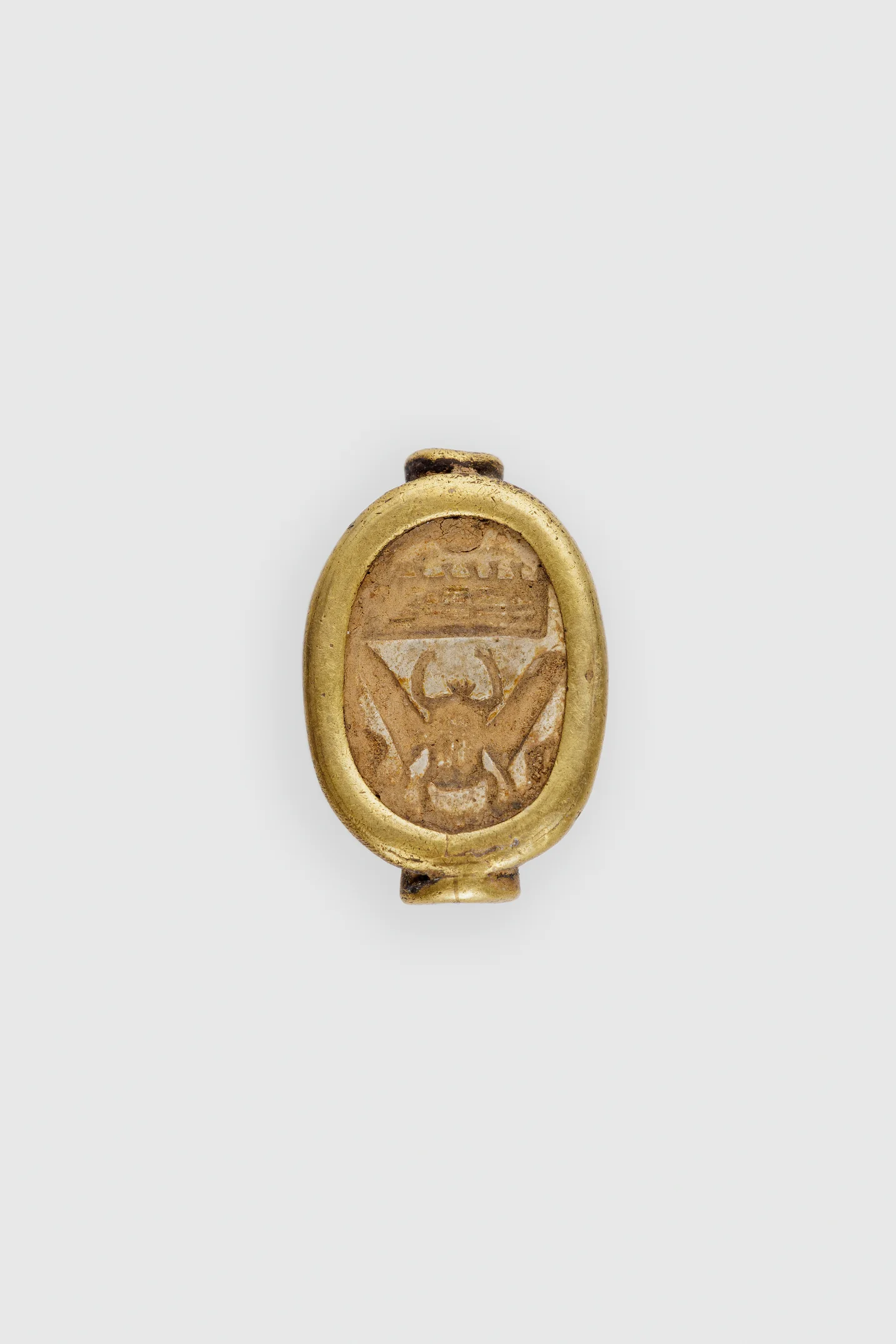
A relief showing Thutmose III, a sculpted head, a royal offering statue and a named scarab can establish royal identity and visual culture. Those objects demonstrate the material environment from which the war narrative emerged. None is itself a literal depiction of the clash at Megiddo. Captions should not imply otherwise merely to make an article’s pictures more exciting.
The accession numbers supplied by The Met let students distinguish four different evidence types. A royal head conveys idealized likeness; a scarab communicates a name; a relief belongs to another monumental context; and an offering statue reflects cultic or commemorative function.
12. Were there 17 campaigns?
Popular books often describe seventeen campaigns led by Thutmose III into the Levant. That number comes from modern grouping and interpretations of annual records and does not mean every year contained an identically structured battle. Megiddo is often treated as the first especially famous major campaign within his independent military rule.
The most useful historical question is not simply the campaign count, but how repeated expeditions, tribute, hostages, garrisons and diplomacy worked together to secure Egyptian power. A state could win battles and still need continuing negotiation to maintain regional influence.
13. Conquest, diplomacy and local autonomy
The New Kingdom overseas system did not always resemble straightforward annexation of a modern province. Some Levantine rulers retained local positions under obligations to Egypt, while their capacity to resist depended on the wider balance of power. Tribute and diplomatic recognition were part of the structure.
Studying this system requires care with terms such as empire, occupation, client ruler and tribute. Each captures different features of political control, and none by itself describes all relationships throughout the region. This is one reason Megiddo belongs within the history of Egyptian imperialism rather than as a stand-alone battle anecdote.
14. Comparing Megiddo with Kadesh
Megiddo and Kadesh are both famous royal battle narratives, but they belong to different centuries and monarchs. Thutmose III’s Megiddo campaign is associated with an Egyptian victory and subsequent siege, while Ramesses II’s Battle of Kadesh has a heavily contested strategic outcome despite strongly triumphalist Egyptian inscriptions.
Both cases teach a similar method: read the royal record, establish the campaign’s geopolitical background, then distinguish tactical claims from the longer political consequences. Kemet Vault maintains separate articles for both wars because their evidence and chronology are not interchangeable.
15. A student’s evidence checklist
First, identify the monarch and chronology: Thutmose III, Dynasty 18, not Ramesses II. Second, find Karnak’s campaign annals rather than citing an anonymous modern map. Third, separate the battle and the siege. Fourth, ask whether a scarab or statue actually depicts a battle or only shows royal identity. Fifth, make clear which numbers come from the monument and which are later estimates.
A strong essay can also compare alternative scholarly translations of a key passage and explain why translating royal rhetoric presents difficulties. Being explicit about uncertainty makes a narrative more academically useful without losing its excitement.
16. Frequently asked questions
Where was Megiddo? It was in the ancient southern Levant, at a site in present-day Israel. Who commanded Egypt? Thutmose III. Who led the opposition? The coalition is associated with the ruler of Kadesh, among others. Did the city surrender immediately? No, a siege followed. Is the exact year certain? About 1457 BCE in a common chronology, with variations. Is the story on the walls of Karnak? The royal campaign record is preserved at Karnak.
undefined
17. Further study and connected topics
Explore Thutmose III in the New Kingdom on the Kemet Vault Interactive Timeline. Compare this campaign with our documented Battle of Kadesh article, taking care to keep the different rulers and periods separate. Readers interested in visiting Luxor today should use a travel guide about Karnak’s location, visitor experience and current arrangements rather than this ancient war essay.
That separation allows a student to investigate the battle and a tourist to plan a good day in Luxor without one page becoming a confusing mixture of ancient conquest and modern ticket questions.
Sources and historical method
The Met, Thutmose III Offering; The Met, Head of Thutmose III; The Met, Relief Thutmose III; The Met, named scarab; The Met, Egypt in the New Kingdom. The Egyptian annals at Karnak remain the primary narrative source; modern reconstructions are interpretations, not battle photographs.
Related: Battle of Kadesh, Interactive Timeline and Karnak on the Atlas.