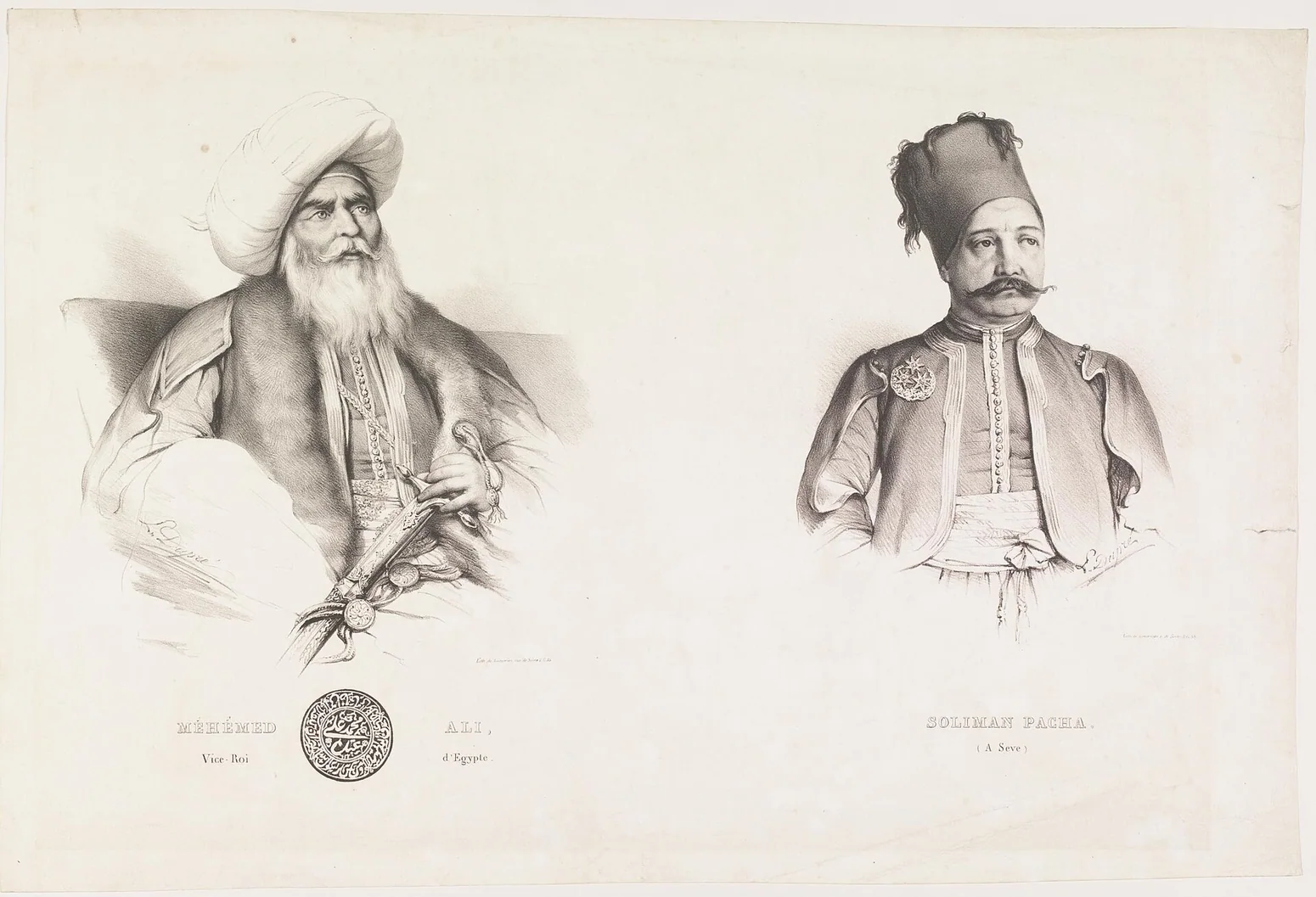
On 1 June 1841, the Ottoman sultan issued a decree confirming Muhammad Ali’s hereditary government of Egypt. That sentence sounds like a simple victory for the dynasty he had built. Read the document, though, and the bargain becomes more complicated: hereditary succession came with limits on the army, coinage, taxes, senior military appointments and Egypt’s place within the Ottoman Empire.
The distinction matters because the ‘1841 firman’ is often treated as a single timeless declaration of independence. It was neither. A series of diplomatic decisions from 1840 to June 1841 created a settlement in which Muhammad Ali’s family could govern Egypt across generations, but the sultan remained the recognized sovereign.
The crisis came before the decree
By 1839, Muhammad Ali’s military forces had challenged Ottoman power beyond Egypt, and his son Ibrahim had campaigned in Syria. The European powers feared a much wider war. The United States Office of the Historian’s collection of translated diplomatic documents preserves the London Convention of 15 July 1840 and the terms proposed to Muhammad Ali.
Those terms made a distinction between Egypt and other territories. An early proposal offered him and his descendants hereditary administration in Egypt, while the question of parts of Syria depended on acceptance within a narrow period. The 1840 settlement unfolded through military pressure and negotiation. It was not a personal favor suddenly handed down in an otherwise peaceful year.
On 27 November 1840, Commodore Charles Napier and Boghos Yusuf Bey signed an agreement at Alexandria about withdrawal from Syria and return of the Ottoman fleet. Senior commanders disputed parts of its handling, but the agreement was one stage in the retreat from a broader Egyptian military empire toward hereditary rule within Egypt.
February 1841 was not the final wording
An Ottoman investiture of 13 February 1841 confirmed hereditary tenure but attached stringent conditions. The translated February text says the sultan could choose among Muhammad Ali’s male descendants, required continuing Ottoman laws and treaties, and initially set an unusually demanding fiscal arrangement based on a proportion of revenues. It also restricted the army’s size and the appointment of senior officers.
That was not the last word. The European powers and Egyptian government contested aspects of the conditions. Diplomatic correspondence in the same historical collection records requests for revision, leading to a later decree. Treating the February terms as if they remained fully intact after June distorts the historical settlement. A useful account has to ask not simply what a decree says, but which decree, issued when.
What the firman of 1 June actually granted
The revised instrument was dated 1 June 1841. The University of Wisconsin’s catalogue describes a later publication of the decree covering hereditary succession, taxation, coinage and troop numbers. The translated text is also reproduced in the contemporary diplomatic-document compilation.
The central concession was a hereditary governorship for Muhammad Ali’s male line. But being hereditary was not the same as being fully sovereign. The ruler’s relationship with Constantinople continued to be expressed through investiture, the application of imperial laws and treaties, and fiscal and military obligations.
Nor did the decree confer identical hereditary rights over every territory Muhammad Ali had previously administered or occupied. The Ottoman texts discuss southern provinces such as Nubia, Darfur, Kordofan and Sennar separately. Modern national borders should not be read back into those clauses without examining their legal and practical meaning.
Why 18,000 soldiers is the number people remember
The figure 18,000 occurs in both the restrictive February terms and the revised settlement. In the June decree it represented a ceiling for Egypt’s peacetime local force, while the sultan retained authority over military needs in wartime. It was a legal condition for the settlement, not a reliable count of every soldier in Egypt during every later year.
Other clauses controlled the military hierarchy. Muhammad Ali could appoint officers only up to specified ranks without approval from the Ottoman center; the construction of warships also required authorization. These details show what limited autonomy looked like in practice. A hereditary governor could administer a large army and still face restrictions on its size, senior command and fleet.
The number also says little by itself about the lives of soldiers. Drafting, service length and the communities that supplied recruits demand other kinds of evidence. A diplomatic document sets rules. It does not tell the reader how consistently officials enforced them in every village or barracks.
Money, taxes and a limited kind of autonomy
The settlement involved money as well as soldiers. The February draft tied the Ottoman government’s claim to a proportion of Egyptian revenue. The later revision altered the financial arrangements, and the source record distinguishes these from provisions for coinage and other imperial obligations. Quoting the earlier formula as the final rule would be misleading.
The ability to collect taxes within Egypt was therefore not a declaration that Cairo and Constantinople had no financial relationship. A tribute obligation remained part of the framework. Monetary signs of the sultan’s authority also mattered: the decree addressed coins issued in Egypt and their conformity with the imperial system.
This was an example of layered power. Muhammad Ali’s administration controlled many decisions at home, while political and legal authority still flowed through Ottoman institutions. The difference between formal sovereignty and practical administrative strength explains why the decree can be described as both a dynastic gain and a restriction on Egyptian freedom of action.
A short timeline makes the bargain clearer
| Date | Document or event | Why it mattered |
|---|---|---|
| 15 July 1840 | London Convention | The great powers backed an Ottoman settlement restricting Muhammad Ali’s wider military position. |
| 27 November 1840 | Alexandria agreement | Withdrawal from Syria and return of the Ottoman fleet became central to negotiation. |
| 13 February 1841 | Initial investiture | Hereditary tenure was offered with strict military and financial clauses. |
| 1 June 1841 | Revised firman | The later instrument confirmed the dynasty under modified conditions and continuing Ottoman sovereignty. |
Dates matter here because documents written a few months apart did not express identical conditions. The published diplomatic series gives readers the opportunity to follow the progression rather than treat every limitation as a permanent law for the whole century.
What the settlement meant for Egypt’s future
Muhammad Ali kept the basis of dynastic rule. The price was a narrower geopolitical position after conflict with the Ottoman government and European intervention. His descendants would rule Egypt for generations, but later changes to titles, succession rules and foreign involvement did not follow automatically from a claim of independence in 1841. They were later developments with their own documents.
The most useful way to read the firman is therefore to ask two questions at once. What did it allow Muhammad Ali’s family to keep? And what powers did it leave with the sultan? The 18,000-man clause, the requirements for senior appointments and the tribute provisions answer the second question as clearly as hereditary succession answers the first.
For a related but separate stage in Egypt’s nineteenth-century story, see our article on the debt crisis of Khedive Ismail. The subjects are connected by questions of autonomy, but a 1841 Ottoman investiture and an 1876 international debt commission were different institutions with different consequences.