A felucca sail in Aswan is one of the most atmospheric ways to experience the Nile: a traditional-style boat, triangular sails and a slower view of islands, palm-lined banks and granite hills. It is also an activity that requires sensible planning. Boats, routes and prices vary, and wind determines more than a promotional itinerary can promise. This practical English guide explains how to choose a safe trip, what Elephantine and Kitchener’s Island add to the experience, how a felucca differs from a motorboat and how to plan a memorable sail without turning living communities into tourist props.
What is a felucca and why sail in Aswan?
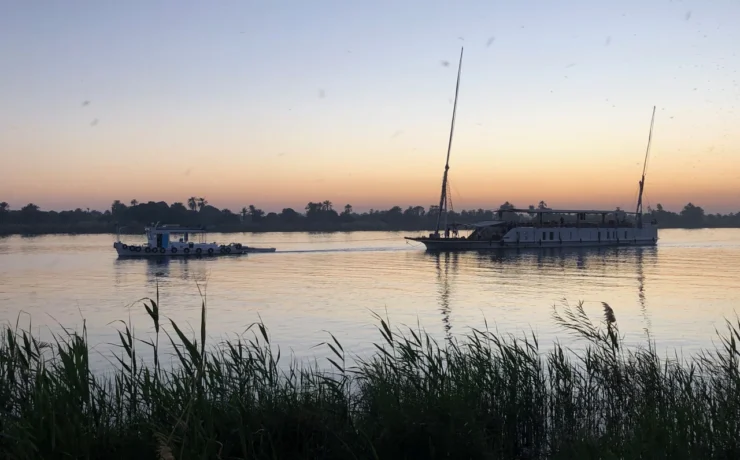
A felucca is a traditional-style sailing boat associated with the Nile and other Mediterranean and Red Sea waterways. On the Aswan riverfront, feluccas are among the most recognisable features of the landscape. Their triangular sails, low position on the water and reliance on wind create a different atmosphere from a powered excursion boat.
Some craft are used for short tourist sails while others are arranged for longer journeys. Their equipment, comfort and safety provisions can vary, so the word ‘felucca’ does not guarantee one standard experience. A simple day sail may have shaded seating and room for a small party but not the facilities of a multi-deck Nile cruise ship.
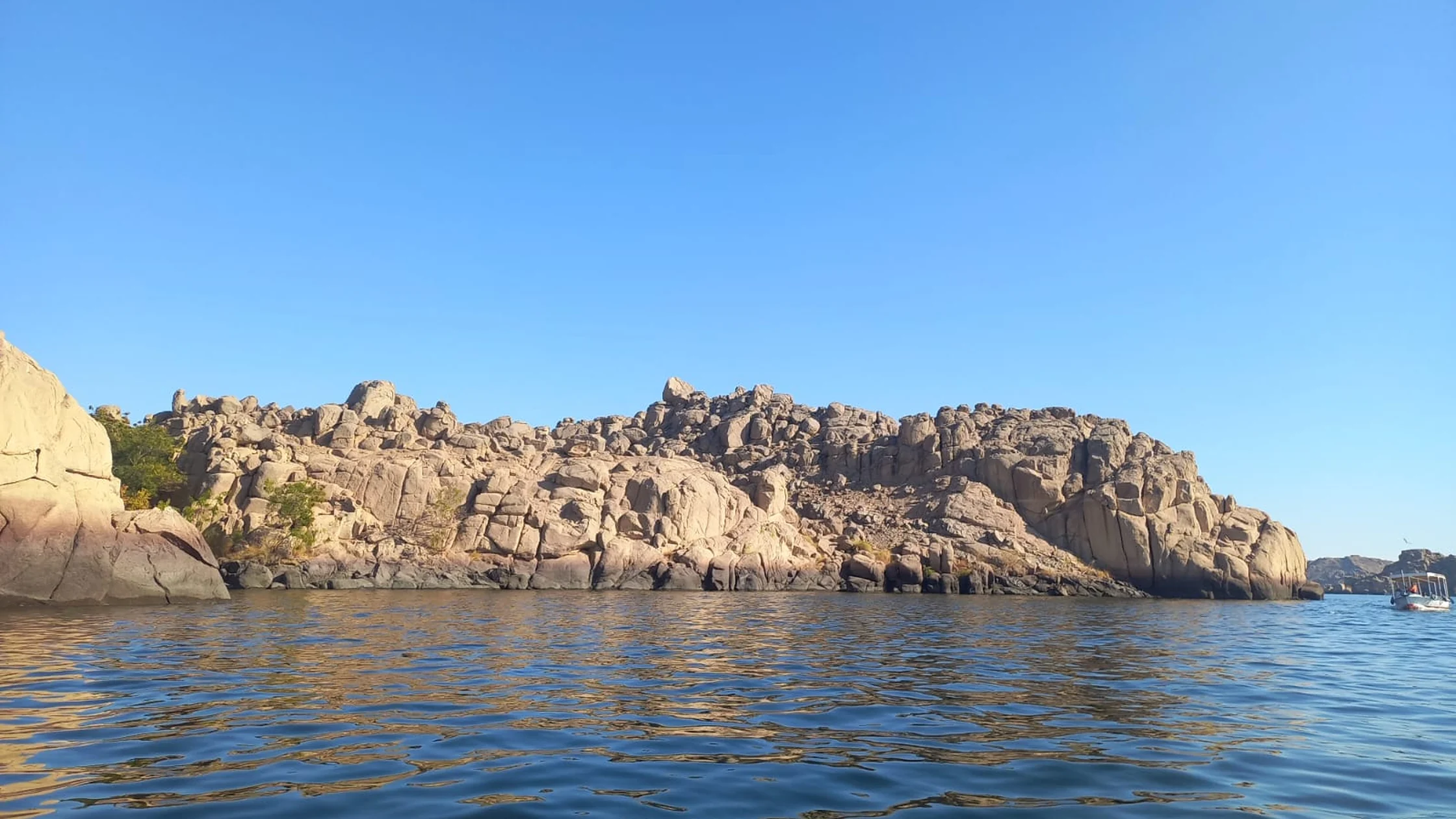
Choose this experience for the river itself: changing light on the granite islands, small movements of wind and water, birdlife and the perspective of Aswan from the boat. Historic monuments may be visible, but a river sail is not a substitute for a museum visit or a guided archaeological tour.

The Aswan stretch of the Nile
Aswan lies where the Nile threads between islands and rocky banks below the modern dams. The river’s course, desert hills, landscaped shorelines and settlements make this southern Egyptian city visually distinctive. Sailing here lets the visitor see multiple kinds of river life without needing a multi-day cruise.
Elephantine Island, historically a major settlement at Egypt’s southern frontier, adds archaeological depth to the views. Its ruins record several periods of activity, although a passing sightline from a boat cannot replace studying excavated structures on shore. Modern island communities are living neighbourhoods, not open-air props for tourist photography.
Other riverside landmarks around Aswan include the botanical garden on Kitchener’s Island and the broader west-bank landscape. Which ones are reached depends on the route agreed with the captain, wind and water conditions, and whether the outing includes shore stops.
A sailboat trip versus a powered Nile cruise
A short felucca sail usually emphasises quiet movement over a flexible stretch of river. It tends to have simple seating and limited facilities, and a sailing route depends partly on wind direction. A powered launch is often better suited to a predictable transfer or a series of time-sensitive shore stops.
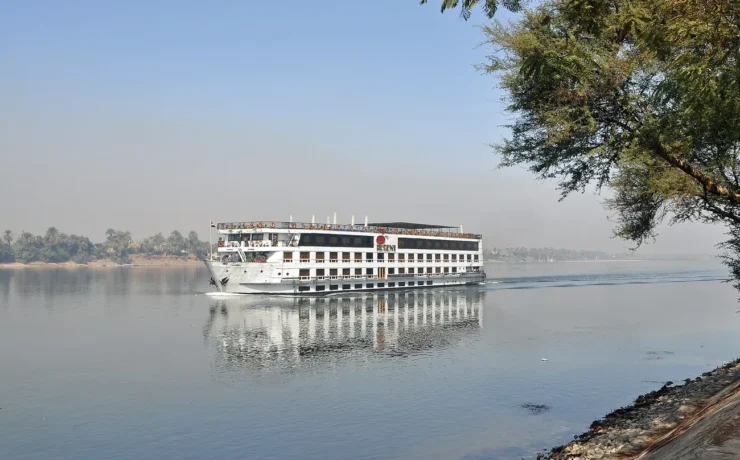
A multi-night Nile cruise between Luxor and Aswan is a different travel product entirely: cabins, meals, onboard staff and planned excursions. It has a different price structure and may follow regulated schedules. A traveler who wants an overnight hotel-like experience should not assume a one-hour felucca ticket provides that.
Before booking, ask about duration, route, whether the boat has an engine or support arrangements, restroom availability, and what happens if wind becomes unsuitable. Clarity matters more than promotional language about an ‘authentic’ journey.
When is the best time to sail?
Morning can offer a different light, pace and ambient temperature from late afternoon. Many travelers favour the hour before sunset for photographs of the river and silhouettes of sails. Yet sunset bookings may be popular and a sail cannot be guaranteed to reach a particular viewpoint at an exact minute.
Wind is essential to the experience and can also limit it. Too little wind may keep a sailboat close to departure; strong gusts or poor visibility may make departure unwise. The captain should make safety decisions using conditions on the day, not merely the itinerary printed in a brochure.
In warmer periods, sun exposure can be intense even when the breeze feels refreshing. A hat, drinking water and sun protection make a practical difference. Cooler evenings can feel chilly on the water, so bring a light layer.
Where to board and what to confirm first
Felucca trips are commonly arranged along Aswan’s Nile waterfront through hotels, local operators or captains. There is not one universal pier for every route. The exact meeting point should be agreed in writing and checked against a recognizable local landmark.
Clarify the boat’s capacity, the number of passengers, availability of life jackets, and whether your booking is private or shared. Ask whether the quoted fare applies to the whole boat or per passenger, and whether gratuities, shore stops, transport or refreshments are included.
A responsible operator should be able to describe safety procedures and the condition of the boat. If basic questions about passengers, life jackets or weather limits are dismissed, choose another provider. Avoid prepaying through an unverified link or sending personal data to an unfamiliar contact.
Elephantine Island: the history behind the view
Elephantine is not simply scenery. Archaeological remains reflect the island’s role in administration, religion and contact with Nubia. The island’s ancient temples and settlement layers are studied by Egyptologists, and historical occupation reached back into early Egyptian history.
From a felucca, the changing outline of the island creates a memorable visual impression, but a visitor wishing to inspect antiquities should arrange a separate landing and verify current access rules. An itinerary that promises to ‘see Elephantine’ may mean sailing past it, not visiting the archaeological site.
Treat local homes and riverbank activity respectfully. Photographing a community from the water should not become an excuse for intrusive close-up portraits without permission.
Kitchener’s Island and the western banks
One potential destination on the central river is Kitchener’s Island, known for its botanical garden and landscaped greenery. Visitors can combine a boat transfer with a garden visit if access, opening conditions and fare are agreed in advance. A sailing circuit that only passes the island is a different product.
The western riverbank has its own settlements, ruins and desert slopes. A private trip may emphasize these views rather than a long list of landings. Ask what the route genuinely covers, since a felucca’s reliance on the wind can change the order and timing of stops.
Adding multiple shore visits to a short trip can leave surprisingly little time under sail. For the full cultural context, see Aswan, Nile islands and Nubian culture, which provides a separate destination overview.
Can you visit a Nubian village by felucca?
Some travel offers combine a boat ride with a Nubian community visit. This can be interesting when it is organised responsibly and residents choose how they welcome visitors. However, a traditional sailing boat, motor launch and island visit may be sold together under a vague ‘felucca to a Nubian village’ heading.
Verify the actual type of vessel, duration and settlement being visited. A fast motorboat transfer should not be advertised as a continuous wind-powered sail. Cultural experiences should support local people, respect private homes and avoid representing a diverse population as a stage-managed historical attraction.
Visitors interested in language, food and local crafts can gain far more from a well-guided visit than from a rushed photograph stop. Set aside time for conversation and avoid assumptions that every Nile island shares the same culture.
What a normal trip may cost
Felucca prices vary by season, duration, number of passengers, boat exclusivity, route and what is included. A headline price may apply to the entire boat rather than to one seat, or it may be a per-person charge on a shared departure. Without a current direct quotation from the operator, a fixed fare would risk misleading a reader.
Request an itemised quote stating the route, duration, total party size, payment terms and cancellation conditions. Confirm whether any island landing, garden entry or other attraction ticket is included. Ask separately about transfer from the hotel and gratuities.
Price should not be the only deciding factor. A safer, properly maintained boat with a clear itinerary and a respectful captain is preferable to an offer that refuses to discuss basic details.
Sailing with children and less confident travelers
Small children need close supervision around moving water and boat edges. Appropriate, properly fitting personal flotation devices should be available for everyone for whom they are necessary, and the operator should explain where to sit during manoeuvres.
A felucca’s deck and boarding arrangements may involve uneven surfaces or steps. Travelers with reduced mobility should ask for detailed information about the actual vessel rather than assuming accessible boarding because a hotel marketed the trip as suitable for everyone.
People who become motion-sick may find a short, calm-weather excursion easier than a long trip, but individual experiences vary. Carry necessary personal supplies and avoid committing to a difficult schedule immediately after a tiring journey.
A sample 90-minute Aswan river experience
Allow enough time to arrive at the agreed meeting point and confirm the boat and route. Start with a safety briefing, then leave the waterfront under sail if conditions permit. Spend time appreciating riverbank views and watching the approach to Elephantine rather than expecting the boat to serve as a fast sightseeing taxi.
The captain may choose a course that offers sheltered sailing and river panoramas. Return with sufficient margin for changing light and wind. If a landing is part of the arrangement, make sure it was agreed before departure rather than assuming it is automatically included.
This is an example, not a guaranteed passage or hourly timetable. Conditions, river traffic and the chosen provider determine what is safely achievable. The best visit is flexible enough to remain enjoyable without chasing a precise photograph.
Felucca versus motorboat: a decision table
| Priority | Felucca | Motorboat |
|---|---|---|
| Quiet river atmosphere | Excellent when wind permits | Engine noise varies |
| Predictable point-to-point transfer | Less predictable | Often better suited |
| Slow photography and sunset views | Strong appeal | Can also work |
| Multiple timed landings | Ask carefully | Usually easier to schedule |
| Accessibility and facilities | Vary by specific boat | Vary by specific boat |
Neither vessel type is inherently safe or unsafe without considering the craft, crew and conditions. Ask providers for the details that matter for your party instead of assuming a traditional sail means a particular level of comfort or regulation.
Responsible river travel
The Nile is an ecosystem and a working river, not only a scenic backdrop. Keep waste aboard until it can be disposed of properly, avoid throwing food or plastic into the water, and respect local boat traffic and fishermen.
Use routes approved by the captain and do not pressure a crew member to sail in risky conditions for a photograph. Support operators who maintain vessels and treat staff fairly. The best heritage experience is one in which modern river communities benefit rather than become invisible.
If combining the trip with a cultural day, read the separate Abu Simbel visitor experience; travel to Abu Simbel is a separate land journey and not a short extension of a felucca outing.
Frequently asked questions
How long should an Aswan felucca ride be? Short sails can last roughly an hour or two, while longer outings are possible. Agree on the total duration and whether it includes stops before booking.
Is a felucca the same as a Nile cruise ship? No. A felucca is a relatively simple sailing boat; multi-day cruise ships are powered accommodation and excursion products.
Can a felucca stop on Elephantine Island? Some routes may include landings, but passing an island and visiting its archaeology are not the same. Confirm arrangements and any separate entry tickets.
Do feluccas sail when there is no wind? Sailing relies on suitable wind; operators may postpone, change routes or use arrangements described in the booking. Ask how cancellations work.
What should families check first? Passenger limits, appropriate life jackets, boarding access, supervision and current water conditions.
Photographic and research references
Featured image: actual felucca sailing in Aswan, photographed by Omar Ahmed Elhossiny in 2024, released under CC BY-SA 4.0 and cropped for web display.
Useful background context: Britannica, Aswan; Britannica, Elephantine; UNESCO, Nubian Monuments from Abu Simbel to Philae. Tour prices and boat schedules are variable and should be confirmed directly with the operator.