Three rock-cut tombs uncovered at Saqqara in July 2026 have given archaeologists something more revealing than a cache of valuables: the names of officials, their relatives and a fragment referring to a military commander’s return from the Near East. Discovered in the Bubasteion necropolis, the New Kingdom chambers belonged to Mentuhotep, Paremwia (Samut), and Nehesy. What distinguishes the finds is the detail with which private funerary monuments help reconstruct administration, families and memory beyond the lives of kings.
July 2026: a new set of rock-cut tombs at Bubasteion
On 19 July 2026, Egypt’s Supreme Council of Antiquities announced the discovery of three New Kingdom rock-cut tombs along the eastern edge of the Bubasteion necropolis at Saqqara. Their inscriptions identify officials, family members and a striking reference to a military commander’s return from Naharin in northern Syria.
All three are tombs of private individuals, not newly discovered royal burials. They nevertheless have historical value because non-royal funerary decoration can preserve names and titles absent from better-known accounts of pharaohs. Unlike a generic discovery story about hidden treasures, this find lets us examine social relationships and the administration of ancient Egypt.
The three identified owners are Mentuhotep, Paremwia (also called Samut) and Nehesy. Their chambers have different levels of preservation and different strengths of documentary evidence. They should not be treated as interchangeable examples of the same tomb.
Quick research facts
| 2026 tomb | Verified discovery | Unresolved question |
|---|---|---|
| Mentuhotep | Offering and hunting reliefs; titles; scene with his mother. | Burial shaft not yet completely investigated. |
| Paremwia / Samut | Ptah institutional title; wife, mother and four sons named. | Names and posts await a full inscription edition. |
| Nehesy | Administrative title, wife and Naharin-related column fragment. | The short text does not date a particular campaign. |
Announcement: 19 July 2026. Location: eastern sector of the Bubasteion cliff at Saqqara, within the ancient Memphite funerary landscape. Period: New Kingdom, a broad range commonly placed around 1550–1070 BCE. Named owners: Mentuhotep, Paremwia/Samut and Nehesy. Important evidence: offering scenes, family names, titles and a fragment referring to the return of a commander from Naharin.
The excavations were not presented as completed. At least one burial shaft associated with Mentuhotep was awaiting further work, and researchers expected additional results in the next field season.
Mentuhotep’s tomb: a powerful administrator and his mother
Mentuhotep’s tomb includes carved scenes showing offerings and hunting. He is depicted sitting with his mother, whose name appears in English reports as Iahhotep or Eihotep. The combination provides a portrait of elite representation in which the owner’s family and social status are essential to the tomb’s message.
Reported titles include hereditary prince, mayor, royal seal bearer, and other administrative or military appointments. The titles indicate connections to the government, but caution is needed: they may be ranks, honours or responsibilities acquired over a career. They do not automatically establish that Mentuhotep governed every location named in secondary summaries.
The inscriptions provide enough detail for a biography built on what is physically recorded, but not for a historical novel about the official’s ambitions or political rivalries. One burial shaft had not yet been fully excavated at the announcement date, a reminder that the data set remains incomplete.
Why the carved hunting and offering scenes matter
Elite tomb decoration is not a candid photographic record. Offerings address the owner’s hopes for continued support after death; hunting and other activities can express ideals of status and vitality. Studying their subjects and the arrangement of inscriptions helps distinguish religious aspiration from biographical events.
A scene showing Mentuhotep beside his mother is stronger evidence for a family relationship than a modern caption inventing his entire household. The titles and relationships should be checked against original epigraphic publication when it becomes available.
Comparative New Kingdom scenes can help interpret artistic conventions, but photographs of a different Saqqara tomb are not documentary pictures of Mentuhotep’s newly excavated chamber. Source labelling is essential.
Paremwia, also called Samut: the merchant’s family archive
Of the three tombs, the second is especially valuable for the way its inscriptions preserve members of an elite family. Its owner, Paremwia, also known as Samut, is described as the Great Merchant of the Estate of Ptah, linking him to an important Memphite religious institution.
The tomb reportedly names his wife Tuwi as Lady of the House, his mother Atibyu as Singer of Amun, and his four sons. This documentation brings family networks into view, beyond an isolated male name and title. It also shows the variety of institutional roles in one household, including temple economy and religious service.
An estate merchant was not simply a modern shopkeeper, nor does the title mean that Paremwia controlled all commerce in Egypt. Translating Egyptian offices into familiar contemporary words can obscure how temple estates, royal institutions and logistics actually operated. The inscription is a starting point for contextual study.
Family names are more than decorative labels
Egyptian elite tombs often present themselves through kinship. Naming parents, spouses and children could serve religious remembrance while recording affiliations useful to modern historians. A list of relatives is not by itself a full family tree extending across generations, and the exact relationships should be derived from the inscription rather than assumptions about image placement.
The presence of four sons in Paremwia’s tomb is an unusually rich detail for contemporary reporting of a newly discovered chamber. Researchers may eventually compare the names to other inscriptions in the Memphite region. Such connections would require careful verification, since different people can share names across dynasties.
Paremwia and Samut are two names for the same tomb owner in the current archaeological reporting, not evidence for two separately discovered merchants.
Nehesy’s tomb: a damaged record that still matters
The third tomb was less well preserved. Inscriptions identify Nehesy with the title Supervisor of the House and mention his wife Neferptah, designated Lady of the House. The damage limits what can be said about the original decorative programme, but fragments retain historical value.
One recovered column fragment includes a reference to a military commander’s return from Naharin, a geographical term associated with parts of northern Syria and the Near East in ancient Egyptian texts. Its preservation opens a line of research into how distant military events could enter the decorative and commemorative world of officials at Saqqara.
The phrase does not, by itself, establish the date of a particular campaign or identify a victorious pharaoh. More inscriptional context is necessary before assigning it to one famous battle. There is a crucial difference between documenting a geographical reference and reconstructing an entire war.
What was Naharin in Egyptian historical geography?
Naharin is a term encountered in Egyptian texts relating to northern Levantine and Mesopotamian political geography. Its application could depend on period and context, and it is often discussed alongside the kingdom of Mitanni in New Kingdom history. An Egyptian inscription referring to a commander returning from that region is evidence of the place’s presence in official memory.
Readers should not translate Naharin automatically as the territory of a modern nation-state. Ancient geographical labels, shifting political boundaries and the perspectives of the writers are distinct from modern maps. Without the full sentence and names from Nehesy’s tomb, it is premature to make claims about a specific military operation.
For wider historical context, Kemet Vault’s Battle of Megiddo study shows how campaigns and royal narratives were recorded, while this Saqqara discovery concerns a separate fragment and should not be made to document Megiddo without evidence.
Three tombs, three different kinds of historical evidence
Mentuhotep’s tomb foregrounds titles and funerary scenes; Paremwia’s preserves an unusually substantial set of family names; Nehesy’s contains a limited but potentially important reference to a military movement. None alone offers a complete account of New Kingdom life, but together they broaden the picture of the Memphite elite.
These discoveries remind us that royal monumental inscriptions are only one layer of Egypt’s history. The careers of officials, arrangements of households and names of relatives can survive on chapel walls far from the palace. What appears as a modest fragment may alter how historians reconstruct administration or kinship.
A critical study treats each inscription as an object belonging to a particular owner and archaeological setting. It does not turn the three men into colleagues, contemporaries at one court or participants in the same event unless the evidence supports those connections.
An original visualization of a rock-cut tomb landscape
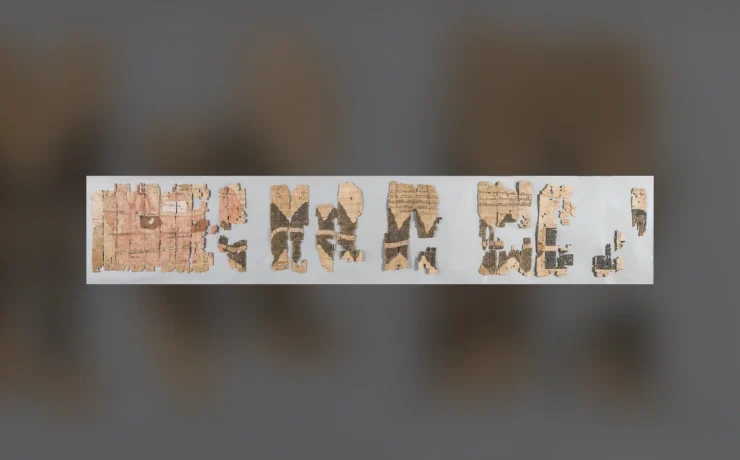
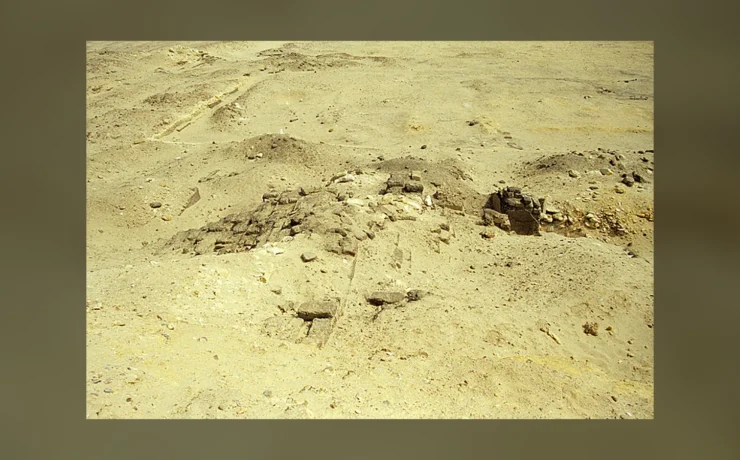
Image evidence: the following two original documentary photographs show the Bubasteion necropolis as it existed in 2022; neither is a photograph of the three newly announced 2026 tombs. The precise new discoveries are described from the Egyptian Supreme Council of Antiquities announcement and cited contemporary reporting.

The original images of the three tombs, including carved scenes and entryways, were published with the Egyptian antiquities announcement and reproduced by Egyptian Gazette and Archaeology Magazine. These are the correct sources for studying actual surfaces rather than an artistic visualization.
The genuine 2026 photographs: sources and correct identifications
Photographs of the actual rock-cut tombs were released with the July 2026 discovery reporting. These are far more important for studying the excavation than the illustrative digital image on this page. The Egyptian Gazette’s original illustrated report and Archaeology Magazine’s image-led account display genuine tomb entrances and reliefs, credited to Egypt’s Ministry of Tourism and Antiquities. Ancient Egypt magazine’s August 2026 note provides additional context and archaeological photographs.
The current Kemet Vault cover and inline illustration are conceptual artworks and must not be mistaken for the 2026 excavation photographs. They do not reproduce measured plans, individual inscriptions or the precise state of the exposed entrances. Because unrestricted permission for republishing the ministry’s photographs has not been established, they are linked to their credited original sources rather than copied here.
Why archaeologists cannot turn these three tombs into one story yet
Discovering three tombs in one area does not prove that their occupants were members of one family, held office under one pharaoh or participated in one campaign. The New Kingdom is a broad historical period. The excavation announcement identifies the owners and selected inscriptions but is not a complete technical publication assigning every architectural phase to a specific reign.
Mentuhotep’s titles show political and administrative status; they do not supply an independently verified birth date or a narrative of his career. Paremwia’s title Chief Merchant of the House of Ptah connects him to a temple institution, rather than proving that he owned the equivalent of a modern private trading firm. Nehesy’s surviving name and household title provide less personal information than the family inscriptions preserved in the second tomb.
The military-geographical reference in Nehesy’s tomb requires particular care. Naharin was an Egyptian designation associated with the northern Near East and with Mitanni in relevant New Kingdom contexts. The fragment records a commander’s return, not a complete military report. Without a fully published text, it cannot confidently be linked to a single ruler, battle or expedition. The August 2026 article in Ancient Egypt magazine provides a useful control for the terms and owners.
The strongest historical comparison is between the different types of evidence. One tomb documents office and family images, a second records a household network, and the third preserves a limited but important external geographical reference. Future epigraphic drawings, photography and excavation data may extend those biographies, but filling the gaps with imagined detail would mislead readers.
Why the tombs belong in an archaeology section, not a king’s biography
The news does not announce the reign or burial of an unknown pharaoh. Its significance lies in people who worked within royal and temple institutions. By treating their careers and families as historical subjects in their own right, an article can reveal aspects of Egyptian society that would disappear in a history told only through kings.
The same site also yielded a separate August 2026 announcement concerning the Old Kingdom official Sekhentyu-Ptah, a false door, connected shafts and later shabtis. Those remains form a different chronology and research question despite the shared location at Saqqara.
A well-connected encyclopedia should allow readers to move between distinct discoveries without conflating them. A page about the New Kingdom three-tomb report should not replace a separate analysis of the Old Kingdom Sekhentyu-Ptah material.
What further research could settle
The location and contents of Mentuhotep’s unexcavated shaft could add information about his family. Complete copies of Paremwia’s inscriptions could clarify names and relationships. Detailed epigraphic publication of Nehesy’s column could show whether the return-from-Naharin episode relates to a known campaign or a different military setting.
Beyond the texts, architectural recording could show how the tombs fit within the expanding burial landscape along the Bubasteion escarpment. Changes in carving style, construction and burial usage may help refine dates inside the long New Kingdom.
These are open questions rather than outcomes already guaranteed by a press release.
Frequently asked questions
How many tombs were announced at Saqqara in July 2026? Three rock-cut tombs dating to the New Kingdom.
Who are their identified owners? Mentuhotep, Paremwia (also called Samut), and Nehesy.
Was a new pharaoh discovered? No. The inscriptions concern officials and their families.
Why is Paremwia’s tomb notable? Its inscriptions identify his wife, mother and four sons, preserving valuable family history.
What is the Naharin inscription? A fragment from Nehesy’s tomb referring to the return of a military commander from the northern Syrian region; it does not yet identify a definite campaign.
Primary reporting and image provenance
Egypt State Information Service, 19 July 2026; Ahram Online, 19 July 2026; Archaeology Magazine, 21 July 2026; Egyptian Gazette original discovery photo coverage. All original editorial illustrations on Kemet Vault are labelled as interpretive artwork and not presented as images of recovered objects.
Additional verified view of the archaeological landscape