How should you spend two cultural days in Alexandria? Devote day one to the Eastern Harbour, Qaitbay Citadel and Bibliotheca Alexandrina, then explore the Royal Jewelry Museum in Zizinya on day two. Leave the second afternoon flexible for Montaza or an unhurried coastal visit. This route balances geography and cultural interest without treating every historic site as a compulsory stop.
Built around official monument and library sources, the itinerary distinguishes real places, practical access checks and the separate historical periods each institution represents.
A two-day route that does not treat Alexandria as one giant museum
Alexandria rewards visitors who combine the Mediterranean waterfront with the city’s changing historical layers. A good two-day visit does not try to include every archaeological site, every beach and every famous restaurant in one relentless schedule. This itinerary keeps the first day close to the Eastern Harbour, where the Qaitbay Citadel and Bibliotheca Alexandrina offer radically different kinds of heritage, and reserves the second for the Royal Jewelry Museum and the eastern city. It separates what can be experienced during a visit from the deeper histories of the institutions. The plan assumes an overnight stay in Alexandria and reasonably flexible transport, rather than an unrealistic same-day dash from Cairo with an early departure and late return. Opening hours can change, particularly for museum galleries and library tours, so the order is a planning framework rather than a guaranteed admission ticket. The historic citadel, modern library and royal museum must each be checked directly before travel. The emphasis is cultural pacing, not maximum stop count.
Why begin at the Eastern Harbour
The Eastern Harbour is one of Alexandria’s most recognisable urban landscapes. Its curve connects coastal views with layered historic sites, cafes, pedestrian approaches and streets that reflect the city’s modern life. Beginning here makes geographical sense because it places visitors near Qaitbay Citadel without requiring repeated journeys from one end of the city to the other. Maritime weather and road conditions may shape the experience: the waterfront can be windy, while city traffic can slow short rides. Treat the coast as an active public space, not an abandoned archaeological panorama. Fishing boats, residents and visitors share the view. If your trip takes place during the warmer months, give outdoor walking more room in the schedule during comfortable periods of the day. Photographers should leave time for changes in light around the harbour. A useful itinerary also leaves space for rest and meals rather than inventing an exact total walking time independent of a person’s pace and the day’s traffic.
Day one: Qaitbay Citadel and the medieval harbour defence
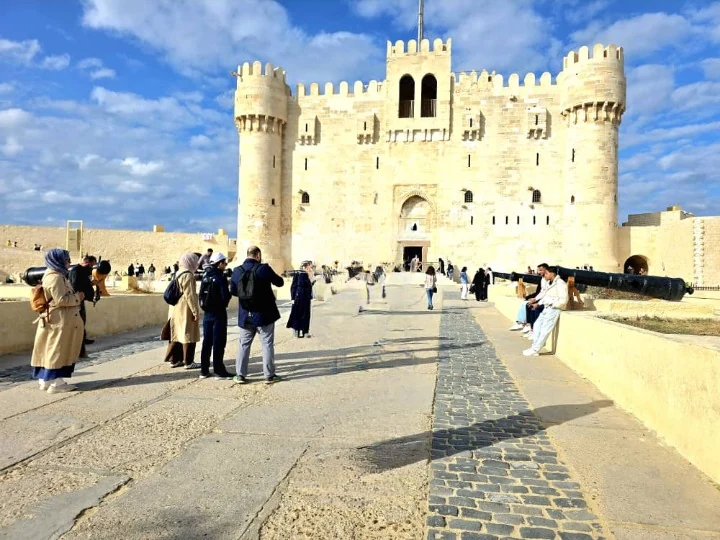
The citadel is an excellent first historical stop because its purpose is directly linked to the place it occupies. Egypt’s Ministry of Tourism and Antiquities dates its construction to the reign of the Mamluk sultan Qaitbay in 1477–1479 on the former site of the Lighthouse of Alexandria. This does not mean the visible fortress is a surviving piece of the ancient lighthouse. The lighthouse had a much older history and its remains were affected by earthquakes and later rebuilding. The fort itself has undergone several phases of adaptation and restoration, with walls, rooms and defensive arrangements reflecting the needs of different periods. The original site also makes the fortress visually compelling: the Mediterranean is not an accessory to its story, but the strategic approach it was designed to defend. Read the Ministry’s official information before the visit and consider how a defensive coastal building differs from a palace or ceremonial mosque. Allow enough time to examine the courtyard and the external setting rather than treating the visit as one photo of a tower.
What the citadel can and cannot tell you about the lighthouse
The Lighthouse of Alexandria was one of the celebrated landmarks of the ancient Mediterranean, but it should not be pictured as intact inside Qaitbay’s fort. Archaeological and architectural research has explored the reuse of materials and the relationship between the two phases of the site. The Centre d’Études Alexandrines documents the fort’s later development and the site’s connection with the lost lighthouse. That makes the citadel an ideal setting to discuss historical change, but physical presence is not enough to assign every block to a particular ancient tower. Avoid guides who present unverified stone fragments as conclusive proof of a spectacular reconstructed lighthouse interior. The history of the Mamluk fort is interesting in its own right: it required maritime defence, investment, storage and military architecture. A visitor can appreciate the site without accepting every legend about ancient Alexandria. The best experience begins with the documented surviving fortress and treats the lighthouse as the earlier, largely lost monument that shaped the location.
Lunch and the Corniche as an experience of modern Alexandria
After the citadel, do not force a second major indoor museum immediately if the group needs a rest. Time for lunch or a leisurely promenade helps distinguish an itinerary from an archaeological checklist. The Corniche offers the sensory qualities that make Alexandria different from Cairo: open sea, changing light, urban waterfront activity and a more expansive horizon. Restaurants vary in service and opening days, and recommendations based on a single historical menu should not be mistaken for current offerings. Travelers with dietary restrictions should verify ingredients and practical facilities directly. Avoid promising that a particular terrace will have an uninterrupted view; buildings, crowding and seating arrangements change. This interlude also gives the reader a chance to absorb the contrast between the medieval citadel and the contemporary city. A successful heritage route is not only about monuments. The transition from historic architecture to ordinary waterfront life helps show that Alexandria is a living Mediterranean metropolis.
Day one afternoon: Bibliotheca Alexandrina
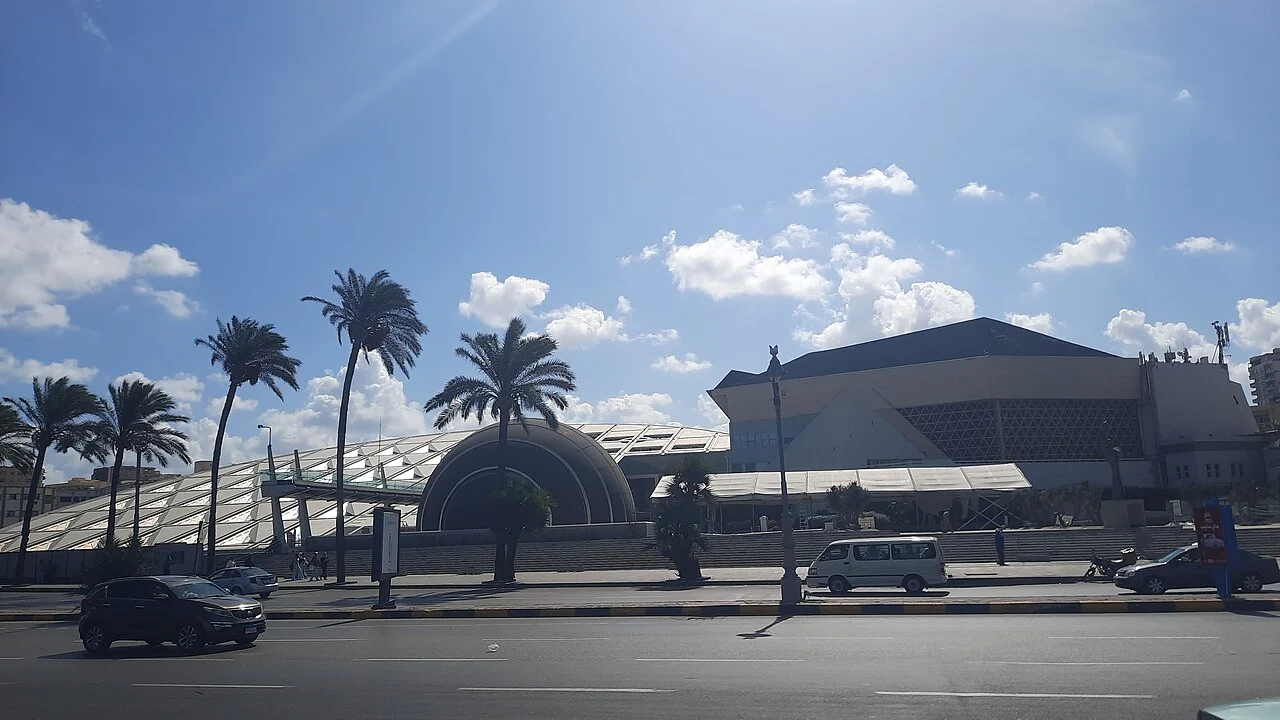
The modern Bibliotheca Alexandrina is a major cultural institution that explicitly invokes Alexandria’s ancient library tradition without claiming to be the original institution reborn unchanged. Its architecture, reading spaces, galleries and events offer a different form of visit from the military citadel. The library’s official portal publishes information on its visitor programmes, tours, museums and reading-area access. Those services may operate under separate schedules. A museum ticket, guided tour and reading permit should never be presented as automatically identical products. Before choosing an afternoon arrival, check the current day and ticket window; the official portal has published different hours for weekdays, Saturdays and Fridays. If a gallery is closed, focus on the architecture and the parts that remain open under the current rules. For an existing site-specific guide, see our Bibliotheca Alexandrina visitor dossier, which addresses the institution in greater practical depth. Here its role is a well-paced cultural stop in a city itinerary.
What to choose inside the library when time is limited
A limited afternoon does not permit a serious visit to every reading room, temporary exhibition, museum and multimedia installation. Choose the part that best fits the group. Architecture lovers may focus on the exterior and the public spaces included in the visit. Museum-oriented travelers can select one officially accessible gallery rather than rushing past every object. Families may prefer a visitor programme appropriate to younger participants, subject to current availability and any reservations. Researchers have a different purpose: catalogues and reading facilities may require procedures not covered by a general tour. The official institution is the right source for those distinctions. Modern libraries are not merely landmarks for taking photographs; their active educational mission makes them different from ancient ruins. Respect restrictions around readers and staff, and avoid assuming all interior photography is permitted. A productive afternoon is one where visitors actually understand something about the library’s contemporary role rather than only ticking off its impressive roofline.
Day two: the Royal Jewelry Museum in Zizinya
On the second morning, move to the eastern city for the Royal Jewelry Museum. The Egyptian Ministry identifies its setting as a palace built in 1919 by Zaynab Fahmi in Zizinya and later associated with Fatma al-Zahra, daughter of Prince Ali Haider. The museum displays possessions associated with the Egyptian dynasty descended from Muhammad Ali Pasha, including jewellery, decorative objects and items that illustrate elite court culture. The palace itself deserves as much attention as the precious materials. Its rooms combine European and Islamic artistic references, while ceiling decoration and mosaics create a distinct experience from the medieval citadel. The subject is modern dynastic heritage, not pharaonic burial treasure. Understanding that difference helps visitors place objects within the right historical period. The Ministry’s official page also describes museum conduct and photography rules, which should be checked before visiting. If there is a long queue or temporary room closure, preserving time for the palace’s architectural detail is more satisfying than hurrying through display cases.
A palace museum is different from a jewellery shop
The Royal Jewelry Museum contains objects with financial value, but their historical interest extends beyond gold or gemstones. A collection can reveal materials, craftsmanship, changing tastes and the public image of the Egyptian royal family. The rooms also tell a story about the patrons who inhabited the building and the context in which the collection became a museum. Do not present every object as something worn personally by one named queen unless the official label supports that association. The Ministry gives examples of royal possessions, but an exhibition may change which items are displayed or how they are grouped. A visitor who slows down to compare several objects and the room’s decoration will gain more insight than someone racing for the most expensive jewel. Photography and conservation requirements can be strict around valuable or fragile materials. Treat those limits as part of responsible museum visiting, especially if travelling with children. A historically grounded account also distinguishes the family’s nineteenth- and twentieth-century period from Alexandria’s Hellenistic royal past.
Where the afternoon can go: Montaza or a quieter urban route
After the Royal Jewelry Museum, travelers can choose an afternoon based on energy and interest. One possibility is the Montaza area, which has a distinct royal landscape and waterfront setting. Our Montaza royal gardens guide explains that location’s cultural background and visitor considerations. Do not assume every palace interior is publicly accessible merely because the grounds may be open. Another option is a more modest route through the city’s eastern neighbourhoods, with cafes, coastal views or time to revisit a favourite waterfront scene. This flexible design avoids the illusion that a museum ticket entitles a visitor to unrestricted palace access across the city. Alexandria’s road network and traffic also make it unwise to attach a made-up fifteen-minute transfer to every journey. Keeping the final afternoon optional helps families and independent travelers make decisions based on real conditions rather than a rigid internet checklist.
Transport and realistic pacing between the districts
The Eastern Harbour and Zizinya are separate urban zones, and the second-day move is not best treated as a continuation of one short walking route. Depending on where you stay, public transport, a licensed taxi or an app-based ride may be practical. Route times depend on congestion, weather and the exact point of departure. The article intentionally does not invent universal driving durations or quote unverified ride prices. A visitor with mobility needs should ask each institution about step-free routes and lifts instead of assuming that a prominent public museum is accessible in exactly the same way as a modern shopping centre. Budget a reserve for delays, ticket queues and a meal. The city is enjoyable because it offers different experiences, and those experiences become less rewarding when an itinerary is overfilled. If a museum has limited last admission, it should be the more time-sensitive stop, while a coastal walk can often be arranged more flexibly subject to personal safety and local conditions.
When the plan works best and how seasons change it
The Mediterranean climate changes the feeling of an Alexandria trip. Summer can bring busy waterfront conditions and warm afternoons, while cooler periods may make walking more pleasant for some visitors. Wind and rain can affect open-air sections regardless of the month. Use the official weather forecast close to departure rather than a generic climate statistic to choose clothing and outdoor timings. During holidays, special events or temporary restoration works, the availability of tours and museum rooms may change. A two-day cultural trip has an advantage over a rushed single-day excursion because a closure or unexpected delay need not spoil the whole visit. Plan indoor attractions with confirmed admission first, then adjust the promenade and optional garden time. Do not market a single season as perfect for every traveler. Someone interested in beach swimming has different requirements from a visitor focused on libraries, architecture and collection labels. This itinerary explicitly prioritises cultural heritage.
Photography, privacy and responsible site visits
Original photographs of Qaitbay Citadel and Bibliotheca Alexandrina accompany this article. They show real buildings and landscapes, not AI-generated visions of what the ancient city supposedly looked like. They cannot determine today’s weather, crowds or admission arrangements. Travelers should respect posted rules on tripods, commercial filming, flash and photography of visitors or staff. Cultural centres may contain active workspaces where the presence of a large camera is intrusive. At historic structures, do not climb barriers or lean into restricted areas for a dramatic harbour photograph. At museums, protect displayed objects by avoiding touch and following conservation guidance. Include genuine creator credits when reusing licensed photographs, and verify whether a particular license requires attribution and share-alike conditions. Responsible images can tell a compelling travel story without making an architectural scene look more spectacular than the surviving evidence allows.
What the two-day itinerary does not include
This guide is deliberately not a complete list of Alexandria’s archaeology. The Catacombs of Kom el-Shoqafa, Pompey’s Pillar, Roman-period remains and other museums all deserve their own focused treatment. Squeezing them into these two days would transform a practical cultural route into an unreliable competition for the highest number of stops. Some travelers may swap the Royal Jewelry Museum for Roman archaeology, but such a swap changes the theme and geography of the second day. It should be chosen consciously rather than added automatically. Our Kom el-Dikka archaeological article offers additional historical context for readers whose priority is the Roman city. For travel beyond Alexandria, the Egypt ten-day route concerns a different multi-city planning question. Each itinerary should serve a clear traveler need instead of attempting to rank for every variation of ‘things to do in Egypt’.
Official sources and the route’s evidence standard
The historical description of the fort is based on the Egyptian Ministry’s Qaitbay Citadel record, supplemented by the Centre d’Études Alexandrines research on fortifications. The Bibliotheca Alexandrina official website is the first place to check current library tours and exhibits; the Ministry’s Royal Jewelry Museum page describes the Zizinya palace and its collections. The article does not reproduce prices or fixed hours because different admission services and holiday schedules can change. The photographic record consists of two actual Commons images with independent author, source and reuse details. All route advice reflects a November 2026 editorial plan rather than guaranteed daily availability.