Is the Winter Palace Luxor open in November 2026? The historic Winter Palace closed for major renovation in early 2026, according to Mandarin Oriental’s announcement of 11 February 2026. The company planned to reopen it in July 2027 as Mandarin Oriental Winter Palace, Luxor. That is a future target rather than a verified reopening or a bookable 2026 room offer.
This dated hotel profile explains the difference between the historic Sofitel identity and the new announcement, the debate surrounding its early history and how travelers should assess claims about availability.
The short answer: the historic hotel is in transition
Luxor’s Winter Palace is a famous Nile-side hotel with a history stretching back to the age of grand Egyptian travel. As of the November 2026 research check for this article, the important news for prospective guests is not a room-rate promotion but a management and renovation transition. Mandarin Oriental announced on 11 February 2026 that the property would close in early 2026 for restoration and was planned to return in July 2027 under the Mandarin Oriental Winter Palace, Luxor name. This schedule is a stated corporate plan, not an independently confirmed completion date. It can change as construction progresses. Travelers should therefore treat older search results offering a normal Sofitel Winter Palace stay as potentially out of date. A room listing that preserves an old brand name is not proof that the historic building is currently accepting guests. This guide distinguishes the hotel as a heritage landmark from its availability as a bookable property and examines what the 2026 announcement actually establishes. No rates are invented, and no future room inventory is presented as already on sale.
Where the Winter Palace stands in Luxor
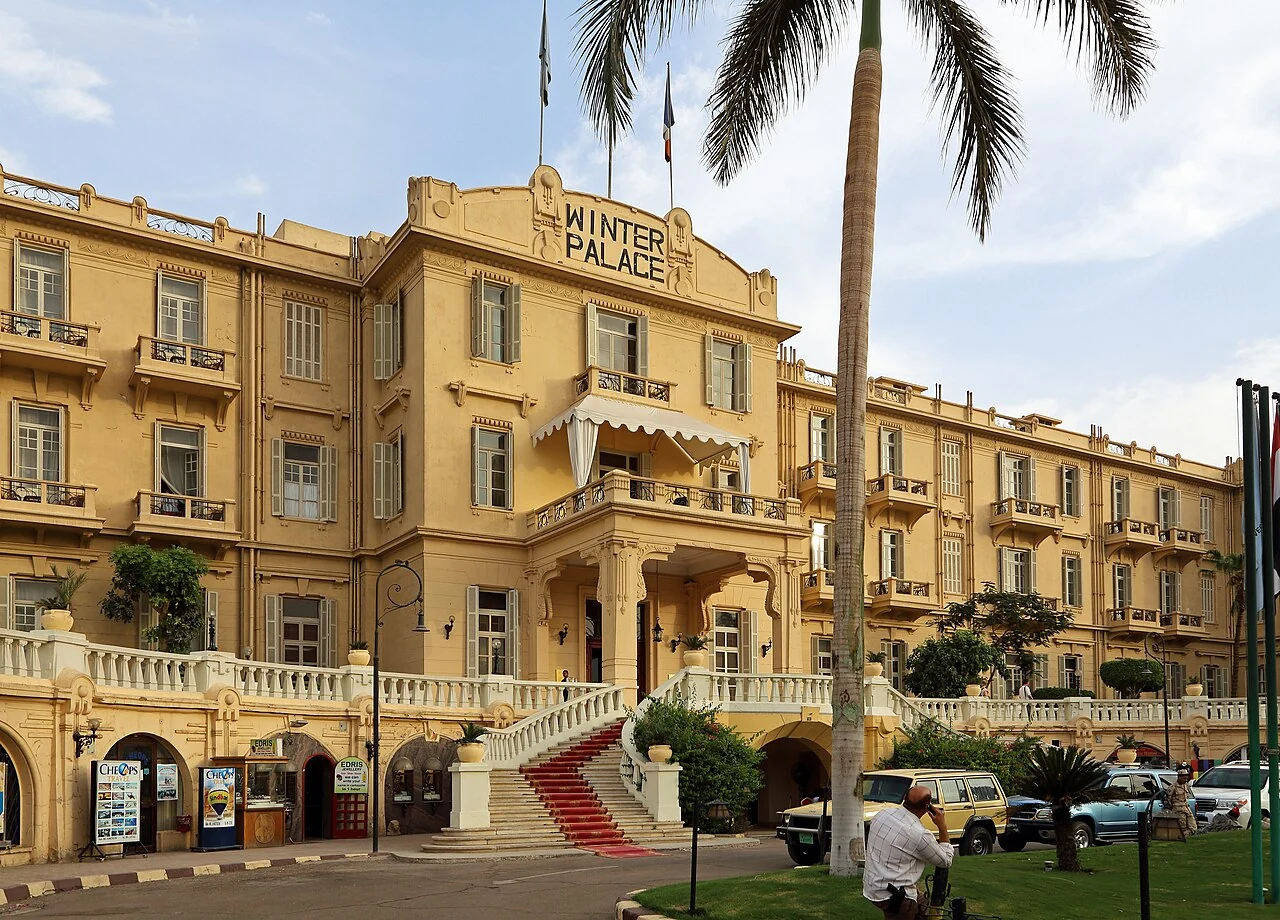
The hotel occupies a prominent position near the Nile Corniche on Luxor’s East Bank. Its position is part of its fame: the urban historic hotel connects the riverfront with a city whose ancient temple landscape is still central to daily life and tourism. The proximity of Luxor Temple makes its setting unlike that of a remote Red Sea resort. From the hotel district, travelers can plan separate visits to East Bank attractions and journeys over the river toward West Bank sites such as the Valley of the Kings. Location should not be confused with access; hotel closures and restoration works may restrict entrances or gardens even when adjacent streets remain open. An exterior photo can illustrate the building’s relationship with the Nile-side city, but it cannot guarantee a visitor will be permitted inside. For a broader approach to Luxor as a living destination, read our cultural Luxor guide. That visitor-first guide describes the wider city rather than the commercial status of one landmark hotel.
What Mandarin Oriental announced on 11 February 2026
Mandarin Oriental’s own media release provides the key contemporaneous evidence. It announced a partnership covering the Winter Palace in Luxor, the Old Cataract in Aswan and a Nile cruise venture. It specified that the Luxor property would undergo significant renovation and be reintroduced as Mandarin Oriental Winter Palace, Luxor, with a planned reopening in July 2027. The announcement also described proposed accommodation, dining and spa facilities. Those proposals should be reported as future intentions, not as amenities that are available to book during 2026. A hotel can have a well-defined reopening target while contractors, permissions, staffing and construction remain unfinished. The release is authoritative for what the new manager planned on the announcement date; it is not evidence that every advertised facility has since opened. Reading the actual corporate source avoids the common travel-content mistake of presenting renderings as contemporary photographs of finished suites. In this article, all statements about the 2027 offering are clearly future-oriented.
How the Sofitel name fits the hotel’s history
For many years the property appeared in travel guides as Sofitel Winter Palace Luxor, and Accor’s destination pages still preserve descriptions of its historic character, Nile position and amenities. Those pages are valuable evidence for the previous operating identity, but they cannot override a dated 2026 announcement from the incoming operator. A brand appearing in a search snippet is not itself proof of a live reservation. The independent property Pavillon Winter Luxor may also appear beside the famous hotel, and some guests confuse the two. They share an associated setting but are not necessarily interchangeable room products or booking conditions. Before making a payment, travelers should confirm the legal property name, precise building, and current operator directly. An agent may advertise a stay in ‘Winter Palace’ while actually quoting a separate wing, a replacement property or an itinerary built around the landmark. None of those is automatically fraudulent; the mistake is failing to distinguish the exact accommodation in writing. The 2026 transition makes precision more important than usual.
Was it built in 1886 or opened in 1907?
The Winter Palace has a contested popular origin date. Historic hospitality marketing long used 1886, and a former restaurant name also reflected that date. Yet archival research on early hotel advertisements and the Upper Egypt Hotels Company has argued that the grand hotel’s inauguration belongs in January 1907. A detailed historical investigation published by EgyptTravelBlog explains why a simple ‘opened 1886’ claim deserves scrutiny, and it points to contemporary travel literature as a different kind of source. It would be careless to hide the conflict by selecting whichever date appears more frequently in tourism copy. This article therefore distinguishes heritage marketing tradition from the competing documentary chronology and does not declare the matter settled without a clearly identified primary archive. The central fact for a visitor is the existence of an important historic hotel associated with the expansion of Nile tourism. Its exact inauguration date is a historical research question, not a reason to invent Victorian royal events within its walls. Museum-style rigor remains useful even in hotel coverage.
The building’s connection with early Nile tourism
The rise of large hotels along the Nile formed part of a wider story of steam travel, European tourism networks, archaeological interest and the development of new service institutions. Luxor attracted visitors who wanted to spend more than a single day among the temples and tombs of ancient Thebes. A substantial riverside hotel made extended stays possible for travelers with the resources to use it. The property is often associated with the era of excavation and with well-known archaeologists. Such associations should be documented individually rather than using every prominent name as a guaranteed former guest. Hotels can become places where travel companies, officials, journalists and archaeologists meet, but a glamorous story about an encounter is not evidence without a date or source. The Winter Palace’s true cultural role is broader than its anecdotal guest list. It belongs to the architecture of modern tourism in Egypt, and the restoration raises questions about how to preserve a functioning historic hotel rather than transform it into a static museum.
The gardens and the distinctive hotel setting
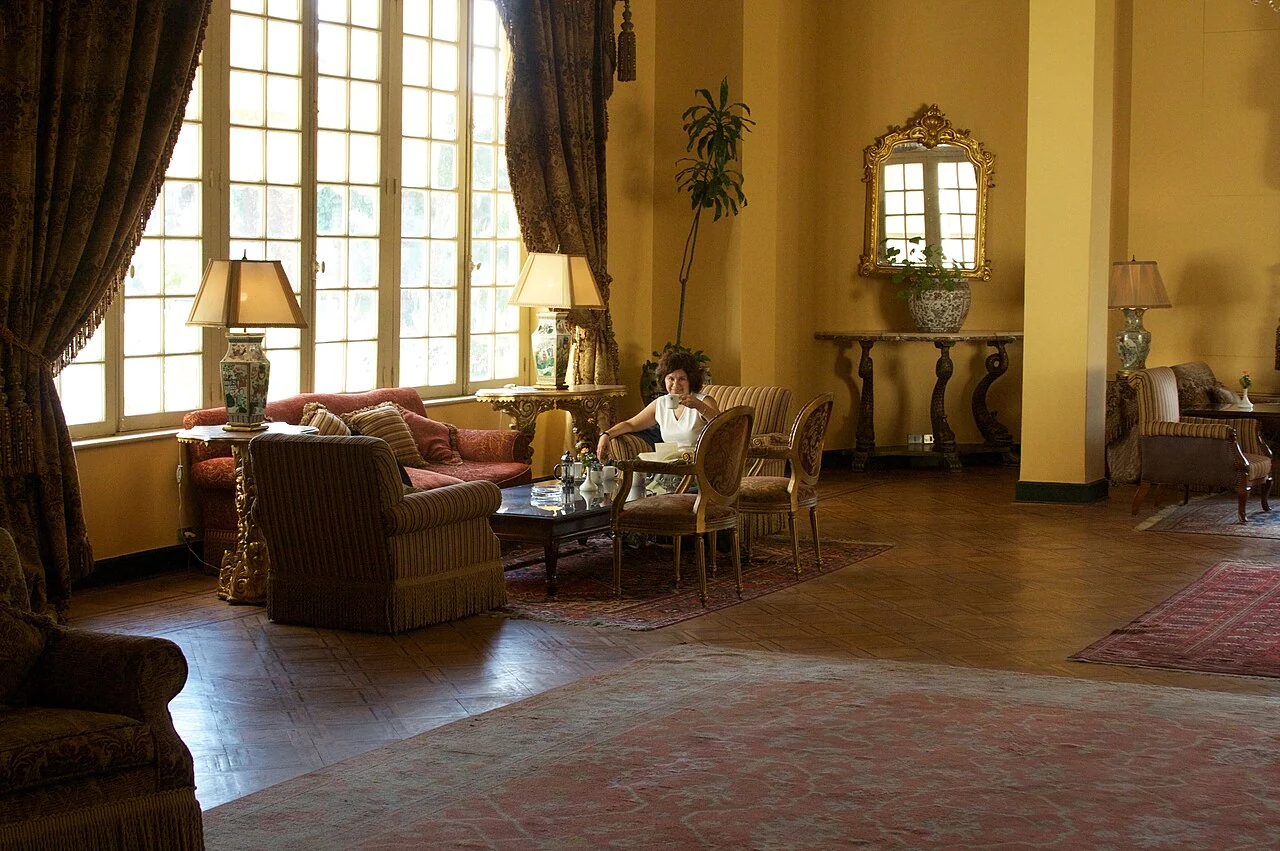
Historical hotel gardens are part of a property’s identity, not merely decorative greenery in booking photographs. Earlier hospitality descriptions of the Winter Palace emphasised formal planted grounds, palms and quiet outdoor spaces between the historic building and the surrounding city. Historic Hotels Worldwide placed the hotel’s gardens in a curated 2024 list and described their mature trees and landscape character. Such material documents how the grounds were understood before the 2026 closure. It does not confirm that every tree, path or access point is unchanged during renovation. A travel guide should be especially careful with picturesque garden pictures because old online images may still be shown while a hotel is inaccessible. Two licensed contemporary photographs in this article document the historic building from different external viewpoints; they are not images of a completed 2027 Mandarin Oriental interior. Readers interested in royal gardens elsewhere may compare our Montaza gardens visitor guide, a different destination with its own public access rules.
What is expected to change in the 2027 reintroduction?
The announced renovation aims to present the Winter Palace under the Mandarin Oriental brand. The press release discusses reworked rooms and suites, dining concepts and a spa, with gardens and heritage architecture forming part of the planned guest experience. None of this should be turned into an invented price table for 2027. Room categories, opening packages and restaurant arrangements can change before reservations open. The responsible approach is to retain the original corporate target and identify the date of the statement. The significance of a restoration is not simply a new logo on the entrance. A building with historic public rooms and a recognised urban position must balance conservation, modern services, safety and guest expectations. Whether a particular room will preserve an older design cannot be established from a generic marketing rendering. Prospective guests should consult the operator’s direct property channels when they are available and ask which building, wing and services the booking actually covers.
Does the Old Cataract in Aswan have the same timeline?
The Winter Palace announcement was linked to the Old Cataract hotel in Aswan, but the two should not be collapsed into one property. Mandarin Oriental identified separate buildings and city contexts under the wider Egyptian expansion plan. The company expected restoration and a 2027 reopening for both historic hotels, but local works and operational arrangements may differ. A traveler booking a Nile route could easily see both names in one luxury itinerary and assume that confirming one confirms the other. That is a mistake. Our Old Cataract renovation research treats the Aswan property independently, including the heritage context of its own location. A trip from Luxor to Aswan can involve many forms of accommodation and transport, not just these two hotels. For route planning, see the seven-day cultural itinerary. This article’s subject remains the Winter Palace and its specific 2026–2027 commercial transition.
Booking risks while the historic hotel is closed
Search engines and travel platforms can preserve room pages for years. During an extended renovation, a stale page may still display a prominent booking widget or an availability-looking date selector. The presence of that interface does not prove the specific historic hotel is accepting real stays. Before paying, ask the provider to identify the exact property legal name and address, whether the historic Winter Palace building or another hotel is being sold, and what happens if the planned reopening shifts. Read the written cancellation terms carefully. A genuine reservation should identify a confirmed supplier and actual stay dates rather than merely promise first access after a renovation. Be cautious about social-media accounts that claim to represent the hotel without linking to an operator-controlled website. This is especially important for expensive multi-city Egypt packages where accommodation can be substituted without much attention to a historic brand name. Neither the writer nor the site can guarantee future opening dates or independently verify every third-party agency’s inventory.
What visitors can do in Luxor in the meantime
The closure of a famous hotel does not close Luxor itself. A visitor can still explore the city, subject to normal monument opening arrangements, independently of one hotel renovation. The East Bank provides cultural experiences around Luxor Temple, Karnak, the Nile promenade and local markets. The West Bank offers a distinct set of archaeological landscapes that demand their own planning and travel time. Travelers choosing alternate accommodation should compare practical location, accessibility, transport to archaeological sites and the quality of official booking confirmation rather than assuming the most historically famous name is the only desirable address. The Egypt ten-day itinerary can help distribute the trip across regions without unrealistic transfers. This distinction is central to a useful travel guide: an article about a hotel must be clear about the hotel’s current operating status while still helping readers understand the destination. A historic property remains culturally interesting even when its rooms are temporarily unavailable.
Two kinds of history: architectural evidence and hotel anecdotes
The Winter Palace attracts stories about royalty, writers and the excavation era. Some may be well supported; others grow through repetition in travel marketing. A rigorous history distinguishes an archival register, contemporary newspaper report or company announcement from a later narrative that mentions a famous guest without evidence. It also distinguishes the hotel’s original construction and subsequent refurbishments from changes to neighbouring properties. The photographs used here show the building as it appeared in the photographers’ own periods, not how it looked at an alleged ancient ceremony. They can document details of facade and urban position but cannot establish the truth of a guest-list story. A dated opening event, investment history and the development of Nile tourism are more historically meaningful than a generic claim that every significant visitor to Luxor spent the night there. That is why the disputed 1886 versus 1907 date is identified openly: acknowledging uncertainty makes a heritage profile more useful, not less.
How to compare future Winter Palace offers
When the renovated hotel eventually takes confirmed reservations, compare total cost rather than an isolated headline room price. Ask whether the quoted rate includes taxes, breakfast, local transfers and the exact cancellation deadline. Confirm whether the room belongs to the main historic building, a separately marketed wing or a different hotel entirely. Check accessibility if the building contains heritage features that might limit movement. Travelers interested mainly in seeing Luxor’s monuments may value a convenient location more than an elaborate room category; others may prioritise the historic atmosphere of the property itself. The right choice depends on what is actually open and documented at booking time. Avoid distributing screenshots of hypothetical 2027 tariff tables as factual evidence. Pricing, occupancy rules and tour-company allocations are commercial variables. The responsible article can explain the questions worth asking before money changes hands while leaving final availability decisions to the direct operator.
Source chronology and evidence policy
The principal time-sensitive source is Mandarin Oriental’s announcement dated 11 February 2026, which names the planned 2027 reopening and restoration. Earlier operating identity is contextualised by Accor’s Luxor destination information; it is not treated as current booking confirmation. The historical date debate is outlined in research on Winter Palace opening claims, which distinguishes marketing tradition from contemporary evidence. Historic garden information appears in Historic Hotels Worldwide, and the two Commons photos are identified by author and actual subject. Our editorial check was made in November 2026. No claim is made that 2027 restoration work is already complete. Future dates remain the announced plan of the relevant company until independently verified through an updated official statement or the actual reopening.