Hurghada and Marsa Alam are both Red Sea destinations, but they should not be treated as interchangeable names on a flight search. They offer different coastal geographies, types of resort clusters, marine experiences and transfer demands. The right choice depends on travellers' interests and accessibility needs, not on an unsupported promise that one beach is always better.
Compare locations before comparing hotel marketing
Hurghada is an established Red Sea destination with a substantial urban centre and a broad range of surrounding resort areas. Marsa Alam refers both to a town and to a much longer southern coastal region containing separated hotel and dive locations. Two properties advertising the same destination can be far apart, so distance from an airport is only one element of the journey. Check the exact hotel address, route and transfer operator when booking. An advertised 'nearby reef' may mean an easily accessible house reef at one resort and a boat trip at another. Do not rely on a destination label alone for accessibility, beach conditions or public transport options.
Snorkelling, diving and marine wildlife
The Red Sea's underwater environments are a major attraction, but the quality and safety of an excursion depend on the specific reef, conditions, season, operator practices and visitor experience. A marine encounter with a sea turtle or another wild animal cannot be guaranteed. At places such as Abu Dabbab Bay, responsible behaviour matters: do not chase or touch wildlife, stand on coral or ignore protected-area instructions. Guided diving requires appropriate certification or instruction according to the activity. Ask operators about equipment checks, group sizes and emergency planning instead of relying solely on promotional photographs. If marine conservation is a priority, choose providers that explain clear wildlife guidelines rather than using close contact as a selling point.
The essential geographic difference: two labels with different scales
Hurghada names a major urban resort hub with a wide selection of surrounding hotels, transport connections and developed leisure districts. Marsa Alam can mean a town, a wider coastline and resort areas separated by long road distances. This difference makes a broad destination comparison misleading unless the precise resort and airport are known. Visitors choosing among southern Red Sea properties should request a map coordinate or verified hotel address, not assume all listings marked 'Marsa Alam' are close to the town center. A name in a flight search may also be several stages removed from the actual beach: arrival airport, transfer route, hotel entrance and marine excursion departure are distinct points. The best trip begins with those locations rather than an abstract claim that one entire region has better beaches. Licensed real coastline photographs can show context without pretending all resort shorelines share the same sand, coral or accessibility.
Hurghada: an urban base and a collection of coastal experiences
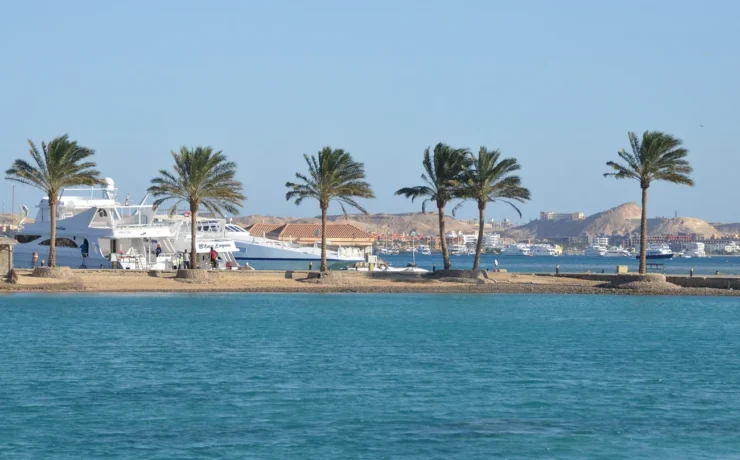
Hurghada combines an active city with resort strips and marine tourism providers, and different neighborhoods offer different access to public services and nightlife. That range can be useful for first-time visitors who want the option to explore beyond a hotel. But being in Hurghada does not guarantee that a particular property is walkable to a lively district or that the hotel's own beach provides effortless swimming. Some accommodation is located in relatively separate resort developments. Check the actual district, beach type, transport options and whether the property operates a shuttle. A genuine photograph of Hurghada's coast illustrates a real shore at a documented date; it is not evidence that every resort looks like the pictured hotel or supports the same water activities. Families should prioritize practical access and room location over an attractive but insufficiently described city-wide panorama.
Marsa Alam: a region where hotel coordinates matter
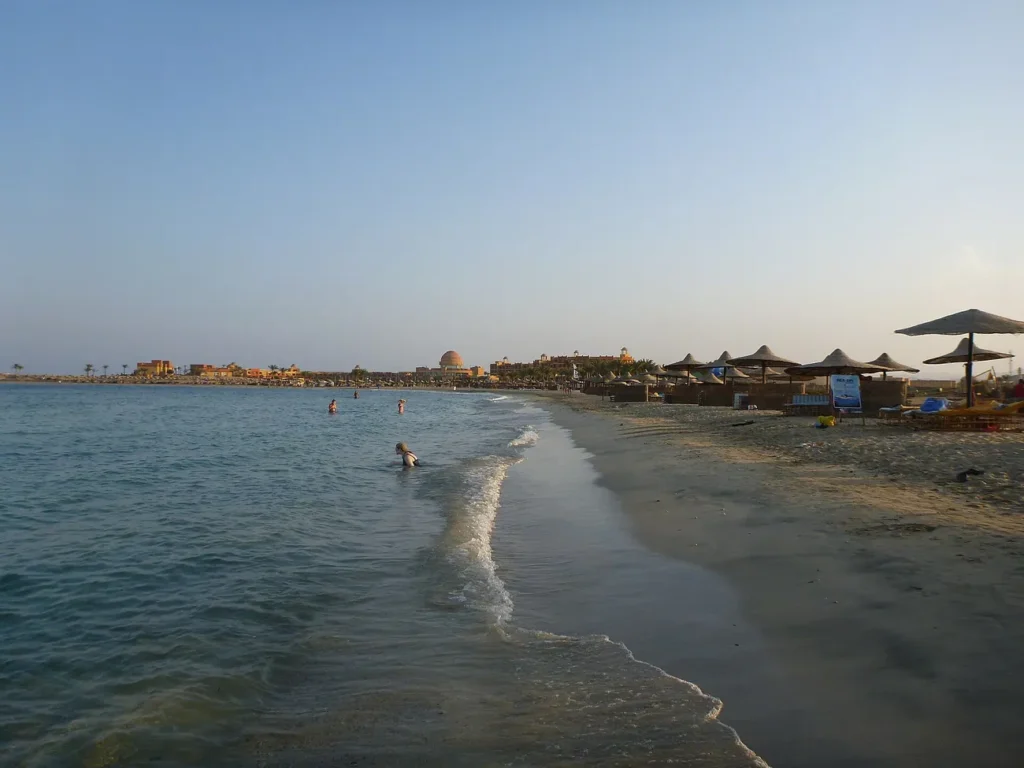
For many visitors, Marsa Alam's appeal lies in its southern Red Sea setting and proximity to specific dive or snorkeling locations. Yet the region contains widely separated properties, bays and excursion departure points. A hotel advertised as 'Marsa Alam' might require a significant transfer from a selected airport or another coastal settlement. Travelers should confirm that route directly before comparing prices, particularly when arriving late or booking private transport. The region also differs in access to city amenities from central Hurghada, though individual resorts can have substantial facilities. Remote-feeling beaches should never be described as private or deserted without evidence about public access and land management. The choice for an experienced diver should be connected to the dive center and relevant reefs, while family holiday planning may place more weight on a sheltered entry point and emergency arrangements. The landscape is meaningful, but exact local conditions are decisive.
Abu Dabbab: wildlife in a real ecosystem, not an attraction guaranteed on schedule
Abu Dabbab near Marsa Alam is frequently associated with snorkeling and possible sightings of sea turtles. The key word is possible. Wild animals move naturally, and tour operators cannot guarantee ethical encounters on demand. Visitors should never chase, corner, touch, stand on or feed turtles and other marine animals. Coral and seagrass environments need protection, including when shallow water creates an apparently easy place to stand. A real photograph of Abu Dabbab Bay helps explain the physical setting while offering no evidence that turtles will appear during a future stay. Snorkeling conditions depend on weather, visibility, currents, individual competence and the particular entry route. Ask locally whether a protected-area restriction or operator code applies and follow current guidance. A provider promising intimate contact with a wild animal should be approached critically rather than rewarded for a persuasive advertising image.
House reef, beach snorkeling and boat dives are three different products
A resort may advertise a house reef, but the phrase does not reveal the distance from the guest room to the water, entry steps, current risk or whether the reef is appropriate for beginners. Beach snorkeling from a sheltered sandy entrance differs from a jetty entry and from a boat trip to an offshore site. Scuba diving also requires suitable training, supervision and medical considerations. Advertised water-sport inclusions may cover equipment rental rather than professional instruction, and a hotel may contract the activity to a separate company. Get written answers for the exact activity and operator, including cancellation procedures when conditions are unsafe. A reef photograph taken at one location is not a promise about another site's coral, marine life or visibility. Contextual marine imagery should be named as such, avoiding the common mistake of attaching an attractive underwater shot to a property where it was never taken.
Family planning: water entry, pools and supervision
Families often decide between destinations based on accessible beach entry, pool design, childcare options, shade, food and the ease of recovering from a long transfer. The reality is property-specific. A shallow-looking image may show only one corner of a large pool, while a natural shoreline may have rock, reef or seasonal wave conditions not visible in a promotional photograph. Ask whether a designated safe swimming area is monitored and what age and height limits apply to equipment or slides. If the trip includes young children, confirm sleeping arrangements and medical needs as carefully as any advertised leisure feature. Mobility and sensory needs deserve direct property-specific discussion, including steps between buildings and shorelines. Neither 'family friendly' nor 'all inclusive' is a substitute for those details. Honest comparison helps avoid a physically unsuitable holiday despite attractive marketing.
What kind of stay suits different travellers
A first-time resort holiday may benefit from a property with easy beach access, reliable transfer arrangements and activities suited to the party. Dedicated divers sometimes prefer accommodation selected for a particular reef or dive centre rather than general nightlife. Families should evaluate water depth, lifeguard arrangements, shaded facilities and the availability of suitable medical services. Travellers with mobility needs should ask for photographs and precise descriptions of steps, beach surfaces, accessible rooms and embarkation requirements. 'All inclusive' is a commercial board arrangement, not a guarantee that every tour, equipment rental or transfer is covered.
Seasons, heat and changing sea conditions
The Red Sea can be visited at different times of year, but air and water temperatures, wind and sea conditions affect individual experiences. A wind-exposed snorkelling entry may be difficult on a day when another sheltered place is pleasant. No average monthly temperature guarantees good weather for a particular boat departure. Ask about cancellation policies and the alternative plan if an excursion is unsafe. The main decision should combine activities, comfort preferences and verified transport, not a single generic statement that every month is 'perfect'. Visitors should also consider sun exposure and responsible use of marine environments.
Booking without being misled by stale prices
Check a hotel's official site or a reputable booking provider for the exact room type, date, taxes and cancellation rules. Compare airport transfers, meals, beach access and reef activities on like-for-like terms. For guided excursions, identify the operating company and safety standards rather than assuming a social-media seller is the operator. Prices and flight schedules change too often to publish as evergreen facts without dates. A coastal guide can explain the decisions that remain stable, while a live supplier confirmation settles costs and availability. Readers looking for one documented beach experience can follow our separate Abu Dabbab travel guide.
Season, wind and the limits of average temperatures
The Red Sea climate supports tourism across much of the year, but conditions are not uniform from beach to beach or day to day. Wind can make an exposed jetty inconvenient even when a sheltered bay remains enjoyable, and summer heat can affect outdoor comfort. Average air temperatures are not a safe prediction of sea-state conditions for a booked boat activity. Visitors should ask providers about weather-related decisions and alternative activities, particularly if the itinerary depends on one offshore excursion. Sun protection, hydration and sensible exposure precautions matter in both destinations. Travelers seeking a specific marine activity may wish to compare the season and typical operator schedule, but no article should assert a guaranteed calm day or wildlife sighting. The most useful guidance describes the different uncertainties, not an invented universal 'best month' that supposedly works for every visitor.
Airport names, transfers and costs beyond a headline fare
A booking search may show Hurghada International Airport or Marsa Alam International Airport, but the name alone is not the complete transfer plan. Check terminal and arrival arrangements, verified transport provider, hotel address, distance and whether a late arrival is supported. Packages can quote per-person shuttle rates or whole-vehicle private transfers; those numbers should not be mixed. A hotel could advertise airport pickup while requiring advance reservation or charging separately. Preserve contact details offline and avoid making a time-sensitive transfer decision based only on an undated article. Where a flight involves separate tickets, verify luggage and missed-connection rules with the actual carriers. The cheapest flight on one screen can become expensive once transfers and cancellation rules are counted. Thoughtful destination comparison therefore begins with the total journey rather than the dramatic aerial photograph.
Hotels and the danger of borrowed marketing photographs
Resort brands frequently show their most attractive exterior, largest suite or a beach in ideal weather. A single photo rarely establishes which room category is available for the planned dates. For named properties, require the exact hotel identity and official room descriptions, and distinguish operator photographs from genuinely third-party licensed images. Never reuse a photo from another JAZ, Pickalbatros or SUNRISE hotel as if it depicts the property under review. When reproduction rights for a particular hotel gallery are not established, link to the official gallery and describe what the operator states instead of importing the image. A clear choice worksheet can record beach characteristics, board basis, child policies and cancellation rights with a last-confirmed date. This is a stronger editorial service than an invented illustrated ranking of unnamed resorts.
Responsible snorkeling: specific behavior before photo opportunities
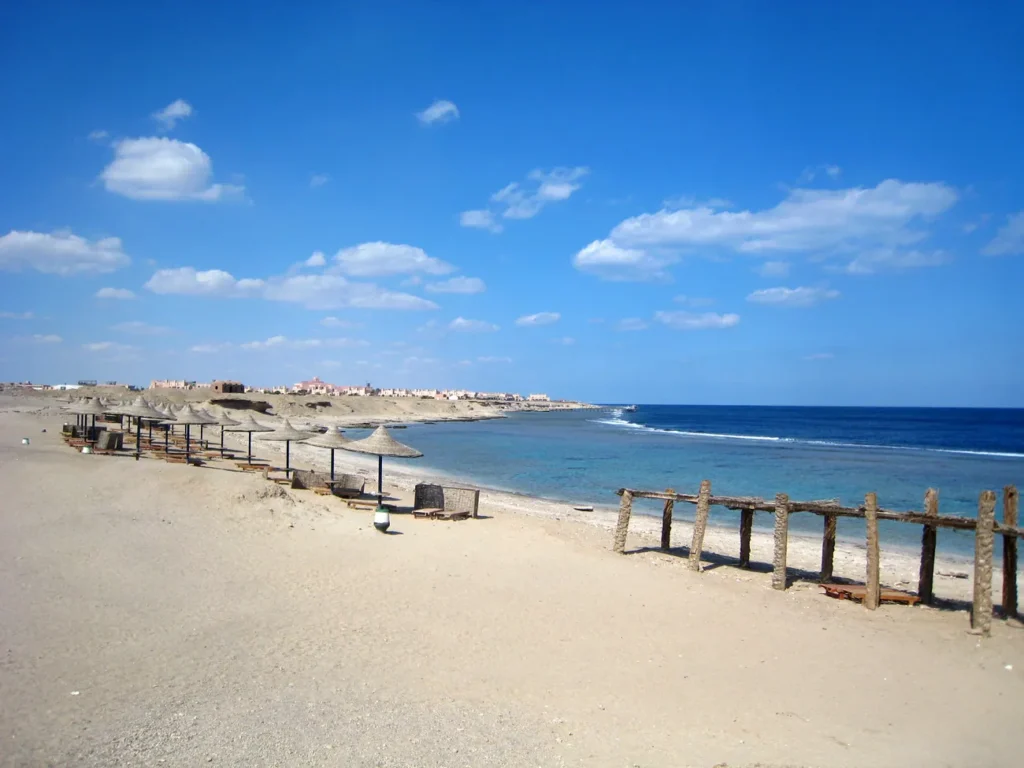
Responsible marine travel protects the environments on which coastal tourism depends. Keeping a respectful distance from wildlife and avoiding physical contact with coral are practical minimums that apply in any destination. Divers and snorkelers should receive a suitable safety briefing and avoid entering a current or deep site beyond their skills. Operators must be able to explain their emergency arrangements and any local permit or protected-area rules. Shoreline rubbish, sunscreen choice and careless fin use can affect sensitive marine environments, though ecological effects depend on context and available evidence. A tourist should also refuse to manipulate animals for a photograph. A real sea photograph may help interpret the habitat, but the ecological conditions visible on a single day should not be generalized to an entire coastline. The aim is a rewarding trip that does not turn protected wildlife into a staged spectacle.
Comparing a town break with a dive-focused itinerary
A traveler interested in restaurants, neighborhoods and a mix of day excursions may prioritize the service infrastructure of a larger coastal city. Someone whose primary purpose is diving may choose a specific operator and site, possibly placing less weight on evening city access. Those differences should drive a destination decision, but there are exceptions across both regions. Some Hurghada properties are isolated resort compounds; some southern Red Sea hotels offer extensive facilities and activities. Comparing based solely on stereotypes would be unreliable. Start with the number of nights, the activities that genuinely matter and a map of the exact hotel and transport route. If a cultural excursion forms part of the plan, check whether time and travel arrangements make it realistic rather than assuming major Egyptian monuments are close to every Red Sea beach. A comfortable base is one that fits the actual itinerary.
Decision worksheet and what to verify before paying
Build a short comparison containing the named hotel, precise location, airport transfer, suitable beach or reef access, exact room occupancy, board terms, safety-related limitations, total price and cancellation policy. For each fact, note whether it comes from an official hotel response, a current supplier quote or general destination research. Do not list past resort prices as if they were current, and avoid awarding ungrounded star rankings to entire cities. Where details cannot be verified, say 'not confirmed' rather than filling the gap with a plausible claim. The same method helps couples, groups and travelers with accessibility requirements. A trip to the Red Sea is often memorable for authentic places and encounters, but its practical success depends on evidence and planning rather than publicity photographs. This framework is a reusable travel tool even after particular airlines, hotels or packages change.
Evidence comparison and key distinctions
| Topic | What the evidence establishes |
|---|---|
| Hurghada | City and extensive neighboring coastal resort areas |
| Marsa Alam | Town and broad southern coastal tourism zone; verify exact hotel |
| House reef | Not a guarantee of beginner-safe water entry or free guided trips |
| Wildlife | No guaranteed turtle, dugong or dolphin encounter |
| Transfers | Confirm exact airport, property and supplier |
| Prices | Compare current dated quotes, not archived evergreen amounts |
| Rights | Property images must depict the correct resort and be reuse-cleared |
Frequently asked questions
Are the photographs of the exact featured hotel or ancient event?
No. Each caption identifies the actual documented place and date; it does not imply a current resort service or an ancient eyewitness view.
Can the published article guarantee current opening hours or transport?
No. Confirm dates, public access, booking terms and operator availability with the provider.
Is a modern photograph the same as archaeological or historical proof?
It can document surviving material or contemporary geography, but historical claims require independent sources.
How should I check uncertain information?
Use original monument, museum or travel-provider records and treat unverified details as unknown.
References, museum evidence and photography credits
All cited providers and institutions should be consulted at their original sources. The linked photographs accurately identify real Egyptian urban places, beaches, an airport, airline or travel environment. Their photos are not evidence of current prices, hotel rooms or an ancient building original appearance.
- Egyptian Tourism Authority — Experience Egypt
- UNESCO — Marine and coastal conservation background
- Experience Egypt official tourism portal
- Egyptian Ministry of Tourism and Antiquities
- UNEP — Coral reef and marine conservation
- IUCN Marine Turtle Specialist Group
- Egyptian Environmental Affairs Agency
- Hurghada Coast by Hatem Moushir 10.JPG — Hatem Moushir, CC BY-SA 4.0.
- Marsa Murena Beach1.JPG — Commons photographer, CC BY-SA 3.0.
- Carnelia Beach, Marsa Alam (2232052889).jpg — Commons photographer, CC BY 2.0.