In a museum case full of grand metalwork and illuminated manuscripts, a little disc of green glass barely earns a second glance. Some are no bigger than a coin. Yet a stamped glass weight can tell us the name of an official in medieval Egypt, the standard against which money was checked, and something about the trust needed to keep a market working.
These objects are often called glass coin weights. That doesn’t mean people spent them like coins. They were reference measures, used to test the metal currency being paid. The distinction is the start of their story.
The problem a tiny piece of glass was designed to solve
Gold dinars, silver dirhams and copper coins did not always arrive in a merchant’s hands in identical condition. They could vary in weight through manufacture, wear or deliberate alteration. One way to check a payment was to weigh coins against an officially approved reference standard. The Metropolitan Museum’s catalogue of coin weight 08.256.20 explains that glass was useful because damage and chipping were visible, making tampering easier to notice.
Glass standards were not an invention of the Islamic period alone. The museum notes earlier Greek-stamped examples from Byzantine Egypt. The practice continued under Islamic governments, with Arabic inscriptions identifying relevant weight standards or issuing authorities. The connection across periods makes these objects a useful antidote to the idea that the conquest of Egypt instantly replaced every practical technique used in the country.
To understand their use, imagine a sale agreed in gold dinars. Rather than assuming that every coin handed over had the right weight, someone could use a glass standard and a balance to test the amount of gold represented. The weight wasn’t a miniature replacement for the gold coin. It was a way of evaluating it.
One weight, one named governor, two unusually precise dates
Object 08.256.20 at the Met is attributed to Egypt and dated to 808–810 CE. The museum identifies its inscription as specifying the standard of one mithqal, the weight of a dinar, and naming the governor al-Hasan ibn al-Bahbah, whose governorship it dates to that same interval.
In the catalogue, the object is only 0.3 cm high and measures roughly 2.9 by 2.7 cm across. The recorded mass is 5.7 g. Those numbers are museum measurements of a surviving artifact, not a universally applicable conversion for every weight described as a dinar standard across all periods. A stamped statement of nominal value and the current physical weight of a damaged or weathered object also need not be identical.
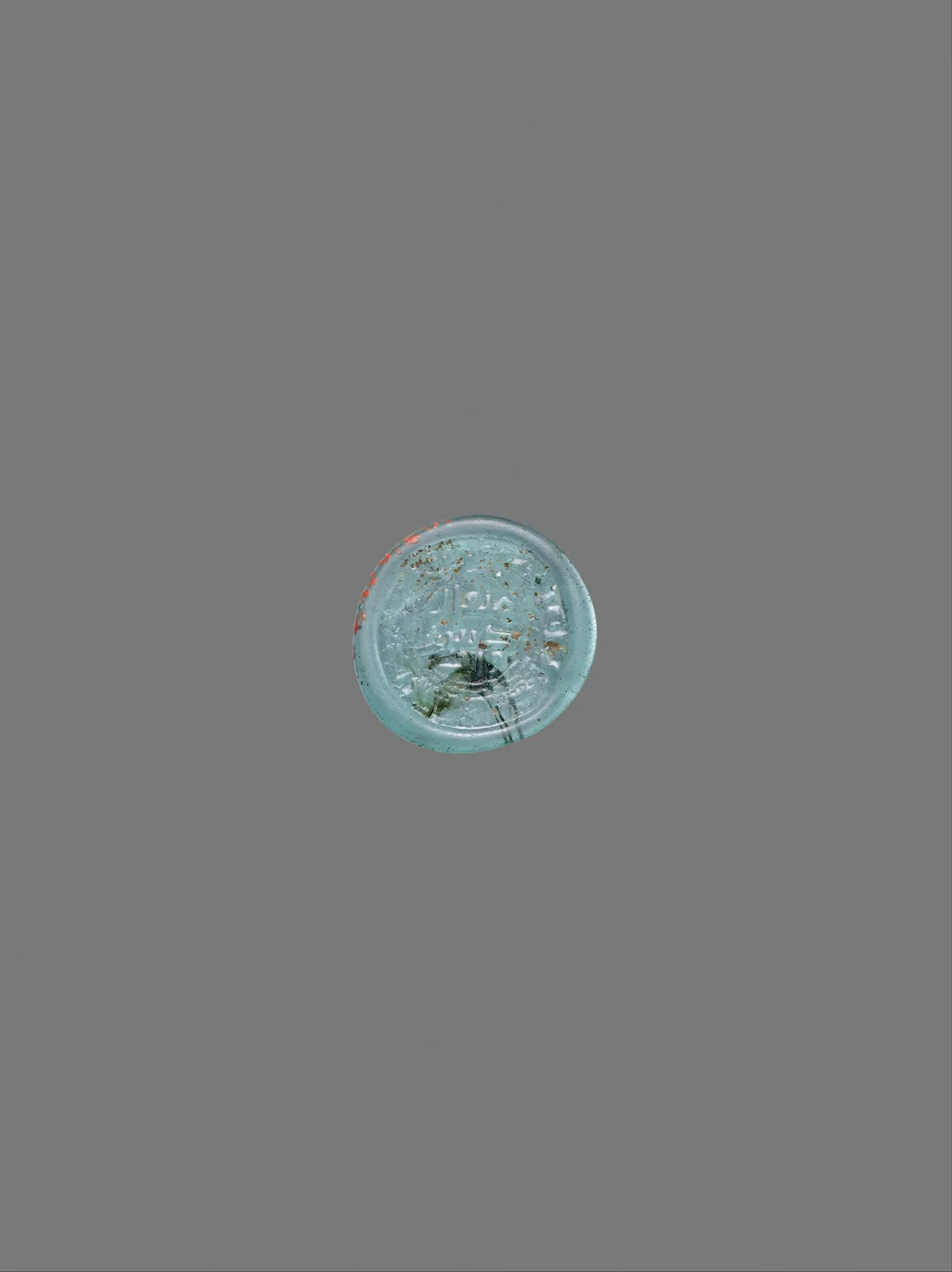
This is the kind of evidence political histories often lack. A governor’s name can survive on a tiny object connected to market regulation rather than on a fortress or triumphal inscription. That makes the weight a link between high-level government authority and the practical mechanics of trade. It doesn’t prove what every merchant in every Egyptian city did, but it does show the official stamp reaching into a domain of ordinary transactions.
An eleventh-century weight that tells a different story
Compare the earlier example with another Metropolitan Museum object, 08.256.67. The museum dates this one broadly to the eleventh century and attributes it to Egypt. Its dimensions are smaller, approximately 0.3 cm in height and 1.7 by 1.6 cm across, with a recorded weight of about 1.7 g.
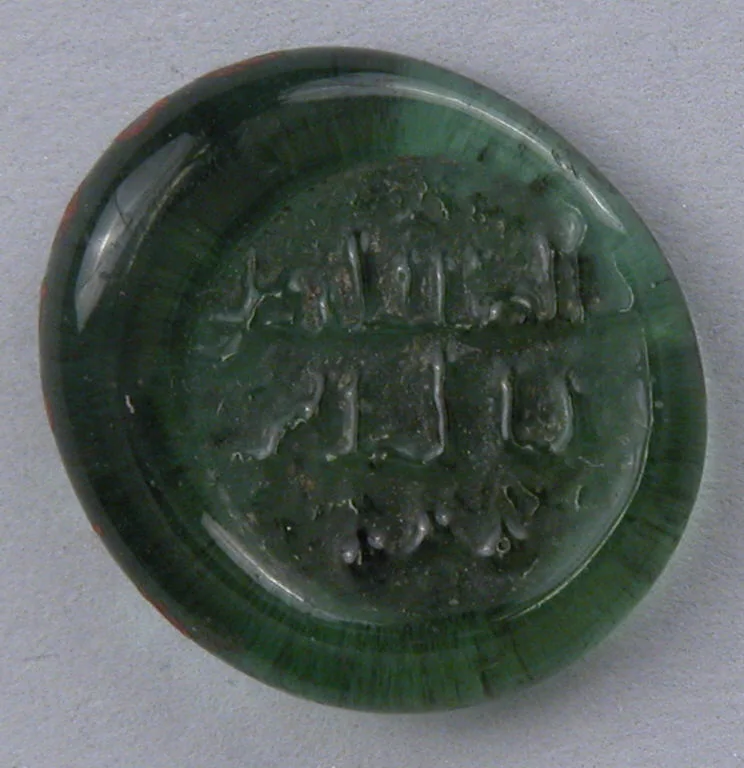
The difference in dating matters. The first object is tied to a narrow range and named governor; the second is not catalogued with that same certainty. It would be easy to assign the eleventh-century weight to a specific Fatimid ruler based on the dynasty that governed Egypt for much of that century. The surviving museum description does not justify such a precise attribution. A broad date is still useful evidence, and admitting its limits makes the comparison stronger.
Who issued these standards?
A reference weight had to be accepted as trustworthy for it to serve a market. Medieval Islamic administrations therefore had reasons to control the standards and the offices associated with them. The Metropolitan Museum’s scholarly publication Islamic Glass: A Brief History describes how officials including governors and finance directors could be involved in authorizing coin weights.
Some inscriptions include personal names, religious formulas, quantities or official titles. Scholars compare them with surviving coins, dated papyri and other stamped pieces to understand how authority changed. That work is more careful than looking at the color of a glass disc and naming an entire dynasty. The lettering, issue standard and documented parallel objects are the evidence.
A familiar political period may appear in many weights, but no single specimen establishes market regulation everywhere. An object attributed to Egypt may also lack a securely recorded archaeological findspot. Museum provenance tells us how a weight entered a modern collection; it isn’t automatically the address of the medieval shop where the weight was last used.
What the Kelsey Museum adds
The Kelsey Museum of Archaeology displays glass standards alongside vessels and other objects showing the technical range of Islamic-period glassworking. Its collection includes a turquoise Egyptian coin weight dated 717–720 CE, with an inscription connected to the finance director Hayyan ibn Shurayh. That earlier example shows how financial officials’ names could be recorded in glass within a century of the beginnings of the Islamic period.
The Kelsey’s broader exhibit also makes a useful point about manufacture. Glass was shaped and stamped while workable, then cooled into small durable objects. The material’s translucency, color and wear vary widely. Not every round piece of stamped glass served an identical denomination, and not every stamped piece was necessarily used in the same way.
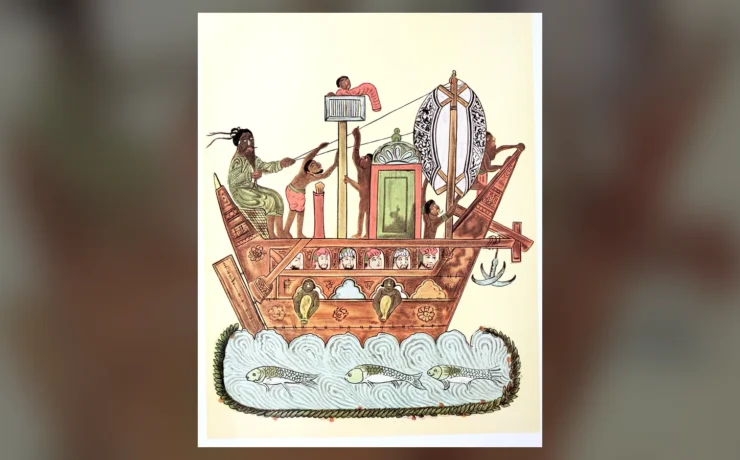
For a wider look at Islamic Egyptian government, our study of Fatimid naval administration uses a very different source base: texts describing ships and state activity. The coin weights show how a small portable object can preserve another aspect of political control. Both are part of administrative history, but they answer different questions.
Read a coin weight like an archaeologist
| Question | Evidence to examine | Common mistake |
|---|---|---|
| What is it? | Museum classification, material, shape, stamped inscription | Calling the glass reference piece a circulating metal coin |
| When was it made? | Named official, inscription, typological parallels and catalogue date | Assigning an exact ruler to a broadly dated object |
| What did it weigh? | Stated standard and recorded physical mass | Confusing denomination with a universal modern gram conversion |
| Where was it used? | Excavation context or documented provenance | Assuming ‘attributed to Egypt’ identifies an individual market |
| Who issued it? | Official names and titles in the stamp | Claiming every glass piece must carry the same governor’s authority |
The object numbers matter because they allow another reader to check the claims against the primary museum records. For 08.256.20, the name, narrow date and mithqal inscription are recorded; for 08.256.67, the catalogue provides a broader eleventh-century date. That contrast is a lesson in how historians handle different degrees of certainty.
What two surviving discs can tell us
The story isn’t that glass magically prevented dishonest trade. Stamps could be copied, objects could be damaged, and actual commercial practice was more complicated than a museum label. The artifacts nevertheless document an attempt to create standards that others could recognize and test.
At their best, these little weights bring the state and the marketplace into the same frame. An official’s name, a weight standard and a bit of colored glass survive together. They don’t let us listen to the voices of the buyers and sellers who used them. But they make it much easier to imagine the practical problem those people were trying to solve: how to know that the money offered was really worth what it claimed.
Sources: The Metropolitan Museum of Art collection records 08.256.20 and 08.256.67; the museum’s scholarly Islamic Glass publication; and the Kelsey Museum’s Islamic glass collection. The photographs show two authentic Met objects and are used under the museum’s Open Access terms.